Jewelry Moves Fast Now
Jewelry Moves Fast Now
Five years ago, jewelry trends changed slowly. A style would hang around for a season or two, then gradually fade. That's not how it works anymore. Social media, fast-moving celebrity culture, and a generation of buyers who treat accessories like outfit changes have sped everything up. The result? 2026 is shaping up to be one of the most interesting years for personal adornment in a long time.
What's different this time is the mix. People aren't just chasing one look. They're blending vintage with futuristic, minimal with maximal, precious with affordable. The through-line is personality — jewelry that says something about who's wearing it, not just what's on trend.
Here are ten trends worth paying attention to if you care about what's happening in jewelry right now.
1. Oversized Gold Chains
Gold chains are back, and they're bigger than most people expected. We're not talking about subtle pendant chains — these are thick, chunky links that sit heavy on the collarbone. The kind of thing that makes an outfit the moment you put it on.
The appeal is straightforward: gold has never gone out of style, but the scale has shifted. In 2024, delicate layered necklaces dominated. Now, the pendulum has swung the other way. People want one statement piece instead of three thin ones. It's easier, bolder, and honestly, more practical for daily wear.
You'll see this in both solid gold and gold-plated versions. The plated ones have gotten significantly better in quality over the past few years, which means the look is accessible at different price points. But if you're investing, a solid 14k or 18k chain in a classic link style (curb, figaro, or rope) will hold value for years.
2. Lab-Grown Diamonds Go Mainstream
This one isn't new, but 2026 is the year lab-grown diamonds stopped being a niche alternative and became a default option. The quality gap between mined and lab-grown has essentially disappeared. The price gap hasn't — lab-grown still costs 40-70% less, depending on size and grade.
Millennial and Gen Z buyers have driven this shift. They care about origin, environmental impact, and getting more for their money. A 2-carat lab-grown diamond that would cost $20,000 mined can often be found for $6,000-$8,000. That math is hard to argue with, especially for engagement rings where the emotional value matters more than the geological source.
The design world has caught up too. Major jewelry houses that once refused to touch lab-grown stones are now offering them. Independent designers, who were early adopters, are pushing creative boundaries — unusual cuts, colored lab diamonds, and settings that would be too risky with expensive mined stones.
3. Pearl Everything
Pearls had a reputation for being your grandmother's jewelry. That's officially over. Designers have been reimagining pearls for several years now, and 2026 is when the reinterpretation has fully matured.
What's changed is how pearls are being used. Instead of traditional strands, you're seeing pearls set in unexpected materials — mixed with silver chains, embedded in resin, arranged in asymmetrical clusters. Baroque pearls, with their irregular shapes, have become particularly popular because each one is unique.
The color range has expanded too. White and cream are still the baseline, but dyed pearls in deep greens, blues, and even blacks are showing up in collections. There's something refreshing about taking a material associated with formality and making it feel casual and modern.
4. Personalized and Initial Jewelry
Name necklaces never really went away, but the personalization trend has broadened significantly. It's not just names anymore — it's coordinates of meaningful places, dates in Roman numerals, zodiac symbols, fingerprint engravings, and even sound waves converted into metal patterns.
The technology behind this has gotten better and cheaper. Laser engraving, 3D printing for custom molds, and direct-to-consumer brands have made personalized jewelry fast and affordable. What used to require a custom jeweler and weeks of waiting can now be ordered online and delivered in days.
What makes this trend durable (pun intended) is the emotional angle. A piece of jewelry with your kid's initials, your anniversary date, or a location that means something to you isn't going to feel dated next season. It's personal in a way that transcends trends.
5. Vintage and Estate Revival
There's a growing appetite for jewelry with history. Estate sales, vintage shops, and online marketplaces for pre-owned fine jewelry have seen steady growth. Part of this is sustainability — buying vintage means no new mining, no new manufacturing. Part of it is aesthetic — older pieces often have craftsmanship details that are expensive to replicate today.
Art Deco pieces from the 1920s are particularly sought after. The geometric patterns, the mix of platinum and white gold, the use of onyx and emerald as accents — these designs translate surprisingly well to modern wardrobes. Victorian pieces with their intricate filigree work have a following too, especially among buyers who romanticize craftsmanship.
The practical advice here: learn to spot quality. Vintage doesn't automatically mean valuable. Look for hallmarks, check the weight (real gold is heavy), and be wary of pieces that have been "enhanced" with modern repairs that compromise the original structure.
6. Sculptural and Asymmetrical Designs
Jewelry is getting weird in the best way. Designers are moving away from symmetrical, polished perfection and embracing irregular shapes, raw textures, and forms that look more like tiny sculptures than traditional accessories.
This trend works well with the broader cultural shift toward embracing imperfection. In a world that's increasingly digital and polished, there's a craving for things that feel handmade and real. A ring with an uneven surface texture or a pendant that looks like it was carved by hand rather than cast in a mold taps into that feeling.
Materials play a big role here. Recycled metals, rough-cut stones, and even materials like wood and ceramic are showing up alongside precious metals and gems. The mix of high and low materials is part of the appeal — it challenges the idea that fine jewelry has to look a certain way.
7. Stackable Rings and Bracelets
The stack isn't new, but the approach has evolved. Instead of matching sets, people are mixing metals, widths, and styles deliberately. A thin gold band next to a chunky silver ring. A delicate chain bracelet next to a hammered copper cuff.
The rule-breaking is the point. For decades, conventional wisdom said you shouldn't mix gold and silver. That's gone out the window. The current aesthetic celebrates contrast and personal curation. Your stack should look like it accumulated over time, even if you bought everything last week.
For makers and sellers, this trend is a gift. It encourages multiple purchases (people rarely stop at one ring), and it creates opportunities for entry-level pieces that customers can build on. A $30 silver band can be the start of a collection that eventually includes a $500 gold ring.
8. Colored Gemstones Take Center Stage
Diamonds are no longer the automatic default for statement pieces. Emeralds, sapphires, rubies, and semi-precious stones like tourmaline, garnet, and aquamarine are getting more attention from both designers and buyers.
Part of this is price-driven. Colored stones offer more visual impact per dollar than diamonds, especially in larger sizes. A 5-carat emerald is going to turn heads in a way that a 1-carat diamond might not, and it'll cost significantly less.
There's also a design advantage. Colored stones open up creative possibilities that white diamonds don't. They can be cut into unusual shapes (emerald cuts, cushion cuts, cabochons), set in contrasting metals, and paired with other stones for multi-color effects. Designers are taking full advantage of this freedom.
9. Ear Curation and Multiple Piercings
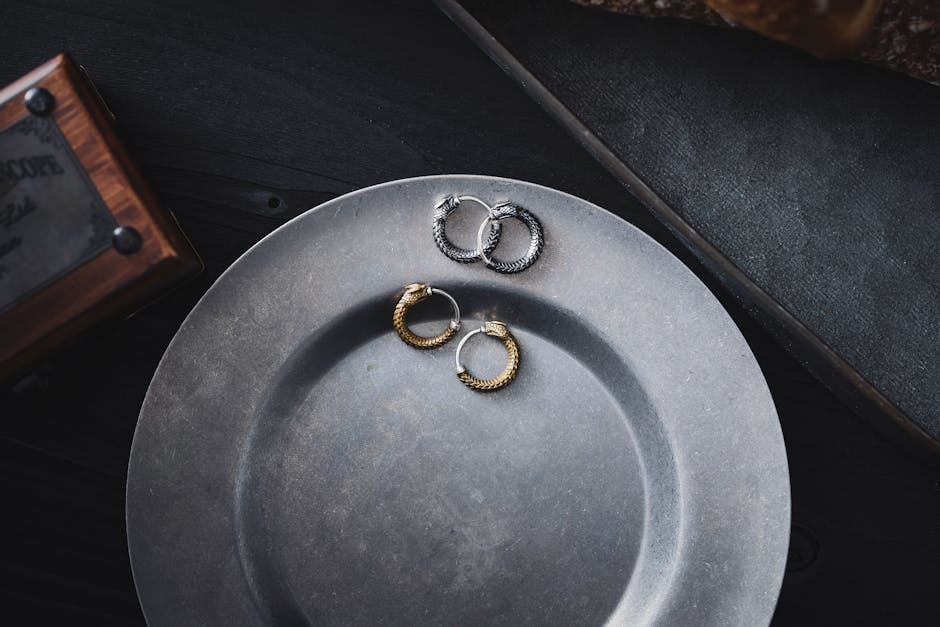
The single-stud look has given way to the curated ear. People are getting multiple piercings and treating their ears like a canvas — mixing studs, hoops, cuffs, and climbers in arrangements that are unique to each person.
Helix piercings, tragus piercings, and conch piercings have become mainstream enough that most piercing studios offer them as standard services. The jewelry for these placements has gotten better too — small hoops and studs designed specifically for cartilage that are comfortable and stay secure.
The business angle here is interesting. Once someone has multiple piercings, they need multiple pieces of jewelry. It's naturally a higher-volume purchase pattern than buying one pair of earrings. Brands that offer curated ear sets (a mix of pieces designed to work together) are doing well with this trend.
10. Sustainable and Ethical Materials
This is less a specific style and more an underlying shift in how people think about what they buy. Recycled metals, ethically sourced stones, transparent supply chains — these factors are influencing purchasing decisions more than ever before.
Brands that can tell a clear story about where their materials come from and how their pieces are made have a real advantage. It's not just about avoiding guilt — buyers genuinely want to feel good about what they're wearing. A ring made from recycled gold with a traceable origin story carries a different weight (emotionally, not physically) than one without that context.
The challenge for the industry is that "sustainable" is becoming an overused buzzword. Greenwashing is real, and consumers are getting savvy about it. The brands that will win are the ones with specific, verifiable claims — not vague promises about being "eco-friendly."
What This Means for You
If you're buying jewelry in 2026, the landscape gives you more options than any previous year. You can go big or small, new or vintage, precious or affordable. The defining characteristic isn't any single style — it's intention. People are choosing pieces that mean something to them, whether that meaning comes from the design, the story, the materials, or all three.
If you're making or selling jewelry, pay attention to the mix of trends, not just individual ones. The customer who buys a personalized pendant might also be in the market for a chunky gold chain. The person interested in lab-grown diamonds might also appreciate vintage estate pieces. The overlaps are where the opportunities are.
Trends come and go, but the shift toward personal expression and conscious buying feels permanent. That's probably the most important thing to understand about jewelry in 2026 — it's not about following trends anymore. It's about finding pieces that fit your life.
Comments