<h2>Jewelry Trends 2026: What People Are Actually Wearing</h2>
Stacked rings are not going anywhere
The ring stacking trend that started gaining momentum around 2022 has become the default way many people wear rings. Instead of one statement ring, the look is now three to six thin bands worn together on one or multiple fingers.
On Etsy, "stacked ring set" searches increased 42% between January 2025 and January 2026. Google Trends data for "stacking rings" shows consistent interest with seasonal spikes around holiday gift-buying periods. Pinterest's 2026 trend report listed "stacked everything" as a continuing macro trend, applying to rings, bracelets, and necklaces.
The mechanics matter. A good stack typically mixes textures: a plain gold band next to a hammered one next to a thin band with a tiny stone. The look works because it's personal — everyone's stack is slightly different — and it's affordable to build over time. You don't need to drop $500 at once. One thin band a month adds up to a full stack in six months.
The shift from statement to collection is the interesting part. Where 2010s jewelry was about one bold piece — a cocktail ring, a chunky necklace — 2026 is about accumulation. More pieces, individually less expensive, worn together.
Gold is back in a big way
Silver had a long run as the default "cool" metal, but gold has been reclaiming ground. Google Trends shows "gold jewelry" search volume surpassing "silver jewelry" consistently since mid-2024, a shift that hadn't happened since the early 2010s.
The comeback isn't limited to yellow gold, though that's the dominant tone. Rose gold remains popular but has plateaued — the growth is in classic yellow gold, particularly in 14K. Etsy's gold jewelry category grew 31% year-over-year in 2025, outpacing silver's 12% growth. The price gap between gold and silver has widened as gold hit record prices above $3,000 per ounce in early 2026, but consumer interest hasn't dropped. Instead, buyers are shifting toward smaller gold pieces — a thin chain, small stud earrings, a simple band — rather than large, heavy items.
This explains the stacking trend too. When individual gold pieces are expensive, buying small ones and layering them is a practical way to wear the metal without a single large purchase.
Pearls are everyday now
Pearls used to mean formal occasions: weddings, job interviews, your grandmother's jewelry box. That association has broken down almost completely.
Pinterest searches for "casual pearl jewelry" grew 67% between 2024 and 2025. On TikTok, #casualpearls has accumulated over 200 million views, with the aesthetic typically featuring a single pearl pendant on a thin chain, pearl studs worn with t-shirts, or pearl hair clips with streetwear. The pearl is no longer the focal point of a formal outfit — it's an accent piece in a casual one.
Baroque pearls (irregularly shaped, not perfectly round) are driving much of this growth. They're less expensive than round Akoya or South Sea pearls, and their organic shapes fit the imperfect, handmade aesthetic that dominates 2026 fashion. Etsy baroque pearl listings increased 55% in 2025. Freshwater baroque pearls — which can cost as little as $5 to $15 for a single pendant — have made pearls accessible to a much younger demographic.
For freshwater pearl farmers, this is a significant shift. The market has moved from valuing only round, high-luster pearls to appreciating natural variation. A slightly lopsided pearl that would have been discarded a decade ago is now sold as a feature.
Personalized and initial jewelry
Name necklaces and initial pendants have been around for years, but the category has expanded well beyond the classic cursive nameplate. Now it includes birthstone rings, coordinate necklaces (engraved with the latitude and longitude of a meaningful place), custom handwriting jewelry (where a piece is cast from an actual handwritten note or signature), and fingerprint jewelry.
Etsy's personalized jewelry category is one of its top-performing segments, with year-over-year growth of 38% in 2025. Google Trends for "personalized necklace" and "custom name ring" show sustained high interest with no sign of decline. The average order value in this category ($45 to $80) sits in a sweet spot — expensive enough to feel like a real gift, affordable enough for impulse purchases.
The psychology driving this is straightforward: in an era of mass-produced everything, people want objects that can't belong to anyone else. A plain gold chain is beautiful. A plain gold chain with your child's initial on it is irreplaceable. That emotional multiplier justifies the price premium.
Sustainable and ethical jewelry is a purchase driver, not just a buzzword
Five years ago, "sustainable jewelry" was a niche concern. In 2026, it's becoming a standard expectation, at least among buyers under 35.
A 2025 survey by the jewelry industry platform Rapaport found that 62% of millennial and Gen Z buyers said they would pay more for jewelry with verified ethical sourcing. Google Trends for "sustainable jewelry" and "ethical diamonds" has tripled since 2022. Lab-grown diamonds, which were controversial when they first became commercially viable, are now mainstream — the lab-grown diamond market reached an estimated $15 billion in 2025, roughly 20% of the total diamond market.
The demand extends beyond diamonds. Recycled gold (gold refined from existing jewelry and electronic waste rather than newly mined) is increasingly used by independent designers. On Etsy, listings mentioning "recycled gold" grew 28% in 2025. Brands that prominently display their sourcing practices — where the metal came from, how the stones were mined, who made the piece — are seeing higher conversion rates in social media marketing.
This doesn't mean everyone is paying attention. Price and aesthetics still drive most purchases. But the sustainable option now exists as a default choice in many categories, which is a real shift from even three years ago.
Men's jewelry is a growing market
This is one of the most quantifiable growth areas. Google Trends for "men's jewelry" shows a steady upward trajectory since 2021, with search volume roughly 2.5 times higher in early 2026 than it was five years ago. Etsy's men's jewelry category grew 45% year-over-year in 2025, the fastest growth rate of any jewelry demographic on the platform.
The dominant styles are understated: thin chain necklaces, small signet rings, leather and bead bracelets, and minimal stud earrings. The aesthetic is closer to "refined casual" than the heavy chains and large pendants that characterized men's jewelry in previous decades. Think a 2mm gold chain under an open collar, not a thick Cuban link.
Social media has been the primary driver. Male fashion influencers on Instagram and TikTok routinely feature jewelry in their daily outfit posts, normalizing it for younger audiences. The Pinterest 2026 trend report specifically highlighted "quiet luxury for men" as a key direction, with jewelry playing a central role — small, quality pieces rather than loud statement items.
The market opportunity is significant because men's jewelry has historically been underserved by both large brands and independent designers. Most jewelry marketing, store layouts, and product development has been oriented toward female buyers. That's changing, and the brands moving first are capturing disproportionate market share.
Beading and handmade elements
After years of minimalist, barely-there jewelry dominating high fashion, there's a visible counter-movement toward handcrafted, textured pieces. Beaded necklaces — particularly with natural stone beads — have become mainstream in a way they haven't been since the early 2000s. The difference this time is the aesthetic: instead of uniform plastic beads, the trend favors irregular natural stone beads, handmade ceramic beads, and mixed-material strands.
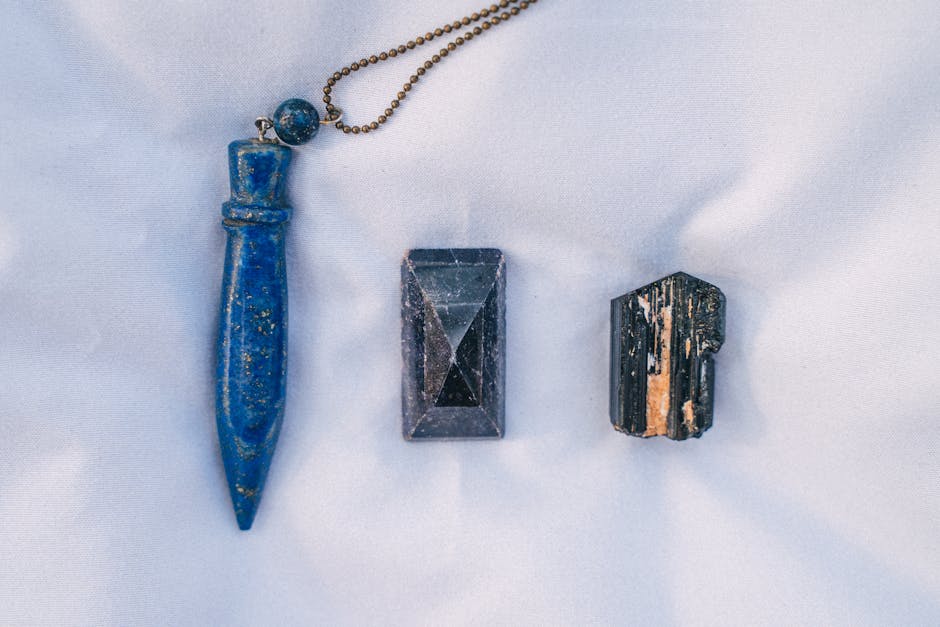
Pinterest searches for "beaded necklace" grew 51% in 2025. TikTok's #stonebeads tag has over 300 million views. The crossover with the crystal collecting community is part of the story — people who buy crystals for display are increasingly wearing them as jewelry too, in the form of bead bracelets and pendant necklaces.
For jewelry makers, this trend is a win because beaded pieces have lower material costs and higher perceived value than their actual production cost suggests. A strand of natural stone beads might cost $3 to $8 in materials but sells for $25 to $60 as a finished bracelet. The labor and design are what buyers are paying for.
What's fading
No trend report is complete without noting what's on the way out. Oversized chain necklaces — the thick, heavy links that dominated around 2021–2023 — have declined in search volume by roughly 25% since their peak. Matching jewelry sets (identical necklace and earring combos) are losing ground to the more eclectic stacking aesthetic. Extremely minimalist jewelry — the single thin bar pendant or tiny geometric shape on a barely visible chain — is softening as buyers gravitate toward pieces with more visual presence.
None of these styles are dead. They're just no longer growing, which is how trends work: they peak, plateau, and get absorbed into the general pool of options rather than disappearing entirely.
The through-line
If there's a single pattern connecting these trends, it's personalization — not just in the literal sense of engraved names, but in the broader sense of jewelry that feels like it belongs to a specific person. A stack of rings you chose one by one. A pearl necklace that doesn't match anything else you own, on purpose. A men's chain that's thin enough to forget you're wearing it.
The 2026 buyer wants jewelry that looks collected, not purchased in a set. That preference favors independent makers, Etsy sellers, and small brands over mass retailers — which is, for the jewelry industry, probably the most important trend of all.
Comments