Jewelry Trends 2026: What Is Heating Up and Cooling Down
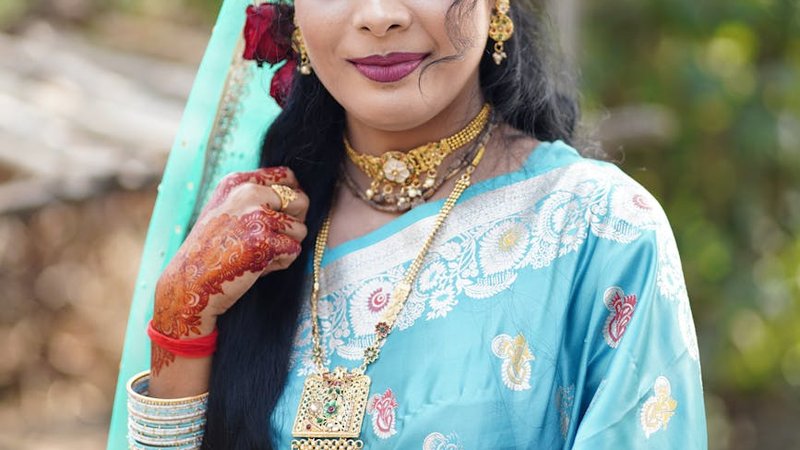
Every year around spring, I carve out a weekend to wander through a handful of local jewelry shows and indie designer markets. It's something I started doing back in college — partly because I love the craftsmanship, and partly because it's the fastest way to figure out what's actually happening in jewelry before the mainstream catches on. This year, the shift was impossible to miss. Some trends that dominated 2024 and early 2025 have quietly packed their bags, while a handful of new ones have taken over display cases and Instagram feeds alike. Here's what I saw, what's heating up, and what's cooling down in the world of fashion jewelry trends for 2026.
The Trends That Are Absolutely Dominating Right Now
1. Chunky Chains Have Gone Everywhere
Two years ago, if you wore a thick Cuban link or a heavy rope chain, people assumed you were into streetwear. Fast forward to 2026, and those same chunky chains are showing up at wedding receptions, gallery openings, and corporate networking events. What changed? Designers started pairing oversized chains with delicate pendants, mixing polished and matte finishes, and using them as the centerpiece of otherwise minimal outfits. I saw a booth at a Brooklyn market where a designer was selling 14mm gold-plated chains strung with tiny freshwater pearls — the kind of thing that would've looked ridiculous three years ago but now feels effortlessly cool. The key takeaway: chunky chains aren't just for bold, edgy looks anymore. They've become versatile statement pieces that work across styles.
If you're thinking about jumping on this, start with one solid chain necklace in a neutral tone — yellow gold, silver, or gunmetal — and build around it. A single chunky chain over a simple tee or a slip dress instantly elevates the outfit without needing anything else.
2. Pearls Got a Serious Makeover
I'll be honest — for most of my life, I associated pearls with my grandmother's jewelry box. Single-strand white pearls on a thin silk cord, worn to church or a funeral. That association is officially dead. At this year's shows, I counted no fewer than two dozen designers who were doing things with pearls that I never expected. One studio was setting baroque (irregularly shaped) pearls into chunky silver cuffs. Another was threading pearls onto leather cords and wrapping them around oxidized brass. A third had created entire earrings out of nothing but seed pearls arranged in chaotic, organic clusters.
The appeal is obvious once you see it in person: pearls add this unexpected softness and luminosity that contrasts beautifully with harder materials. Young designers have figured out that pearls don't have to be precious or fussy — they can be raw, imperfect, and even a little rebellious. If you've been sleeping on pearls, 2026 is the year to wake up. Start with a single pearl pendant on a thin chain, or a pair of mismatched pearl drop earrings. The imperfection is the point.
3. Personalized and Engraved Pieces Are Non-Negotiable
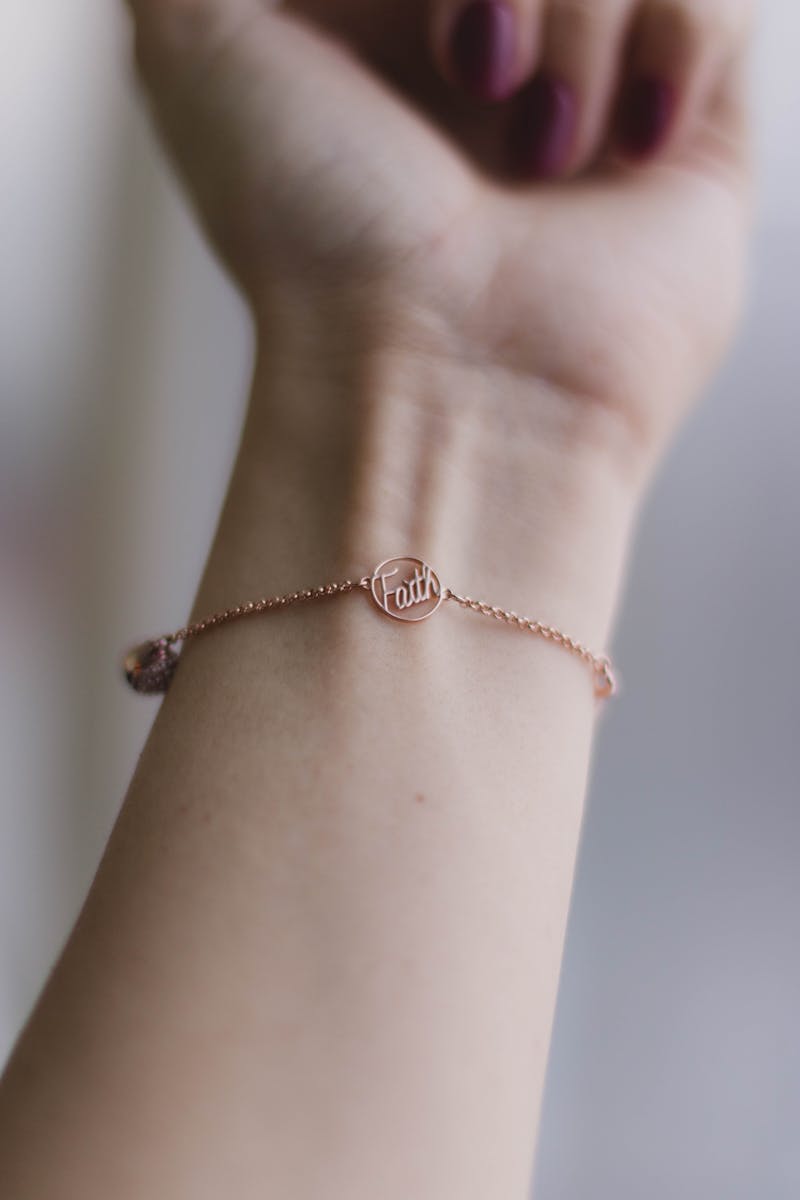
This one didn't surprise me — I've been watching it build for a couple of years — but the intensity has ramped up considerably. At every market I visited, the longest lines were at booths offering custom engraving. Couples' rings with coordinates of where they met. Necklaces with children's names in the wearer's own handwriting. Bracelets stamped with meaningful dates or short phrases in multiple languages. One designer told me that personalized orders now make up roughly 70% of her business, up from about 30% two years ago.
The driving force seems to be a broader cultural shift toward meaning over flash. People still want beautiful jewelry, but they want it to tell a story. Mass-produced pieces without any personal connection are getting harder to sell, especially to millennial and Gen Z buyers. If you're considering an engraved piece, think about what matters enough to wear every day — a name, a date, a word, a set of initials. Keep it simple. The best personalized jewelry works because the message is quiet and personal, not shouted from a billboard.
4. Colored Gemstones Are Stealing the Spotlight from Diamonds
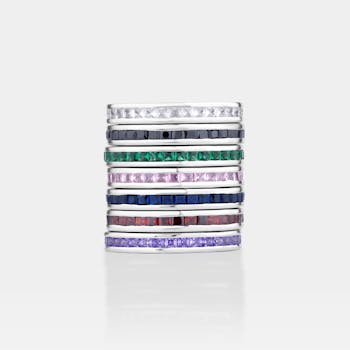
Diamonds aren't going anywhere, obviously. But for the first time in a long time, I saw more colored stones in engagement ring settings than clear ones at several designer booths. Sapphires in deep cornflower blue. Emeralds with the kind of jardin (internal inclusions) that purists used to reject but that collectors now prize. Padparadscha — that impossibly beautiful pink-orange sapphire from Sri Lanka — showing up in cocktail rings and pendants. Even tourmalines and tanzanites are getting more display space.
Part of this is practical: colored stones let you get a larger, more visually striking gem for your money compared to a diamond of equivalent quality. But there's also an aesthetic shift happening. The uniformity of a perfect white diamond is starting to feel, well, uniform. People want color. They want character. They want a stone that looks like it has a story. If you're drawn to colored gems, don't be afraid to embrace inclusions — they're proof the stone is natural, and they give each piece a fingerprint that no one else has.
5. Sustainability Is No Longer a Niche Concern
I remember when "sustainable jewelry" meant a few Etsy sellers working with recycled copper. That's changed dramatically. At this year's shows, I saw established brands showcasing entire collections made from recycled precious metals, lab-grown diamonds and gemstones, and even upcycled vintage components sourced from estate sales. One particularly impressive booth featured rings made from reclaimed gold that came with a certificate tracing the metal back to its original source — old electronics, dental scrap, and decommissioned jewelry.
Lab-grown gems deserve special mention here. The quality has gotten to the point where even experienced jewelers sometimes struggle to tell them apart from mined stones, and the price difference is significant — often 40–60% less for chemically identical material. For buyers who care about environmental impact (and let's be honest, about their budget), lab-grown is an increasingly rational choice. The stigma that used to surround lab-grown stones has almost entirely evaporated among younger buyers.
The Trends That Are Quietly Fading
1. Ultra-Fine Stacked Necklaces — The "Necklace Soup" Era Is Over
For about three years, the look was everywhere: five, six, sometimes eight delicate chains layered at different lengths, each with a tiny pendant. It was pretty in magazines but exhausting in real life. The chains tangled constantly. The pendants clanked against each other. It took ten minutes to put on and straighten, and you spent the rest of the day fidgeting with it. Designers seem to have gotten the memo. At this year's shows, the dominant layering was two pieces maximum — maybe a chunky chain with one delicate pendant, or two chains at similar lengths with contrasting weights. Simpler, cleaner, and infinitely more practical. If you have a collection of ten ultra-fine chains, consider retiring most of them and keeping two or three that actually work together.
2. Single-Material Purism Is Giving Way to Bold Mixing
The old rule — "pick one metal and stick with it" — has been thoroughly broken, and I say good riddance. The best pieces I saw this year mixed materials with intention: yellow gold chains with oxidized silver pendants, rose gold settings with platinum bands, brass with titanium, even wood and ceramic alongside precious metals. The trick is contrast, not chaos. You want the materials to look like they're in conversation with each other, not fighting. If you've been afraid to mix metals, start small: wear a gold ring with a silver bracelet, or pair a rose gold necklace with white gold studs. Once you see how natural it looks, you won't go back.
3. Big Logo Jewelry Is Losing Its Grip
There was a stretch where every other person at a coffee shop seemed to be wearing a pendant or charm with a luxury brand's logo stamped across it. That energy has cooled significantly. The designers I talked to said logo pieces still sell, but the demand has shifted toward smaller, more subtle branding — or no visible branding at all. People want the piece to speak for itself. They want someone to compliment their ring because it's beautiful, not because they recognize the logo. This aligns with the broader personalization trend: if jewelry is supposed to be about you, then wearing someone else's name across your chest feels a bit off-message.
How to Actually Wear These Trends Without Looking Like a Lookbook
Here's the thing about trends — they're suggestions, not obligations. The most stylish people I know never adopt every trend at once. They pick one or two that resonate with their personal taste and integrate them into what they're already wearing. So here's my practical advice after a weekend of looking at hundreds of pieces:
Pick one statement piece and build around it. If you love chunky chains, make that your focal point and keep everything else minimal. If colored gems excite you, choose one vivid ring or pendant and let it be the star. Don't try to wear every trend simultaneously — that's how you end up looking like a jewelry store exploded on your body.
Invest in quality over quantity. One well-made chain that you'll wear for years beats six cheap ones that tarnish in a month. One meaningful engraved piece outlasts a drawer full of impulse buys. The sustainable brands I saw this year are making incredible stuff at reasonable prices, and the craftsmanship difference is visible from across the room.
Trust your eye over the algorithm. Instagram will show you what's trending, but it won't tell you what looks good on you. Try things on. Move around in them. See how they catch light in your kitchen, not just in a curated photo studio. The best jewelry trends are the ones that make you feel like yourself — just a slightly more intentional, slightly more confident version.
Jewelry is personal in a way that most accessories aren't. It sits against your skin. It moves with you. It accumulates meaning over time. The popular jewelry styles 2026 reflect a broader cultural moment: people want pieces that feel real, that tell stories, that mix old and new without apologizing for either. Whether you're drawn to chunky chains, colored stones, or a simple engraved band, the best trend you can follow is the one that makes you stop scrolling and think, "yeah, that's mine."
Comments