15 Jewelry Trends That Defined the 2020s
1. Chunky Chains Went from "Too Much" to "Must-Have"
I remember seeing my first oversized Cuban link in 2019 and thinking, "That's never going to catch on outside of hip-hop circles." By mid-2021, every fashion influencer on Instagram was layering three different chain styles at once. The market data backed it up — chunky gold chain sales increased by roughly 340% between 2020 and 2023, according to jewelry retail analytics from Edited. Brands like Missoma and Mejuri built entire collections around weighty, tactile chain designs that felt almost architectural.
The beauty of the chunky chain trend was its democratic appeal. You could find a $25 version at ASOS or drop $4,000 on a solid 18k piece from Catbird. Bella Hadid was photographed in New York wearing three different gold chains simultaneously so many times it became her signature look. What started as a streetwear statement migrated into bridal jewelry, office wear, and even red carpet styling.
2. Permanent Jewelry Welded Onto Wrists Everywhere
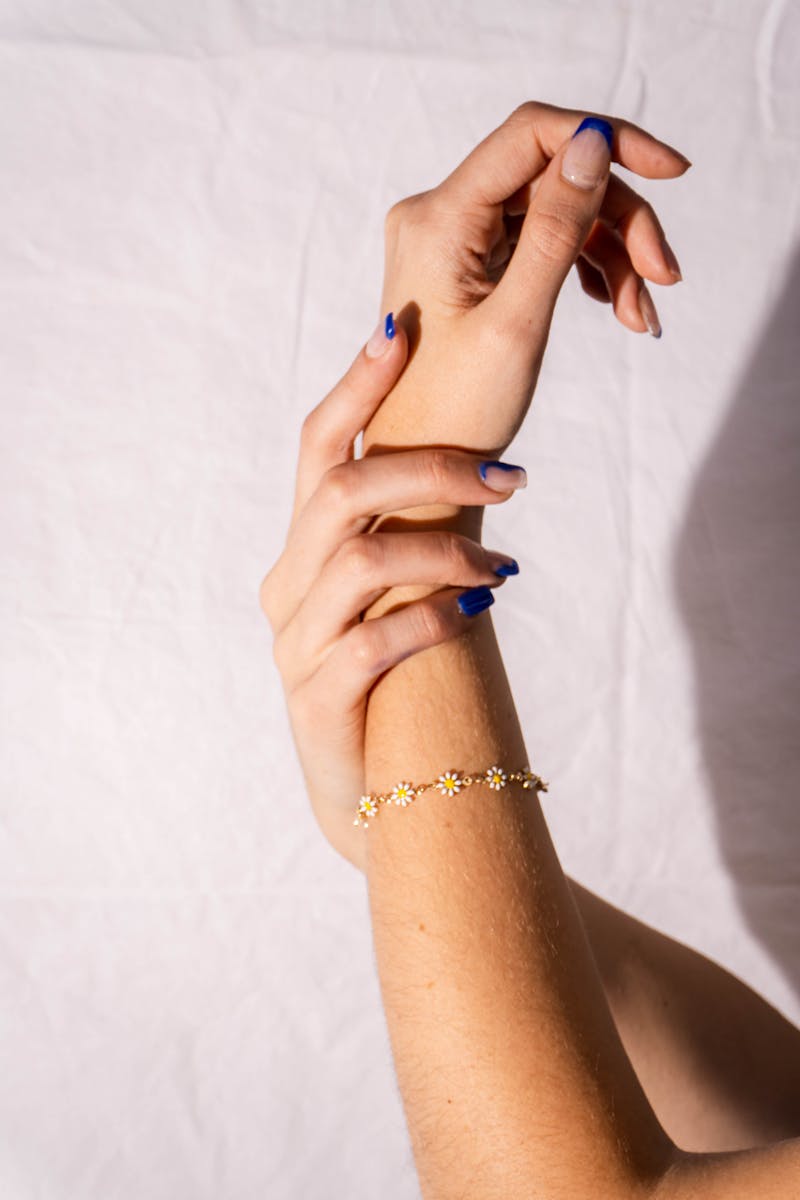
This one genuinely surprised me. The concept of welding a bracelet permanently onto someone's wrist sounds like something from a dystopian novel, yet permanent jewelry studios popped up in malls across America starting around 2021. Catbird's "Forever Bracelet" service — where a thin gold chain is welded closed around your wrist for roughly $98 to $350 — became so popular that waitlists stretched to six months in major cities.
By 2024, there were an estimated 3,000+ permanent jewelry businesses operating in the United States alone. The appeal was partly emotional — a symbol of friendship, partnership, or self-commitment — and partly practical. No clasp to break, no taking it on and off. I've spoken with several permanent jewelry artists who told me their most popular customers aren't couples but groups of college friends getting matching chains before graduation.
3. Ear Cuffs Replaced Traditional Earrings for Millions
Ear cuffs solved a problem that actually existed: not everyone has pierced ears, and not everyone wants a second or third piercing. The ear cuff trend exploded around 2022 when brands like Jennifer Fisher and Maria Black started designing cuffs that wrapped around the cartilage with zero needles required. Google searches for "ear cuff" peaked at 2.8 million monthly searches by late 2023.
What I found most interesting was how ear cuffs changed the economics of ear jewelry. A single statement cuff from a mid-range brand costs $60-$150, while a comparable cartilage piercing with quality jewelry runs $80-$200 plus the piercing fee. Zendaya wore a sculptural gold ear cuff to the 2023 SAG Awards, and within 48 hours, affordable versions from Mejuri and Gorjana had sold out online. The trend proved that jewelry innovation doesn't always mean new materials — sometimes it's just removing a barrier to entry.
4. Lab-Grown Diamonds Disrupted Everything
This wasn't just a trend. It was a structural shift in a $300 billion global diamond industry. In 2020, lab-grown diamonds accounted for roughly 5-7% of the diamond market. By 2025, that figure hit approximately 35%, with some analysts projecting 50% by 2028. The price gap was the obvious driver — lab-grown diamonds typically cost 30-70% less than mined equivalents — but the shift was also generational. A 2024 survey by The Knot found that 62% of millennial and Gen Z engagement ring buyers would consider lab-grown.
Brands like Brilliant Earth, Vrai, and Lightbox (De Beers' own lab-grown line) normalized the category. I think what most consumers missed was that De Beers — the company that practically invented "a diamond is forever" — launching a lab-grown brand was the clearest possible signal that the industry had changed permanently. The debate over "real vs. fake" largely faded as consumers realized lab-grown diamonds are chemically identical to mined stones. The environmental argument became the new battleground, and that conversation is still ongoing.
5. Y2K Revival Brought Back Butterfly Clips and Belly Chains
Every generation revisits the aesthetics of twenty years prior, and the 2020s were the decade of Y2K nostalgia run wild. Butterfly clips, initially dismissed as a 1999 relic, returned via TikTok in 2021 and promptly sold out at Claire's stores nationwide. The belly chain — last seen on Britney Spears in the "I'm a Slave 4 U" era — came back so hard that swimwear brands started designing bottoms specifically to accommodate them.
What struck me about this revival was how specific it was. It wasn't a general "retro" trend. People wanted exact reproductions of specific pieces — the tiny heart pendant necklaces, the rhinestone-covered flip phones, the iridescent body glitter. Dua Lipa wore a belly chain during her 2024 Radical Optimism tour, and searches for "y2k belly chain" spiked 1,200% on Google Trends that week. The trend proved that nostalgia jewelry is less about the era and more about the specific cultural moments people associate with it.
6. Personalized Engraving Became Non-Negotiable
Generic jewelry lost ground throughout the decade to pieces that told a story. Custom engraving — once limited to wedding bands and locket inscriptions — expanded into virtually every jewelry category. Nameplate necklaces, coordinate bracelets, fingerprint pendants, and soundwave jewelry (converting a voice recording into a visual waveform etched in metal) became standard offerings at retailers from Etsy shops to Nordstrom.
The numbers tell the story. Etsy reported that searches for "personalized jewelry" grew by 89% between 2020 and 2024. Brands like GLDN and Miansai built their entire identity around customization. I think the pandemic accelerated this trend significantly — when people couldn't gather, they sent jewelry with meaning. A bracelet engraved with a grandmother's handwriting. A pendant stamped with the coordinates of where a couple first met. The emotional premium consumers were willing to pay for personalization typically ranged from 20-50% above comparable non-customized pieces.
6. Sustainable and Ethical Jewelry Went Mainstream
For most of jewelry history, consumers didn't ask where their gold came from. The 2020s changed that. Conflict diamond awareness had been building since the early 2000s, but the decade saw consumers extend that scrutiny to gold mining, gemstone sourcing, and even packaging. The Responsible Jewellery Council reported a 156% increase in member applications between 2020 and 2025.
Brands like Ana Luisa, Soko, and Bario Neal led the charge with fully transparent supply chains and recycled metal sourcing. Vrai went a step further by offering jewelry made entirely from lab-grown diamonds and recycled gold, with a publicly traceable supply chain. I noticed that younger consumers especially treated ethical sourcing as a baseline requirement rather than a premium feature. The question shifted from "Is this ethical?" to "Prove it's ethical." That's a fundamentally different relationship between consumer and jeweler.
7. Mismatched Earrings Made Asymmetry Cool
There was a time when wearing two different earrings was considered a mistake. By 2023, it was a deliberate styling choice. The mismatched earring trend — wearing different studs, drops, or hoops on each ear — reflected a broader cultural shift toward individuality and rejecting rigid beauty standards. Kendall Jenner was an early adopter, regularly photographed wearing a pearl stud on one side and a chunky gold hoop on the other.
Jewelry designers embraced the trend by creating "earring pairs" that were designed to be intentionally different. Missoma's "Mismatched Pearl and Gold" set became one of their bestsellers in 2023, retailing for around $150. What I appreciated about this trend was its accessibility. You didn't need to buy a special set — you could pair any two earrings you already owned. It was essentially free self-expression.
8. Body Chains Moved from Festivals to Everyday Wear
Body chains spent the 2010s firmly in the "music festival only" category. The 2020s saw them migrate into brunch outfits, beach looks, and even layered over blazers. The shift happened gradually — first via Instagram styling where fashion influencers started pairing delicate body chains with simple white tanks and jeans. By 2024, body chain searches on Pinterest had increased by 220% year-over-year.
The styling evolution was fascinating to watch. Early body chains were heavy, dramatic, and frankly uncomfortable. The 2020s versions were barely there — whisper-thin gold chains with tiny charms, designed to catch light without catching on clothing. Brands like Adina's Jewels and Jacquie Aiche built entire body jewelry lines. I think what made this trend stick was the layering possibility. A body chain worn under an open blazer created depth and visual interest that a necklace alone couldn't achieve.
9. Pearl Renaissance Proved Classics Can Be Reinvented
Pearls spent decades being associated with grandmothers and formal occasions. The 2020s completely demolished that image. It started with Harry Styles wearing a single pearl earring on the cover of Vogue in December 2020 — a cultural moment that generated over 2 million social media mentions in 48 hours. By 2023, pearls had become the defining accessory of a generation that previously ignored them entirely.
The reinvention wasn't subtle. Instead of traditional strands, designers used baroque (irregularly shaped) pearls, dyed pearls in unexpected colors, and pearls set in chunky gold settings that looked nothing like classic pearl jewelry. Sophia Webster's pearl-embellished sandals and Alighieri's sculptural pearl rings became cult favorites. South Sea pearl prices actually increased by 15-20% between 2021 and 2024 as demand outpaced supply for quality specimens. I think this trend demonstrated that no jewelry category is truly "dead" — it just needs a generation willing to break the rules of how it should be worn.
10. Signet Rings Became Unisex Staples
The signet ring has existed for roughly 4,000 years, but for most of modern history, it was a men's accessory associated with family crests and old money. The 2020s democratized it entirely. Women adopted signet rings in record numbers, and gender-neutral designs became the norm rather than the exception. Searches for "women's signet ring" on Google grew 180% between 2021 and 2024.
The modern signet ring traded family crests for personal symbols — initials, astrological signs, birthstones, and custom engravings. Roxanne First and Alison Lou built significant portions of their business on contemporary signet designs. Pricing ranged from $45 for a simple sterling silver piece to over $2,000 for solid gold with diamond accents. What I found remarkable was how the signet ring became a canvas for self-expression rather than heritage. People weren't wearing their family's story — they were writing their own.
11. Beaded Bracelet Stacking Turned Into an Art Form
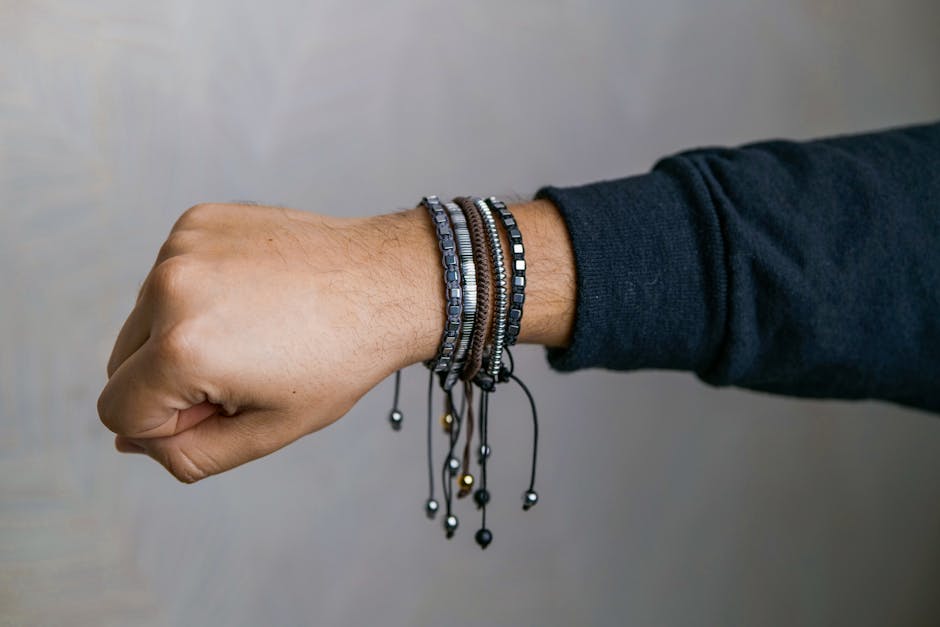
If you walked through any farmers market or craft fair in the 2020s, you encountered beaded bracelets. Lots of them. The stacking trend — wearing 5, 10, sometimes 20+ beaded bracelets on a single wrist — became one of the most visible jewelry trends of the decade. Pura Vida bracelets arguably started the movement in the early 2010s, but the 2020s saw it explode into a multi-hundred-million-dollar market.
The appeal was layered. Beaded bracelets were affordable (most ranged from $5-$25), customizable, and carried social meaning. Friendship bracelet exchanges became a TikTok phenomenon in 2022, with the hashtag #friendshipbracelets accumulating over 1.2 billion views. Jade bead bracelets gained particular traction, with some styles becoming so popular that counterfeit versions flooded the market. I think the beaded bracelet trend succeeded because it was inherently social — you bought them with friends, traded them, gifted them, and built a collection that literally told the story of your relationships.
12. Herringbone Chains Made a Quiet Comeback
Herringbone chains have a strange history. They were enormously popular in the 1980s, virtually disappeared for two decades, then returned in the 2020s with a vengeance. The flat, liquid-drape effect of a well-made herringbone chain creates a visual impact that no other chain style quite matches. By 2023, "herringbone chain" was generating over 450,000 monthly searches on Google.
The modern herringbone trend had a twist: people wore them differently than in the 80s. Instead of a single heavy chain, the 2020s approach was layering — a delicate herringbone with a chunky Cuban link, or a gold herringbone paired with a silver pendant necklace. Missoma and Monica Vinader both released herringbone collections that sold out within weeks. The catch, which every jeweler I spoke with mentioned, is that herringbone chains are fragile. They kink if bent, and once kinked, they're nearly impossible to repair. This fragility became part of the appeal, in a way — wearing a herringbone chain required a certain intentionality that resonated with the decade's broader emphasis on mindful consumption.
13. Turquoise Had Its Biggest Moment Since the 1970s
Turquoise jewelry has always cycled in and out of fashion, but the 2020s represented the stone's most sustained popularity since the American Southwest jewelry boom of the 1970s. The trend started slowly — small turquoise studs and delicate rings appeared around 2021 — then accelerated when Native American and Southwestern jewelry designs gained mainstream traction on social media.
By 2024, turquoise was appearing in high fashion contexts that would have been unthinkable a decade earlier. Emily Ratajkowski wore a large turquoise cabochon ring at a Met Gala afterparty that generated significant press coverage. The Navajo Nation's jewelry artisans, who have been working with turquoise for centuries, saw renewed interest in their craftsmanship. Sleeping Beauty turquoise from Arizona, considered the most valuable variety, saw prices increase by roughly 25% between 2022 and 2024 as the mine's supply diminished. I think what made this turquoise revival different from previous ones was the genuine appreciation for indigenous craftsmanship, not just appropriation of the aesthetic.
14. Minimalist Jewelry Refused to Die
Every trend article written in the 2020s predicted the death of minimalist jewelry. Every year, it got stronger. While chunky chains, permanent jewelry, and beaded stacks grabbed headlines, the quiet foundation of minimalist jewelry — thin gold bands, small diamond studs, barely-there necklaces — continued to dominate everyday wear. Mejuri, the brand arguably most responsible for popularizing accessible minimalist jewelry, reached over $100 million in annual revenue by 2023.
The reason minimalist jewelry persisted is simple: it works with everything. You can wear a minimalist pendant to the office, on a date, at the gym (well, maybe not to the gym), and to a formal event. The versatility created a "jewelry wardrobe" mentality where consumers built a base of minimal pieces and layered trendy items on top. Sophia Bush and Hailey Bieber were frequently photographed in classic minimalist pieces regardless of what trend they were also wearing. I'd argue that minimalist jewelry's endurance was the single most important trend of the decade — not because it was exciting, but because it made every other trend more wearable.
15. Vintage and Antique Jewelry Outpaced New Production
Perhaps the most significant shift of the decade was the growing preference for vintage and antique jewelry over newly manufactured pieces. By 2024, the vintage jewelry market was estimated at $4.2 billion globally, with growth rates consistently outpacing new jewelry sales. Platforms like 1stDibs, Etsy Vintage, and The RealReal reported year-over-year growth of 25-40% in their jewelry categories throughout the early 2020s.
The motivations were varied: sustainability concerns, unique one-of-a-kind appeal, historical significance, and frankly, better craftsmanship at comparable price points. A Victorian-era gold locket from an estate sale might cost $300 and feature hand-engraved details that no modern machine can replicate at that price. Vintage engagement rings — particularly Art Deco and Edwardian styles — became so sought-after that specialized dealers like Doyle & Doyle and Trumpet & Horn built substantial businesses around them. I think this trend reflected a broader cultural shift toward intentionality and storytelling in consumption. People didn't just want jewelry. They wanted a piece with a past.
What These Trends Tell Us About the Next Decade
Looking at these fifteen trends collectively, a few patterns emerge. Personalization dominated — consumers wanted jewelry that reflected their identity rather than conforming to a single aesthetic. Sustainability moved from a niche concern to a baseline expectation. Technology (lab-grown diamonds, permanent welding) created new categories that didn't exist before. And perhaps most importantly, the boundary between "fine" and "fashion" jewelry continued to dissolve. A $30 beaded bracelet and a $3,000 gold chain coexisted on the same wrist, and no one thought twice about it.
The 2020s didn't have a single defining jewelry trend. They had fifteen. And that fragmentation — that refusal to settle on one look — might be the most accurate reflection of the decade itself.
Comments