The Broken Necklace That Started It All
The Broken Necklace That Started It All
A few years ago, I had a necklace I really liked. Simple silver chain, small pendant, nothing fancy. The jump ring connecting the pendant to the chain broke. Tiny, stupid thing — a 2mm circle of wire had opened up, and the pendant fell off somewhere between my car and my office.
I found a local jeweler who could fix it. They charged me $25 and kept the necklace for a week. When I picked it up, the repair was fine. Functionally perfect. But waiting a week and paying $25 for what amounted to 30 seconds of work with a torch felt absurd. Not because the jeweler was overcharging — they weren't — but because the fix was so simple that I could have done it myself if I knew how.
That's when I started looking into basic soldering. What I found surprised me. The barrier to entry was lower than I expected. The tools were affordable. And the skill itself — once I got past the initial intimidation — was genuinely learnable in a weekend. Not master, but learn. Good enough to fix broken chains, close jump rings, resize rings, and attach findings.
Here's the case for why basic soldering is worth learning, even if you have zero intention of becoming a jeweler.
What You Actually Need to Get Started
Let's talk cost, because that's the first objection most people have. A basic soldering setup for jewelry isn't cheap, but it's not the thousands of dollars you might imagine either.
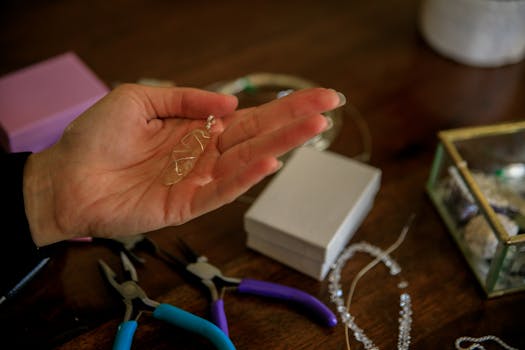
The essentials: a small butane torch (Blazer GB2001 or similar, around $40-$60), silver solder (easy or medium paste solder for beginners, $15-$20 for a small syringe), flux ($8-$12), a soldering block or charcoal block as a heat-refractive surface ($10-$15), basic tweezers and pick ($10-$15), safety glasses ($10), and pickle solution for cleaning after soldering ($10-$15).
Total startup cost: roughly $100-$150 for everything you need to start practicing. You can go cheaper by using a portable butane culinary torch from the kitchen store (they work, though they're less precise), and you can find some of these items secondhand. You can also spend significantly more — professional setups run into the thousands — but you don't need professional equipment to do basic repairs.
One thing worth noting: this is for precious metals (silver, gold, copper, brass). Soldering steel, titanium, or stainless steel requires different equipment and techniques. If you're mostly dealing with fashion jewelry made from base metals, basic soldering won't help much. But for silver, gold, and copper jewelry — which covers a lot of what people actually want repaired — it's the right tool.
The Skills That Pay for Themselves
Once you know basic soldering, a whole category of jewelry problems becomes trivially solvable. Here's what you can fix.
Broken chains are the most obvious one. A chain that's snapped at a link can be re-soldered closed in under a minute. The repair is invisible if done well — the soldered link looks identical to the rest. Compare that to the hassle of taking it to a jeweler, paying for the repair, and waiting. For anyone who wears chains regularly, this one skill alone justifies the learning investment.
Jump rings that won't stay closed is another common issue. Most jewelry uses jump rings to connect components — pendant to chain, clasp to chain, earring hook to body. These rings open over time, especially on pieces you wear daily. Soldering them shut permanently (or re-opening and closing them with solder when you need to change a component) is a beginner-level technique.
Ring resizing, at least for simple adjustments (making a ring slightly smaller by cutting and re-soldering), is achievable with basic skills. Professional ring sizing for complex designs with stones still requires experience, but closing a gap in a plain band is straightforward.
Attaching findings — ear posts, clasps, bails — to handmade pieces opens up creative possibilities. If you make your own jewelry, soldering lets you create finished pieces instead of relying on cold connections (wire wrapping, glue) that may not hold up long-term.
Broken earring posts, detached bracelet clasps, split shanks on rings — these are all repairable with basic soldering. The common thread is that they're small, they involve precious metals, and they're structurally simple. Exactly the kind of thing a beginner can handle.
Why Not Just Use Superglue?
People do. A lot of people do. And for some applications, adhesive is fine. Epoxy can hold a post back on a costume earring for months. Superglue can temporarily reattach a clasp. But adhesives have limitations that soldering doesn't.
Adhesives degrade over time, especially with exposure to water, sweat, and skin oils. A superglue repair that looks solid today might fail in a month. A soldered joint, properly done, is as strong as the surrounding metal. It doesn't degrade, weaken, or discolor.
Adhesives are visible. Even clear epoxy has a slight shine or thickness that's noticeable on close inspection. Solder, when applied correctly and polished, is invisible. You can't tell where a piece was soldered if the work is clean.
Adhesives don't conduct. For pieces that need electrical conductivity (some kinetic jewelry, light-up pieces, technically any piece), adhesive creates an insulating barrier. Solder creates a conductive joint. Niche concern for most jewelry, but relevant for some specialty pieces.
That said, if you're dealing with costume jewelry, enamel pieces, or anything that can't tolerate heat, adhesive might be your only option. Soldering requires heat, and heat can damage certain materials. Know when to solder and when to glue. Both tools have their place.
The Learning Curve Is Real but Manageable
I'm not going to pretend soldering is effortless. It takes practice. The first few times you try to solder a jump ring closed, you'll probably melt the ring into a tiny silver blob. That's normal. The metal is small, the torch is hot, and your instinct to "just hold it there a bit longer" will lead to overheating.
The core skills to develop are heat control (knowing how much heat to apply and where), solder placement (putting the right amount of solder in the right spot), and timing (recognizing when the solder has flowed into the joint). These are physical skills that improve with repetition, not intellectual concepts you can just read about and understand.
Start with cheap copper wire or scrap sterling silver. Don't practice on pieces you care about. Cut a bunch of small wire segments, try to solder them into rings, then try to solder the rings into chains. You'll waste some material. That's the cost of learning. Silver scrap is cheap — a few dollars' worth of wire will give you hours of practice material.
YouTube is your friend here. There are dozens of jewelry soldering tutorials that walk you through the basics step by step. Watching someone else do it, seeing the color changes in the metal, observing how the solder flows — these things are nearly impossible to learn from text alone. Visual demonstration makes a huge difference for this particular skill.
Safety: The Non-Negotiable Part
You're working with an open flame, hot metal, and chemicals (flux and pickle solution). Safety isn't optional. Here's what you need to know.
Work in a well-ventilated area. Soldering produces fumes, and while they're not toxic in small amounts, you don't want to be breathing them in a closed room. Open a window, use a fume extractor, or work near an exhaust fan. Your kitchen with the stove hood running works in a pinch.
Wear safety glasses. Always. Flux can pop and splatter when heated. Small pieces of metal can fly. Solder paste can sputter. Eye protection is cheap and non-negotiable.
Keep a fire extinguisher nearby. Not a bucket of water — water can spread a grease fire or cause a steam explosion if it hits the wrong surface. A small ABC fire extinguisher within arm's reach is the right choice.
Tie back long hair, avoid loose sleeves, and don't wear synthetic fabrics that can melt onto your skin if they catch fire. Cotton or natural fibers are safer around open flames.
The pickle solution (usually a mild acid) needs to be handled with basic precautions. Don't touch it with bare hands (use copper tongs to insert and remove pieces), don't splash it, and dispose of it properly. It's not hydrochloric acid — it's usually a citric acid solution or diluted Sparex — but it's still an acid and deserves respect.
Beyond Repair: The Creative Door That Opens
Something happens once you learn to solder. The relationship with jewelry changes. Instead of seeing pieces as finished, immutable objects, you start seeing them as assemblies of components that can be modified, combined, and reconfigured.
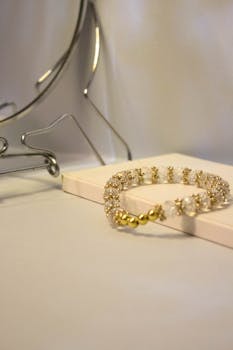
A broken necklace becomes material for a bracelet. A pendant you don't wear can be removed from its bail and attached to a different chain. Two pairs of earrings you don't love individually can be combined into one pair you do love. Old jewelry from thrift stores or estate sales — pieces that are damaged or outdated — can be disassembled and rebuilt into something new.
This creative aspect is, honestly, more rewarding than the repair angle. Being able to fix your own jewelry is practical. Being able to make your own jewelry from raw materials and components is something else entirely. It's a creative outlet that doesn't require much space (a small desk or even a kitchen table with a fireproof surface) and doesn't cost much to maintain once you have the basic tools.
Some people take it further — making jewelry to sell, taking metalsmithing classes, building out a full workshop. Others just keep it at the hobby level, fixing their own stuff and occasionally making gifts. Both paths are valid. The point is that soldering opens a door, and you get to decide how far to walk through it.
The Counterargument: When It's Not Worth It
I've made the case for learning soldering, but I should acknowledge when it doesn't make sense.
If you rarely wear jewelry and don't own much, the upfront cost of tools might not be justified by the occasional repair. A $25 repair once a year is cheaper than a $150 setup you use twice.
If your jewelry is all costume/fashion pieces made from base metals and alloys, soldering won't help much. These materials are harder to solder (lower melting points, unpredictable behavior) and not worth the effort to repair. Replace instead.
If you're uncomfortable with open flames or can't work in a space where soldering is safe (no ventilation, fire risk, etc.), respect that. No piece of jewelry is worth a safety hazard.
But for most people who wear and care about jewelry — especially silver and gold pieces — basic soldering is one of those skills that, once learned, you'll use regularly for the rest of your life. It's not a trendy hobby. It's a practical capability that saves money, reduces waste, and gives you a relationship with your belongings that passive consumption doesn't.
The necklace that started this for me? I still wear it. The soldered jump ring has held for years. Every time I put it on, I remember the $25 I paid someone else to do a 30-second job, and I'm glad I took the time to learn how to do it myself.
Comments