Jewelry Pricing Strategy: The Complete Guide to Pricing Your Work
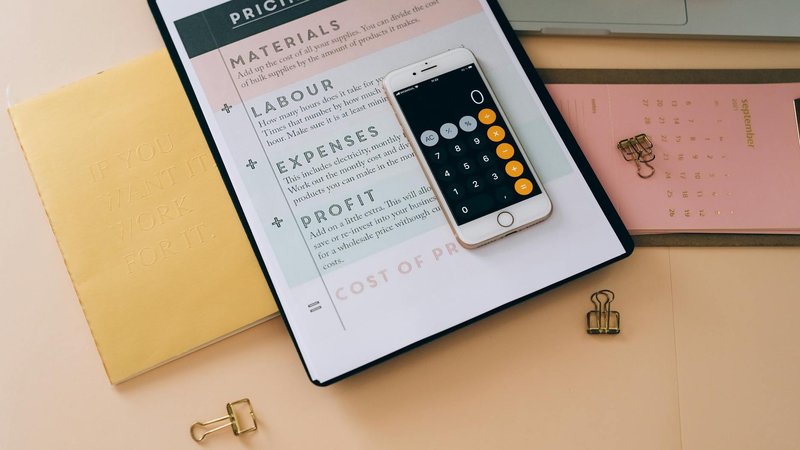
The first bracelet I ever priced at $45 sold in 30 minutes. I was thrilled — until I realized I'd sold $45 worth of materials and three hours of my time for a net profit of $12. I had priced based on what I thought was "reasonable," not on what the market would bear.
Pricing jewelry is one of the most emotionally charged parts of selling handmade work. Charge too much and you're afraid no one will buy. Charge too little and you're working for pennies. But fair pricing isn't guesswork — it's a formula that balances material costs, time value, and market positioning.
This isn't about greed or exploitation. It's about sustainability. You're a small business owner with materials to replace, tools to maintain, skills to grow, and bills to pay. Pricing correctly means you can keep making jewelry — and eventually make a living from it. Here's how to do it right.
The Four Factors of Pricing
Jewelry pricing depends on four interrelated factors. Master these and you'll never again wonder "is this price too high?"
1. Material Costs
Everything that goes into your piece. Be precise about this. Don't round up or approximate.
- Metals: Gold-fill, sterling silver, brass, copper. Calculate by weight (grams or ounces) and current market price.
- Gemstones: Natural, lab-created, synthetic. Wholesale prices are more stable than retail.
- Findings: Clasps, jump rings, ear wires, chain, wire, tubing.
- Chain: Usually sold by foot or meter, but you need to factor in waste from cutting.
- Wire: Sold by foot, but often has unusable ends or requires multiple pieces.
- Beads: Cost per bead or per strand (accounting for waste).
- Finishing materials: Polish, flux, solder, patina chemicals, solvents.
- Packaging: Boxes, pouches, cards, tape, ribbon.
- Shipping materials: Boxes, mailers, cushioning, insurance (if applicable).
Key insight: don't include tools in your per-piece pricing. Tools are fixed costs that spread across your total output. A $200 mandrel used to make 50 bracelets costs $4 per bracelet ($200 ÷ 50). A saw blade used to cut 50 blanks costs $0.10 per blank ($5 ÷ 50). Calculate tool amortization separately from materials.
2. Labor Costs
Your time is valuable. Assign yourself an hourly wage, even when you're first starting. This isn't greedy — it's what allows you to grow from hobbyist to professional.
The hourly wage varies by location, experience, and market:
- Beginner (0-2 years experience): $15-25/hour
- Intermediate (2-5 years): $25-40/hour
- Advanced (5+ years): $40-65/hour
How long did this piece actually take to make? Be honest. Include all the time, not just "fun" creative time:
- Design time: Sketching, planning, researching patterns
- Materials preparation: Cutting, filing, shaping, sanding
- Assembly time: Soldering, riveting, setting stones
- Finishing time: Polishing, patina, final cleaning
- Photographing time: Lighting, shooting, editing
- Listing time: Writing descriptions, setting up listings
- Packaging time: Wrapping, boxing, addressing
Example: A necklace takes 45 minutes to make. At $20/hour, labor cost = $15 ($20 × 0.75 hours).
3. Overhead Costs
Business expenses that aren't direct to any single piece. These are real costs that small businesses often forget to factor in:
- Studio rent or space costs: Whether it's a dedicated studio or corner of your home, assign a percentage of rent, utilities, internet.
- Equipment maintenance: Tool replacement, repairs, calibration.
- Insurance: Business liability insurance, studio insurance.
- Taxes: Sales tax, income tax (consult your local tax authority for rates).
- Website hosting fees: Domain, hosting, e-commerce platform fees.
- Marketing costs: Social media ads, craft show fees, business cards.
- Software subscriptions: Photo editing, accounting, design software.
- Bank fees: Transaction fees, payment processor fees.
Calculate overhead as a percentage of your total annual sales. For most jewelry makers, overhead is 15-25% of total revenue.
4. Profit Margin
The money you actually keep. After covering materials, labor, and overhead, this is your take-home pay. Minimum profit margins by sales channel:
- Craft shows/art fairs: 40-60% (higher because you handle everything yourself)
- Etsy/online marketplaces: 35-55% (platform fees, payment processing, marketing costs)
- Consignment galleries: 30-45% (lower because they take a commission and handle some marketing)
- Wholesale: 50-70% (higher margin because you sell in volume)
- DIRECT sales (your website): 60-75% (highest margin because no middlemen)
The margin is where you account for unsold inventory, market fluctuations, your business growth fund, and your time as the business owner (this isn't just labor — it's ownership risk).
Standard Formulas
Formula 1: Materials + Labor + Overhead + Profit
For beginners, this is the most transparent and educational formula.
Example: Sterling silver pendant with a freshwater pearl
- Materials: $8 (silver sheet) + $2 (pearl) + $3 (chain/finding) + $2 (packaging) = $15
- Labor: 1.25 hours × $20/hour = $25
- Overhead: $40/month ÷ 20 pieces/month = $2 per piece
- Total cost: $15 + $25 + $2 = $42
- Target margin: 45%
- Final price: $42 × 1.45 = $60.90 → Round to $61
Formula 2: Hourly Wage × Hours + Materials × Multiplier
When you're more experienced and want consistency in markup.
Hourly wage × hours covers your labor and profit expectation. Materials × multiplier accounts for everything else. A typical multiplier is 3-4x (100-300% markup on materials).
Example: Using the same pendant:
- Hourly wage: $20 × 1.25 hours = $25 (includes expected profit)
- Materials: $15 × 3.5x multiplier = $52.50
- Total: $25 + $52.50 = $77.50 → Round to $78
Formula 3: Cost Multiplier
The simplest formula, best for when you don't track time meticulously. Multiply your total cost by 2-4x.
- Total cost: $42
- Multiplier: 3.5x
- Final price: $42 × 3.5 = $147 → Round to $145
This is less precise but quick and effective. The key is knowing your actual costs — you can't what you don't measure.
Pricing by Complexity Level
Beginner Level (15-30 minutes per piece)
Simple designs, basic techniques, minimal materials.
Example: Copper bracelet with single strand of beads, adjustable closure.
- Materials: $3
- Labor: 0.5 hours × $15/hour = $7.50
- Overhead: $1
- Total cost: $11.50
- Target margin (craft show): 50%
- Price: $17.25 → Round to $18-$20
Intermediate Level (1-3 hours per piece)
Complex designs, multiple techniques, higher materials costs.
Example: Sterling silver pendant with bezel-set turquoise, fabricated bail, and chain.
- Materials: $12
- Labor: 2.5 hours × $25/hour = $62.50
- Overhead: $3
- Total cost: $77.50
- Target margin (Etsy): 40%
- Price: $108.50 → Round to $110
Advanced Level (3+ hours per piece)
Intricate designs, high skill level, premium materials.
Example: Gold-fill art necklace with custom-fabricated components, stone settings, and mixed-metal accents.
- Materials: $45
- Labor: 5 hours × $40/hour = $200
- Overhead: $7
- Total cost: $252
- Price: $403.20 → Round to $400
Target margin (website): 60%
Market Positioning and Psychology
Where Do You Fit?
Jewelry typically falls into one of these market tiers:
- Budget: Under $50. Price elasticity is high — small changes dramatically affect sales. Volume-driven.
- Designer: $50-$200. Where most serious jewelry makers live. Brand recognition matters. Quality is expected.
- Designer-plus: $200-$600. Established brands with unique voice. Story and craftsmanship justify the premium.
- High-end/Luxury: $600+. Artistic reputation, investment quality, brand legacy.
Stay within your tier. A piece that should be $100 shouldn't be $25 — undervaluing hurts your brand. It also shouldn't be $300 — overvaluing when your skills don't yet command that price.
Anchoring and Perception
Price communicates quality. Most jewelry buyers assume:
- Under $25: Probably mass-produced or very simple handmade. Acceptable as gifts or for personal use.
- $25-$75: Likely handmade, but from newer or part-time makers. Good value, acceptable quality.
- $75-$200: Professional jewelry maker, quality materials and craftsmanship. Worthy of special occasions or splurges.
- $200-$500: Established artist, exceptional skill, unique designs. Investment piece.
- $500+ Collector-level work, limited edition, museum quality.
People buy based on their perception of value, not just intrinsic worth. A $200 necklace priced at $60 signals either "I don't know what this is worth" or "It's a beginner's work" — neither is what you want to communicate.
Decimals and Rounding
Most buyers read prices quickly. Make them easy to process.
- Round up to the nearest $5 or $10, not $1. $47 looks like $40-something, $50 looks like "premium."
- Avoid .99 endings — they look cheap for handcrafted goods. A $79 necklace looks better than a $79.99 necklace.
- For very high-end pieces, whole numbers work best: $400, $500, $600 — the cents don't matter at that price point.
Testing Your Price
Ask, Don't Tell
When you're unsure, ask people what they'd pay. But ask specific, revealing questions:
- "What would you expect to pay for something like this?" (Rather than "What do you think of this price?")
- "If this were from a jewelry store downtown, what would you guess its price?"
- "What would make it worth paying more for this?"
- "Would you buy it as a gift for someone special?" (They'll pay more for gifts)
Test with 10-15 people in your target demographic. If most guesses fall within $10 of your target price, you're probably close. If most guesses are half your target, you need to either justify the difference (materials, craftsmanship) or adjust your price.
Make Two Versions
When possible, make similar pieces at different price points and see which sells. Example:
- Bracelet A: Copper with one design element — price $45
- Bracelet B: Same design with gemstone accents — price $75
Track sales over a month. If Bracelet B sells almost as well as Bracelet A, you're underpricing the upgrade. If Bracelet A sells much better than Bracelet B, you're pricing the gemstone version too high or the copper version too low.
Pricing Strategies for Different Channels
Craft Shows and Art Fairs
Higher price expectations, ability to demonstrate value.
- Price 20-30% higher than online. People expect higher prices in person.
- Have multiple price points: $25, $50, $75, $150. Lower prices encourage browsing; higher prices make the mid-range seem reasonable.
- Display clearly marked price tags. Include your booth card with "Handcrafted by [Your Name]" to justify the price.
- Offer payment flexibility: cash, cards (Square reader), PayPal. More payment methods = more sales.
Etsy and Online Marketplaces
Commodity market effect — identical items side by side means buyers compare prices.
- Include "Handmade" and "Local" in titles to distinguish from mass-produced.
- Use professional photos to justify your price. blurry photos = cheap price expectation.
- Offer bundles: "Buy 2 get 10% off" encourages higher average order value.
- Consider free shipping over $75 — the psychology of free can overcome resistance to price.
Consignment and Galleries
You give up some margin but gain exposure and credibility.
- Accept that consignment typically means 40-60% commission. Price accordingly.
- Work with established venues that match your brand. A high-end gallery can justify higher prices than a craft consignment shop.
- Visit the venue first. Look at the other artists' work and price points. You need to fit their aesthetic.
Your Own Website or Social Media Sales
Highest margin, hardest to generate traffic.
- Include your story, process, materials — this justifies premium pricing.
- Offer first-time customer discounts to lower barrier to entry.
- Use email lists to announce new collections and get immediate feedback on pricing.
- Consider offering customization options — customers pay more for personalization.
Common Pricing Mistakes
Mistake 1: Underpricing to "Get Customers"
Low prices attract price shoppers, not loyal customers. If you price at $20 when it should be $60, you'll attract people who only buy at $20, not people who value quality craftsmanship.
Example: A silversmith friend used to price her intricate silver rings at $35. She got lots of sales but no repeat customers. When she raised prices to $120, sales dropped initially but quickly recovered. The people who bought at $35 weren't her real customers — the ones willing to pay $120 were.
Mistake 2: Pricing What "You Would Pay" Rather Than What Your Market Will Pay
As the creator, you see every flaw and every hour of work. Customers see beauty and utility. Your perception of value doesn't match theirs.
Mistake 3: Not Tracking What Actually Sells
Keep a sales log. Note price, time sold, customer comments. You'll see patterns:
- Price points where conversion spikes
- Items that command premium prices
- Times when people resist certain price points
This real-world data is more valuable than theoretical formulas.
Mistake 4: Copying Other Jewelers' Prices
Comparing prices is natural, but it doesn't account for differences in overhead, location, materials quality, skill level, or brand perception. Your competitor might be working for $5/hour — you shouldn't too.
Mistake 5: Constantly Changing Prices
Price instability confuses customers and suggests uncertainty in your brand. Choose your price points carefully and stick with them for at least a quarter. Raise prices annually if needed, but don't change them week to week.
Dynamic Pricing and Bundles
Dynamic Pricing
Offer different prices for different conditions:
- Collection pricing: $120 for individual pieces, $100 for two pieces, $85 for three
- Time-sensitive pricing: $80 for holiday season (Dec), $60 regular season
- Customer tier pricing: $70 for first-time buyers, $80 for returning customers
- Pre-order pricing: $60 for pre-order, $80 at retail
This increases average order value and cash flow without devaluing your regular prices.
Product Line Laddering
Create three price tiers in your collection:
- Entry: $30-50 — Simple designs, accessible price points
- Mid-range: $80-150 — Your signature pieces, moderate complexity
- Premium: $200+ — Showstoppers, limited editions, exceptional craftsmanship
This serves different customer segments and encourages upselling. Someone who buys an entry-level piece may return for a mid-range purchase.
When to Raise Prices
Annual Review
Set a specific date (your business anniversary, December 1st, whenever) to review your pricing. Look at:
- Material cost changes (silver went up 15% this year)
- Your skill improvement (you can now make complex pieces faster)
- Competitor pricing changes
- Customer feedback on perceived value
Triggered Increases
Raise prices when:
- Materials increase by 10% or more
- You add new skills or certifications
- You win an award or significant press coverage
- You achieve 100+ positive reviews on a platform
- You're consistently selling out of popular items
How to Announce Price Increases
Be transparent, not apologetic.
- Email your existing customers first with a "heads up" — they're your most valuable customers.
- Announce the increase on your website with a brief explanation: "Due to increased material costs, my pricing will increase by 15% effective [date]." li>Frame it as a reflection of quality, not greed: "Better materials mean better longevity for your jewelry."
Final Thoughts: Pricing Is Evolutionary
Your first price calculation will be wrong. That's okay. The important thing is to track, adjust, and learn. Every sale teaches you something about what your market values.
Start with a calculated price, then observe. Does it sell quickly? Consider raising it. Does it sit for months? Consider adjusting down (or improving marketing).
Remember: you're not selling materials. You're selling beauty, time, expertise, and the story of your hands making something beautiful. That has value. Pricing is how the world recognizes that value.
Don't undervalue your work. Don't overvalue beyond your skill level. Find the sweet spot where your passion, your craftsmanship, and your market meet. That's the price that honors your art and feeds your business.

Comments