Gold, Silver, Platinum: Your Jewelry Metal
May 14, 2026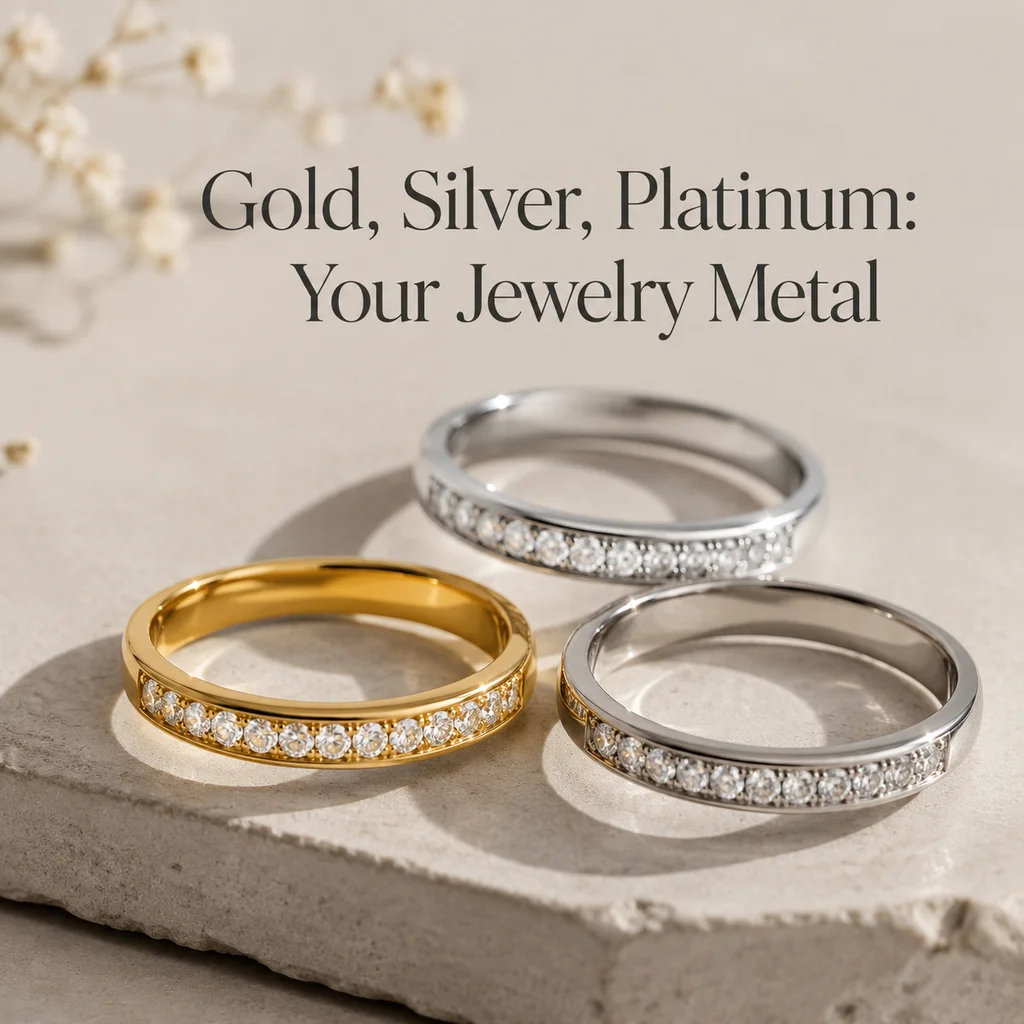
Gold, Silver, Platinum — What You're Actually Paying for When You Buy Jewelry
Walk into any jewelry store and you're hit with a wall of terminology: 14K, 18K, 925 sterling, platinum 950, vermeil, plated, filled. It's confusing by design. The more confused you are, the easier it is to upsell you on something you don't need.
This article breaks down what each metal actually is, how it performs over years of daily wear, and where the value lies. No sales pressure, just material facts.
Gold: Karats, Colors, and What They Mean for Durability
24-karat gold is pure gold. It's also terrible for most jewelry. Pure gold is soft — you can dent it with your fingernail. That's why almost all gold jewelry is an alloy: gold mixed with other metals to increase hardness and change color.
Karat Breakdown
- 24K (99.9% gold): Rich yellow color, very soft. Common in investment bars and some cultural jewelry (Indian and Chinese wedding pieces), but impractical for rings or bracelets that take daily impact.
- 22K (91.6% gold): Still quite yellow, slightly harder. Popular in South Asian jewelry. Better than 24K for wearability but still scratches easily.
- 18K (75% gold): The sweet spot for luxury jewelry. Hard enough for daily wear, high gold content for value retention, rich but slightly more subdued yellow than 22K. Most high-end engagement rings use 18K.
- 14K (58.3% gold): The workhorse of the American market. Significantly harder than 18K, good for rings worn every day, still looks like gold. If you want a ring that lasts decades without looking beat up, 14K is a practical choice.
- 10K (41.7% gold): The minimum that can legally be sold as "gold" in the US. Very durable, pale yellow. Good for chain necklaces and pieces that take abuse. Lower resale value due to lower gold content.
Where Gold Color Comes From
The "other metals" in the alloy determine color:
- Yellow gold: Mixed with copper and silver. The higher the karat, the warmer and more yellow the color.
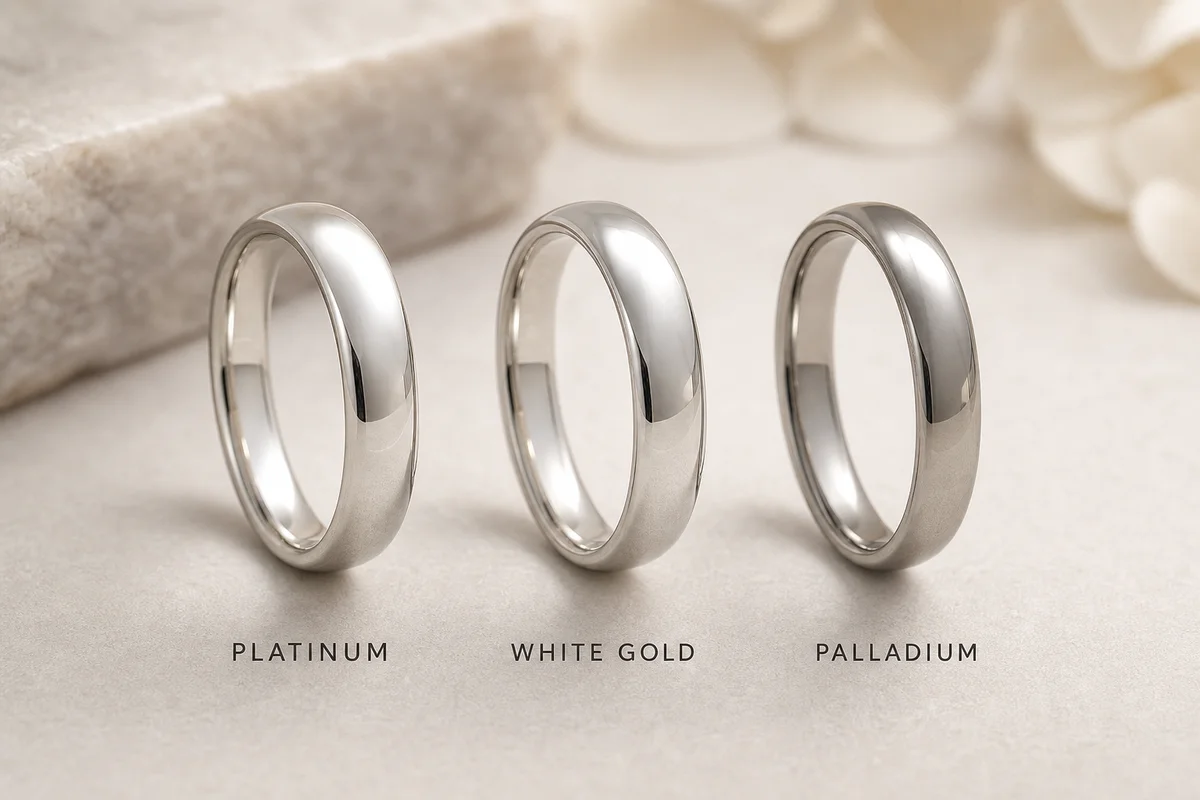
- White gold: Mixed with palladium, nickel, or manganese. Almost always rhodium-plated to give a bright white finish. That plating wears off over time, revealing a slightly yellowish undertone. Re-plating costs $30-$60 and needs doing every 1-3 years depending on wear.
- Rose gold: Mixed with a higher proportion of copper. The more copper, the pinker the result. 14K rose gold has a noticeably copper tone; 18K rose gold is more subtle.
- Green gold: Mixed with silver, no copper. Rarely seen outside custom pieces. It's a pale greenish-yellow, not vivid green.
The color difference isn't just cosmetic — it affects durability. Rose gold (more copper) is slightly harder than yellow gold at the same karat. White gold alloys with nickel are very hard but can cause skin reactions in people with nickel sensitivity.
Silver: Sterling Isn't the Only Option
Sterling Silver (925)
Sterling is 92.5% silver and 7.5% other metals, usually copper. It's the standard for quality silver jewelry worldwide. The "925" stamp you see on pieces is your guarantee.
Sterling silver is affordable, workable, and takes detail well — which is why you see incredibly intricate silver designs that would cost a fortune in gold. The trade-off is tarnish. Silver reacts with sulfur in the air and turns gray, then black. It's not damage; it's a surface chemical reaction that polishes off easily.
For daily wear, sterling holds up reasonably well. Rings will thin over decades, and thin chains can kink. But for the price, it's hard to beat.
Fine Silver (999)
99.9% pure silver. Softer than sterling, more resistant to tarnish, but too soft for most jewelry. You'll find it in some artisan pieces and investment bullion, rarely in commercial jewelry.
Argentium Silver
A modern alloy that replaces some of the copper in sterling with germanium. The result is significantly more tarnish-resistant while maintaining the same silver content (93.5% or 96%). It's also harder than standard sterling. Not widely known yet, but worth seeking out if tarnish bothers you.
The Silver Warning Labels
Be clear on what you're buying:
- "Silver-plated": A thin layer of silver over brass or copper. The plating wears through in months to a year of regular wear. The piece underneath has essentially no silver value.
- "Silver-filled": Thicker plating than standard silver plate (1/10 or 1/20 silver by weight). Lasts longer, but eventually the base metal shows through. Better than plated, not comparable to solid sterling.
- "Nickel silver" or "German silver": Contains zero silver. It's an alloy of copper, nickel, and zinc that looks like silver. Cheap and durable but a nightmare for anyone with nickel allergy.
Platinum: The Practical Luxury Metal
Platinum gets marketed as the ultimate luxury metal, and the price tag backs that up. But the reasons behind platinum's cost — and whether it's worth it for your specific piece — deserve a closer look.
Why Platinum Costs More
- Rarity: About 30 times rarer than gold in the earth's crust.
- Density: A platinum ring weighs about 60% more than the same ring in gold. You're buying more metal.
- Working difficulty: Platinum melts at 1,768°C (gold melts at 1,064°C). Casting, soldering, and finishing platinum requires specialized equipment and more labor.
- Purity: Most platinum jewelry is 90-95% pure (marked 900 or 950), compared to 75% for 18K gold or 58% for 14K gold.
How Platinum Performs
Here's the thing about platinum that marketing materials rarely explain: it scratches differently than gold.
When gold scratches, material is lost. A 14K gold ring worn daily for 20 years will be measurably thinner. When platinum scratches, the metal displaces rather than sheds. The surface develops a matte patina (many people like this look; it's called "the platinum patina"), but the metal volume remains essentially intact.
This makes platinum ideal for:
- Engagement rings with prong-set stones (prongs don't wear thin and lose the stone)
- Wedding bands meant to last a lifetime
- Family heirloom pieces you want to pass down
Platinum is not ideal for:
- People who want a high-polish look forever (you'll need to re-polish to maintain the shine, and polishing platinum is labor-intensive)
- Very detailed filigree work (the density makes fine detail harder to achieve)
- Lightweight or delicate pieces (platinum's weight can be a drawback for earrings and pendants)
Metal Allergies and Skin Sensitivity
Nickel is the most common jewelry allergen, affecting an estimated 10-20% of the population. It causes contact dermatitis: redness, itching, sometimes blistering.
Nickel shows up in:
- White gold alloys (especially older or cheaper pieces)
- "German silver" and costume jewelry base metals
- Some sterling silver alloys (rare, but it happens)
If you've ever had a ring turn your finger green or itchy, nickel is the likely culprit. Green skin from copper (common with cheap rings) looks alarming but isn't an allergic reaction — it's just oxidation. It washes off.
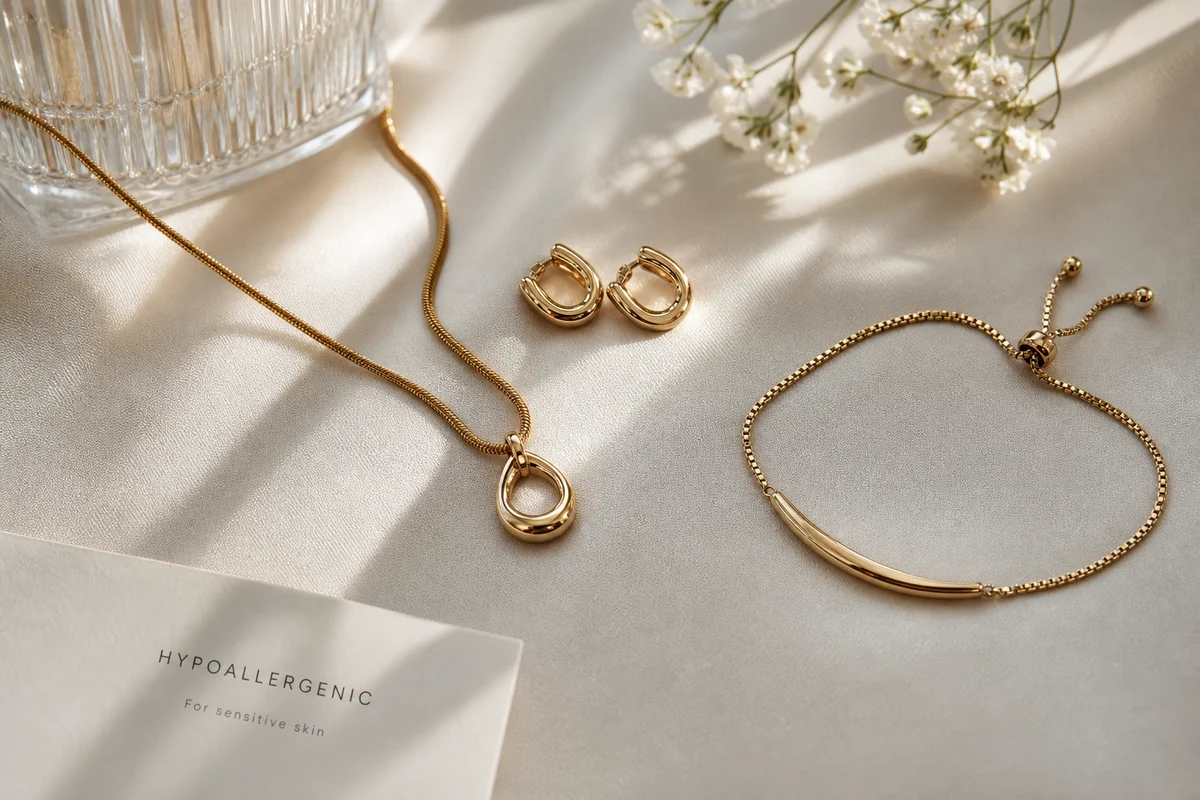
Safest metals for sensitive skin:
- Platinum — essentially hypoallergenic
- 18K+ yellow gold — low nickel content
- Titanium — no nickel, extremely biocompatible (used in medical implants)
- Niobium — used in piercing jewelry, very inert
- Argentium silver — copper and germanium only, no nickel
Comparing Long-Term Value
Gold holds value well because it's universally recognized and easily melted. A 14K gold chain from 1990 still has significant scrap value today. Silver holds value too but more modestly — the lower per-ounce price means storage and transaction costs eat a bigger percentage.
Platinum's value is more volatile. It traded above gold per ounce for decades, then dropped below gold in 2014 and has stayed there. This means a platinum ring you bought in 2010 may have less metal value now than a comparable gold ring, despite costing more initially.
None of this should be your primary reason for choosing a metal — you're buying jewelry to wear, not to trade. But if you're choosing between metals and long-term value matters to you, 14K or 18K gold offers the most consistent value retention.
Choosing the Right Metal for Your Situation
Some practical recommendations based on how the piece will be used:
- Engagement ring, daily wear, lifetime piece: Platinum or 18K gold. Platinum for durability, 18K yellow or rose gold if you prefer warmth and lower weight.
- Wedding band: Same as engagement ring for consistency. If budget is tight, 14K is perfectly fine — it's harder than 18K and resists scratching better.
- Everyday earrings: 14K gold or sterling silver. Lightweight matters here, so platinum's density is a disadvantage.
- Statement necklace for occasional wear: Sterling silver. You'll pay a fraction of gold prices, and occasional wear means tarnish buildup is minimal.
- Bracelet that takes daily abuse: 14K gold or platinum. Silver bracelets scratch and dent noticeably within a year of daily wear.
- Gift when you don't know metal sensitivity: 18K yellow gold or platinum. Play it safe on allergies.
A Final Note on Pricing
Jewelry pricing is not just metal weight times spot price. You're paying for design, craftsmanship, brand markup, and retail overhead. A 14K gold ring from a luxury brand may cost five times the gold value, while the same ring from a local goldsmith might be closer to two times gold value.
Neither approach is wrong — you're choosing between artistry and economy. But understand which you're paying for, and don't assume a higher price means better metal. The metal is what it is regardless of the label on the box.
Related Guides
- How to Clean and Care for Your Natural Stone Bracelet
- Crystal Shapes Explained: Tumbled, Raw, Points, Spheres
- 15 Creative Ways to Display and Store Your Crystal Collection
- Essential Jewelry Storage Tips
- Crystal Pricing: 7 Tricks Shops Use to Make You Overpay
- Colored Gemstones Buying Guide for Beginners
Frequently Asked Questions
What is the best jewelry metal for sensitive skin?
If you have sensitive skin, platinum is the premier choice because it is naturally hypoallergenic. For gold, 18k or 24k yellow gold is usually safe, but avoid lower karats if they contain nickel. At SagStone, we prioritize skin-friendly metals so you can comfortably wear our handcrafted crystal pieces every day without any irritation.
Does sterling silver ruin easily with daily wear?
Sterling silver is highly durable but can scratch or tarnish over time with daily wear. Tarnishing is a natural reaction to air and moisture, not a sign of poor quality. You can easily restore its brilliant shine with a gentle polishing cloth. For a natural crystal pendant you wear daily, sterling silver offers a beautiful, artisan look.
Which jewelry metal is best for holding natural crystals?
It depends on the crystal's hardness and your lifestyle. Prong settings in platinum or solid gold provide maximum security for softer stones, while bezel settings in sterling silver offer excellent protection for everyday wear. Our artisans carefully select the right metal to securely complement the unique energy of each natural stone.
Is platinum too heavy for everyday jewelry?
Platinum has a beautiful, substantial weight that feels luxurious, but it is not uncomfortably heavy for everyday wear. Because it is incredibly durable, it holds natural gemstones securely, making it an excellent choice for a forever piece. Many people actually prefer the grounded, premium feel of a handcrafted platinum crystal ring.
Will 14k gold fade or change color over time?
Solid 14k
Comments