<h2>Jewelry Insurance Explained: What You Actually Need to Know</h2>
Why your homeowner's insurance probably isn't enough
Most homeowner's and renter's insurance policies include some coverage for jewelry, but the default limits are surprisingly low. A typical policy caps jewelry coverage at $1,000 to $2,500 total — not per piece, but for all your jewelry combined. If you own a watch worth $3,000, a diamond pendant worth $2,000, and a few gold rings, you're already over that limit before you factor in your engagement ring.
Even within that limit, the payout structure matters. Standard homeowner's policies typically pay "actual cash value," which means depreciation is factored in. A ring you bought for $5,000 ten years ago might be appraised at an actual cash value of $2,500 today, depending on how the insurer calculates it. You'd get $2,500 (minus your deductible), not enough to replace the ring at current market prices.
There's also the issue of covered perils. Homeowner's insurance usually covers theft and fire, but not "mysterious disappearance" — which is the insurance term for losing something without knowing exactly how or when it happened. That diamond that slipped off your finger while you were swimming? If you can't prove it was stolen, your homeowner's policy may not cover it at all.
Floaters and riders: what they actually do
A scheduled floater (also called a rider or endorsement) is a separate policy add-on that covers specific pieces of jewelry at an agreed-upon value. This is where most jewelry insurance conversations should start.
With a floater, you provide a detailed appraisal for each piece, and the insurer agrees to pay that amount if the item is lost, stolen, or damaged. The coverage typically includes mysterious disappearance, which is a big upgrade from standard homeowner's terms. Most floaters also cover the full appraised value without depreciation — you get enough to actually replace the item, not a fraction of its original cost.
The cost is usually 1% to 2% of the appraised value per year. So a $10,000 ring would cost roughly $100 to $200 annually to insure. That's not nothing, but it's manageable for most people who own significant jewelry. The exact rate depends on where you live (urban areas with higher theft rates cost more), your claims history, and the specific insurer.
One thing I learned that surprised me: you need to update the appraisal periodically. Gold prices have fluctuated wildly — from around $400 per ounce in the early 2000s to over $2,300 per ounce in 2024. Diamond prices have their own market dynamics. If your appraisal is ten years old, the replacement value listed on it might be significantly lower than what it would actually cost to buy an equivalent piece today. Most insurers require appraisals updated every two to three years for scheduled items.
What's worth insuring
Not everything in your jewelry box needs its own policy. The practical threshold, in my experience, is around $1,000 to $1,500 per piece. Below that, the annual premium relative to the value doesn't make much financial sense — you'd pay more in premiums over a few years than the piece is worth. Self-insuring (setting aside money in savings) is more rational for inexpensive items.
Above that threshold, the math shifts. Engagement rings and wedding bands are the most commonly insured pieces, and for good reason — they're often the most valuable items people own, they're worn daily (increasing the risk of loss or damage), and they carry enormous sentimental value that makes replacement psychologically important, not just financially.
High-end watches deserve special mention. A Rolex Submariner or Patek Philippe Calatrava can easily exceed $10,000, and the secondary market for luxury watches is active enough that replacement is genuinely expensive. These are prime candidates for scheduled coverage. Vintage and antique pieces also benefit from insurance, since their value tends to appreciate and replacement at equivalent quality would be difficult or impossible.
Fashion jewelry and costume pieces — even expensive ones from brands like David Yurman or Tiffany — might not need separate insurance if they're below your homeowner's coverage limit and you don't wear them daily. The risk profile is simply different for a $500 necklace you wear occasionally versus a $5,000 engagement ring that never leaves your finger.
The appraisal question
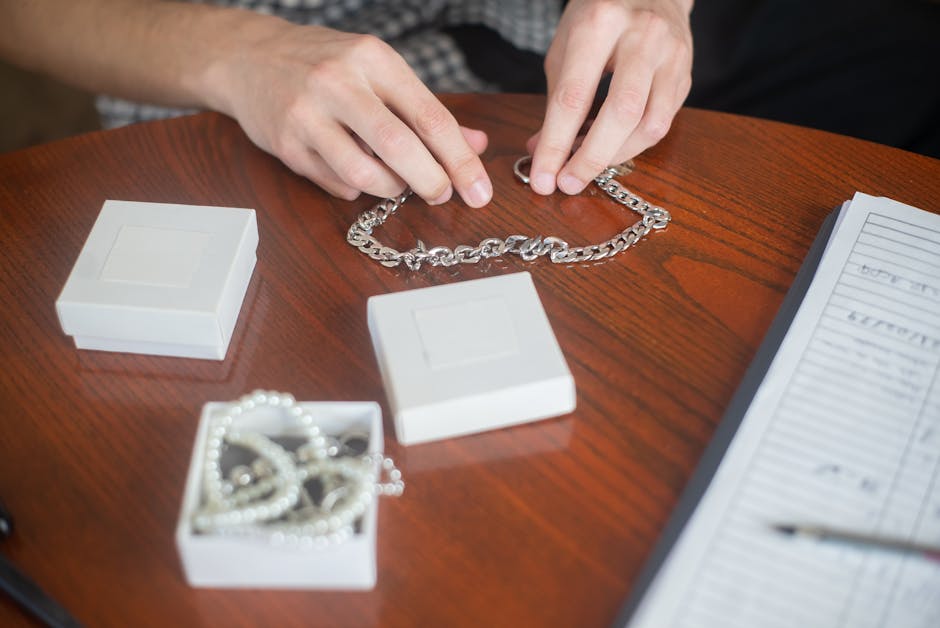
The quality of your appraisal directly affects your insurance experience. A vague "diamond ring, approximately $4,000" description from a local jeweler who glanced at it for thirty seconds is not going to serve you well in a claim. You want a detailed document that includes:
The metal type, weight in grams, and purity (14K, 18K, platinum, etc.). For stones: the carat weight, cut grade, color grade, clarity grade, and any certifications (GIA, AGS). The total replacement value based on current retail pricing, not what you originally paid. A photograph of the piece. The appraiser's credentials and contact information.
Insurance appraisals should reflect replacement cost — what it would cost to buy a substantially equivalent new piece from a retail jeweler. This is different from a fair market value appraisal (what the piece would sell for on the secondary market) or an estate appraisal (which may factor in antique or collectible premiums). Make sure your appraiser understands which type you need, because using the wrong one can leave you underinsured or overpaying premiums.
Good appraisers typically charge $50 to $150 per piece, depending on complexity. That's a one-time cost (plus periodic updates) that pays for itself if you ever need to file a claim.
Common exclusions and gotchas
Insurance policies are contracts, and like all contracts, the devil is in the details. Some exclusions show up across multiple insurers and are worth knowing about before you buy.
Wear and tear is almost never covered. If the prongs on your setting wear down over years of daily wear and your diamond falls out as a result, that's normal wear, not a covered loss. Similarly, gradual deterioration of pearls or damage from regular exposure to chemicals (chlorine, perfume, household cleaners) falls under maintenance, not insurance.
Intentional damage is obviously excluded, but the line between intentional and accidental can be blurry. If you decide to resize a ring yourself and crack the stone, most insurers would consider that self-inflicted damage. Always use a professional jeweler for repairs and modifications.
Some policies exclude coverage when jewelry is left unattended in a vehicle, even if the vehicle is locked. Others have different terms for "theft" versus "burglary" versus "robbery." Understanding these distinctions matters when you file a claim, because using the wrong term can trigger a denial.
Verify before you travel. Some domestic policies don't cover international loss, or have lower limits outside your home country. If you're taking expensive jewelry on a trip, check your policy terms and consider a temporary rider if needed.
Choosing an insurer: Chubb, Jewelers Mutual, and others
The jewelry insurance market is relatively small compared to auto or health insurance, but there are meaningful differences between providers. Here's what I've found comparing the major players.
Chubb is widely regarded as the premium option. They offer "agreed value" policies, meaning they pay the full appraised amount with no depreciation and no deductible for total loss. Their claims process is generally considered smoother and faster than standard insurers. The tradeoff is cost — Chubb's rates are typically 1.5% to 2.5% of appraised value annually, and they often have minimum coverage requirements that may not suit people with modest collections.
Jewelers Mutual is a mutual company (policyholders are also owners) that specializes exclusively in jewelry insurance. Their rates are competitive, often 1% to 1.5% of appraised value. They offer replacement through their network of preferred jewelers, which can be either a benefit (convenient, streamlined) or a limitation (you may not get to choose your jeweler). Their deductible options are flexible, from $0 to $500 depending on the policy.
Some people simply add scheduled riders to their existing homeowner's policy through companies like State Farm, Allstate, or USAA. This can be convenient and sometimes cheaper than standalone jewelry insurance, especially if you already have a relationship with the insurer. But the coverage terms may be less favorable — some homeowner's riders pay "actual cash value" rather than replacement cost, and the claims process goes through your homeowner's insurance infrastructure, which may not have jewelry-specific expertise.
The average cost of jewelry insurance in the United States is approximately 1% to 2% of the total insured value per year. For a $10,000 collection, that's $100 to $200 annually. For a $50,000 collection, $500 to $1,000. These are broad averages — your actual rate will depend on location, claims history, and the specific pieces being insured.
My take after looking at all of this
Insurance is fundamentally about risk tolerance and peace of mind. If losing a piece of jewelry would create genuine financial hardship or significant emotional distress, insure it. The cost is modest relative to the value protected, and the coverage gap between a standard homeowner's policy and a proper floater is large enough that most people with valuable pieces are underinsured without even realizing it.
Get a proper appraisal from a qualified appraiser, not a ballpark estimate. Read your policy documents — yes, actually read them — and understand what's covered, what's excluded, and what your deductible is. Update your appraisals every few years, especially in a volatile gold market. And keep documentation (photos, receipts, appraisals) stored somewhere accessible — a safe deposit box or cloud storage, not just a drawer in the same house as the jewelry.
The insurance industry isn't set up to be your friend, but it is set up to pay claims when the conditions are met. Understanding those conditions before you need to file a claim is the single most useful thing you can do as a policyholder.

Comments