Jade Stone Meaning, History & Complete Guide
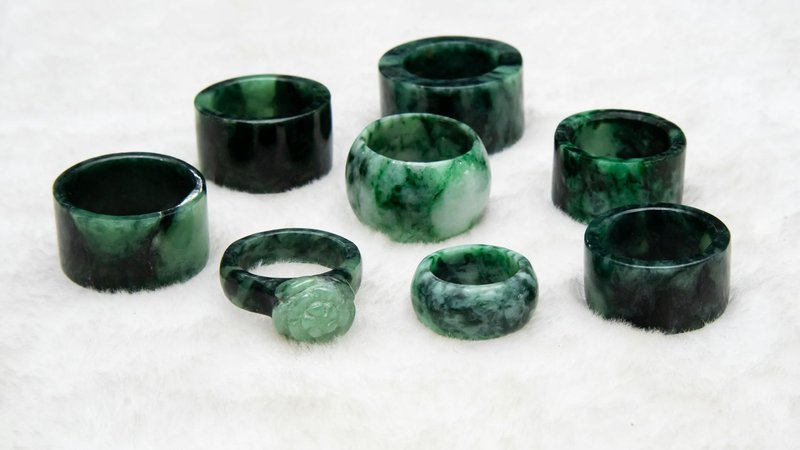
A couple of years ago, I was wandering through one of those bustling jade markets in Hong Kong — the kind with narrow aisles, glass cases everywhere, and shopkeepers who can size you up from thirty feet away. I found a gorgeous green bangle with this deep, almost translucent color, and the price seemed too good to pass up. The seller told me it was natural jadeite, "A grade," straight from Myanmar. I bought it, wore it home, and felt pretty proud of my bargain hunting. Then I started reading about jade grading and realized what I probably bought was B jade — treated with acid and injected with polymer resin to look like the real thing. That bangle is now sitting in a drawer as a reminder to always do your homework before dropping serious money on jade. Let me save you from making the same mistake.
Jade Is Actually Two Different Minerals
Here's something that confuses a lot of people: "jade" isn't a single mineral. It's a catch-all term for two completely different stones that happen to look similar enough that people have been lumping them together for centuries.
Jadeite (硬玉) is the rarer and more valuable of the two. It's a sodium aluminum silicate with a Mohs hardness of 6.5 to 7, and it comes in a stunning range of colors — emerald green, lavender, white, yellow, red, orange, brown, and even black. The most prized variety is "imperial jade," a vivid, semi-transparent green that practically glows from within. Almost all of the world's gem-quality jadeite comes from Myanmar (Burma), and the best stones can sell for more per carat than diamonds at auction.
Nephrite (软玉) is the more common variety. It's a calcium magnesium silicate with a slightly lower hardness range of 6 to 6.5, but it's actually tougher than jadeite because of its interlocking fibrous crystal structure. Nephrite is typically found in greener, more muted tones — think sage green, spinach green, or creamy white. Major sources include China's Xinjiang province (home of the famous Hetian jade), British Columbia in Canada, and parts of Russia and New Zealand. Nephrite is what most ancient Chinese artifacts are carved from, and it's still widely used in both jewelry and sculpture.
Both minerals score around 6.5-7 on the Mohs scale, which makes them fairly durable for everyday wear — harder than glass, but softer than quartz. They can be scratched by harder materials, so storing them loose in a jewelry box with diamonds or sapphires isn't ideal.
5,000 Years of Jade Culture
Jade holds a place in Chinese culture that no other gemstone even comes close to. For over five thousand years, it's been associated with virtue, status, and spiritual power. Confucius famously compared the qualities of jade to the qualities of a virtuous person — its smoothness representing benevolence, its translucence representing honesty, its hardness representing wisdom. The phrase "君子比德于玉" (a gentleman compares his virtue to jade) isn't just a nice saying; it shaped how an entire civilization viewed both the stone and itself.
In imperial China, jade was reserved for royalty and the elite. Emperors wore jade pendants as symbols of authority. Jade burial suits — made from hundreds of jade plaques sewn together with gold or silver wire — were believed to preserve the body for the afterlife. The most famous example was found in the tomb of Prince Liu Sheng of the Han Dynasty, dating back over 2,000 years.
Beyond China, jade has cultural significance across East Asia and Mesoamerica. The Maori people of New Zealand carved nephrite (which they call pounamu) into tools, weapons, and ornaments that carry deep spiritual meaning. The Olmec and Maya civilizations of Central America valued jadeite even more than gold, using it for masks, figurines, and royal ornaments.
Jadeite vs. Nephrite — How to Tell Them Apart
If you're shopping for jade, knowing the difference between jadeite and nephrite matters a lot, especially for your wallet. Here's a practical comparison:
Appearance: Jadeite has a wider color range and can achieve a glassy, almost crystalline transparency that nephrite rarely matches. The finest jadeite has a luminous quality that jewelers describe as "watery" or "icy." Nephrite tends to look more creamy or waxy, with a softer, more muted appearance. If a piece has that vibrant lavender or bright apple green color, it's almost certainly jadeite.
Hardness and toughness: Jadeite is slightly harder on the Mohs scale, which means it takes a higher polish and can have sharper carved details. But nephrite is actually tougher — its fibrous structure makes it more resistant to chipping and breaking. This is why ancient tool-makers preferred nephrite for axes and blades.
Price: This is where it gets real. Top-quality jadeite, especially in imperial green, sells for astronomical prices at Hong Kong and Chinese auctions. A single bangle can fetch millions. Nephrite, while still valuable in its own right, is far more affordable. A beautiful Hetian nephrite pendant might cost a few hundred dollars, while a comparable jadeite piece could be tens of thousands.
Origin: If someone tells you a piece is jadeite, ask where it's from. Myanmar produces the vast majority of gem-quality jadeite. If the source is vague or they say "China," be skeptical — while some jadeite is found in other countries, the finest material by far comes from Burmese mines.
The A, B, C Grading System — This Is Crucial
If you're going to remember one thing from this article, make it this section. The jade grading system used in the industry has three main categories, and understanding them will save you from getting ripped off.
A-Jade (Type A)
Natural, untreated jade. No acid treatment, no polymer injection, no dye, no heat treatment to enhance color. What you see is what nature created. This is the only category that's genuinely worth collecting and investing in. A-jade can still be polished and carved, of course — those are mechanical processes, not chemical treatments. The key is that the stone's internal structure and color are completely natural.
B-Jade (Type B)
This is what I probably bought in Hong Kong. B-jade is natural jadeite that's been treated with strong acid (usually hydrochloric or sulfuric acid) to remove impurities and brownish staining from the stone's interior. After the acid bath, the jade becomes porous — like a sponge. It's then injected with polymer resin (usually epoxy) to fill the voids and restore its transparency. The result is a stone that looks clean, bright, and attractive — but it's structurally compromised. Over time (usually a few years), the polymer degrades, the jade becomes cloudy or discolored, and it can even crack. B-jade is essentially damaged goods disguised as quality jade.
C-Jade (Type C)
Natural jadeite that's been dyed to enhance or change its color. Green dye is the most common, but red, lavender, and blue dyes are also used. C-jade looks good initially, but the dye fades over time with exposure to light and heat. If you see a jade piece with unnaturally vivid, almost neon color and the price seems surprisingly low, it's probably been dyed.
B+C Jade
The worst of both worlds — acid-treated, polymer-filled, AND dyed. These stones look impressive in the display case but deteriorate quickly. They have virtually no long-term value.
How to Tell Real Jade from Fake — Practical Tests
So how do you protect yourself when shopping for jade? Here are the methods that actually work, ranked from easiest to most reliable.
1. Look at the Internal Structure
Natural jadeite is a crystalline mineral, and if you examine it under good light (a jeweler's loupe or even a phone camera with macro mode), you should see subtle internal features — what Chinese dealers call "石纹" (stone patterns) or "cotton." These are tiny natural inclusions, veins, and color variations that prove the stone hasn't been melted down and rebuilt with polymers. B-jade, by contrast, often looks too clean and too uniform inside. If a stone is perfectly clear with no visible internal structure at all, that's actually a red flag, not a selling point.
2. The Temperature Test
This one's simple and surprisingly effective. Hold the jade piece in your hand for about thirty seconds. Natural jade is dense and feels distinctly cool to the touch, even after being held. It takes a while to warm up. Plastic, glass, and resin-filled B-jade will feel warm almost immediately because those materials conduct and absorb body heat much faster. It's not definitive on its own, but it's a quick first check.
3. The Sound Test
If you're looking at jade bangles, try tapping two of them together gently (or tapping one against a hard surface). Natural, untreated jade produces a clear, resonant, almost bell-like chime. B-jade — with its acid-weakened structure and polymer filling — sounds dull, flat, and muted. Think of the difference between tapping a crystal glass versus tapping a plastic cup. Again, this takes some practice to recognize, but experienced jade dealers in Hong Kong markets do this constantly without even thinking about it.
4. UV Light Examination
Take a UV flashlight (the small 365nm ones cost about ten dollars online) and shine it on the jade in a dark room. Natural A-jade typically shows no fluorescence — it stays dark. B-jade, on the other hand, often fluoresces a whitish-blue or greenish color because of the polymer resin inside. This is one of the most reliable at-home tests and has saved countless buyers from B-jade scams. If a piece glows under UV light, put it down.
5. The Only Foolproof Method: Professional Certification
Here's the honest truth: all the tests above are helpful, but none of them are 100% conclusive. The only way to know for certain whether jade is natural (A-grade) or treated is to have it tested by a reputable gemological laboratory. The two most recognized certificates for jade are from NGTC (National Gemological Training Centre in China) and GIA (Gemological Institute of America). An NGTC or GIA certificate will tell you exactly what you're dealing with — the mineral type, whether it's been treated, and any other relevant details.
Reputable jade dealers will provide certificates with their higher-end pieces. If a seller can't or won't provide certification for a jade item priced over a few hundred dollars, that's a serious warning sign. Walk away. The jade markets are full of incredibly convincing fakes, and even experienced dealers sometimes need lab equipment to be sure.
Traditional Healing Properties and Symbolism
Beyond its beauty and value, jade carries deep cultural and spiritual significance, especially in Chinese tradition. Whether or not you believe in crystal healing, understanding these traditions gives you a deeper appreciation for why people have treasured jade for millennia.
In Chinese culture, jade is the ultimate protective stone. It's believed to shield the wearer from harm, ward off evil spirits, and bring good fortune. Parents and grandparents often give jade pendants to children as talismans — the concept of "平安扣" (peace charm), a simple round jade disc with a hole in the center, is one of the most common gifts for this purpose. The idea is that wearing jade close to your body creates a spiritual connection that keeps you safe.
Health-wise, jade has been associated with longevity, vitality, and physical well-being for thousands of years. Traditional Chinese medicine holds that jade can cool the body, calm the mind, and promote the flow of qi (life energy). Some practitioners use jade gua sha tools and rollers for facial massage, believing that the stone's cool surface helps reduce inflammation and improves circulation. While the scientific evidence for crystal healing is limited, the facial massage itself has genuine skincare benefits — and using a cool, smooth jade tool certainly feels wonderful.
In feng shui, jade is associated with the heart chakra and the wood element. It's said to attract abundance, foster harmonious relationships, and promote emotional balance. Green jade is especially connected to growth, renewal, and prosperity, which is why jade plants (a different plant entirely, but named for the association) are popular housewarming gifts.
For the Maori people of New Zealand, nephrite (pounamu) is considered a treasure (taonga) with immense spiritual power. Each piece is believed to absorb some of the wearer's mana (spiritual energy) over time, making heirloom pounamu some of the most valued possessions a family can have.
How to Wear and Care for Jade Jewelry
Jade is tough, but it's not indestructible. Proper care will keep your pieces looking beautiful for decades.
Avoid hard impacts. Despite its reputation for toughness, jade can chip or crack if it's hit against a hard surface. Take off jade rings and bangles before doing heavy work, exercising, or moving furniture. I've seen people crack jade bangles by accidentally knocking them against door frames — and once a jade bangle cracks, it's nearly impossible to repair seamlessly.
Keep away from harsh chemicals. Household cleaners, bleach, acetone, and even some perfumes can damage jade's surface over time. Remove your jade jewelry before cleaning, swimming in chlorinated pools, or applying lotions and sprays. This is especially important for B-jade (if you ended up with one) because the chemicals can accelerate polymer degradation.
Clean with plain water. The best way to clean jade is simply to wipe it with a soft, damp cloth. For a deeper clean, you can soak it briefly in lukewarm water with a tiny drop of mild soap, then rinse and dry. Don't use ultrasonic cleaners, steam cleaners, or any abrasive materials.
Occasional oiling. Some jade collectors recommend occasionally applying a thin coat of mineral oil (or even baby oil) to nephrite pieces to maintain their luster, especially if they're starting to look dry or dull. Let the oil sit for a few minutes, then wipe off the excess. This is a traditional practice with Hetian jade and genuinely helps maintain that warm, glowing appearance. Don't do this with jadeite, though — it's less porous and doesn't benefit from oiling.
Store properly. Keep jade pieces separate from harder gemstones (diamonds, rubies, sapphires) that could scratch them. A soft pouch or lined jewelry box compartment works well. Jade doesn't need the airtight storage that silver does — it's chemically stable and won't tarnish.
Buying Jade — My Advice After Learning the Hard Way
Here's what I wish someone had told me before I walked into that Hong Kong market:
Buy from reputable sources. This doesn't mean you have to go to luxury boutiques — there are honest dealers at jade markets too — but you need to know what you're looking at. Ask for certificates. Use a UV light. Do the temperature test. Compare the price to what similar pieces sell for online (high-quality jadeite has well-established market prices).
And most importantly: if a deal seems too good to be true, it almost certainly is. A deep green, translucent jadeite bangle for fifty dollars? It's B-jade, C-jade, or glass. Real imperial jade costs thousands to tens of thousands. Beautiful natural jadeite in lighter colors or with more inclusions can be more affordable, but it's still not cheap.
Nephrite is a great entry point if you love the look of jade but don't want to spend jadeite prices. High-quality Hetian nephrite is genuinely beautiful, culturally significant, and a fraction of the cost. Plus, you don't have to worry about the A/B/C grading system — nephrite is almost never treated the way jadeite is.
Jade is one of the most meaningful gemstones you can own. When you buy the real thing and take care of it, it becomes more than just jewelry — it's a piece of history, a cultural artifact, and something you can pass down to the next generation. Just make sure it's the real thing.
Comments