Jade Stone Meaning: History, Healing Properties, and Cultural Significance
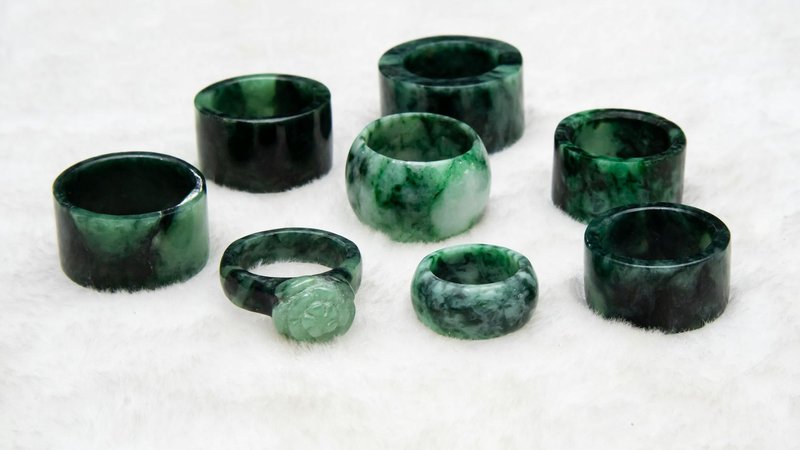
My grandmother pressed a bangle into my palm the summer I turned eighteen. It was a deep, translucent green—almost like frozen pond water with something alive trapped inside it. "This was my wedding dowry," she said in Mandarin, sliding it over my wrist with careful hands. "I've worn it almost every day for fifty years. Now it's yours."
I didn't think much about jade back then. It was just grandma's bracelet—pretty, sure, but mostly just... old. It wasn't until years later, when I started getting serious about crystals and gemstones, that I realized what she'd actually given me. That little green bangle carried thousands of years of human history, cultural weight, and meaning that goes far beyond "pretty jewelry."
If you've ever been curious about jade stone meaning, what makes this gem so special, or why entire civilizations have practically worshipped it—you're in the right place. Let's dig into it.
Here's the Thing: "Jade" Isn't Actually One Stone
This is the part that surprises most people. When someone says "jade," they could be talking about two completely different minerals that share almost nothing except a name and a reputation.
Jadeite (the "hard jade") has the chemical formula NaAlSi₂O₆. It's a pyroxene mineral. On the Mohs hardness scale, it sits at 6.5 to 7. The finest jadeite in the world comes from Myanmar (Burma), and it's the stuff that sells at auction for millions.
Nephrite (the "soft jade") has the formula Ca₂(Mg,Fe)₅Si₈O₂₂(OH)₂. It's an amphibole mineral. It clocks in slightly lower on the hardness scale at 6 to 6.5, but here's the catch—it's actually tougher. Way tougher. Nephrite has an interlocking fibrous structure that makes it incredibly resistant to breaking, which is why ancient carvers preferred it for tools and weapons.
Both minerals get called "jade" in English, but in Chinese they have separate names: fei cui (翡翠) for jadeite and he tian yu (和田玉) for nephrite. The confusion goes back to the 16th century when Spanish conquistadors arrived in Central America, saw the Aztecs using jadeite, and called it piedra de ijada—"stone of the loin" (they believed it cured kidney stones). The name stuck, and eventually got applied to nephrite too, even though they're geologically unrelated.
Besides Myanmar and China's Xinjiang region, jade is also found in Guatemala (especially jadeite), Canada (British Columbia has massive nephrite deposits), Russia, and New Zealand. Each source produces jade with its own character—Myanmar jadeite is famous for its vivid imperial green, while Canadian nephrite tends toward darker, forest-green tones.
Jadeite vs. Nephrite: What's the Real Difference?
Once you know what to look for, telling them apart gets easier.
Jadeite comes in a much wider color range. Sure, there's green—but also lavender, purple, red, orange, yellow, white, and even blue. The best jadeite has a translucent, almost glowing quality that gemologists call "glassy luster." It takes a higher polish and generally commands higher prices. A top-grade imperial green jadeite bangle can sell for more than a diamond of the same size.
Nephrite is more subdued in color—mostly greens and whites, occasionally with brown or black inclusions. It has a slightly greasy or waxy luster when polished, and it doesn't reach the same transparency levels as fine jadeite. But what nephrite lacks in flash, it makes up for in toughness. Drop a jadeite piece on a tile floor and you might get a crack. Do the same with nephrite and it'll probably just bounce.
Historically, nephrite has the deeper roots. Chinese jade culture stretches back over 5,000 years, and for most of that time, they were working with nephrite. Jadeite didn't become popular in China until the 18th century, when it started arriving from Myanmar. So when you read about ancient Chinese jade artifacts, you're almost certainly looking at nephrite.
A Stone That Shaped Civilizations
Jade isn't just a gemstone—it's a cultural force.
In China, jade has been revered for millennia. Confucius famously said, "The wise have compared virtue to jade." He listed eleven qualities of jade that mirrored the qualities of a cultivated person: its smoothness represented benevolence, its brightness represented intelligence, its translucency represented honesty. There's a saying: junzi bi de yu—"the gentleman compares his virtue to jade." Wearing jade wasn't decoration; it was a moral statement.
Then there's the legend of the He Shi Bi (和氏璧), the legendary jade disc that a man named Bian He discovered in the mountains. He presented it to the king, who didn't believe it was real jade and had Bian He's foot chopped off as punishment. This happened twice. After the third king finally recognized its value, the disc was carved into the Imperial Seal of China and passed through dynasties for over a thousand years.
But China doesn't have a monopoly on jade culture. The Māori people of New Zealand have their own deep relationship with nephrite, which they call pounamu or greenstone. They carve it into hei tiki (pendant figures), mere (short clubs), and toki (adzes). A treasured pounamu piece is considered a taonga—a prized possession that carries ancestral mana. It's not uncommon for a pounamu pendant to be passed down through generations, gaining spiritual weight with each owner.
In Mesoamerica, the Maya and Aztec civilizations valued jadeite even more than gold. They carved it into masks for royalty, ceremonial axes, beads, and figurines. When Spanish conquistadors looted the Aztec capital, they found rooms full of jade—and melted down the gold but kept the jade. (Well, they shipped it back to Europe, where most of it was eventually lost or forgotten.) For the Maya, jade symbolized water, vegetation, and the life force itself.
What Does Jade Actually Mean?
Across all these cultures, certain themes keep showing up.
Wisdom is probably the oldest association. In Chinese tradition, jade represents the clarity and calm of a wise mind. It's the stone you turn to when you need to see a situation clearly, without emotional fog.
Harmony and balance come up constantly. Jade is said to bring equilibrium—between your thoughts and feelings, between you and the people around you, between ambition and patience. It's the diplomatic stone, the peacemaker.
Protection is a big one, especially in Chinese culture. People have worn jade for centuries specifically to ward off bad luck, evil spirits, and misfortune. Those jade pendants babies wear in many Chinese families aren't just cute—they're protective talismans. There's a belief that if your jade piece cracks, it absorbed a blow meant for you.
Longevity and good health are also tied to jade. In traditional Chinese medicine, jade was sometimes used in healing practices—jade rollers and gua sha tools are actually based on centuries-old techniques. The idea is that jade's cool, smooth surface promotes circulation and reduces inflammation.
Prosperity and good fortune round out the list. Jade has been a symbol of wealth and status across many Asian cultures. In feng shui, jade objects are placed in specific areas of the home to attract abundance.
Jade Crystal Benefits: What Do People Believe?
In crystal healing traditions, jade is most commonly associated with the heart chakra. Here's how people typically work with it:
Emotional balance. Jade is said to help calm nervous energy, ease anxiety, and promote a sense of inner peace. People going through stressful transitions—breakups, career changes, moves—sometimes carry jade as a grounding presence.
Wiser decision-making. Because of its association with wisdom, jade is often used during meditation when you're facing a tough choice. The idea is that it helps you think clearly and trust your intuition rather than reacting impulsively.
Physical protection and vitality. Some crystal practitioners believe jade supports the body's natural healing processes, particularly related to the kidneys and immune system (hence the Spanish name "stone of the loin"). Others wear it simply as a general health talisman.
Attracting good fortune. In many traditions, jade is considered a lucky stone. Some businesspeople keep a jade piece on their desk or in their wallet, believing it attracts prosperity.
I want to be straightforward here: there's no scientific evidence that jade (or any crystal) has healing properties. What jade definitely does have is thousands of years of cultural belief, personal testimony from people who swear by it, and a genuine psychological comfort factor. Sometimes holding something beautiful and meaningful is its own kind of therapy.
How to Actually Use Jade in Your Daily Life
You don't need to be a crystal expert to benefit from jade. Here are the most common ways people incorporate it:
1. Wear It
This is by far the most popular approach, and for good reason—jade jewelry is gorgeous. Bangles are the most traditional form (and the one my grandmother chose). The continuous circle symbolizes eternity and completeness. Pendants worn close to the heart are perfect if you're focusing on emotional healing or the heart chakra. Rings and earrings work too, though they're less common in traditional jade culture.
There's a saying in Chinese: ren yang yu, yu yang ren—"people nourish jade, and jade nourishes people." The idea is that the more you wear jade, the more lustrous it becomes, as it absorbs oils from your skin. In return, it brings you calm and protection. Whether or not you buy the spiritual aspect, there's something genuinely pleasant about wearing a piece of stone that slowly gets shinier the longer you have it.
2. Keep It in Your Wallet
This is a very common practice in Chinese culture. A small jade pendant or charm tucked into your wallet or purse is believed to attract wealth and prevent financial loss. It's a small, easy habit that costs nothing extra once you have the piece.
3. Use It in Meditation
Hold a jade stone in your hand during meditation, or place it on your chest near the heart chakra. The cool, smooth texture is naturally calming and gives your hands something to do if you struggle with restlessness during seated meditation. Some people find that having a physical anchor helps them stay present.
4. Pass It Down
Jade might be the ultimate heirloom stone. Unlike many gems that look dated after a few decades, jade has a timeless quality. My grandmother's bangle looks just as good today as it did in the 1970s. The concept of jade carrying the energy and memories of its previous owners is a beautiful idea, even if you view it metaphorically rather than literally.
Crystal Pairings: What Goes Well With Jade?
If you're building a crystal collection, jade plays nicely with quite a few other stones:
Jade + Pearl. This is a classic East Asian combination. The cool green of jade and the warm luster of pearl create an elegant, sophisticated pairing that works in jewelry and in feng shui arrangements. It's the kind of combination that looks intentional and refined.
Jade + Red Carnelian. In Chinese culture, green jade and red stone together symbolize prosperity and joy. Carnelian's warm orange-red is a traditional pairing—you'll see it in many Chinese decorative pieces and jewelry designs.
Jade + Black Obsidian. This is a protective combination. Jade's gentle, harmonious energy paired with obsidian's strong grounding and shielding properties creates a balanced energy that's both open and protected. Good for people who feel emotionally vulnerable but still want to stay open-hearted.
Jade + Clear Quartz. Clear quartz is said to amplify the properties of other crystals, so pairing it with jade can potentially intensify jade's calming and wisdom-promoting qualities. Simple and effective.
Caring for Your Jade: It Needs Attention
Jade isn't high-maintenance, but it's not indestructible either. Here's what you need to know:
Clean it with a soft, damp cloth. Warm water is fine for occasional deeper cleaning, but avoid soap unless it's very mild. Stay far away from harsh chemicals, ultrasonic cleaners, and steam cleaners—these can damage the stone, especially jadeite which can develop internal fractures under extreme conditions.
Store jade separately from harder gems like diamonds or sapphires, which can scratch it. A soft pouch or lined jewelry box works well.
And here's the big one: jade doesn't like being dropped. Nephrite is tougher and can survive minor impacts, but jadeite is more brittle. A significant drop onto a hard surface can cause internal cracking that may not be visible immediately but weakens the stone over time. Treat it like something precious, because it is.
Buying Jade: How to Pick a Good Piece
If you're shopping for jade, there are a few things that separate a quality piece from a mediocre one:
Color. For green jade, the ideal is a vivid, even green with good saturation—not too pale, not too dark. The most prized color is "imperial green," a pure, intense green with a hint of blue. But color preference is personal, and some people love the softer celery or apple greens. What matters more than the specific shade is evenness—you want consistent color throughout the piece, not splotchy or uneven patches.
Transparency. Higher transparency generally means higher quality. Fine jadeite can be semi-transparent, almost like a colored glass. Nephrite tends to be more opaque, but within its range, more translucency is still better.
Texture. Fine jade has a smooth, even texture when polished. If you can see graininess, mottling, or visible inclusions, it's lower quality. Run your finger over the surface—it should feel like glass, not like sandpaper.
Sound. This is an old trick: gently tap two jade pieces together (or tap your piece against a known genuine jade piece). Real jade produces a clear, resonant, almost musical sound. Fake jade or heavily treated jade tends to sound dull or hollow.
The A-B-C System (Important!)
In the jade trade, especially for jadeite, pieces are classified into three types:
Type A (natural jade). This is jade that has been polished but not treated in any way. No dye, no polymer impregnation, no heat treatment. This is what you want. It's the real deal.
Type B (bleached and polymer-impregnated). Lower-quality jade that's been bleached with acid to remove impurities, then injected with polymer resin to improve transparency. It looks better than it should, but the resin degrades over time, causing the jade to become dull and brittle. Avoid this for anything you want to keep long-term.
Type C (dyed). Jade that's been artificially colored with dye. The color looks unnaturally vivid and may fade or discolor over time. Definitely avoid.
Type A jade is more expensive, but it's the only kind worth investing in if you care about quality and longevity. Always ask the seller what type the jade is, and if they can't or won't tell you, that's a red flag.
Spotting Fake Jade
The jade market is unfortunately full of fakes. Here's how to protect yourself:
Price is the biggest giveaway. Real jade isn't cheap. If someone is selling a large, vivid green jade bangle for $20, it's almost certainly not real jade. Genuine jadeite of that quality would cost hundreds or thousands of dollars. If the price seems too good to be true, it is.
Glass fakes are common. Green glass is the most frequent jade impersonator. It looks similar at first glance but feels different—it's either too light or too heavy, and the temperature is wrong. Jade feels slightly cool to the touch and takes a moment to warm up in your hand. Glass reaches your body temperature almost immediately.
Look for bubbles. If you examine a piece under magnification and see tiny air bubbles, it's glass, not jade. Natural jade never has bubbles.
Get a certificate. For any significant jade purchase, insist on a certification from a reputable gemological laboratory. In Hong Kong and mainland China, the Jade Laboratory or NGTC (National Gemological Training Centre) certificates are well-regarded. For international purchases, GIA certifications carry weight. A real certificate will specify whether the jade is Type A, B, or C.
I'm not saying you need to be paranoid about every jade piece you encounter. But if you're spending real money—especially on jadeite—do your homework and buy from reputable dealers. My grandmother's bangle probably isn't museum-grade jade, but it's genuine, and that's what makes it meaningful. The best jade piece is the one with a story behind it.
Why Jade Endures
There are gemstones that are rarer than jade. There are stones that are harder, more colorful, or more expensive. But very few stones have the depth of cultural meaning that jade carries. It's been shaped into tools, weapons, ritual objects, burial goods, and jewelry. It's been the subject of legends, wars, and imperial decrees. People have literally given their lives for it.
And yet, at the same time, it's also just a really nice stone to wear. My grandmother put it on her wrist every morning for fifty years, not because she was making a cultural statement, but because it felt right. It was her stone. That's probably the truest jade stone meaning there is—whatever it means to the person holding it.
Comments