How to Tumble Polish Rocks and Crystals at Home
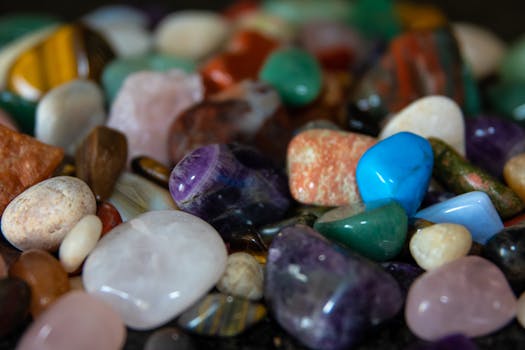
Rock tumbling is a slow-motion magic trick. You put dull, rough stones into a noisy machine, and four to six weeks later, they come out shiny enough to see your reflection in. It's not instant gratification — it's delayed gratification with a motor attached. I started tumbling in 2021 because I wanted to turn the gravel from my driveway into something worth keeping. Most of those early attempts produced碎石 covered in fine scratches, but the process taught me a lot about what actually works versus what the instruction manuals gloss over.
What you need to get started
The startup cost for rock tumbling is $70 to $200 depending on the quality of equipment you choose. Here's the breakdown:
A rock tumbler. Two brands dominate the beginner market: Lortone and Thumler's. Both make reliable rotary tumblers. Lortone's 3A model ($85 to $100) holds 3 pounds of rock and is the most common starter size. Thumler's A-R1 ($110 to $130) holds 3 pounds as well and runs slightly quieter. Avoid the ultra-cheap tumblers on Amazon that sell for $30 to $40 — they leak, the barrels crack after a few runs, and the motors burn out within months. The noise difference alone is worth paying extra. A good tumbler sounds like a muffled clothes dryer. A cheap one sounds like someone shaking a can full of bolts.
Grit. You need four stages of silicon carbide grit: coarse (60/90 mesh), medium (220 mesh), fine (500 mesh), and polish (typically aluminum oxide, 600 to 1000 mesh). Each stage does progressively finer abrasion. A complete grit kit costs $15 to $25 and contains enough for 10 to 15 tumbling runs. Buy it in bulk if you plan to tumble regularly — it's much cheaper per pound.
Ceramic media. These are small ceramic cylinders or triangles that fill empty space in the tumbler barrel. They prevent stones from chipping each other during the coarse grinding stages and improve the tumbling action. A 1-pound bag costs $8 to $12 and lasts for many runs.
Plastic pellets. Used in the final polishing stage instead of ceramic media. The pellets are softer and won't scratch the polished stone surfaces. They also cushion the stones during the low-agitation polish stage.
Rough rock. You need tumbling-grade rough. Not just any rock from the ground — the stones need appropriate hardness (Mohs 6 to 8 is ideal) and structure to survive the tumbling process. More on this below.
Choosing the right rocks
This is where most beginners make their first costly mistake. Not all rocks can be tumbled. The wrong rocks break, turn to mud, or come out looking worse than they went in.
Good tumbling candidates: Quartz (clear, smoky, rose, milky), agate, jasper, petrified wood, aventurine, tiger's eye, and unakite. These have hardness ratings between 6.5 and 7 on the Mohs scale, which means they're hard enough to take a polish but not so hard that they grind your grit to nothing. They also have uniform internal structure without cleavage planes that cause them to split along predictable lines.
Bad candidates: Calcite (Mohs 3 — it dissolves in the coarse grit stage and turns your barrel into a slurry of chalky mud), obsidian (Mohs 5 to 5.5 — too soft, it chips and rounds into blob shapes without developing a shine), turquoise (too soft and porous), any stone with visible cracks or fractures, and anything with a mica content high enough to flake.
The hardness rule: Don't tumble rocks of different hardness together. If you put quartz (Mohs 7) and calcite (Mohs 3) in the same barrel, the quartz will grind the calcite to dust while barely being affected itself. Match hardness levels within 1 to 1.5 points on the Mohs scale. When in doubt, sort your rough by approximate hardness and tumble similar groups together.
Load size — the 60 to 70 percent rule
Fill your tumbler barrel to about 60% to 70% of its volume with rock. Not more, not less. This is one of the most important variables in tumbling, and it's the one most people ignore.
If the barrel is too empty (below 50%), the rocks slam against each other violently with each rotation. This causes chipping, fracturing, and flat spots instead of smooth rounding. The stones need the cushioning effect of neighboring stones to tumble properly.
If the barrel is too full (above 75%), there's no room for the rocks to move. They just sit in a clump and slide around without any tumbling action. The result is stones that are ground down but not rounded or polished — they'll have flat surfaces where they pressed against each other.
Use ceramic media to fill gaps if you don't have enough rock to reach the 60% threshold. The media takes up space and provides cushioning without affecting the grinding action significantly.
The four stages — what actually happens in each one
Stage 1: coarse grit (60/90 mesh) — 7 days
This is the shaping stage. The coarse grit knocks off rough edges, chips, and surface irregularities. Your stones will change shape noticeably — angular rocks become rounded. The grit breaks down the stone surfaces through mechanical abrasion, and the resulting rock sludge (a thick gray-brown paste) fills the barrel.
Use about 2 tablespoons of coarse grit per pound of rock. Add water until it just barely covers the stones when the barrel is at rest — roughly 1 to 2 inches of water above the rock level. The slurry should have the consistency of thin pancake batter when the tumbler has been running for a few hours.
Run for 7 days. Check progress at day 5 — if the stones still have sharp edges, give them 2 more days. If they're already well-rounded, you can move to stage 2 a day early.
Stage 2: medium grit (220 mesh) — 7 days
This stage smooths the surface left by coarse grit. The 220 mesh grit is fine enough to remove the scratches from stage 1 without changing the stone's shape. The stones should look smoother and start developing a slight sheen when wet, though they'll still look dull when dry.
Same water ratio as stage 1. Same 7-day run time. Use about 2 tablespoons of medium grit per pound of rock.
Stage 3: fine grit (500 mesh) — 7 days
This is where the surface starts to really smooth out. The 500 mesh grit creates a satin-like finish. When you pull the stones out and rinse them off, they should look noticeably smoother than after stage 2, even when dry.
Reduce the water slightly for this stage — the slurry should be a bit thicker. Too much water dilutes the grit and slows the process.
Stage 4: polish (aluminum oxide) — 7 to 10 days
The final stage uses a non-abrasive polish compound (usually aluminum oxide at 600 to 1000 mesh, or TXP aluminum oxide polish) to bring out the shine. Replace ceramic media with plastic pellets for this stage — ceramic is too hard and can scratch the developing polish.
Use about 2 tablespoons of polish per pound of rock. Add water to just cover the stones — roughly the same level as previous stages. Some people add a small amount of burnishing soap (like Ivory bar soap, shaved into flakes) to improve the polish. It helps, but it's not strictly necessary.
Run for 7 to 10 days. After 7 days, pull a stone out, rinse it, and dry it completely. Check the shine in good light. If it's mirror-bright, you're done. If it's still slightly hazy, run 2 to 3 more days.
The golden rule: wash everything between stages
This is the single most important rule in rock tumbling, and ignoring it is the single most common reason for failed batches. Between every single grit stage, you must thoroughly wash:
The rocks themselves — scrub each one under running water with an old toothbrush. Pay attention to crevices and surface texture where grit can hide.
The barrel — remove the lid, dump all contents, and scrub the barrel interior with soap and water. Grit residue clings to the barrel walls and lid gasket.
The ceramic media — if you're reusing it, wash it separately and inspect for embedded grit particles.
Your hands — change gloves or wash thoroughly between handling different grit stages.
Even a few grains of coarse grit carried over into the medium grit stage will scratch the surface of your stones, creating pits that no amount of later polishing can fix. Cross-contamination between stages is the reason most people's first batch of tumbled rocks comes out dull and scratched instead of shiny.
I've heard people say they skip the washing step "to save time." That's like saying you skip the oil change in your car to save time — you'll pay for it later, and the repair costs more than the maintenance.
Why you can't skip stages
The most common beginner question: "Can I skip straight to the polish stage if my rocks are already pretty smooth?" The answer is no, and here's why.
Polish compound doesn't remove material. It's not abrasive in the way grit is — it works by burnishing the surface, smoothing microscopic scratches into a reflective finish. If the surface has 220-grit scratches (which are large enough to see individually), no amount of polish will fill them in or smooth them out. The polish just rides over the scratches and the stones come out looking hazy.
Each grit stage must remove the scratch pattern left by the previous, coarser stage. Stage 1 creates 60/90 grit scratches. Stage 2 removes those and creates 220 grit scratches. Stage 3 removes those and creates 500 grit scratches. Stage 4 polishes those 500 grit scratches to a mirror finish. Break the chain at any point and the final result suffers.
Think of it like sanding wood. You wouldn't go from 60-grit sandpaper directly to 2000-grit sandpaper — the fine paper can't reach into the deep scratches left by the coarse paper. Rock tumbling works on exactly the same principle, just in a rotating barrel instead of by hand.
Common failures and what causes them
Stones turned to powder or small fragments: Your coarse grit was too aggressive, or you tumbled for too long in stage 1. 60/90 grit is coarse enough for most rocks. Anything coarser (like 46/70) is overkill unless you're working with extremely hard stones like corundum. Also check that you're not mixing hard and soft stones — the hard ones pulverize the soft ones.
Stones have a nice shape but no shine: Inadequate washing between stages. Almost certainly coarse grit contamination in the later stages. Stripped the batch back to stage 2 and redo it with obsessive cleaning. Yes, that means another 2 to 3 weeks. The alternative is living with dull rocks.
Flat spots on otherwise round stones: The barrel was overfilled, or the stones are all roughly the same size and shape, creating consistent contact points. Mix in some smaller stones or ceramic media of varying sizes to create more chaotic tumbling action.
Stones have tiny pits all over the surface: Grit was too coarse for stage 2 or 3, or you didn't run stage 3 long enough. The pits are remnants of stage 1 scratches that stage 2 didn't fully remove. Run an extra 3 to 4 days in stage 3 and see if that clears it up.
The barrel leaks: The rubber lid gasket is worn, cracked, or has grit embedded in it. Clean the gasket thoroughly and check for damage. Replacement gaskets cost $5 to $8. Don't run a leaking barrel — the slurry that escapes is caustic and can damage the motor.
Rock tumbling is a hobby that rewards patience more than skill. The machine does the work. Your job is to load it correctly, keep the stages clean, and wait. Four to six weeks feels like a long time when you're starting your first batch, but the payoff — pulling out a handful of stones that literally sparkle — is worth the wait. And the machine runs quietly in a corner of your garage or basement, requiring maybe 10 minutes of attention per week for grit changes. Low effort, high reward. That's the appeal.


Comments