How to tell if your crystal is real or fake (a practical guide)
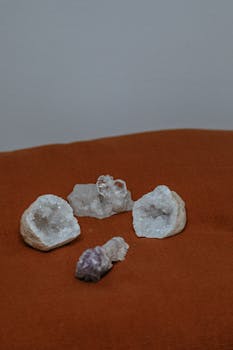
The crystal market has a fake problem. Not every vendor is dishonest, but the sheer volume of synthetic, treated, and outright counterfeit stones on platforms like Etsy, Amazon, and even some mineral shows means that buying blindly is a losing strategy. I've handled thousands of specimens over the years, and I've been fooled more than once. The tricks are getting better, and the prices keep getting lower — which is itself a red flag.
This guide covers the most common types of fake crystals, how to identify them without professional equipment, and when to walk away from a purchase. None of these methods require a gemology degree or expensive tools. A decent loupe, a kitchen scale, and common sense will catch most fakes.
Glass: the most common fake
Glass is the single most common crystal imitation, and for good reason — it's cheap to produce, easy to color, and can look convincing to an untrained eye. You'll encounter glass fakes most often with expensive-looking stones: moldavite (green glass from a factory, not from a meteorite impact), high-end turquoise (dyed glass or ceramic), and various "rare" crystals that command premium prices.
Here's how to spot glass:
Bubbles. This is the easiest tell. Glass often contains small round or elongated air bubbles trapped during manufacturing. Natural crystals don't have perfectly round, gas-filled bubbles. Under a 10x loupe ($5-10 on Amazon), these bubbles are obvious — they look like tiny glass spheres suspended inside the material. Some high-end fakes use bubble-free glass, but most cheap fakes won't bother.
Too perfect. Natural crystals have inclusions, internal fractures, growth patterns, and surface irregularities. Glass imitations are often suspiciously clean and uniform. If a piece of "emerald" or "ruby" has zero visible inclusions under magnification, it's almost certainly synthetic or glass. Natural stones of any meaningful size will have something going on inside them.
Weight. Glass is lighter than most gemstones. A piece of natural quartz weighs about 2.65 grams per cubic centimeter. Standard glass is around 2.4-2.5 g/cm³. Lead glass (used in some higher-end fakes) can be heavier at 3.0-3.3 g/cm³, but it still feels different from natural stone. If you handle enough real crystals, the weight difference becomes noticeable — glass fakes often feel "light" in a way that's hard to articulate but easy to recognize.
Temperature. Glass warms up to body temperature faster than most natural crystals. Hold a suspected fake in your closed hand for 30 seconds, then hold a known-real piece of similar size in your other hand. The glass will feel warmer. This isn't definitive, but combined with other signs, it's a useful check. Quartz, in particular, stays noticeably cool to the touch for longer than glass.
Scratch test. Glass scratches at about Mohs 5.5-6. Quartz is Mohs 7. If a piece of "quartz" can be scratched by a piece of steel (like a pocket knife blade or a steel file), it's probably glass. Don't do this on a polished piece you're considering buying — but if you already own a suspected fake, it's a definitive test.
Resin and plastic imitations
Plastic and resin fakes are less common than glass for standalone crystals, but they show up frequently in specific categories: fake geodes (a real rock shell filled with resin crystals), carved figurines, and costume jewelry.
Plastic is significantly lighter than any natural stone — roughly 1.1-1.5 g/cm³ compared to quartz at 2.65 or even lightweight minerals like amber at 1.05-1.10. A piece that feels hollow or weightless for its size is almost certainly plastic.
The internet is full of "tests" for resin fakes that involve biting the stone or pressing a hot needle into it. I'm not going to recommend either of these. Biting a stone with unknown composition is a good way to crack a tooth, and pressing a hot needle into something you paid money for is destructive. If you're at the point where you need to damage a specimen to determine its authenticity, you've already bought a fake.
Instead, look at the surface under magnification. Resin often has a slightly waxy or plastic-looking luster that's distinct from the vitreous (glassy) luster of most natural crystals. Molding seams — thin lines where the two halves of a mold met — are a dead giveaway. Real crystals don't have seams. Resin pieces may also show tiny surface bubbles that weren't fully removed during manufacturing.
Resin is sometimes used to create "clusters" where individual crystals are glued onto a matrix. Look at the bases of the crystals — if they appear to be attached to the base rather than growing from it (flat bottoms, visible adhesive, or crystals all pointing in random directions that don't follow any natural growth pattern), it's a manufactured piece.
Dyed stones: the color cheat
Dyeing is probably the most insidious type of fake because the underlying stone is real — it's just been artificially enhanced in a misleading way. Agate and quartz are the most commonly dyed minerals. Bright purple "amethyst" that's actually dyed quartz, vivid blue "turquoise" that's dyed howlite, and neon pink "rose quartz" that's been soaked in dye are all common.
The key identifier for dyed stones is color concentration. Natural crystal color is typically even throughout the material (with some variation, which is normal). Dyed color concentrates in fractures, pits, and porous areas — the dye follows the path of least resistance through the stone. Under a loupe, look for darker color in cracks and crevices while the surface of the stone is lighter. This uneven distribution is the smoking gun.
The nail polish test works for porous dyed stones: rub a cotton swab with nail polish remover (acetone) on an inconspicuous area. If color transfers to the swab, the stone has been dyed. This doesn't work on all stones — acetone won't strip dye from non-porous materials — but for porous stones like howlite, magnesite, and some agates, it's reliable.
Another sign: the color is too good. Nature rarely produces the vivid, saturated, perfectly even colors you see in some dyed specimens. If a piece of "turquoise" is an impossibly bright robin's egg blue with no matrix (the darker web-like inclusions that characterize real turquoise), it's probably dyed howlite or magnesite.
Synthetic vs natural: a different conversation
It's important to distinguish between synthetic stones and outright fakes. A synthetic ruby is still ruby — same chemical composition, same crystal structure, same hardness. It was just grown in a lab instead of forming in the earth over millions of years. Whether that matters to you is a personal question, but it affects price significantly. A synthetic ruby might cost $20-50 per carat, while a comparable natural ruby could be $1,000-10,000 per carat.
The most reliable way to distinguish synthetic from natural is by examining inclusions under magnification. Natural stones typically contain mineral inclusions, growth zoning, and tiny fractures — the geological fingerprints of their formation process. Synthetic stones, depending on the growth method, may contain curved growth lines (flame-fusion/synthetic), metallic flux inclusions (flux-grown), or perfectly clean interiors (hydrothermal growth).
Flame-fusion synthetics (also called Verneuil synthetics) are the most common and the easiest to identify. They show curved growth lines called "striae" under magnification — thin, curved lines that follow the shape of the boule as it was grown. These curves are unlike anything found in natural crystals. Under a loupe, they look like curved striations or banding, almost like the growth rings of a tree but curved.
Flux-grown synthetics are harder to identify because the inclusions can look more natural. They often contain tiny metallic flux particles (remnants of the growth medium) that appear as small, reflective platelets under strong lighting. These are visible with a good loupe but can be mistaken for natural mineral inclusions by an inexperienced eye.
Price as a reality check
Here's a simple rule that will save you from most crystal scams: if the price is too good to be true, it is.
Natural gem-quality stones have a real cost of extraction, cutting, and distribution. Labor-intensive mining in countries like Myanmar, Sri Lanka, and Brazil costs money. Cutting and polishing rough stones requires skill and equipment. Shipping, customs, and retail markup add more. When you see a "natural emerald pendant" on a wholesale site for $8, the emerald is not natural. It might be synthetic, it might be glass, or it might be dyed quartz — but whatever it is, it didn't come out of the ground.
Some rough price benchmarks (as of 2025-2026, approximate retail for decent quality): natural amethyst clusters from Brazil run $5-30 for small to medium specimens. Genuine turquoise (untreated or minimally treated) starts around $20-40 for small pieces and goes up steeply. Natural moldavite is $15-40 per gram. If someone is selling a "natural moldavite" necklace for $12, it's glass.
Prices fluctuate, and deals exist — but they're modest deals, not orders-of-magnitude discounts. A 20-30% discount from typical retail pricing might be legitimate. A 90% discount is a scam.
Low-tech identification methods that actually work
You don't need a spectrometer or refractometer to catch most fakes. Here's a practical toolkit:
A 10x jeweler's loupe. This is the single most useful tool. Look for bubbles (glass), curved growth lines (flame-fusion synthetic), color concentration in fractures (dye), and surface seams (resin/cast). Spend $10-15 on a decent triplet loupe — the cheap single-lens ones distort the edges and miss fine detail.
A digital kitchen scale. Weigh the stone and calculate its specific gravity by weighing it in air and then suspended in water (Archimedes' method). Quartz is 2.65, glass is 2.4-2.5, most plastics are under 1.5. A $15 kitchen scale with 0.1g precision is accurate enough for this.
A strong flashlight. Shine a bright light through the stone. Natural crystals typically show some internal structure — growth zoning, inclusions, veils. Glass looks uniformly transparent or has bubbles. Dyed stones show uneven color transmission. This single test catches a lot of fakes.
A UV flashlight (365nm). Many minerals fluoresce under UV light, and the fluorescence pattern can help with identification. Real amber fluoresces greenish-white or blue. Some synthetic materials don't fluoresce at all, or fluoresce differently from the natural material they're imitating. A 365nm UV flashlight costs $8-12.
Your hands. The temperature test (glass warms up faster than most natural stones) and the weight test (does it feel right for its size?) require no equipment at all. They're subjective, but combined with other checks, they're genuinely useful.
When to get professional help
If you're buying a stone worth more than a few hundred dollars, or if you're unsure about a specific piece, get a lab certification. GIA, IGI, and other reputable gemological laboratories will test a stone and issue a report identifying it as natural, synthetic, or treated, along with any treatment details. The cost is typically $50-200 depending on the stone and the tests required.
For lower-value pieces, a local jeweler with a loupe and refractometer can usually give you a quick opinion for free or a small fee. They see fakes all day and can often identify them within seconds.
The honest summary
Most crystal fakes aren't sophisticated — they're mass-produced glass or dyed stone aimed at casual buyers who don't know what to look for. A little knowledge goes a long way. Learn the common tells (bubbles, uneven dye, too-perfect clarity, suspicious pricing), buy a $15 loupe, and handle enough real stones that fakes start feeling wrong. The crystal market rewards informed buyers and punishes impulsive ones. Take your time, ask questions, and walk away from anything that doesn't feel right. The good stuff is out there — it just requires a slightly more deliberate approach to find.
Comments