How to Start a Successful Etsy Jewelry Business: A Real Beginner's Guide
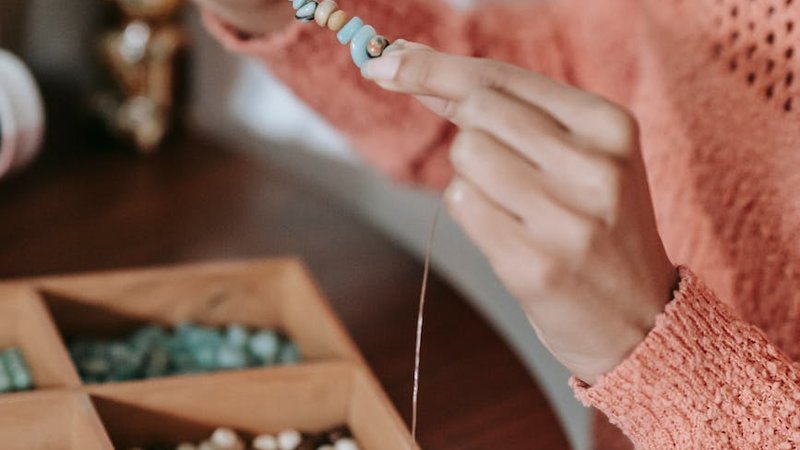
Three years ago, I was making beaded bracelets on my living room floor while watching Netflix. I'd string together whatever caught my eye at the craft store — cheap glass beads, some leather cord, maybe a charm or two. I gave a few to friends, posted a couple photos on Instagram, and people actually seemed to like them. Someone commented "you should sell these!" and I laughed it off. Then I kept thinking about it. Then I opened an Etsy shop. That first year was messy, stressful, confusing, and honestly, one of the best things I've ever done. I'm writing this because when I started, I desperately needed someone to just tell me what to do step by step, in plain English, without all the generic "follow your passion" fluff. So here's the real breakdown — the stuff that actually mattered, the stuff that didn't, and the numbers nobody wants to share.
Before You Open Your Shop: The Prep Work That Actually Matters
Find Your Niche (No, Really)
The biggest mistake I see new jewelry sellers make on Etsy is trying to sell everything. One shop has beaded bracelets, resin earrings, wire-wrapped pendants, and engraved rings. That approach might work if you're already a brand with a following, but for a new Etsy shop? It's a death sentence. Etsy's algorithm and search function favor shops that demonstrate expertise in a specific category. When you search "minimalist gold necklace" and see a shop with 200 listings all in that exact style, you trust them. You bookmark them. You buy from them. But if that same shop also sells dog bandanas and crochet baby hats, you start wondering if they're really a jewelry expert. Pick one thing and do it really well. For me, it was minimalist geometric earrings in brass and sterling silver. That was it. Everything I made, listed, and marketed revolved around that single concept. It felt limiting at first, but that focus is what allowed me to stand out in a sea of 50,000+ jewelry shops on Etsy.
Naming Your Shop: Don't Overthink It
I spent two weeks agonizing over my shop name. I'm not proud of that. Here's what I wish someone had told me: your shop name matters, but not as much as your product photos and your listings. Pick something memorable, easy to spell, and ideally related to your niche. Avoid numbers, underscores, and anything that requires explanation. "MoonAndWire" or "GoldenHourJewelry" works better than "JennyShop2024_xoxo." Check that the name is available on Etsy, Instagram, and ideally as a domain name — even if you don't build a website right now, having the option later is valuable. Also, check that the handle is available on social media platforms. Consistency across Etsy and Instagram builds trust and makes you easier to find.
Pricing: The Formula Nobody Teaches You
Pricing was the thing I struggled with most, and I see new sellers either pricing way too low (essentially paying customers to take their jewelry) or way too high (without the brand credibility to back it up). Here's the formula that finally clicked for me: take your material cost, add your labor (yes, even if it's "just a hobby" — your time has value), add overhead (packaging, shipping supplies, Etsy fees, payment processing fees), and then add a profit margin of at least 30-50%. Let me give you a real example. One pair of my brass earrings costs about $3 in materials. It takes me roughly 20 minutes to make a pair, and I value my time at $30/hour, so that's $10 in labor. Packaging is about $1.50 per order. Etsy takes 6.5% of the sale price plus 3% + $0.25 for payment processing. If I sell the earrings for $28, Etsy's cut is about $3.15. So my costs are roughly $3 + $10 + $1.50 + $3.15 = $17.65, and I clear about $10.35 per pair. That's a 37% profit margin, which is decent for handmade goods. Some people will tell you to double or triple your material cost, but that doesn't account for the reality of labor and fees. Use the real math. And don't apologize for your prices — handmade jewelry is worth more than mass-produced mall stuff, and the right customers understand that.
Product Photography: Your Phone Is Enough
I bought a fancy camera when I started. I used it twice. The learning curve was steep, the setup was annoying, and my phone took better photos with way less effort. Here's what actually matters for jewelry photography on Etsy: good natural light (shoot near a window, never with direct sun), a clean background, and consistency across all your listings. I use a piece of white poster board from the dollar store as my background. I shoot on my phone (an iPhone, but any modern smartphone works), and I edit with the free Lightroom mobile app — just adjusting brightness, white balance, and a slight warmth. That's it. No studio, no fancy lights, no tripod required for most shots. The key is to take at least 5 photos per listing: one "hero" shot that shows the jewelry clearly, one on a model or mannequin for scale, one flat lay showing the packaging or styling context, one close-up showing detail and texture, and one lifestyle shot showing the piece "in action." Etsy allows up to 10 photos per listing — use as many as you can. Listings with more photos convert at significantly higher rates. I tested this myself: my listings with 8-10 photos outsold my listings with 3-4 photos by roughly 40%. And please, for the love of everything, don't use those blurry, yellow-lit photos taken on your bedspread. I had those in my early days and I cringe every time I think about them. Your photos are your storefront. Treat them that way.
Writing Listings That Actually Get Found
Titles: Front-Load Your Keywords
Etsy's search algorithm puts the most weight on the first 40 characters of your title, so put your most important keywords right at the beginning. Instead of "Beautiful Handmade Earrings Perfect for Gift Giving," write "Minimalist Gold Hoop Earrings | Dainty Everyday Jewelry." The first version is descriptive but terrible for search. The second one captures the exact phrases people are typing: "minimalist gold hoop earrings" and "dainty everyday jewelry." Use all 13 of your title tags effectively. I use a simple format: primary keyword phrase | secondary keyword | material | style descriptor | occasion. Like "Geometric Brass Earrings | Minimalist Stud Earrings | Handmade Gold Jewelry | Everyday Gift for Her." It reads a bit robotic, but it works. Etsy search doesn't care about beautiful prose — it cares about matching what buyers are searching for. Save the pretty writing for your description.
Descriptions: Sell the Story and the Specs
Your description has two jobs: convince the buyer this is the right piece for them, and provide the practical details they need to make a decision. I structure every description the same way: a brief opening paragraph that sets the mood and connects emotionally (1-2 sentences), bullet points with the specs (material, dimensions, weight, closure type), care instructions, shipping info, and a brief note about the handmade process. Here's an example of how I'd open a description: "These earrings were designed for the woman who keeps her jewelry simple but intentional. Hand-formed from raw brass wire, each pair is slightly different — that's the beauty of handmade." Then I'd follow with the specs in clean bullet points. This structure works because it addresses both the emotional buyer (who wants something that feels special) and the practical buyer (who wants to know the exact dimensions and what it's made of).
Tags: Use All 13, Use Them Wisely
Etsy gives you 13 tags per listing, and each tag can be up to 20 characters. Most new sellers waste these on single words like "jewelry" or "gift." Don't do that. Use multi-word phrases that match how people actually search. Instead of tagging "earrings" "gold" "gift," use "minimalist gold earrings" "dainty everyday jewelry" "gift for girlfriend" "brass hoop earrings." Long-tail keywords (phrases with 3+ words) have less competition and convert better because they capture buyers who know exactly what they want. I use Etsy's own search bar for tag research — start typing a keyword and see what auto-suggestions pop up. Those suggestions are what real people are searching for. Use them. Also, don't repeat the exact same phrases that are already in your title — Etsy considers those already indexed. Use your tags to cover related keywords you couldn't fit in the title.
Running the Shop: What They Don't Tell You
Customer Service Is Your Best Marketing
On Etsy, your reviews are everything. A shop with 50+ five-star reviews will outsell a shop with 5 reviews every time, even if the products are identical. The fastest way to get good reviews is to provide an experience that exceeds expectations. For me, that meant including a handwritten thank-you note in every order, using pretty packaging that felt gift-ready, and responding to messages within a few hours (Etsy's algorithm favors shops with fast response times). I also started including a small care card with cleaning instructions and a coupon code for their next purchase. That last detail was a game-changer — my repeat purchase rate went from basically zero to about 18% after I started including those cards. People buy jewelry from people they trust, and little touches like handwritten notes and care cards build that trust fast.
Packaging: The Unboxing Experience
Speaking of packaging — this matters way more than you think. I started with plain bubble mailers and a small ziplock bag. My early reviews were fine, but nobody was blown away. Then I switched to kraft paper boxes with a custom sticker, tissue paper, and a wax-sealed thank-you card. The cost per package went from about $0.80 to $2.50, but my reviews went from "nice earrings" to "the packaging was so beautiful, it felt like opening a gift!" and — this is the important part — people started sharing unboxing photos on Instagram and tagging me. Free marketing, driven entirely by spending an extra $1.70 on presentation. Calculate your packaging costs into your pricing from the start so you're not eating that expense. It's worth it.
Getting Repeat Customers
The jewelry business math is simple: it costs 5-7 times more to acquire a new customer than to sell to an existing one. Every repeat customer is pure profit compared to the marketing spend needed for a first-time buyer. Beyond the coupon card trick I mentioned, I built repeat business by creating a cohesive collection. When someone buys a pair of earrings from me and loves them, they want the matching necklace. They want the bracelet. They want to build a set. If your shop looks like a random assortment of unrelated pieces, there's no motivation to come back and complete a "look." Consistency in your design aesthetic is the single most powerful repeat-purchase driver I've found. I also send a follow-up message about two weeks after delivery — just a quick "hope you're loving your new earrings!" note. Not salesy, just personal. About 10% of those messages lead to another purchase within a month.
My First Three Months: The Real Numbers
I think transparency is important, so here's what my first three months actually looked like financially.
Month One: The Launch
I spent about $350 in my first month: $120 on materials and tools, $80 on packaging supplies (bought in bulk, which was smarter than I realized), $20 on Etsy listing fees (20 listings at $0.20 each), and about $130 on a basic set of props for photography (poster board, a small display stand, some fabric). Revenue: $87 from 4 orders. Yes, I lost money. No, I didn't panic. Month one is about building your shop foundation, not profit. Most successful Etsy sellers will tell you the same thing — don't judge your shop by month one numbers.
Month Two: Finding Traction
Spent about $80 (mostly on materials for new designs and a few more listings). Revenue: $340 from 14 orders. I got my first five-star reviews, which immediately improved my shop's visibility in search. I also made my first sale to someone I didn't know (not a friend or family member), which felt like a huge milestone. I noticed that my geometric brass earrings were outselling everything else by a wide margin, so I doubled down on that style and created variations. Listen to what your data tells you, not what you personally like best.
Month Three: Things Clicked
Spent about $120 (materials + running low on packaging supplies). Revenue: $720 from 28 orders. I hit 50 sales total and got a "Star Seller" badge from Etsy, which gave my listings a visibility boost. My Instagram following had grown to about 400 people, and I was getting 2-3 organic orders a week from Instagram alone. For the first time, I felt like this could actually become something real. By month three, I was clearing roughly $400-500/month in profit after all expenses. Not life-changing money, but real, tangible income from something I genuinely enjoyed doing.
The Mistakes That Cost Me the Most
I made plenty of mistakes in those first three months, and I want you to avoid them. First, I underpriced my first 10 listings because I was scared nobody would pay "handmade prices." Those early customers got an incredible deal, and when I raised my prices, some of them came back expecting the old prices. Set your prices correctly from day one — you can always run a sale later if you want to. Second, I tried to make 15 different product types instead of perfecting 3-5. My early shop looked scattered and unfocused. Third, I ignored SEO for the first two weeks and just wrote whatever I wanted for titles and tags. Once I started researching actual search terms and optimizing my listings, my traffic tripled within a month. Don't skip the SEO work — it's boring but it's the engine that drives everything else.
Five Pieces of Advice I Wish I'd Had on Day One
First, start before you're ready. I spent two months "preparing" — researching, planning, buying supplies — before I listed my first item. Most of that prep was procrastination dressed up as productivity. You learn more from your first week of actually selling than from a month of reading about selling.
Second, your first 10 sales will probably come from people you know. That's not failure — that's your launchpad. Ask them for honest reviews and real feedback. Use those early sales to test your packaging, your shipping process, and your customer communication. Consider them beta testers.
Third, treat your Etsy shop like a real business from day one. Track your expenses, your revenue, your time, and your best-selling items in a spreadsheet. This sounds tedious, but when tax season rolls around or when you need to decide whether to invest in new materials, you'll be grateful you have the numbers. I use a simple Google Sheets template that takes me about 15 minutes a week to maintain.
Fourth, don't compare your month one to someone else's year three. The Etsy jewelry category is saturated, and established shops have thousands of reviews and years of algorithm history working in their favor. Your growth curve will look different, and that's normal. Focus on improving your own numbers month over month, not on matching someone else's.
Fifth, and this is the one that took me the longest to learn: the best marketing is a great product. I spent way too much time in my early months trying to promote listings on social media when I should have been improving my craft, my photos, and my SEO. When your product and your listing are genuinely good, Etsy's algorithm does a lot of the heavy lifting for you. Perfect the product first. The marketing gets easier from there.
Starting a jewelry business on Etsy isn't a get-rich-quick scheme — it's a slow, steady build that rewards consistency, quality, and a willingness to learn as you go. Three years in, my shop supports me full-time, and I still get a little thrill every time an order notification pops up. It started with beads on my living room floor and a comment from a stranger on Instagram. It can start for you too.

Comments