How to Build a Crystal Collection That Actually Means Something: A Beginner's Roadmap

Step 1: Figure Out Why You Want Crystals
Before you buy a single stone, spend five minutes being honest with yourself about why you're here. I know that sounds obvious, but I can't count how many people I've talked to who filled their shelves with impulse purchases and later couldn't explain why they owned half of them.
There's no wrong answer. Maybe you saw a geode at a museum as a kid and never got over it. Maybe you like the way amethyst looks on a bookshelf. Maybe you want stones for meditation, or you're curious about geology, or your friend has a cool collection and you want one too. All of those are valid starting points. But they lead to very different collections, and knowing which direction you're heading saves money and shelf space.
The four most common motivations I see among beginners:
- Decorative: You want beautiful objects that look good in your home. Focus on color, form, and display potential.
- Personal practice: You're interested in crystals for meditation, mindfulness, or traditional cultural practices. Focus on the specific stones associated with those traditions.
- Wearable: You want jewelry or pocket stones you can carry with you. Focus on durability (Mohs hardness above 6.5) and size.
- Scientific/educational: You want to learn about mineralogy, crystallography, and earth science. Focus on variety, clear labeling, and good specimens over pretty ones.
Most people end up a mix of several. That's fine. But if you know that decoration is your primary motivation, you don't need to spend hours researching the traditional properties of every mineral. And if you're primarily interested in meditation practices, you don't need a museum-quality specimen with perfect crystallographic form.
Step 2: Set a Realistic Budget
Crystal collecting can be as cheap or as expensive as you let it. I've seen beautiful, meaningful collections built for under $100, and I've seen people drop $5,000 in a weekend and end up with nothing they particularly care about.
Here are three realistic budget tiers based on what I typically recommend to beginners:
$50 Budget: The Essentials
This gets you 5 to 8 small tumbled stones and one medium raw specimen. Think of it as a tasting menu — you're sampling different minerals to see what resonates. At this price point, buy from a local shop or a reputable online seller who offers individual stones (not pre-packaged "starter kits," which often include filler pieces).
My recommended picks for $50:
- Clear quartz point (tumbled or raw) — ~$5–8
- Amethyst piece (small cluster or tumbled) — ~$8–12
- Rose quartz (tumbled) — ~$4–6
- Citrine or aventurine (tumbled) — ~$4–6
- Black tourmaline (small raw piece) — ~$6–10
- One "wild card" — something that catches your eye regardless of what it is — ~$8–15
That's 6 pieces and leaves you $5 to $15 for a small display dish or pouch. Simple, focused, no filler.
$100 Budget: A Solid Foundation
With a hundred dollars, you can build a genuinely useful starter collection. You'll get 8 to 12 pieces with better quality than the $50 tier, plus room for one or two medium display specimens.
Suggested allocation:
- $40–50: 5 to 8 tumbled or small raw pieces (quartz, amethyst, rose quartz, citrine, black tourmaline, jade, lapis lazuli, or carnelian)
- $25–35: One medium specimen you're genuinely excited about — a nice amethyst cluster, a decent-sized quartz point, or a polished agate slice
- $10–15: Basic display — a wooden bowl, a felt-lined tray, or a small LED light base
- $5–10: A reference book or pocket guide to crystal identification
The reference book is not optional in my recommendation. Even a basic one helps you learn mineral names, hardness ratings, and what natural formations look like versus manufactured ones. That knowledge protects you from buying fakes later.
$300 Budget: The Enthusiast Start
At $300, you're building a collection with real depth. This budget lets you include a few higher-quality pieces, explore less common minerals, and invest in proper storage and display.
Suggested allocation:
- $80–100: One centerpiece specimen — a large amethyst geode slice, an impressive quartz cluster, or a high-grade piece of something you love
- $80–100: 8 to 12 quality tumbled and raw specimens covering a range of minerals and colors
- $40–50: Two or three medium specimens in minerals you're curious about but haven't tried — maybe labradorite, fluorite, or malachite
- $30–40: Display and storage — a proper shelf, a glass dome, or a display case with individual compartments
- $20–30: Tools — a 10x jeweler's loupe for inspecting stones, a soft brush for cleaning, and a good reference book
This budget gives you room to make a few "learning mistakes" without feeling burned. You can afford to take a chance on a stone that catches your eye even if you're not sure about its quality.
Step 3: Buy Your First Five Stones (in Order)
If you're starting from absolutely nothing, here's the order I'd suggest for your first five purchases. These aren't the "most powerful" or "most important" crystals — that's subjective nonsense. They're the most useful for a beginner because they teach you about different mineral types, formations, and care requirements.
First Purchase: Clear Quartz
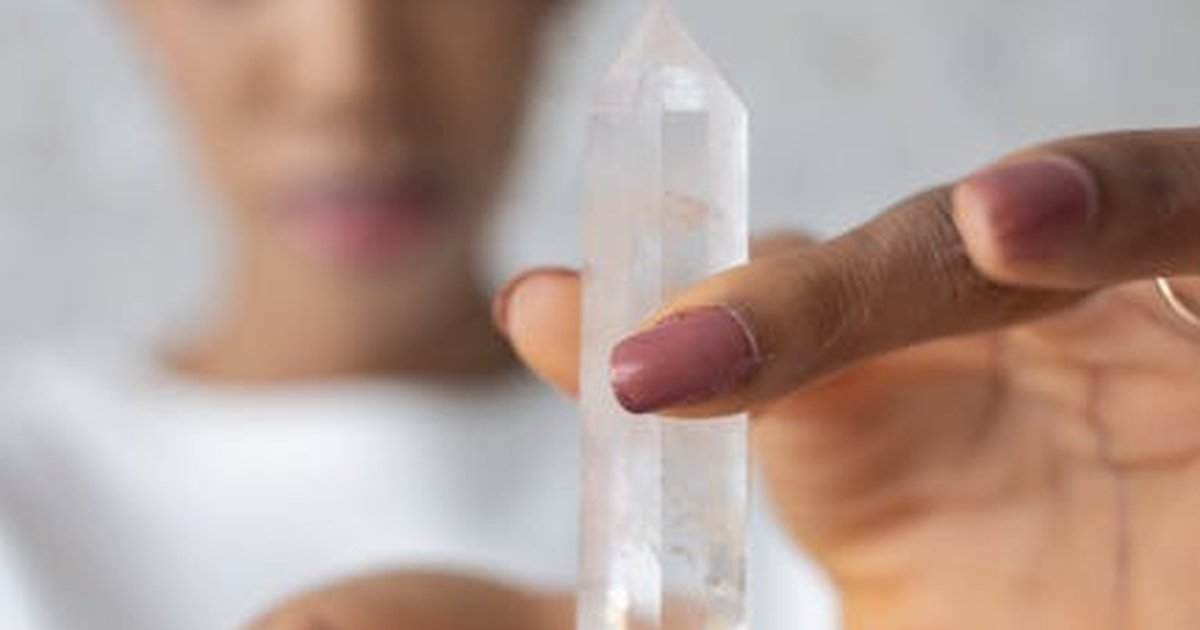
Buy a natural quartz point, not tumbled. You want to see what an actual crystal formation looks like — the hexagonal prism, the termination faces, the growth patterns. Quartz is the mineralogical baseline for everything else. Once you know what real quartz looks and feels like, you have a reference point for evaluating everything else.
Budget: $5 to $15 for a decent small point.
Second Purchase: Amethyst
Amethyst is quartz with iron impurities that create the purple color. Buying amethyst as your second stone teaches you how trace elements affect a mineral's appearance — a fundamental concept in mineralogy. Get a small cluster if possible, not just a tumbled piece. The cluster form shows you how crystals grow in groups, which is different from the isolated point structure of your first purchase.
Budget: $8 to $20 for a small cluster.
Third Purchase: Rose Quartz
Rose quartz is almost always found in massive form (not crystal points) and has a distinctive translucent pink color from titanium, iron, or manganese impurities. It's also slightly harder to find in genuinely natural color — a lot of rose quartz on the market is dyed. This makes it a great learning tool for the color tests I mentioned in my article on spotting fakes.
Budget: $4 to $12 for a tumbled piece or small raw chunk.
Fourth Purchase: Black Tourmaline
This introduces you to a completely different mineral family (tourmaline, not quartz) and a different crystal system (trigonal). Black tourmaline is opaque, heavy for its size, and often has visible striations along its length. It's traditionally associated with protection in various cultural practices, which makes it a practical addition if you're building a collection for personal use.
Budget: $6 to $15 for a small raw piece.
Fifth Purchase: Something You Just Like
By this point, you've handled four different stones and started to develop preferences. You might find yourself drawn to cool blues (labradorite, sodalite), warm oranges (carnelian, sunstone), or unusual textures (lepidolite, desert rose). Whatever catches your eye, buy it. This is your "personal taste" anchor — the stone that makes your collection yours, not just a copy of everyone else's starter set.
Budget: whatever you have left. Don't overthink it.
Step 4: Learn What "Good Quality" Actually Means
Crystal quality isn't just about how pretty something looks. In fact, the prettiest piece on the shelf might not be the best value. Here's what I look for when evaluating a potential purchase:
- Natural color: Is this the stone's actual color, or has it been dyed, heat-treated, or irradiated? Treatments aren't inherently bad, but they should be disclosed and priced accordingly.
- Structural integrity: Are there cracks that might worsen over time? Is the termination (the pointed end of a crystal) intact? Will this piece survive being handled, displayed, or worn?
- Authenticity: Can you verify that this is what the seller claims it is? Do the basic home tests (weight, temperature, scratch, light) support the identification?
- Source transparency: Does the seller know where the stone was mined? Ethical sourcing matters to a lot of collectors, and origin information also helps verify authenticity.
- Personal resonance: Forget everything else for a second — do you actually like this stone? Will you enjoy looking at it or holding it every day? A collection of technically perfect specimens you don't care about is a waste of money.
Quality and price are correlated but not perfectly. I've picked up stunning specimens for $10 at rock shops that beat $50 pieces from Instagram vendors in every metric that matters. The difference is usually that I was looking at the stone itself, not the seller's marketing.
Step 5: Avoid the Beginner Mistakes I Made
I've made most of these myself, so I'm not judging. But if I can save you the time and money, I will.
Mistake 1: Buying Too Much Too Fast
There's an enthusiasm window when you first start collecting where every stone looks amazing and you want all of them. Resist this. Buy slowly. Live with each purchase for at least a week before adding another. This serves two purposes: it prevents impulse buying, and it gives you time to learn what you actually like versus what seemed cool in the moment.
I went through a phase where I bought 30 stones in two months. Six months later, I'd sold or given away 20 of them because they didn't fit the collection I was actually building. That's a lot of wasted money and time.
Mistake 2: Prioritizing Aesthetics Over Everything
Pretty stones are great. But if every piece in your collection is chosen purely for looks, you're building a decoration collection, not a crystal collection. There's nothing wrong with that, but be intentional about it. Mix in some specimens that are educational — unusual formations, minerals you're curious about, pieces with visible inclusions or growth patterns that teach you something.
Some of my favorite pieces are objectively "ugly" — a chunky, bruised-looking piece of labradorite with a tiny flash zone, a smoky quartz point riddled with fractures. But I learned more from handling those stones than from a dozen perfect specimens.
Mistake 3: Not Checking the Source
Where a crystal was mined affects its value, its authenticity, and increasingly, whether you want to own it at all. Some mining operations have documented environmental damage or labor concerns. Others are family-run operations that treat workers well and manage land responsibly.
You don't need to become an expert in mining ethics overnight. But asking "where is this from?" is a reasonable question that good sellers should be able to answer. If they can't, or if they deflect, that's information in itself.
Mistake 4: Storing Everything in One Pile
Crystals are harder than you might think, but they're not indestructible. Storing them loose in a box or bag lets them knock against each other, which causes chips, scratches, and fractures over time. This is especially true for pieces with delicate terminations or natural points.
Even basic separation — wrapping softer stones individually, keeping hard stones in separate compartments — dramatically extends the life of your collection.
Mistake 5: Ignoring Care Requirements
Some minerals are sensitive to light (amethyst and citrine can fade with prolonged sun exposure), water (selenite, malachite, and halite dissolve or react), or heat (opal can crack if it dries out). Before you put any stone on a sunny windowsill or clean it under the tap, spend two minutes checking its care requirements. A basic reference book or a quick search will save you from accidentally ruining a piece.
Step 6: Display and Store Your Collection
How you display your collection affects both how much you enjoy it and how well the stones survive. Here are approaches I've seen work well at different collection sizes:
Small Collections (Under 15 Pieces)
A single shelf, a decorative bowl, or a dedicated display case works perfectly. I like wooden or bamboo trays with felt lining — they protect the stones, look good, and make it easy to rearrange. Keep the collection in one place rather than scattered around the house. Cohesion makes even a small collection feel intentional.
Medium Collections (15 to 50 Pieces)
Consider a wall-mounted shadow box, a glass-fronted cabinet, or a dedicated bookshelf. Group stones by mineral family, color, or whatever organizing principle makes sense to you. The key at this size is having enough space that pieces aren't crowded. Crowding leads to damage and makes it hard to appreciate individual specimens.
Large Collections (50+ Pieces)
You'll want proper storage furniture — specimen cabinets with adjustable shelves, mineral display cases with individual compartments, or a dedicated room if you're really committed. Label everything. I can't stress this enough. Five years from now, you won't remember which piece is from Madagascar and which is from Brazil unless you wrote it down.
For any collection size, keep these display principles in mind:
- Avoid direct sunlight for light-sensitive minerals (amethyst, rose quartz, citrine, fluorite, aventurine)
- Use soft padding or individual compartments to prevent contact damage
- Dust regularly with a very soft brush — microfiber cloths work, but a natural-hair makeup brush is gentler
- Rotate your display every few months. It makes the collection feel fresh and gives you a chance to handle and appreciate pieces you haven't looked at in a while
Step 7: Keep Learning and Growing
A crystal collection is a living thing — it grows, changes, and develops character over time. The best collections I've seen reflect the collector's journey, not just their purchasing power.
As your collection grows, consider these next steps:
- Join a local mineral club or gem society: These groups often organize field trips, swaps, and educational programs. They're also the best source for honest buying advice.
- Attend a gem and mineral show: Large shows (Tucson, Denver, Munich) and smaller regional shows are incredible for seeing variety, meeting dealers, and learning from experts. Even if you don't buy much, the education is worth the trip.
- Start a collection journal: Note where you got each piece, what you paid, what you know about its origin, and why you wanted it. This sounds tedious but becomes one of the most valuable parts of a collection over time.
- Learn basic mineral identification: Mohs hardness, crystal systems, cleavage, and streak are fundamentals that transform you from a buyer into a collector.
The crystal world is vast, and there's always more to learn. That's the fun part. Don't rush it.
The Collection That Means Something
Here's what I've come to believe after years of building, reorganizing, and occasionally dismantling my own collection: the best collection isn't the biggest or the most expensive. It's the one where every piece has a story, a reason, a connection to something you care about.
Maybe your rose quartz was a gift from someone you love. Maybe your quartz point is the very first crystal you ever bought. Maybe your black tourmaline traveled with you through a hard year. These aren't just stones — they're markers of your life, your interests, your growth.
Start small. Buy slowly. Learn as you go. And let the collection become what it wants to become, not what someone else's Instagram feed tells you it should be.
Comments