How to Start a Crystal Collection: A Beginner's Guide
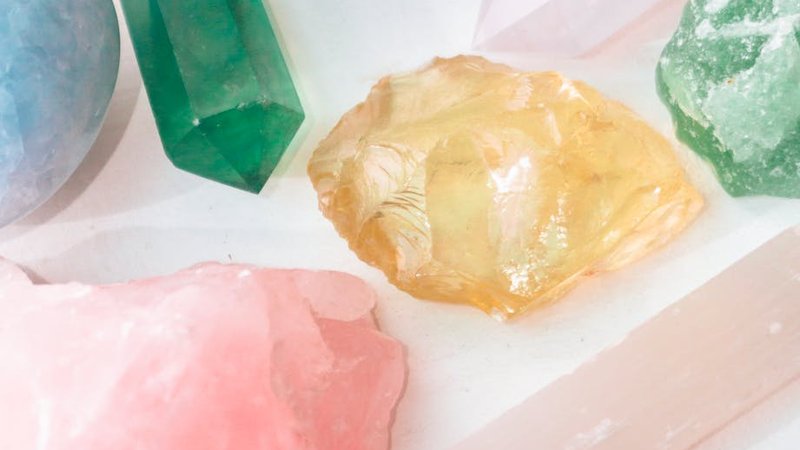
A friend gave me a rose quartz point for my birthday a few years back. Just a small one, maybe two inches long, pale pink, with a slightly rough bottom where it had been broken from a larger cluster. She handed it to me in a little silk pouch and said something like, "I just thought you'd like it." No grand explanation about what rose quartz means or what I should do with it. Just a gift.
I put it on my nightstand. Then I started noticing it during different moments — catching the morning light, looking oddly warm against the white wood. I picked it up one evening, turned it over in my hands, and thought: I want more of these. Not more rose quartz specifically, but more stones. More textures. More colors that came out of the ground instead of a factory.
That was the beginning of what has become, if I'm being honest, a fairly serious collection. I now have stones displayed on every flat surface in my apartment, a dedicated shelf, and a growing rotation of pieces I carry in my bag. But I made plenty of mistakes along the way, spent more money than I needed to at first, and definitely bought some stones I have no real connection to.
This beginner crystal guide is what I wish someone had handed me that day with the rose quartz. A practical, honest walkthrough of how to start a crystal collection without going broke, getting overwhelmed, or ending up with a random pile of rocks.
Step One: Know Why You're Collecting
This sounds obvious, but it's the most important decision you'll make, and a lot of beginners skip it entirely. Before you buy a single crystal, get clear on what's drawing you in. Your "why" determines everything that follows — what you buy, where you buy it, how much you spend, and whether you actually enjoy the process or just feel obligated to keep accumulating.
There are roughly four camps people fall into:
The wellness-oriented collector. Interested in crystals for energetic properties — meditation, emotional support, chakra work. Your collection will be curated and purpose-driven, choosing stones based on what you feel you need right now.
The aesthetic collector. You just think crystals look beautiful. Your collection will be guided by visual appeal — which pieces catch your eye, which colors work with your space.
The curious learner. Fascinated by geology and mineralogy — how these things form inside the earth over millions of years. You'll want to understand crystal systems, inclusions, the difference between natural and polished.
The spiritual practitioner. Crystals are part of a broader practice — tarot, energy healing, a specific tradition. Your collection follows the requirements of your framework.
Most people are a mix. I started purely aesthetic and gradually became more wellness-oriented. The point is having self-awareness so you're not buying blind.
The Starter Five: Crystals Every Beginner Should Own
If I could only recommend five crystals to someone just starting out, these would be them. They're affordable, widely available, genuinely versatile, and each one offers something different.
Clear quartz: the multitool
The crystal world's Swiss Army knife. Called the "master healer" in many traditions, it's believed to amplify energy and intention, versatile enough for almost any purpose. I recommend a small natural point or tumbled stone (usually under $5-10) — one of those pieces you'll reach for constantly. Hold it during meditation, place it on your desk, put it next to other stones to boost them. Most-used piece in my collection by far.
Rose quartz: the heart stone
The crystal of love, compassion, and emotional healing — not just romantic love, but self-love, friendship, family bonds. If clear quartz is the multitool, rose quartz is the comfort object. That pale pink color is genuinely soothing. My first rose quartz was that gift from a friend — it's traveled with me through three moves and sits on the shelf above my desk. Good quality tumbles run $3-8 each.
Amethyst: the calm anchor
Go-to crystal for stress relief, intuitive development, and peaceful sleep. Its deep purple has made it one of the most popular stones in human history — ancient Greeks believed it could prevent drunkenness, and Catholic bishops traditionally wear amethyst rings. A small amethyst cluster is ideal for your collection — beautiful, stunning in any light, and relatively affordable ($10-25) for the visual impact. Also widely available as tumbled stones and points.
Black obsidian: the protector
Volcanic glass — literally cooled lava. Associated with protection, grounding, and shielding against negative energy. I keep a polished obsidian sphere near my front door; it looks sleek and modern regardless of crystal beliefs. Very affordable ($5-15) and extremely durable — perfect for daily pocket carry.
Citrine: the energy booster
Crystal of abundance, motivation, and creative energy. Warm golden-yellow like captured sunlight. Natural citrine is rare and pricey; most on the market is heat-treated amethyst. Still beautiful, perfectly fine for beginners, and much more affordable ($5-15). Just ask your vendor if you specifically want natural.
Where to Buy Your First Crystals
Start local if you can
For your first few purchases, visit a physical crystal shop. When you pick up a crystal in person, you feel its weight, examine its color in natural light, and notice whether something draws you in. There's something real about the intuitive pull when a particular piece catches your attention — you can't replicate that scrolling through photos. A good shop owner can tell you where stones come from, whether they're natural or treated, and show you varieties you didn't know existed.
Online shopping: what to watch for
Look for shops that photograph individual stones, not stock images. Read reviews for color accuracy — crystal colors are notoriously hard to capture in photos. Check return policies. And use price as a signal: a "natural emerald cluster" for $15 is almost certainly not natural emerald. Lab-grown stones are fine, but don't pay natural prices for them.
How to Judge Crystal Quality
Quality is more nuanced than "expensive = good." Clarity matters for transparent stones, but slight inclusions aren't defects — they make each stone unique. Color depth generally means higher quality, but personal preference trumps convention. Formation — are the terminations intact, the shape pleasing? Surface quality — chips, scratches, and cracks reduce durability.
But the most important factor is entirely subjective: does looking at this stone make you happy? If a stone checks every technical box but leaves you cold, skip it. If a slightly imperfect piece makes your heart do a thing, that's the one.
Budget: What Does Starting a Collection Actually Cost?
One of the best things about crystals is the low barrier to entry. You can build a genuinely beautiful starter collection for $30-50. A set of 5-7 small tumbled stones (rose quartz, amethyst, citrine, clear quartz, black obsidian, maybe one or two extras) will run you $15-30 total. Add a small amethyst cluster for $10-20 and a clear quartz point for $5-10, and you have a solid foundation.
What I'd advise against: spending $50+ on your very first crystal because someone told you it was "special" or "high vibration." I made this mistake with a large selenite wand I bought for $45. I never bonded with it. It sits in a drawer. That money could have bought me ten stones I actually love.
Start small. Start cheap. Learn what you're drawn to. Then invest more in pieces you know you'll treasure.
Storage and Display
Some stones are light-sensitive (amethyst fades in direct sunlight), some scratch easily (selenite, calcite), and some absorb skin oils over time. Wooden display shelves or shadow boxes are ideal for medium-to-large pieces. Shallow trays or bowls work for small tumbled stones on your nightstand. Silk or velvet pouches protect stones you carry. Divided boxes store the rest — I organize by color because it makes the box look gorgeous when I open it.
Keep selenite away from water (it will dissolve) and store harder stones separately from softer ones. A quartz point rolling against selenite will leave marks every time.
Growing Your Collection
Once you've lived with your starter set, you'll develop preferences — a color family you love, formations you're obsessed with, rare minerals you want to learn about. Gem and mineral shows are incredible for this: hundreds of vendors, specimens from around the world, prices from pocket-change to museum-quality. Online communities (Instagram, Reddit's r/crystals, Facebook groups) are great for learning and discovering what's possible. Thematic collecting — all pink stones, all from a specific region, all phantom quartz — gives your growth direction. And trading with other collectors is a fantastic way to get new stones without spending money.
Common Beginner Mistakes (I Made Most of These)
Spending too much on the first stone. Your first crystal doesn't need to be expensive or rare. A $3 tumbled rose quartz you carry every day for a year is worth more than a $50 museum piece that sits in a drawer.
Prioritizing quantity over quality. Twenty random tumbled stones for $40 feels like a deal, but you'll end up with ten you never look at. Buy five you love instead.
Ignoring care requirements. Some crystals dissolve in water, fade in sunlight, or scratch absurdly easily. A quick Google search before buying any new variety saves you from the heartbreak of a faded amethyst or dissolved selenite.
Not trusting your instincts. If everyone says you "should" have a stone and you feel nothing, don't buy it. If an unusual piece catches your eye for no reason you can explain, that's usually the one.
Forgetting to enjoy the process. The joy isn't in having them all — it's in the slow, personal process of building something uniquely yours. Each stone carries a story: where you found it, what was happening in your life, what drew you to it.
That rose quartz my friend gave me all those years ago? It's not the most valuable piece in my collection by any measure. But it's the one I'd grab first if I had to choose. Not because of what it's made of, but because of where it came from and what it started.
Start there. Find your rose quartz. Then see where it takes you.
Comments