How to drill a hole in a crystal or stone
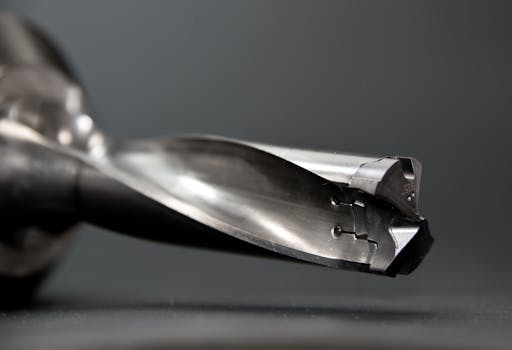
Drilling a hole through a piece of quartz sounds straightforward until you try it with a regular drill bit and watch the bit skate across the surface without making a dent. That is because most minerals rank between 5 and 8 on the Mohs hardness scale, and a standard steel or titanium drill bit maxes out around 6.5. You need something harder than the stone. That something is diamond.
This guide covers what actually works, what does not, and how to avoid destroying both your stone and your drill bit in the process.
Why you need a diamond-coated drill bit
Diamond sits at 10 on the Mohs scale. Nothing naturally occurring is harder. Diamond-coated drill bits have a layer of industrial diamond particles bonded to the tip and sides of a steel shaft. These particles do the cutting — they grind through the crystal at a microscopic level, abrasively wearing away the stone a fraction of a millimeter at a time.
You cannot substitute. Carbide bits will not touch quartz. Titanium bits will not touch amethyst. A masonry bit might scratch the surface but will not penetrate. Diamond is the only practical option for drilling most gemstones and crystals.
Diamond drill bits for jewelry work are small — typically 0.8mm to 3mm in diameter. They are not expensive. A set of 10 bits in assorted sizes costs $8-15 on Amazon. Individual replacement bits run $1-3 each. They do wear out. A single bit will drill maybe 10-30 holes in quartz before the diamond coating thins enough that cutting speed drops noticeably. Harder stones like sapphire will eat bits faster.
Two types exist: solid diamond bits (the entire tip is diamond-impregnated) and diamond-coated bits (a thin layer of particles on the surface). For drilling small holes in crystals, coated bits are fine and cheaper. Solid bits last longer but cost 3-5 times more and are overkill for occasional use.
The tool: use a rotary tool, not a drill
A standard power drill spins at 500-1500 RPM. That is too slow for effective stone drilling — the bit will grab and skid instead of cutting. A Dremel or equivalent rotary tool runs at 5000-35000 RPM, which is the speed range where diamond bits actually work. The high speed means each diamond particle makes many small cuts per second rather than trying to gouge a big chip out of the stone.
The Dremel 3000 or 4000 series costs $60-90 new. Cheaper rotary tools work too — I have used a $25 variable-speed rotary tool from a hardware store and it did the job. What matters is variable speed control. You want the ability to run the tool at low speeds (5000-8000 RPM for the start of the hole) and increase slightly as you progress.
A flex shaft attachment is worth considering. It separates the spinning bit from the heavy motor body, giving you better control and less hand fatigue. Dremel sells one for about $25. It is not essential but makes the process noticeably more comfortable.
Cooling water is not optional
Friction between the diamond bit and the stone generates heat. A lot of heat. Enough heat to crack the stone in seconds. Enough to destroy the diamond coating on the bit. Enough to give you a genuine burn if the bit touches your skin.
You must keep the drilling zone wet. Always. Three methods work:
Drip method. Use a small container of water next to your work area. Dip your fingers in the water and let it drip onto the stone as you drill. Repeat every few seconds. Simple, messy, and works well for small jobs.
Clay dam. Build a small wall of modeling clay around the drilling area on the stone. Fill the well with water. Drill through the water. This keeps the hole flooded continuously. The best method for precision work.
Shallow pan. Place the stone in a shallow dish or pan with enough water to submerge it halfway. Drill underwater. This is the easiest method but limits visibility. You are working blind, which is fine once you have practice but frustrating for your first few holes.
Do not use oil. Oil is recommended for drilling metal, not stone. Water dissipates heat better for this application and does not leave residue on the crystal. Some people add a drop of dish soap to the water to reduce surface tension and improve cooling. It helps slightly but is not required.
Marking the drill point
Smooth, polished stones are slippery. The drill bit will wander across the surface before it catches. You need to mark the starting point.
A piece of masking tape on the stone works as both a marker and a friction aid. Stick a small square of tape where you want the hole, mark the center with a pen, and drill through the tape. The tape gives the bit something to grip initially, reducing the skate effect.
For a more permanent mark, use a fine-tip permanent marker or a mechanical pencil (0.3mm lead works well). The mark will wash away as soon as you add water, so mark first, position the stone, then add water. If the mark disappears before you start drilling, dry the spot and remark it.
Some people use a center punch or an automatic center punch to create a small dimple. This works on metal but can crack softer stones. I would not use a punch on anything below 6 on the Mohs scale. For quartz and harder stones, a light tap with a diamond-tipped scribe is safe and effective.
The drilling process
Start slow and light
Set your rotary tool to its lowest speed. Hold the bit at a slight angle (about 15-20 degrees off vertical) to start the hole. This angle lets just the edge of the bit contact the stone, creating a small groove that prevents wandering. Once the groove is established (after 10-20 seconds), gradually bring the bit to vertical.
Apply very light pressure. The bit should be making contact but not grinding aggressively. Let the diamonds do the work. If you push hard, the bit will overheat, the stone may crack, and you will shorten the life of the bit significantly. Think of it as guiding the tool, not forcing it.
Maintain the water
Check that water is reaching the drilling zone every 5-10 seconds. If the water boils away or runs off, add more. The stone should feel cool or slightly warm to the touch. If it feels hot, stop immediately and let it cool. A stone that is too hot to touch is a stone about to crack.
Do not push through
When you feel the bit break through the far side of the stone, stop. Do not push the bit all the way through — the sudden exit can chip the back of the hole, leaving an ugly crater. Instead, flip the stone over and drill from the other side to meet the hole in the middle. This gives you clean entry holes on both sides.
A 1-inch thick piece of quartz will take 3-8 minutes to drill through with a 1mm bit, depending on the hardness of the specific piece and how aggressive you are. Do not rush it. Set a timer if you tend to push harder as you get impatient.
Safety
Wear safety glasses. This is non-negotiable. Stone particles and water spray will fly off the drill point. A chip of quartz in your eye is a genuine medical emergency. Safety glasses cost $3. Wear them.
Keep fingers clear of the spinning bit. This sounds obvious but becomes less obvious when you are holding a small stone in one hand and a rotary tool in the other. The bit can catch skin instantly and does not stop when it does. Consider clamping the stone in a small vise or holding it with locking pliers wrapped in tape.
Work in a ventilated area. Stone dust is fine and will get everywhere. Silica dust from quartz is a respiratory hazard in large quantities. One hole will not hurt you, but if you are drilling regularly, wear a dust mask and consider a small fan to blow particles away from your face.
Which stones are easy or hard to drill
Relatively easy: Quartz (amethyst, citrine, rose quartz, clear quartz), agate, jasper, and aventurine fall in the 6.5-7 Mohs range. They drill predictably with diamond bits and rarely crack if you keep them cool. These are the best stones to practice on.
Moderate: Garnet (6.5-7.5), topaz (8), and beryl varieties like aquamarine and emerald (7.5-8). These require patience and frequent water checks. Emerald is also brittle and prone to chipping at the drill exit point.
Very difficult or impractical: Opal (5.5-6.5) is porous and contains water. Drilling generates heat that can cause "crazing" — a network of internal fractures that ruins the stone. Opal is also soft enough that the bit can grab and cause cracks. Pearls (2.5-4.5) are organic, layered, and fragile. A drill bit will almost certainly damage them. Coral and turquoise (5-6) are soft and can crumble.
Sapphire and ruby (both corundum, 9 on Mohs) are very hard but not impossible. They eat drill bits quickly. Expect to use 2-3 bits per hole. Diamond (10) requires specialized equipment and is well outside the scope of this guide.
You will break some stones
I want to be honest about the failure rate. Even with good technique, some stones will crack. Quartz sometimes has internal fractures you cannot see. A stone that looks perfect on the outside might split along a hidden fault line when you apply pressure. This is normal and not your fault.
My personal failure rate, after drilling a few hundred holes, is roughly one in eight. That means about 12% of stones break during drilling. When I started, it was more like one in three. The rate drops as you develop a feel for pressure, speed, and cooling. But it never reaches zero.
Buy extra stones. Budget for breakage. If you need five drilled pendants for a project, buy eight stones. The broken pieces are not total losses — small fragments can be used in wire wrapping or resin work.
Cleaning up
After drilling, rinse the stone in clean water to remove dust and debris. A soft toothbrush helps get particles out of the hole. If the hole edges feel rough, you can smooth them by running the drill bit through the hole a few times at low speed with water, or by using a small diamond reamer file (about $5).
Let the stone dry completely before using it in jewelry. Water trapped in the drill hole can cause tarnishing if the stone is set in metal.

Comments