How to Charge Crystals: What Actually Happens and What Doesn't
The word "charging" means almost nothing in physics
Let's get something out of the way first. Crystals are not batteries. They don't store electrical charge in any meaningful sense. Quartz does have a property called piezoelectricity — squeeze it and it produces a tiny voltage — but that voltage dissipates almost instantly. You cannot "fill up" a crystal the way you charge your phone. The voltage produced by a piezoelectric quartz crystal under pressure is on the order of millivolts, and it exists only while the mechanical stress is applied. The moment you stop squeezing, the charge is gone.
The word "charging" in crystal circles usually means one of two things: cleansing (removing unwanted energy) or programming (setting an intention). Neither of these has been demonstrated in a controlled experiment. That said, the rituals around charging crystals are genuinely interesting from a psychological perspective, and some of the practical advice is solid even if the reasoning behind it isn't what people think.
The concept of charging crystals draws from several older traditions. In 19th-century spiritualism, mediums would "magnetize" objects by holding them during trance states. In various folk magic traditions across Europe and Asia, stones were placed in specific locations — running water, burial mounds, crossroads — to absorb or release particular qualities. The modern crystal charging practice is a synthesis of these ideas, filtered through New Age philosophy and repackaged for a contemporary audience.
Common charging methods and what they actually do
Moonlight
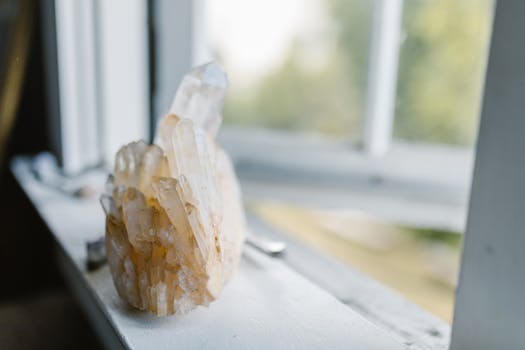
This is the most popular method by a wide margin. You put your crystals on a windowsill overnight during a full moon. Practitioners believe moonlight "recharges" the stone's energy field. Social media is full of posts on full moon nights showing rows of crystals arranged on windowsills, bathed in what looks like dramatic light.
What actually happens? The crystal sits in darkness (moonlight is roughly 400,000 times dimmer than sunlight) at room temperature. There is no known physical mechanism by which visible light at that intensity would alter a mineral's atomic structure. The amount of photon energy reaching a crystal from moonlight is negligible — far less than what it receives from ambient indoor lighting on any ordinary day.
But here's the thing — the ritual of placing the crystal outside, leaving it overnight, and retrieving it the next morning creates a psychological reset point. You've marked the stone as "fresh." That's not nothing. It's the same reason people feel better after cleaning their desk even though the papers are still the same. A 2016 study published in Current Biology found that people who performed a simple "cleansing" ritual before starting a task showed measurably lower cortisol levels and higher task focus compared to a control group. The ritual didn't need to be elaborate — even a structured hand-washing routine produced the effect.
Sunlight
Some people leave crystals in direct sunlight for a few hours. This one actually can change the stone, but probably not in the way intended. Amethyst and rose quartz contain trace amounts of iron. Prolonged UV exposure causes that iron to oxidize, and the purple or pink color fades toward a dull gray or yellow. A 2017 mineralogy study found that amethyst left in direct tropical sun for 100+ hours lost approximately 30-40% of its color saturation.
If you want pale, washed-out crystals, sunlight is your method. If you want to keep the color, keep them in a drawer. Citrine is interesting because much of the "natural" citrine on the market is actually amethyst that has been heat-treated — either in a laboratory kiln (which takes about 20 minutes at 450°C) or, accidentally, by sitting in a sunny window for months. The iron impurities that create purple in amethyst turn amber-gold when heated. So in a sense, sunlight does "charge" amethyst into citrine — it just takes a very long time and the result is usually uneven and muddled compared to proper kiln treatment.
Smoky quartz is another stone affected by light. Its brown-to-black color comes from natural irradiation of aluminum impurities within the quartz lattice. Prolonged sun exposure can actually lighten smoky quartz over time, reversing the very process that gave it color. If you have a particularly dark smoky quartz specimen and want to keep it that way, store it away from light.
Earth burial
Burying crystals in soil or a potted plant is another common practice. The idea is that the earth "grounds" the stone and returns it to a natural state. Some practitioners recommend burying stones for a full lunar cycle (about 29.5 days).
Practically, burying a porous stone (like selenite, which is literally hydrated calcium sulfate) in wet soil for extended periods can damage it. Selenite will dissolve slowly in water. Malachite is copper carbonate — it's reasonably stable dry, but prolonged contact with acidic soil can cause surface pitting. The earth burial method works best for hard, non-porous stones like quartz and garnet, and even then, the main effect is that you've cleaned off fingerprint oils and dust.
There's also the practical problem of forgetting where you buried things. A quartz point buried in a houseplant pot is one thing. A crystal buried in the backyard is another — garden trowels and crystal specimens don't mix well. More than a few people have accidentally damaged buried stones while weeding.
Sound (singing bowls, tuning forks)
Running a singing bowl near your crystals is popular in yoga studios and wellness shops. The theory is that sound vibrations "reset" the crystal's frequency. Some practitioners match specific singing bowl frequencies to specific stones, claiming that each crystal has a resonant frequency that responds to particular tones.
Sound does carry energy — that's basic physics. A singing bowl produces vibrations around 200-600 Hz, which is the same range as normal human speech. The energy transmitted to a quartz crystal through air from a singing bowl is roughly 0.001 joules over a five-minute session. For comparison, dropping the same crystal onto a table from six inches transfers about 0.05 joules of kinetic energy — 50 times more.
The sound method is harmless and pleasant. It won't damage anything. But if the vibration is what's doing the "charging," then you'd get more from accidentally knocking the crystal off your nightstand. The singing bowl session is really more about the person doing the charging than the crystal being charged — the act of sitting quietly, producing a sustained tone, and focusing attention on a single object is a form of meditation, and meditation has well-documented psychological benefits.
Smoke (sage, palo santo, incense)
Passing crystals through smoke is probably the oldest method. The logic varies — some say smoke "clears" negative energy, others say specific herbs have their own properties. White sage is the most commonly used, though palo santo, cedar, and sweetgrass are also popular.
Here's what smoke genuinely does: it deposits a microscopic layer of particulate matter on the crystal surface. Over time, this can make polished stones look cloudy. On rough or natural specimens, it barely matters. The main benefit is the same as with moonlight — it's a ritual that creates a mental boundary between "used" and "ready to use again."
The ethical question around white sage is worth noting. White sage (Salvia apiana) is native to Southern California and has been overharvested significantly due to the wellness industry's demand. Several Native American groups have asked non-Native practitioners to stop burning white sage commercially. If you want to use smoke, consider alternatives like cedar, rosemary, or lavender — they produce pleasant smoke and don't carry the same ethical concerns.
The one thing that genuinely helps: washing them
If you handle your crystals regularly, they accumulate oils from your skin, dust, and general grime. A warm water rinse with a drop of mild soap, followed by drying with a soft cloth, will make any crystal look noticeably better. This is the single most effective "charging" method that has a visible, measurable result.
For harder stones (Mohs 7+ like quartz, amethyst, citrine), warm soapy water is completely safe. For softer stones, a damp cloth is better. Ultrasonic cleaners work well for quartz-family stones but can fracture included specimens — if your crystal has visible cracks or internal veining, skip the ultrasonic cleaner. The high-frequency vibrations can propagate through existing fractures and cause them to spread.
A soft toothbrush works well for cleaning crevices in rough or druzy specimens. Don't use the same toothbrush you use on your teeth — mineral dust and toothpaste don't mix well. A cheap children's toothbrush with soft bristles is ideal.
Why people feel something after charging
This isn't meant dismissively. The feeling is real. There's solid research on why rituals create a sense of renewal, even when the ritual itself doesn't change the physical object.
The mechanism is likely related to the concept of "psychological distance" from prior experiences. When you perform a ritual that marks a stone as "cleansed" or "recharged," you're creating a fresh psychological association with it. The object becomes linked to a moment of intention-setting rather than its previous context. This is the same psychological principle behind throwing away items after a breakup or buying new clothes after getting a promotion — the physical object becomes associated with a new narrative.
When you charge a crystal, you're not changing the mineral. You're creating a psychological bookmark that says "this is a new starting point." That's genuinely useful whether or not you believe the crystal itself changed.
Practical advice that actually matters
If you enjoy charging rituals, keep doing them. They're fun, they're calming, and they don't hurt anything. But if you want your crystals to actually last longer and look better, here's what matters:
Store them away from direct sunlight. UV degrades color in many popular stones. A closed box or a drawer is better than a sunny windowsill. Display them under LED or incandescent light if you want them visible — these light sources produce negligible UV compared to sunlight.
Keep them dry unless you know the specific mineral tolerates water. Selenite, malachite, halite, and pyrite all react badly to prolonged moisture. A sealed container with a silica gel packet is cheap insurance for hygroscopic minerals.
Separate stones by hardness. A diamond ring in a bag with your tumbled stones will scratch everything. Use individual pouches or compartments. The general rule is simple: if two stones are touching, the harder one will eventually scratch the softer one. Mohs hardness isn't linear — the difference between 9 (corundum) and 10 (diamond) is much larger than the difference between 1 (talc) and 2 (gypsum). Diamond scratches essentially everything, including corundum.
Clean them periodically. Warm water and soap for hard stones. A soft brush for crevices. No harsh chemicals — Windex and vinegar can damage some minerals. Ammonia-based cleaners can etch the surface of opals and some treated stones.
Handle them with clean, dry hands. The oils on your fingers will dull polished surfaces over weeks and months. This is particularly noticeable on highly polished specimens and tumbled stones with a glossy finish.
The charging debate isn't going away. But the physical care is straightforward, well-understood, and genuinely makes a difference in how long your crystals stay beautiful.
Comments