<h2>How to Build a Mixed Metals Jewelry Collection Without It Looking Chaotic</h2>
The old rule was simple: pick one metal and stick with it. Gold jewelry with gold jewelry, silver with silver. Mixing them was the kind of thing fashion magazines would call out as a misstep. That rule has been dead for years, and mixed metals are now one of the most popular approaches to personal jewelry styling. But "anything goes" isn't the same as "everything works." There's a real difference between a curated mixed metals look and a cluttered one.
This guide walks through the process of building a mixed metals jewelry collection that looks intentional and put-together, even if you're wearing three different metal colors at once.
Step 1: Understand the Rule of Two
The single most useful principle for mixing metals is this: limit yourself to two metals at a time. Three metals competing for attention creates visual noise. Two metals create a dialogue.
The most common pairings are gold and silver, rose gold and silver, and gold and rose gold. Pick whichever two feel most natural with your existing wardrobe and skin tone. The third metal can exist in your collection, just don't wear all three on the same day or in the same area.
If you already own jewelry in all three metals, this rule helps you edit. Before you walk out the door, check what's on your hands, wrists, neck, and ears. Count the metals. If you see gold, silver, and rose gold all on your left hand, swap one piece out. The restraint looks more deliberate than the abundance.
Step 2: Find Your Base Metal
Your base metal is the one that makes up the majority of your jewelry, maybe 70-80% of what you wear on a given day. The other metal is your accent. The base should feel like "you" while the accent adds surprise and interest.
Two factors help determine your base metal: skin tone and wardrobe.
Skin tone is the more talked-about factor. Warm undertones (yellowish, golden, or olive skin) tend to pair well with gold, because the warm tones echo each other. Cool undertones (pinkish or bluish) tend to pair well with silver, for the same reason. Neutral undertones can go either way. A quick test: hold a gold piece and a silver piece against your bare wrist. Whichever one makes your skin look healthier and more even is probably your base.
Wardrobe is the less obvious but arguably more important factor. Look at the dominant metal colors in your clothing. Belt buckles, buttons, zippers, bag hardware, and shoe details all count. If 80% of your wardrobe features silver or gunmetal hardware, silver is probably your base metal. If you lean toward warm tones in your clothing and accessories, gold might work better. When your jewelry base matches the hardware in your clothes, everything feels cohesive without any effort.
Step 3: Add the Accent Metal
Once you've identified your base metal, the accent is the contrasting metal that you add in small doses. The key word is "small." One accent piece is enough to create the mixed metal effect without overwhelming the look.
A common approach: wear your base metal in pieces close to your body (a necklace, a ring on your dominant hand) and let the accent metal appear in one statement piece further from your center, like a bracelet on your non-dominant wrist or earrings that catch the light. The physical distance between the two metals prevents them from competing visually.
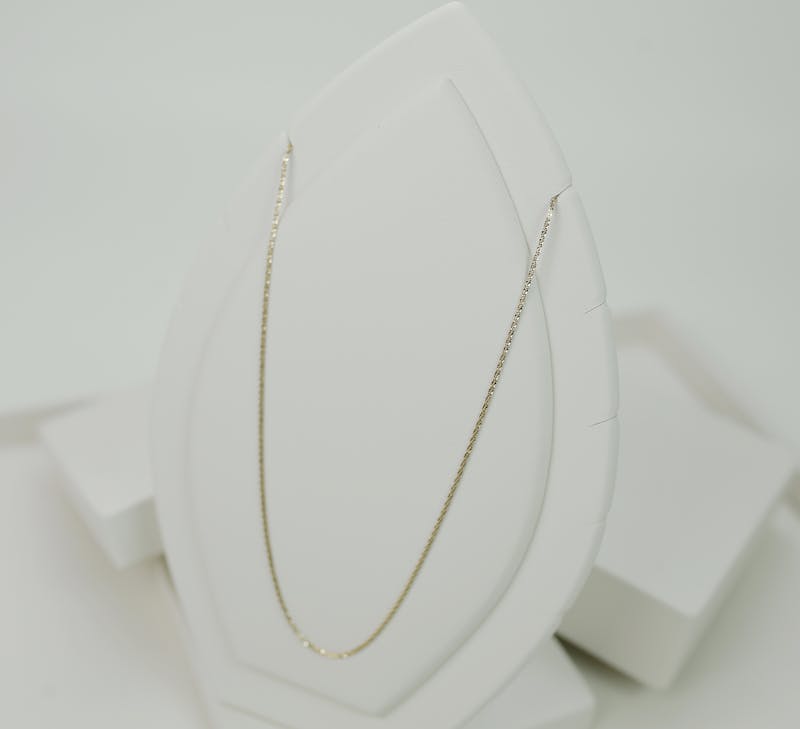
The accent piece should also differ in some other way from your base metal pieces. If your base is delicate gold chains, your accent could be a chunky silver cuff. If your base is a set of silver stacking rings, your accent could be a single gold pendant necklace. The contrast in scale or style reinforces the impression that the mixing is intentional.
Step 4: Texture Matters More Than Color
When two different metal colors are sitting side by side, texture becomes the thing that makes them work together or clash. The principle: don't put two highly polished, shiny metals right next to each other. The similar reflectiveness makes the color difference feel jarring.
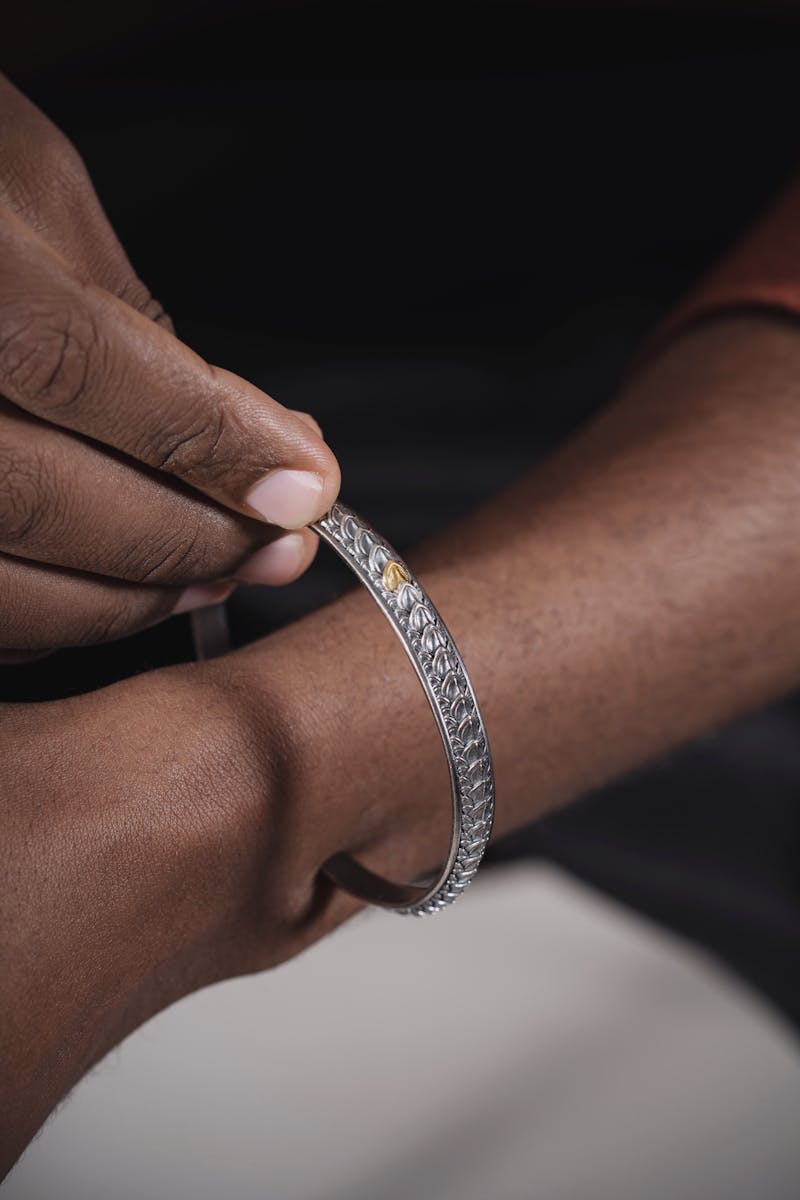
Instead, mix textures. A polished gold ring next to a matte, brushed, or hammered silver ring looks intentional because the different finishes create enough visual separation. The textures act as a buffer between the colors.
This is also where patina helps. A piece of silver that has developed a natural patina (the slight darkening that happens over time as silver reacts with sulfur in the air) has a softer, more muted surface than fresh silver. That aged surface mixes more easily with gold than bright, newly polished silver does. If your silver pieces are too bright for comfortable mixing, you can let them develop patina naturally, or use a gentle patina solution to speed up the process.
Step 5: Stack Strategically
How you arrange your jewelry on your body affects whether mixed metals look intentional or accidental.
For rings, a reliable approach is to keep one hand in your base metal and the other hand in your accent metal. If both hands are mixed, it reads as cluttered. One hand unified, one hand contrasting, looks like a deliberate styling choice.
For necklaces, layer length is your friend. Wear your base metal in the shorter chain (closer to your neck) and the accent metal in a longer chain. The vertical separation lets each piece exist in its own visual space. If you're wearing three necklaces, try base metal for the shortest and longest chains with the accent metal in the middle, or vice versa. The key is that same-metal pieces don't sit right next to each other, creating a rhythmic pattern rather than a block.
For earrings, mixing metals works well because each ear is a separate visual unit. A gold stud with a silver drop earring on the same ear can look like a deliberate pair. Mixing metals between ears (gold on the left, silver on the right) also works but reads as more playful.
Step 6: Use Transitional Pieces
Transitional pieces are jewelry items that combine two metals in a single design. Think of a chain that's half gold and half silver, or a ring with a gold band and silver setting, or a pendant with both metal colors in its construction.
These pieces do the mixing for you and make it look effortless. When you wear a two-tone necklace, it bridges the gap between any gold and silver pieces you're wearing elsewhere. It signals to anyone looking that the mixing is on purpose, which changes how the whole outfit reads.
Two-tone jewelry has become more common in recent years, and it's worth having at least one transitional piece in your collection if you plan to mix metals regularly. A simple two-tone chain or a bangle that transitions from gold to silver is versatile enough to wear on its own or as part of a layered look.
Step 7: Use Stone Colors as Unifiers
One of the most effective tricks for making mixed metals work is using gemstones as a visual bridge. A gold ring with a blue sapphire and a silver ring with a blue sapphire read as a pair, even though the metal colors are different. The shared stone color creates a connection that overrides the metal contrast.
This works with any color that appears in multiple pieces. Diamonds and white sapphires are particularly good unifiers because they're neutral and complement both gold and silver. Colored stones like garnets, emeralds, or amethysts can also work, as long as the colors are similar enough to create a visual link.
The stone-as-unifier approach also helps when you're wearing multiple rings and want them to feel like a cohesive set rather than a random assortment. Three rings in mixed metals but with stones in the same color family look curated. Three rings in mixed metals with completely different colored stones look like you got dressed in the dark.
Putting It Together: Practical Examples
Here are specific combinations that work and ones that don't, so you can see the principles in action.
What Works
A gold watch on your left wrist, a delicate silver chain necklace, and a rose gold ring on your right hand. This works because the three metals are spread across different parts of your body, creating visual distance between them. No two metals are competing in the same area.
A stack of silver rings on your left hand with one gold ring in the middle. The gold ring acts as an accent, sandwiched between silver pieces. The consistent hand placement makes it look like a deliberate stack rather than an accident.
A layered necklace set with a short gold chain, a medium-length silver chain, and a long gold chain. The alternating pattern (gold, silver, gold) creates rhythm and intentionality. The lengths prevent any two pieces from overlapping.
What Doesn't Work
Gold hoop earrings, a gold necklace, and a chunky silver bracelet all on the same side of your body. The gold pieces cluster together and then the silver bracelet sits right below them, creating two competing focal points in the same visual area. It would work better with the silver bracelet on the other wrist or with one of the gold pieces swapped for silver.
Three rings on one hand, each in a different metal (gold, silver, rose gold), with no other shared element. This is the "too many cooks" problem. Three metals in a tight space with nothing connecting them looks accidental. Adding a gemstone element that appears in at least two of the rings would help.
Skin Tone Quick Reference
Warm skin (yellow, golden, peachy undertones): gold as your base metal is the safest bet. Silver works as an accent, especially in cooler weather when your skin is less flushed.
Cool skin (pink, blue, red undertones): silver as your base metal. Gold accents work, especially warmer shades like yellow gold rather than rose gold.
Neutral skin (a mix of warm and cool, or hard to tell): you have the most flexibility. Try both and see what your mirror tells you. Many neutral-toned people find that silver works year-round while gold pops more in summer when skin is slightly more golden from sun exposure.
Starting Your Mixed Metals Collection
If you currently wear only one metal, don't overhaul everything at once. Start by adding one accent piece in a contrasting metal. A simple silver bracelet if you wear gold, or a gold ring if you wear silver. Wear it with your usual pieces for a week and see how it feels. Once you're comfortable with that, add a second accent piece. Build slowly.
The best mixed metals collections look collected over time, not purchased all at once. A gold bracelet from five years ago, a silver ring from last month, and a two-tone necklace from last week tell a more interesting story than a matching set bought together. Let the collection grow organically, and trust the rule of two to keep it coherent.

Comments