<h2>How I Built a Capsule Jewelry Collection With Just 12 Pieces</h2>
The starting point: what I owned vs. what I wore
The first week was just observation. Every time I put on jewelry, I wrote it down. Every time I took it off at the end of the day, I wrote that down too. After seven days, the pattern was obvious. Out of fifty-plus pieces, I was regularly wearing maybe eight of them. Everything else was either too fussy for daily life, did not match anything I own, or was a gift I felt guilty about not wearing but genuinely did not like.
The eight pieces I wore fell into a few categories: a pair of small gold hoop earrings, a thin chain necklace, two or three rings that I rotated, and a watch. That was it. That was my actual jewelry life. The other forty-something pieces were just occupying space.
The rule: six months unworn means gone
I needed a clear standard for what to keep and what to discard, because the emotional part of this was harder than I expected. Every piece had some attachment. This was the necklace from my college friend's wedding. These were the earrings my mom picked out. This was the ring I bought when I got my first real job. But attachment is not the same as use, and a jewelry box full of sentimental objects that never see daylight is just a museum you have to open every morning to find the one thing you actually want.
My rule was: if I had not worn it in the last six months, it went. No exceptions. I made three piles: keep, donate, and sell. The donate pile went to a local women's shelter. The sell pile went to a consignment shop (and I made about $120, which was a nice surprise). The keep pile started with those eight pieces I was already wearing daily.
The 12-piece list
Eight pieces were not enough for a complete collection. I was missing a few categories that I actually needed but had never bothered to fill properly. So I defined the 12 slots I wanted and filled the gaps. Here is the final list:
- Stud earrings (1 pair): Small, simple, gold. For days when hoops feel like too much effort. These go with everything from a t-shirt to a blazer.
- Hoop earrings (1 pair): Medium-sized, about 20mm, thin gold. My default earring. I wear these probably four days out of seven.
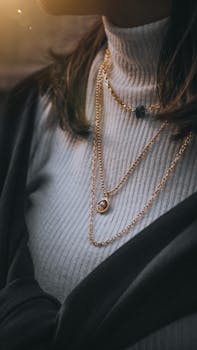
- Fine chain necklace (1): A delicate 18-inch gold chain with no pendant. Layering piece, goes under other necklaces or works alone.
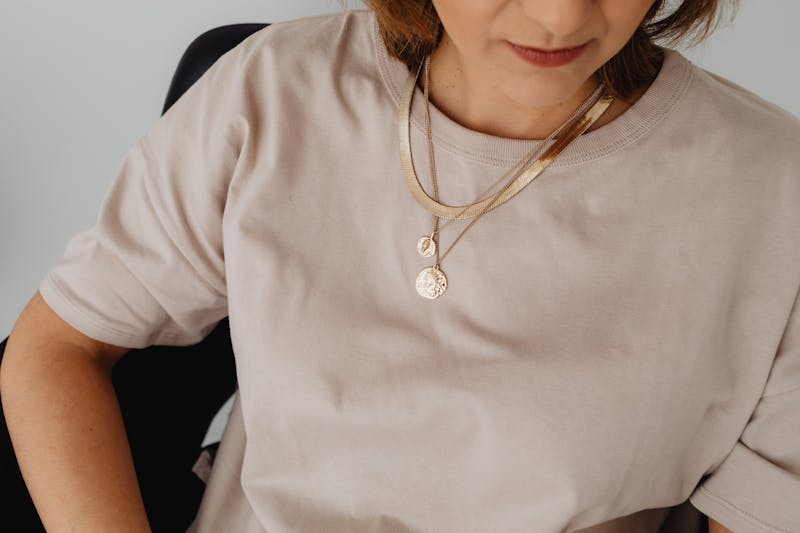
- Statement necklace (1): A slightly thicker chain with a small pendant, nothing too loud. For when the outfit needs a focal point but I do not want to think about it.
- Pendant necklace (1): A specific pendant on a separate chain. I chose a small stone pendant on a 20-inch chain. Different enough from the statement necklace to justify both.
- Plain band ring (1): Thin gold band, no stones. Stackable. This is my everyday ring.
- Signet ring (1): A small signet with my initial. Adds some personality without being flashy.
- Gemstone ring (1): A small stone set in gold, a birthstone. This is my "color" piece, the one ring that is not plain metal.
- Bracelet (1): A simple chain bracelet that matches the necklace metal. I do not wear bracelets every day, but I wanted one for occasions.
- Watch (1): A minimalist gold watch with a small face. Functional, and it ties the gold metal theme together on my wrist.
Wait, that is only 10. The remaining two slots are seasonal rotation pieces. Right now they are a pair of drop earrings for dressier occasions and a simple bangle that I swap in during summer. These two can change with the seasons or my mood, but the core 10 stay constant.
The metal rule: pick one and commit
The biggest decision in building this collection was not which individual pieces to choose. It was the metal. I had a mix of silver, gold, and rose gold jewelry, and mixing metals can look intentional and cool, but it also makes getting dressed in the morning more complicated than it needs to be. Every time I picked a gold necklace, I had to think about whether it clashed with my silver rings. Every outfit decision had a metal-color variable attached.
I chose gold. All gold. Everything in the collection is either solid gold, gold-filled, or gold-plated brass. The result is that every piece in the collection works with every other piece. I can put on any combination and it looks coherent. No mental math required at 7 AM.
If you prefer silver, do silver. The point is not which metal is better. The point is committing to one. Pick the metal you already gravitate toward, look at what is in your regular rotation, and let that decide. Chances are you already have a preference.
The budget: how much it actually cost
When I started this project, I assumed a curated 12-piece collection would be expensive. It was not. I already owned six of the final pieces. Of the six I needed to buy or replace, I spent a total of about $280 over two months. Here is roughly what each new piece cost:
- Stud earrings: $25 (gold-plated sterling)
- Fine chain necklace: $35 (gold-filled)
- Pendant necklace: $45 (gold-filled chain, stone pendant)
- Signet ring: $60 (solid 10k gold)
- Gemstone ring: $75 (gold-filled with small stone)
- Chain bracelet: $40 (gold-filled)
The total value of the full collection, including pieces I already owned, is probably around $450 to $500. That sounds like a lot until you compare it to the retail value of the fifty pieces I got rid of, which was easily over $1,500. I spent less and got more use out of what I owned.
Traveling with 12 pieces
The first real test of the capsule collection was a week-long trip. Previously, I would pack a tangled mess of jewelry, half of which I never touched. This time I took the entire 12-piece collection in a single small travel case. It fit in my toiletry bag. Every morning, I picked from the same 12 options, and every outfit worked because everything was already coordinated. No "I wish I had brought that other necklace" moments, because the other necklace was not part of the collection for a reason.
The watch alone was worth packing. Having a timepiece that matched the rest of the jewelry meant I did not need to think about accessories at all. Put on the watch, add a ring or two, pick earrings, done. The whole process took about 30 seconds.
Seasonal rotation vs. year-round pieces
Of the 12 pieces, 10 are what I would call year-round. They work in any season, with any clothing weight, and in any casual-to-semiformal context. The two rotation slots are where the fun comes in. Right now I have drop earrings and a bangle. In fall, I might swap the drop earrings for a pair of small chandeliers and the bangle for a cuff. In winter, maybe something with a darker stone.
The rotation system keeps the collection from feeling stale without requiring a complete overhaul. Two pieces change, the rest stay the same, and the whole thing feels refreshed. It also means I can indulge the urge to buy something new without expanding the collection. Something new comes in, something old goes into storage. The total count stays at 12.
What I would do differently
If I were starting over, I would do one thing sooner: I would stop buying on impulse before building the core collection. During the first month of this project, I bought two pieces that I thought I needed but ended up not wearing. They are not in the final 12. The lesson is that you do not need to fill every slot immediately. Start with what you have, identify the actual gaps (not the imagined ones), and fill them one at a time.
The other thing I learned is that quality matters more than quantity in a way that is obvious in theory but easy to ignore in practice. A $60 gold-filled chain that I wear every day for two years is a better investment than three $20 plated chains that tarnish and break. The capsule approach forced me to spend more per piece, which was uncomfortable at first, but each piece gets so much wear that the cost-per-use drops to almost nothing.
Three months in, I do not miss the forty pieces I got rid of. I open my jewelry box in the morning and everything in it is something I actually want to wear. That sounds small, but it is a genuinely better start to the day than digging through a pile of stuff I am indifferent about. Sometimes having less really does mean having more.

Comments