<h2>How I Accidentally Bought a $10,000 Herkimer Diamond and What I Learned</h2>
The only place on earth where Herkimer diamonds exist
My partner and I were driving from Albany to the Adirondacks last October when we passed through Herkimer County. I'd read somewhere that this area was famous for a type of crystal called "Herkimer diamonds," and since I'd been collecting stones for about a year at that point, I convinced us to stop.
The county sits in the Mohawk River Valley, about 80 miles west of Albany. The landscape is rolling hills, dairy farms, and the kind of small towns where the main street has a pizza place, a hardware store, and not much else. But underneath all that farmland is Cambrian-age dolostone, a sedimentary rock roughly 500 million years old. And trapped inside that dolostone are some of the clearest, most perfectly formed quartz crystals you'll ever see.
That geological quirk is the reason this is the only place on the planet where true Herkimer diamonds are found. Not India, not Brazil, not Madagascar. Just this one county in central New York. The name is a local marketing term, not a gemological classification, but it stuck because the crystals do look uncannily like diamonds to the untrained eye.
The rock shop that cost me a fortune
We pulled into a gravel parking lot outside a weathered wood building with a hand-painted sign that read "ACA Mining & Rock Shop." Inside, it was exactly what you'd expect from a rural rock shop: glass cases full of specimens, fluorescent minerals under black lights, and a bored-looking teenager behind the counter who seemed more interested in her phone than in geology.
I was browsing the affordable stuff, picking up $15 tumbled stones and $30 small Herkimer diamonds, when the owner appeared from a back room. He was a guy in his sixties with a gray ponytail and the kind of easy confidence that makes you trust him immediately.
"You looking for something special?" he asked. "I just got a piece in that a collector would kill for."
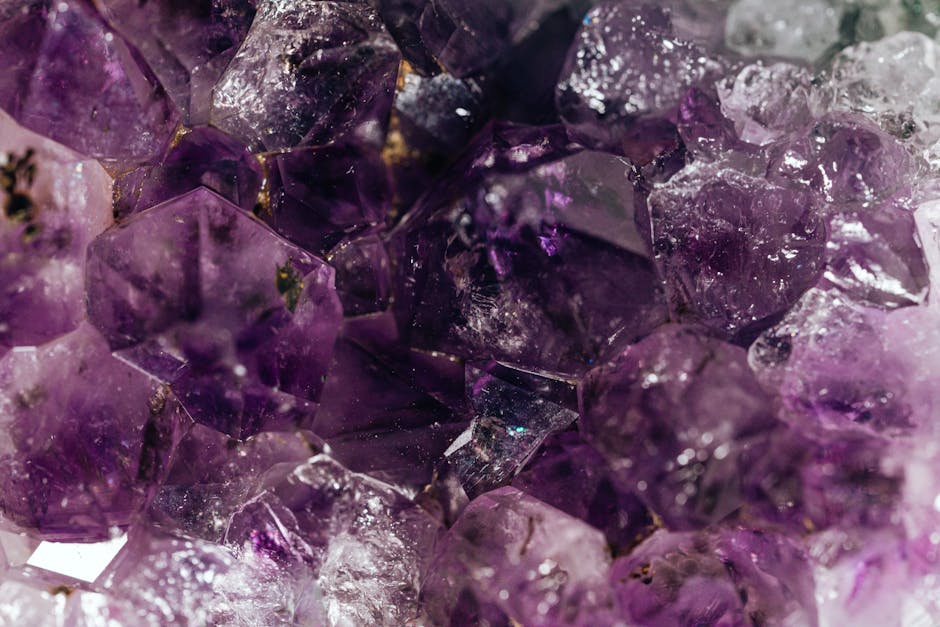
He pulled out a foam-lined wooden box and opened it. Inside was a cluster of maybe 15 double-terminated crystals, ranging from half an inch to nearly two inches long. Every single one was water-clear with sharply defined terminations on both ends. Several had visible inclusions that caught the light, tiny two-phase bubbles that moved when you tilted the specimen.
"Museum quality," he said. "Perfect double terminations. Enhydro bubbles in at least four of the stones. This is a once-in-a-lifetime piece. I'm asking ten thousand."
My first thought, honestly, was: it's just quartz, right? Regular quartz. The stuff that costs $2 a pound at a gem show. But I'd also just spent a year reading about crystals, and I knew enough to be intrigued by the "double-terminated" part. Most quartz crystals form with one pointed end and a flat base where they broke off from the host rock. Double-terminated quartz has points on both ends, which means it grew freely inside a pocket of rock without touching any surface. That's relatively rare.
What the owner told me about Herkimer diamonds
The owner, whose name was Rick, sat down with me and gave me the pitch. I'm going to relay what he said, with the understanding that rock shop owners are, by definition, salespeople:
He explained that Herkimer diamonds formed inside small cavities called "vugs" in the dolostone bedrock. About 500 million years ago, during the Cambrian period, this area was covered by a shallow sea. Calcium carbonate accumulated on the sea floor and eventually compressed into dolomite. As the dolomite formed, it created pockets. Silica-rich groundwater seeped into those pockets over millions of years, and quartz crystals grew slowly, point by point, in both directions.
Because they grew in these protected pockets, undisturbed by surrounding rock, Herkimer diamonds often develop 18 natural facets (six on each termination point, six around the body) without any cutting or polishing. That's what makes them look like cut diamonds. A jeweler in New York City supposedly started calling them "Herkimer diamonds" in the 1800s because of this resemblance, and the name spread from there.
Rick also pointed out the hardness factor. Most quartz sits at a 7 on the Mohs scale. Herkimer diamonds consistently test at 7.5, which makes them slightly harder than regular quartz. Nobody is entirely sure why. The leading theory is that the specific mineral composition of the dolostone host rock allowed trace amounts of other minerals to incorporate into the crystal lattice, making it marginally denser.
He showed me the enhydro inclusions, those tiny movable bubbles inside the crystals. These form when fluid gets trapped during crystal growth. In Herkimer diamonds, the fluid is usually water or petroleum. You can actually see the bubble move when you tilt the stone. Collectors go nuts for these because they're a visible record of the crystal's formation environment, essentially a tiny time capsule from 500 million years ago.
The moment I said yes
I should have walked away. I should have said "let me think about it" and gone back to my hotel to do some research. That's what a smart person would have done.
Instead, I pulled out my credit card.
What can I say? The specimen really was beautiful. The crystals were clearer than any quartz I'd ever handled, the terminations were razor-sharp, and those enhydro bubbles were genuinely fascinating. Rick threw in a display stand, a certificate of authenticity (which I later learned is meaningless in the mineral world), and a laminated information card about the geology of Herkimer County.
The drive to our hotel that night was quiet. My partner, who is not a crystal person, just looked at me. "You spent how much on a rock?" she asked. I mumbled something about it being an investment. She was not convinced.
What I learned after the fact
Over the next few weeks, I went down a research rabbit hole. Here's what I found out, organized into the things I wish I'd known before walking into that shop.
Herkimer diamonds are not diamonds
This should be obvious from the price difference alone. A real diamond of comparable size would cost hundreds of thousands. Herkimer diamonds are double-terminated quartz crystals. They're called "diamonds" purely because of their clarity and natural faceting. The name is a colloquial term that has no gemological standing. If you're buying one thinking you're getting something related to diamond, you're not.
Price guide: what Herkimer diamonds actually cost
After talking to dealers, browsing online shops, and checking auction results, I put together a rough price guide:
Small single crystals (under 1 inch, moderate clarity): $5 to $20 each. These are the tourist-grade stones you'll find in every shop in Herkimer County for $10 to $15.
Medium clusters or large single stones (1-2 inches, good clarity): $50 to $500. The upper end of this range gets you a nice display piece with good terminations and maybe some inclusions.
High-quality clusters with exceptional features (enhydro bubbles, anthraxolite inclusions, perfect clarity): $500 to $2,000. These are collector-grade specimens sold through mineral dealers and auction houses.
Museum-quality pieces (large clusters, exceptional clarity, rare features): $2,000 to $10,000+. This is the range where my purchase fell. These are the kinds of pieces that end up in museum collections or serious mineral collections.
So was my piece worth $10,000? Honestly, I've seen comparable specimens sell at mineral shows for $3,000 to $5,000. The markup in tourist areas is real. Dealers I spoke with later told me that shops in Herkimer County and other mining tourism destinations routinely charge two to five times what the wholesale value would be at a mineral show or through an online dealer.
I overpaid. Probably by a lot.
The geology behind the crystals
One thing I don't regret is learning about the geology. The story of how these crystals form is genuinely interesting.
The host rock is Cambrian-age dolostone, specifically the Little Falls Dolostone formation. Dolostone is different from limestone. While limestone is calcium carbonate (CaCO3), dolostone has been chemically altered so that about half the calcium is replaced by magnesium (CaMg(CO3)2). This alteration happened hundreds of millions of years after the original limestone was deposited, when magnesium-rich fluids moved through the rock.
The quartz crystals formed in vugs, which are small cavities within the dolostone. These vugs were created by dissolution, acidic groundwater eating away at the rock over geological time. Once the cavities existed, silica-saturated groundwater flowed in and, over millions of years, precipitated quartz crystals. Because the crystals grew in open space, they developed terminations on both ends.
The clarity of Herkimer diamonds comes from the slow growth rate and the relatively pure silica solution. Fewer impurities in the fluid meant cleaner crystals. The anthraxolite inclusions (black, coal-like material) that you see in some specimens are bits of organic matter from the ancient sea floor that got trapped during growth.
The area has been mined for these crystals since the late 1700s. There are several "pay-to-dig" mines in the county where, for a fee, you can hammer at dolostone with a chisel and try to find your own. The most well-known are the Ace of Diamonds Mine and the Herkimer Diamond Mines, both of which charge around $15-25 per person for a half-day of digging.
How to tell a real Herkimer diamond from a fake
Fakes do exist. Glass and synthetic quartz are sometimes sold as Herkimer diamonds, especially online. Here's what to look for:
Double terminations. Real Herkimer diamonds have natural points on both ends. The terminations should be well-defined, not rounded or melted-looking. If only one end is pointed, it's not a Herkimer diamond.
Clarity and inclusions. Most real Herkimer diamonds have some internal features, even the clear ones. Tiny fractures, micro-inclusions, or slight growth zoning are normal. Perfectly clean stones exist, but they're rare. If every stone in a batch looks absolutely flawless, that's a red flag for glass.
Enhydro bubbles. These are one of the best indicators. If you see a small movable bubble inside the crystal, tilt it. In a real enhydro, the bubble moves through fluid. In glass, you might see an air bubble, but it won't move because there's no liquid for it to travel through.
Weight and temperature. Quartz is denser than glass (specific gravity 2.65 vs. 2.2-2.5 for most glass) and feels colder to the touch. If the stone feels light or warms up quickly in your hand, it might be glass.
Provenance. The only way to be 100% sure a Herkimer diamond is real is to buy it from a reputable dealer who sources directly from Herkimer County. That said, there are similar double-terminated quartz crystals found in other locations (Pakistan, China, Afghanistan), and these are sometimes mislabeled as Herkimer diamonds. They're real quartz, just not from New York.
What I'd do differently
I've had the specimen for seven months now. It sits on my desk in the display stand Rick threw in, and I still look at it every day. The enhydro bubbles still move when I tilt it, and the clarity is genuinely remarkable.
But if I could go back to that October afternoon, here's what I'd change:
Research before buying. I knew almost nothing about Herkimer diamonds when I walked into that shop. A single evening of reading would have told me the realistic price range and helped me negotiate or walk away.
Don't buy expensive specimens in tourist areas. Mineral shops in mining tourism zones survive on foot traffic from people who don't know better. The same piece at the Tucson Gem and Mineral Show or from an online dealer would have cost a fraction of what I paid.
Start cheap and learn. I should have spent $50 on a handful of smaller specimens to learn what good clarity and termination look like before dropping thousands on a "museum quality" piece.
Get a second opinion. If someone is selling you a $10,000 mineral specimen, you should be able to get an independent appraisal or at least show photos to experienced collectors before committing. I didn't do any of that.
Am I glad I bought it? Part of me says yes. It's a stunning piece of natural history, a 500-million-year-old time capsule sitting on my desk. But another part of me knows I got taken advantage of, and that's a hard feeling to shake. The specimen is worth keeping. The price was not.
If you're heading to Herkimer County to dig or buy, by all means enjoy it. The geology is real and the crystals are beautiful. Just bring a realistic sense of what things should cost, and maybe leave the credit card in the car.
Comments