Crystal Skulls: The History Behind the Myth and What's Actually Real
The Legend That Refuses to Die
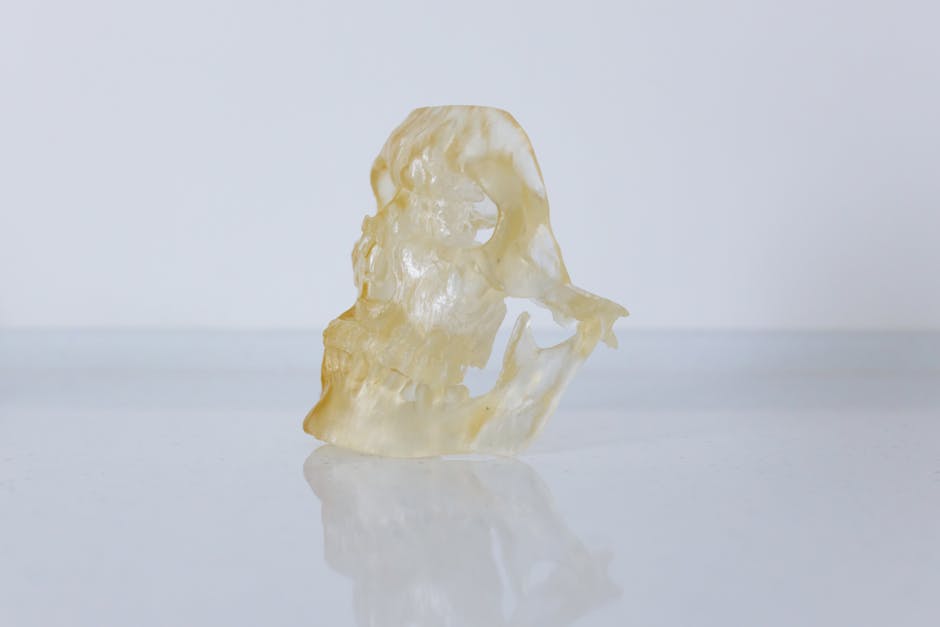
Crystal skulls show up everywhere. They're in New Age shops, on museum shelves, in adventure movies, and scattered across conspiracy theory websites. The story is always roughly the same: ancient civilizations, possibly the Maya or Aztec, carved perfect crystal skulls that contain mystical knowledge, cosmic secrets, or alien technology. Some versions claim there are thirteen skulls that must be reunited to unlock humanity's hidden potential.
It's a fantastic story. The problem is that almost none of it is supported by evidence. And the parts that are true are mostly about modern manufacturing, not ancient mysticism. Let's separate what we actually know from what people wish were true.
The Famous Skulls and Where They Came From
The most famous crystal skull is the Mitchell-Hedges skull, named after the British explorer and adventurer Frederick Albert Mitchell-Hedges. He claimed his adopted daughter Anna discovered it in 1927 at the ancient Maya city of Lubaantun in British Honduras, now Belize. The skull, carved from a single piece of clear quartz, is remarkably detailed and has become the centerpiece of crystal skull mythology.
The problem with the Mitchell-Hedges story is that there's no archaeological evidence supporting it. No photographs from the 1927 expedition show the skull. No field notes mention it. Mitchell-Hedges himself didn't write about the skull until years later, and even Anna's accounts of its discovery changed over time. More damningly, records from an auction house show that Mitchell-Hedges bought the skull at a Sotheby's auction in 1943, for £400. This is a documented fact with paper records, not an adventure story with shifting details.
The British Museum has its own crystal skull, donated in 1898. For decades, it was believed to be an authentic Mesoamerican artifact. The museum displayed it as such and even cited it in publications about Aztec art. Then, in 2008, the museum commissioned a detailed scientific examination that changed everything.
The Smithsonian Institution received a crystal skull in 1992, anonymously mailed from an anonymous donor. It had been offered to the Smithsonian previously with claims of being an ancient Aztec artifact. The museum's gem experts examined it and found evidence that it was carved using modern tools.
The Paris Skull at the Musée du Quai Branly is another well-known example. Like the others, it was long attributed to the Aztec or Maya but has since been examined with modern techniques that suggest a more recent origin.
What Science Actually Found
The 2008 study that examined the British Museum skull and the Smithsonian skull is the most comprehensive scientific investigation of crystal skulls to date. A team from the British Museum and the Smithsonian used scanning electron microscopy, X-ray crystallography, and other techniques to analyze the carving marks, tool traces, and surface characteristics of the skulls.
The findings were pretty definitive. The carving marks on both skulls showed evidence of rotary cutting tools, specifically modern jeweler's equipment like diamond-tipped burrs and rotary wheels. These tools leave distinctive marks that are different from the marks left by the hand tools, stone tools, and abrasive techniques that Mesoamerican craftsmen would have used.
Ancient Mesoamerican lapidaries were incredibly skilled. They carved jade, obsidian, and other hard materials into elaborate shapes using stone tools, abrasives, and cord-sawing techniques. But the specific tool marks on the crystal skulls don't match any known ancient Mesoamerican carving techniques. They do, however, match the marks left by modern lapidary equipment that was available in the 19th century when these skulls first appeared in the market.
The quartz itself, while natural, showed characteristics consistent with material sourced from Brazilian deposits that were commercially mined in the 19th century. The ancient Maya and Aztec did use quartz for various purposes, including small carved objects, but the large, clear quartz pieces used for the famous crystal skulls come from sources that weren't accessible to those civilizations.
The surface of the British Museum skull showed microscopic evidence of a type of abrasive polishing that wasn't developed until the 19th century. The Smithsonian skull had similar telltale signs. Neither showed the kind of hand-finishing and manual polishing that would be expected from ancient craftsmanship, even from the most skilled Mesoamerican artisans.
The Historical Context: 19th Century Antiquities Market
To understand why crystal skulls exist at all, you need to understand the European antiquities market in the 19th century. This was the golden age of archaeological forgery, a period when European collectors were paying enormous sums for artifacts from ancient civilizations, and a cottage industry of forgers sprang up to meet the demand.
Mesoamerican artifacts were particularly hot commodities. The decipherment of Maya hieroglyphs was in its early stages, and European and American collectors were fascinated by the exotic civilizations of Central America. Genuine artifacts were difficult to obtain legally and often required expensive and dangerous expeditions. Forgers in Mexico, Germany, France, and elsewhere filled the gap by creating "ancient" artifacts using modern tools and selling them to gullible collectors.
Crystal skulls fit perfectly into this market. They looked mysterious and ancient, they appealed to European fascination with the occult and the exotic, and they were relatively easy to carve using available lapidary equipment. A skilled 19th-century carver with good tools and access to large pieces of clear quartz could produce a convincing crystal skull in a matter of weeks. The resulting piece could then be sold for many times the cost of materials and labor to a collector who had no way to verify its provenance.
Eugène Boban, a French antiquities dealer who operated in Mexico City in the late 19th century, is believed to be connected to several of the most famous crystal skulls. He sold at least two crystal skulls that later ended up in major museum collections. Boban was a known dealer in both genuine and forged Mesoamerican artifacts, and the provenance records for his crystal skull sales are inconsistent enough to raise serious doubts about their authenticity.
The Mesoamerican Crystal Skull Connection
This is the part that confuses a lot of people. The Maya and Aztec did carve small crystal and stone objects, and some of them do resemble skulls in a general sense. Small, roughly skull-shaped beads and pendants carved from various stones, including quartz, have been found at legitimate archaeological sites in Mesoamerica. These are genuine ancient artifacts, but they're quite different from the large, life-sized crystal skulls that dominate the mythology.
The genuine Mesoamerican skull-shaped objects are small, usually under two inches, and often quite stylized rather than anatomically detailed. They were likely used in religious or funerary contexts, possibly as representations of death and rebirth. Some were worn as pendants or incorporated into larger ceremonial objects. They're interesting artifacts in their own right, but they're not the dramatic, transparent, life-sized crystal skulls that populate the legends.
The size difference matters. Carving a small quartz bead or pendant using hand tools and abrasives is time-consuming but entirely feasible for skilled ancient craftsmen. Carving a life-sized skull from a single large piece of clear quartz, with detailed anatomical features and a polished finish, using the same techniques would be an extraordinarily ambitious project that would take years, possibly decades. No archaeological evidence suggests that ancient Mesoamerican civilizations attempted or completed such a project.
The Pop Culture Legacy
Crystal skulls got their biggest pop culture boost from the 2008 Indiana Jones movie, "Indiana Jones and the Kingdom of the Crystal Skull." The film treated the skulls as genuine alien artifacts with supernatural properties. While the movie explicitly positioned itself as fiction, it also introduced the concept of crystal skulls to a huge audience that might not have encountered them otherwise. The film's version of crystal skull mythology, alien technology, psychic powers, ancient civilizations, became the default framework for many people's understanding of the topic.
Before Indiana Jones, crystal skulls had already been featured in numerous books, TV shows, and documentaries that presented them as genuine mysteries. The 1990s and early 2000s saw a boom in New Age literature about crystal skulls, with books claiming they were Atlantean artifacts, extraterrestrial technology, or tools for accessing higher consciousness. These claims were presented with varying degrees of conviction, but they shared a common thread of treating the skulls as genuinely ancient and genuinely mysterious.
The 2008 scientific study received far less media coverage than the Indiana Jones movie, which means that public perception of crystal skulls is still largely shaped by mythology rather than evidence. Most people who have heard of crystal skulls have encountered them in the context of mystery and mysticism, not the context of 19th-century antiquities fraud.
The Ongoing Belief and Why It Persists
Despite the scientific evidence, belief in the mystical properties of crystal skulls remains widespread. This isn't surprising when you think about it. The skulls are genuinely beautiful objects. A well-carved crystal skull in clear quartz is an impressive piece of craftsmanship, regardless of when it was made. The transparency of the quartz, the anatomical detail, and the sheer size of some specimens create an immediate sense of wonder that's hard to dismiss, even when you know the history.
There's also the appeal of mystery itself. Some people prefer the version of the story with ancient civilizations, cosmic secrets, and hidden knowledge, even when presented with evidence that contradicts it. The scientific explanation, 19th-century carvers using available tools to create salable objects for a gullible market, is mundane by comparison. Human nature tends to favor the more interesting narrative, and crystal skull mythology is certainly more interesting than the reality.
The New Age community's adoption of crystal skulls as spiritual tools adds another layer of persistence. For people who use crystals in meditation or spiritual practice, crystal skulls have become valued objects regardless of their historical authenticity. The meaning they assign to the skulls comes from their personal experience with the objects, not from archaeological evidence. This is a fundamentally different relationship with the objects than an archaeological one, and it's not really addressed by scientific analysis of tool marks and carving techniques.
The Genuine Value of Crystal Skulls
Even though the most famous crystal skulls aren't ancient Mesoamerican artifacts, they're not worthless or uninteresting. They're examples of 19th-century lapidary craftsmanship, some of it quite skilled. The carvers who produced these pieces worked with difficult material using the best tools available to them at the time, and the results are impressive from a technical standpoint.
They're also valuable as historical artifacts of the antiquities market itself. The story of crystal skulls tells us a lot about how 19th-century Europeans and Americans viewed ancient civilizations, how the antiquities market operated, and how myths can persist in the face of contradictory evidence. That's genuinely interesting history, even if it's not the history that the myths claim.
As decorative objects, crystal skulls are striking and conversation-worthy. A well-carved quartz skull on a shelf or desk attracts attention and prompts questions, which is probably exactly what the original carvers intended. The fact that they were made in the 19th century rather than the 9th doesn't make them less visually impressive or less interesting to look at.
The lesson of crystal skulls isn't that ancient mysteries never exist. It's that extraordinary claims require extraordinary evidence, and that the tools of modern science can often distinguish between genuine antiquity and convincing forgery. Crystal skulls are a case study in how mythology can grow around objects, how evidence can be ignored in favor of a better story, and how the real history can be just as interesting as the fictional one, if you're willing to look.

Comments