Fluorite Crystal: The Rainbow Stone That Glow...
May 29, 2026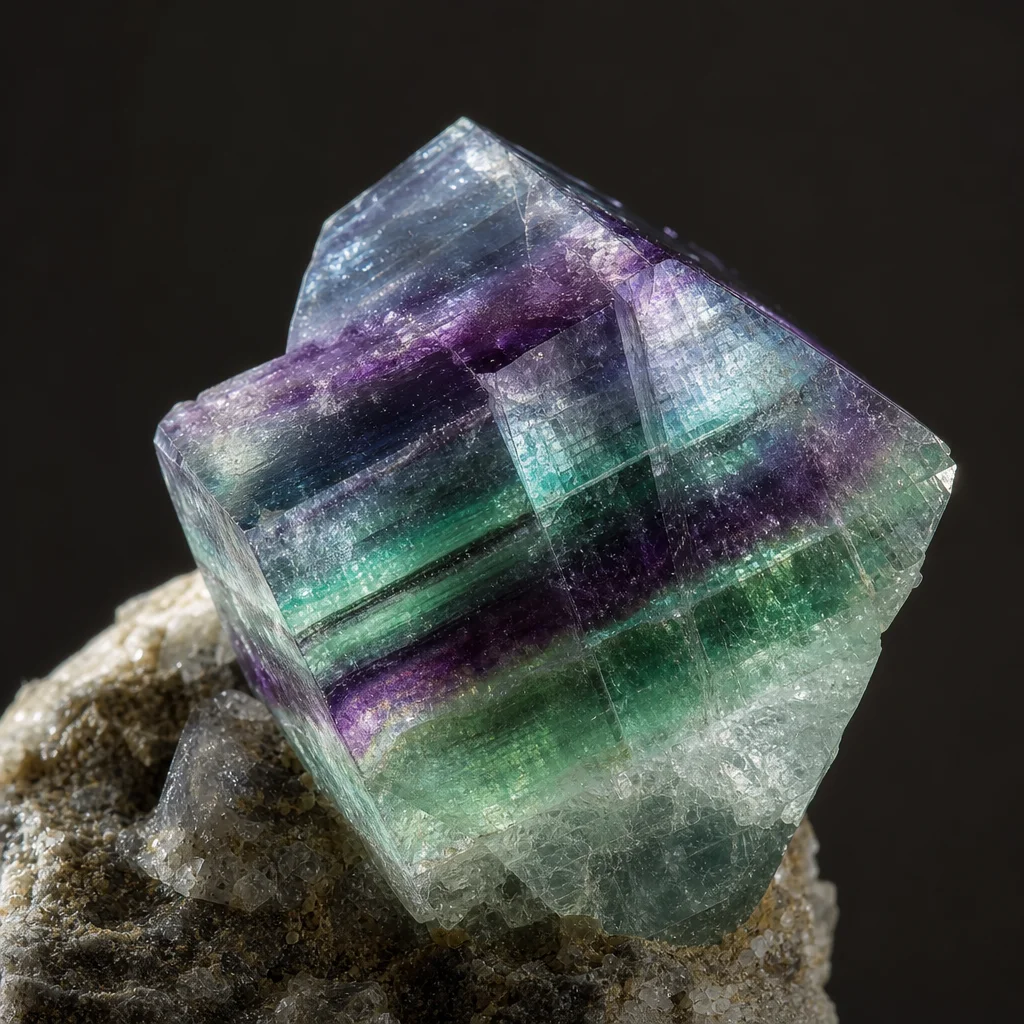
If you have ever held a piece of fluorite under a black light and watched it blaze electric blue, you already understand the appeal. The word "fluorescence" was coined in 1852 specifically because fluorite does this — George Gabriel Stokes watched the mineral glow under ultraviolet light and named the phenomenon after it.
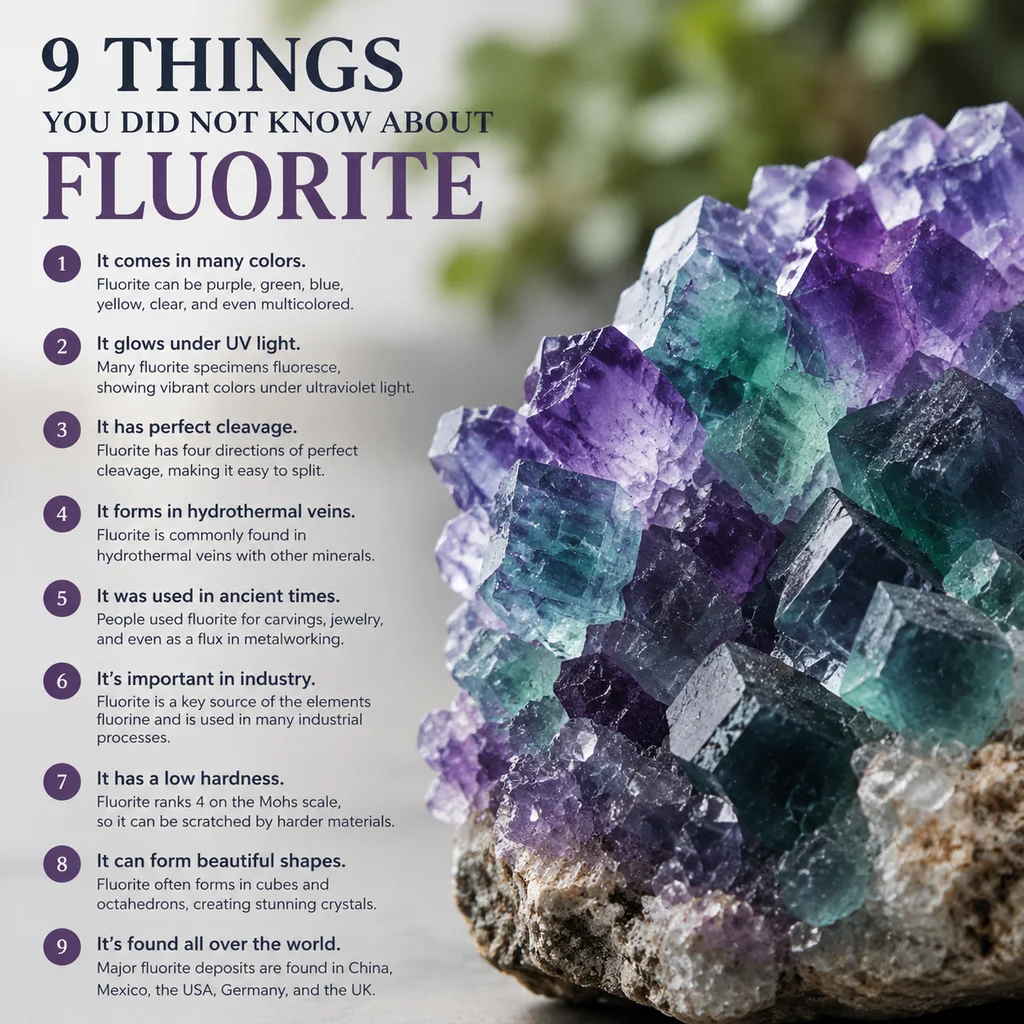
That little piece of trivia tells you a lot about fluorite. It is a mineral that surprises people. It comes in more colors than almost any other crystal, it forms in striking geometric shapes, and it costs a fraction of what you would pay for gems of similar visual impact. But it also has quirks — a hardness of only 4 on the Mohs scale, perfect cleavage in four directions, and a tendency to fade if you leave it in direct sunlight for months.
Here is a practical guide to understanding, buying, and caring for fluorite, whether you want a display specimen, a meditation stone, or a piece of jewelry.
What Makes Fluorite So Colorful
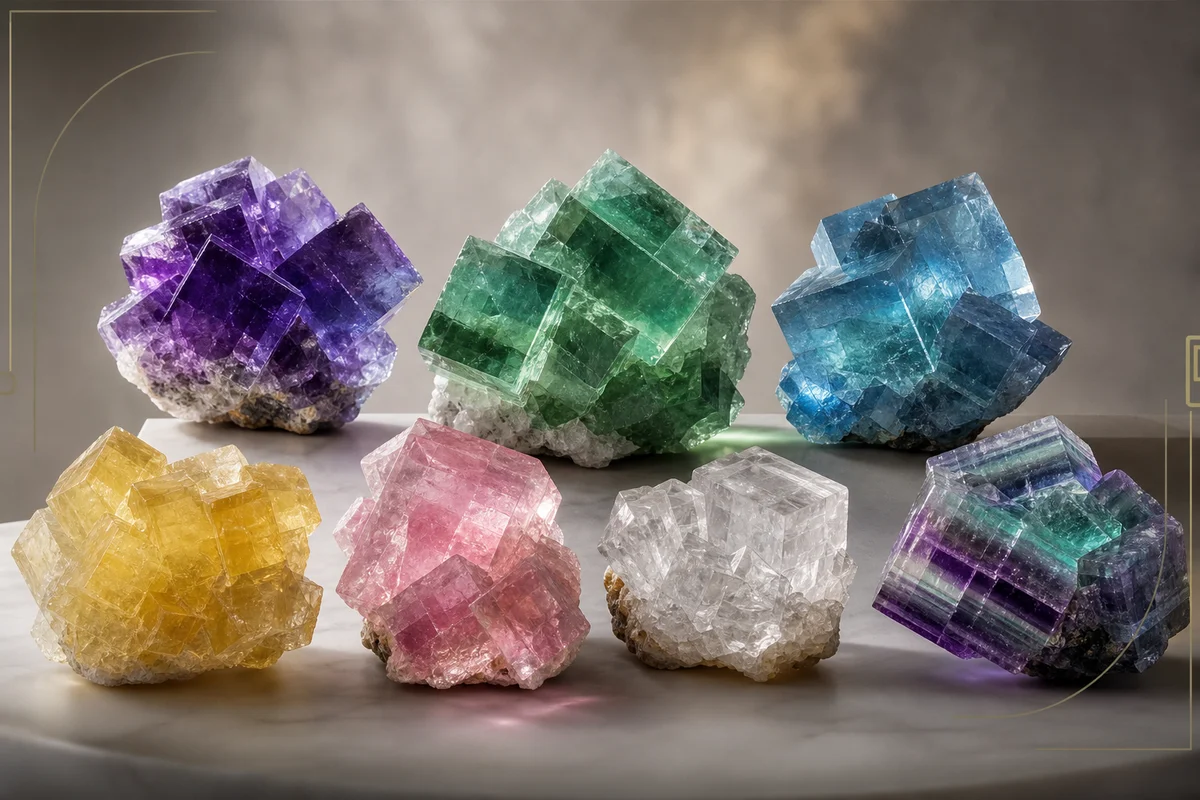
Fluorite is calcium fluoride (CaF₂). In its pure form it is completely clear and colorless. The rainbow of colors you see in mineral shops comes from trace impurities and structural defects in the crystal lattice.
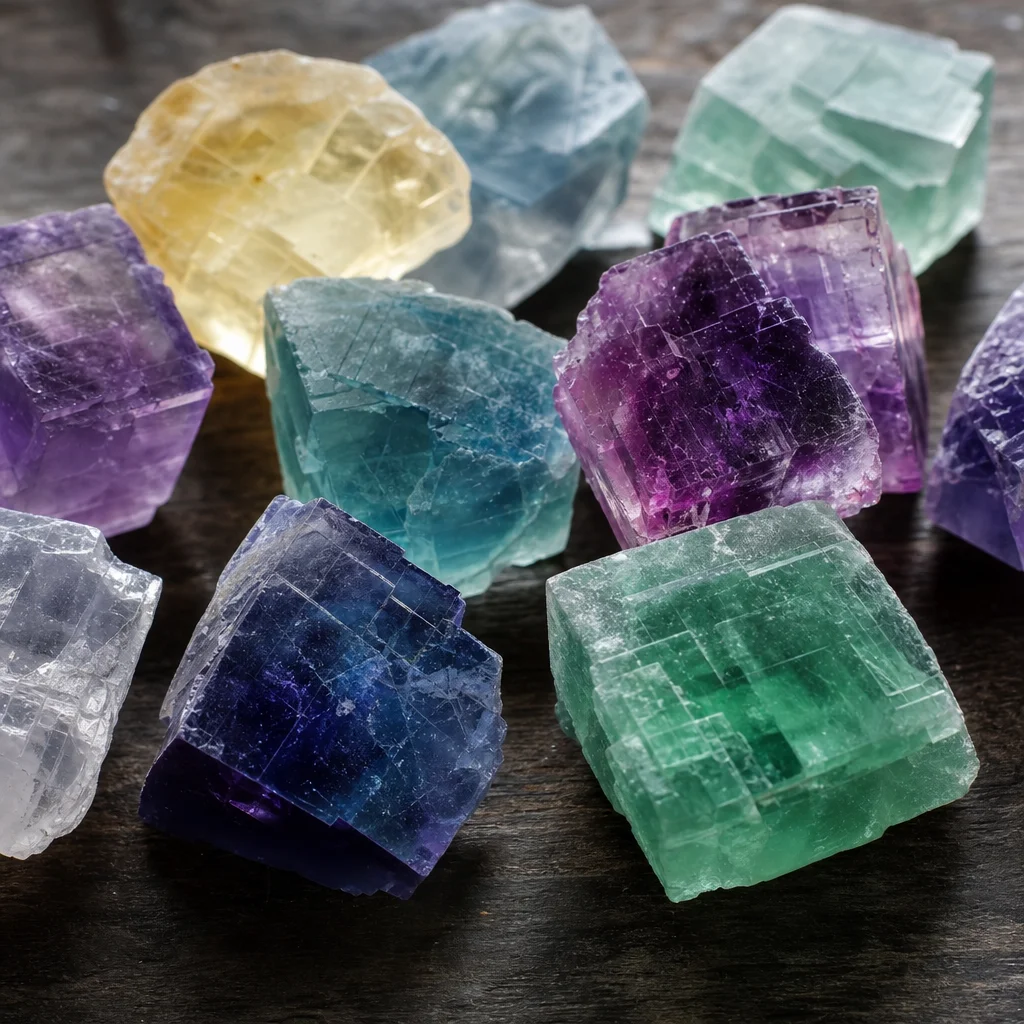
Purple and violet fluorite — the most common and popular — gets its color from radiation damage to the crystal structure combined with trace amounts of rare earth elements like yttrium and cerium. Green fluorite usually contains traces of iron or samarium. Blue fluorite is often linked to yttrium impurities. Yellow and orange varieties come from oxygen substituting for fluorine in the lattice. Rare pink and red fluorite gets its hue from manganese or strontium impurities.
What makes fluorite unusual is that a single specimen can show multiple colors in distinct bands or zones. "Rainbow fluorite" is not a trade name — it is a genuine description of a single crystal that grew under changing chemical conditions, trapping different colors in successive growth layers. You can literally read the geological history of the deposit in the color bands.
Where Fluorite Comes From
Fluorite forms in hydrothermal veins, often alongside quartz, calcite, galena, and sphalerite. The major producing regions are:
- China (Hunan Province): The largest producer today. Hunan fluorite is known for deep purple and green specimens, often in large cubic crystals. The famous Xianghuapu mine has produced world-class pieces.
- England (Derbyshire): Historically significant. "Blue John" is a banded purple-blue-yellow fluorite found only in the Treak Cliff Cavern near Castleton, Derbyshire. It has been carved into ornaments for centuries — the Romans mined it.
- United States (Illinois-Kentucky fluorspar district): Once the largest producer in the world. The Minerva No. 1 mine in Illinois produced stunning yellow and purple cubic crystals. Most of these mines are now closed.
- Mexico (Coahuila and Chihuahua): Produces bright green and purple fluorite, often in large, well-formed cubes.
- Namibia and South Africa: Known for green octahedral fluorite and distinctive banded specimens.
The Famous Fluorescence
Not all fluorite fluoresces, but the specimens that do are spectacular. The fluorescence is usually blue or blue-violet under short-wave UV light (254 nm), though some specimens glow green, yellow, white, or even red.
The mechanism is straightforward: UV photons excite electrons in the crystal lattice to higher energy states. When the electrons drop back down, they emit visible light at a different wavelength. In fluorite, this is usually caused by trace rare earth elements — europium and yttrium are the most common activators.
Some fluorite also shows thermoluminescence (it glows when heated) and triboluminescence (it glows when scratched or crushed). If you have ever dragged a rock across another rock in the dark and seen sparks, triboluminescence might be the reason.
For collectors, fluorescence adds significant value. A piece that looks like an ordinary purple cube under daylight but turns into a glowing blue beacon under UV light is worth considerably more than a non-fluorescent specimen of the same size.
Crystal Habits: Cubes, Octahedrons, and Everything In Between
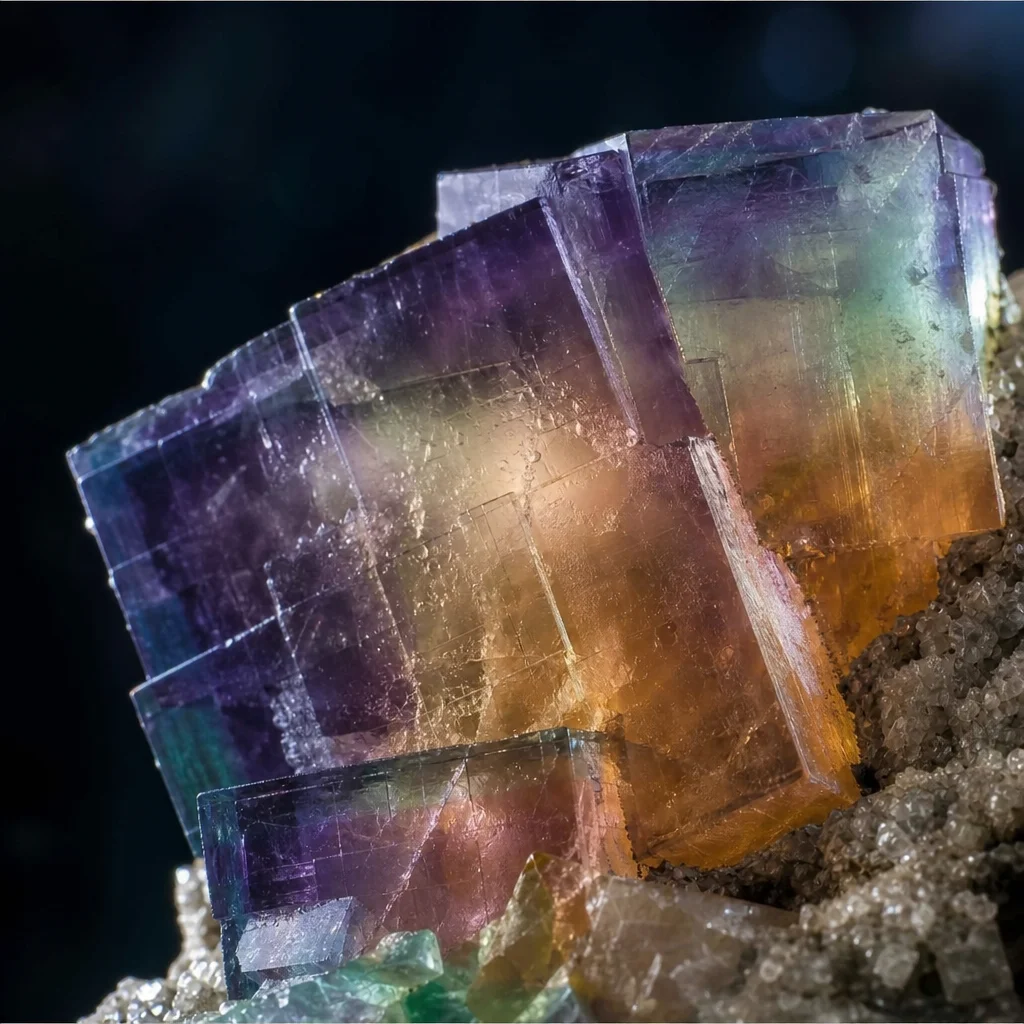
Fluorite crystallizes in the isometric system, and its most common habit is the cube. But it also forms octahedrons, dodecahedrons, and combinations of these forms. Massive (non-crystalline) fluorite is common as well.
The cube is the habit you will see most often in mineral shops. Well-formed cubic fluorite crystals can be quite large — specimens over 10 cm on a side are not unusual from Chinese deposits. Octahedral fluorite is less common and often more sought after by collectors.
Phantoms — earlier growth stages visible as ghostly outlines inside the crystal — are common in fluorite and add both visual interest and collector value. A purple cube with a green phantom inside is a classic and attractive specimen.
Hardness 4: The Big Limitation for Jewelry
On the Mohs hardness scale, fluorite sits at 4. That means it can be scratched by a steel knife (5.5), by glass (5.5-6), and by most common household items. For context, quartz is 7, topaz is 8, and diamond is 10.
This low hardness has real consequences for how you use fluorite:
Rings: Bad idea for daily wear. Even careful wear will result in scratches and chipped edges within months. Save fluorite rings for occasional pieces.
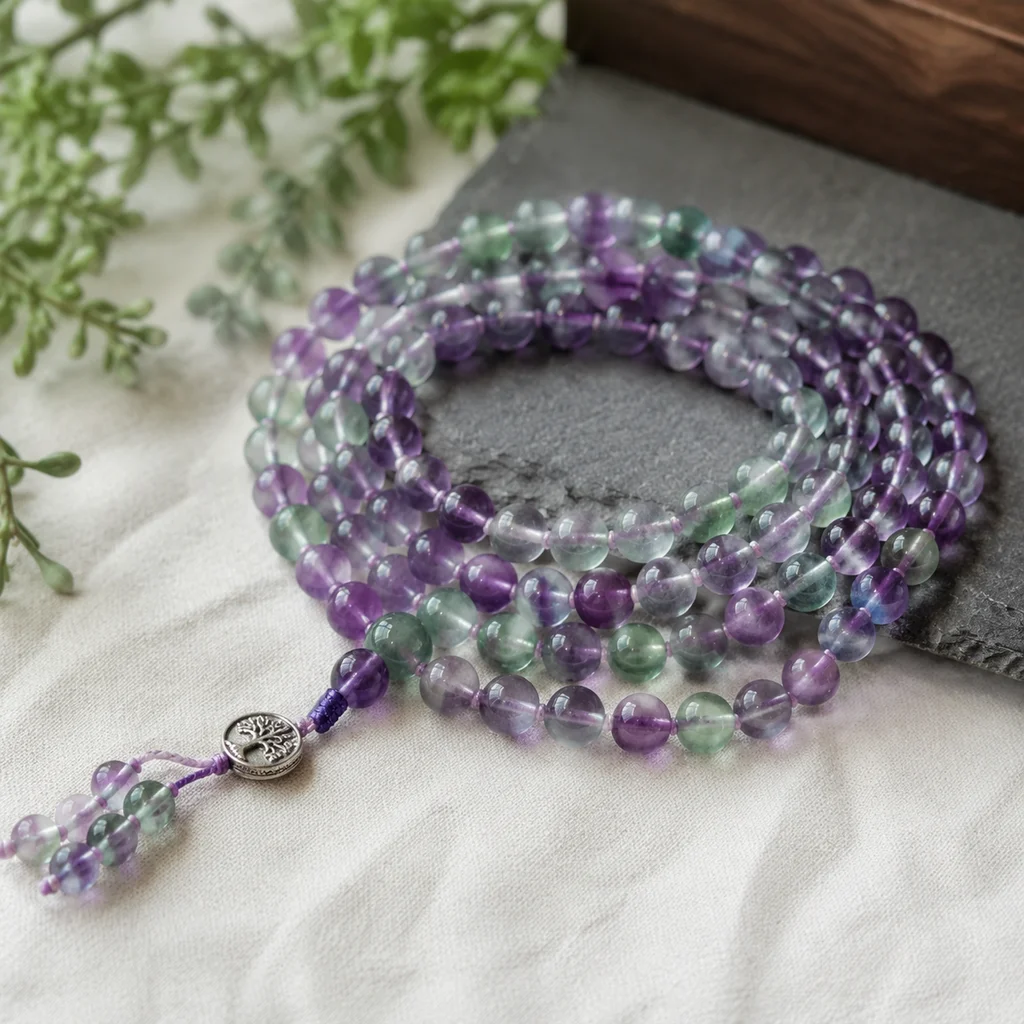
Bracelets: Possible but risky. Bracelets bump into desks, doorframes, and countertops constantly. A fluorite bracelet will show wear quickly unless each bead is protected by harder stones on either side.
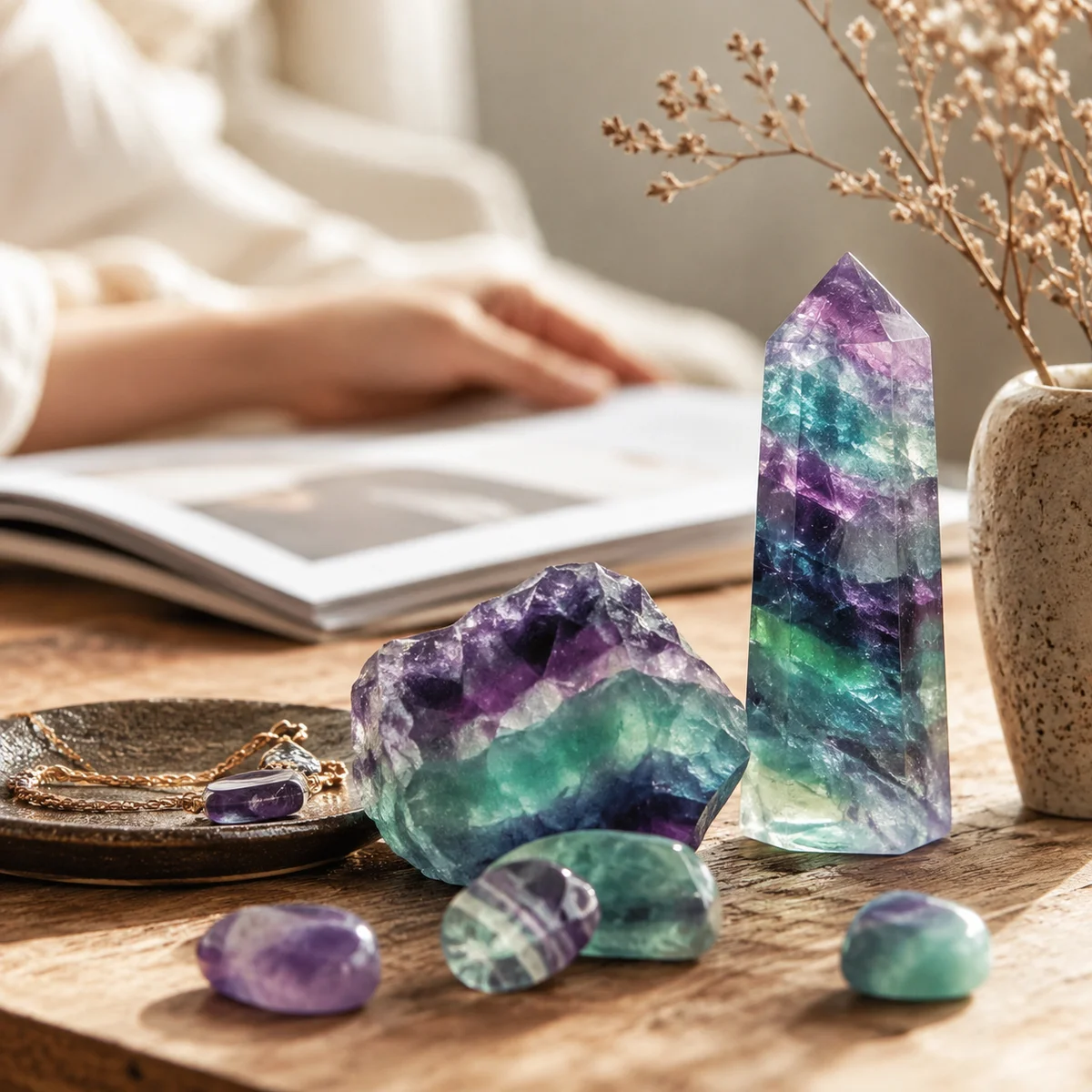
Pendants and earrings: Much better. Pendants do not get banged around the way rings and bracelets do. Earrings are even safer. If you want to wear fluorite as jewelry, pendants and earrings are the way to go.
Display specimens and pocket stones: Ideal uses. A polished fluorite egg or freeform on your desk is going to look great for years with minimal care. Pocket stones will pick up scratches eventually but are cheap enough to replace.
Caring for Fluorite
Fluorite is also sensitive to heat and light. Prolonged exposure to direct sunlight can cause some colors — especially the deeper purples and blues — to fade. If you are displaying fluorite, keep it out of south-facing windows or anywhere it gets more than an hour of direct sun per day.
Cleaning is simple: lukewarm water and a soft cloth. Do not use ultrasonic cleaners, steam cleaners, or chemical jewelry dips. Fluorite can be damaged by strong acids, and the cleavage planes make it vulnerable to thermal shock.
Avoid exposing fluorite to salt water or salt cleansing methods popular in crystal care guides. The sodium chloride can react with the calcium fluoride surface over time, causing a dull, pitted appearance.
Buying Guide: Collector Specimens vs Jewelry Pieces
For collectors, the value factors are color, crystal form, condition, and fluorescence. Deep, saturated colors command higher prices than pale ones. Sharp, undamaged crystals are worth more than chipped or abraded ones. Fluorescence adds a premium. A 5 cm deep purple cubic crystal with blue fluorescence from Hunan might cost $15-40. A comparable non-fluorescent piece might be $8-15. A "Blue John" specimen from Derbyshire with strong banding can run $50-200 depending on size and quality.
For jewelry, look for cabochons with good color saturation and minimal internal fractures. Fluorite is affordable as a gem material — a nice 10mm round cabochon typically costs $3-8. Be wary of "treated" fluorite. Some sellers heat-treat pale fluorite to deepen the color, and this treatment is not always disclosed. Heated fluorite is worth less than natural-color material of the same hue.
Watch for fakes: Glass is sometimes sold as fluorite, especially in tumbled stone lots. Real fluorite has a specific gravity of about 3.2 (heavier than glass at 2.5-2.6), and it will feel noticeably heavier for its size. If the price seems too good to be true for "rainbow fluorite," it might be dyed or glass.
Fluorite in History and Industry
Beyond its appeal to collectors, fluorite has significant industrial importance. It is the primary source of fluorine for hydrofluoric acid, which is used in everything from aluminum smelting to semiconductor manufacturing. The steel industry uses fluorite as a flux to lower the melting point of slag.
Historically, fluorite was carved into bowls, vases, and decorative objects. The Roman author Pliny the Elder described a stone called "murrhine" that may have been fluorite. The Chinese have carved fluorite for centuries, and intricately carved fluorite snuff bottles from the Qing Dynasty are museum pieces today.
Is Fluorite Right for You?
If you want a crystal that is visually striking, scientifically interesting, and genuinely affordable, fluorite is hard to beat. A rainbow fluorite tower or a cluster of cubic crystals makes a fantastic display piece. A fluorite pendant gives you a colorful accent stone for a fraction of what amethyst or garnet would cost.
Just remember the limitations. It is soft, it can fade in sunlight, and it needs gentler care than harder stones. Treat it with respect and it will reward you with colors that change under different lighting — including that spectacular UV glow that started a whole scientific vocabulary.
Crystals are not a substitute for medical treatment. The cultural and traditional associations described in this article are for informational purposes.
Frequently Asked Questions
Why does fluorite glow under UV light?
Fluorite glows under UV light due to trace impurities and structural defects in the crystal lattice. Different impurities create different fluorescent colors — yttrium creates blue fluorescence, europium creates blue-violet, and manganese can create yellow or orange.
What gives rainbow fluorite its multiple colors?
The multiple colors in rainbow fluorite come from different trace elements present during formation. Iron creates purple and blue, manganese contributes to yellow and green, and organic matter can add pinkish hues. Each color band represents a different period of mineral formation.
Is fluorite a good choice for beginner crystal collectors?
Yes, fluorite is an excellent choice for beginners. It is affordable, available in a wide variety of colors and forms, and its UV fluorescence makes it interactive and fun. However, it is relatively soft (4 Mohs) and can be easily scratched or chipped.
How should I clean and care for my fluorite?
Clean fluorite with warm soapy water and a soft brush. Avoid ultrasonic cleaners, steam cleaning, and harsh chemicals. Store separately from harder stones to prevent scratching. Keep out of prolonged direct sunlight, as some colors may fade over time.
Frequently Asked Questions
Can I wear fluorite jewelry every day?
While fluorite is a stunning natural gemstone, it ranks a 4 on the Mohs hardness scale, meaning it is relatively soft and prone to scratching. At SagStone, we recommend treating your handcrafted fluorite jewelry as a special occasion piece rather than an everyday wear item. To keep your vibrant rainbow stone looking its best, remove it before exercising or sleeping.
Comments