The Evil Eye in Jewelry: 3,000 Years of Protection
A Symbol Older Than Most Civilizations
I first noticed the evil eye motif in a glassblower's workshop on the edge of Istanbul's Grand Bazaar. The craftsman — a man in his sixties who'd inherited the trade from his father — pulled a thread of cobalt blue glass from the furnace and told me, through a translator, that he'd been making the same design since he was twelve. "Every nazar is different," he said. "But the eye is always watching."
That conversation sent me down a rabbit hole that lasted two years. What I found surprised me: the evil eye isn't just a Turkish souvenir. It's one of the most widespread and persistent symbols in human history, appearing across at least six major civilizations over three millennia. Understanding where it came from changes how you see it on a bracelet or necklace today.
The Earliest Evidence: Mesopotamia, 1500 BCE
The oldest known references to the evil eye appear in cuneiform tablets from ancient Mesopotamia, roughly 3,500 years ago. These texts describe a belief that certain individuals could cause harm — illness, crop failure, even death — simply by looking at someone with envy or malice. The Akkadian word "iglu ḫul," literally "evil eye," appears in incantations designed to ward off this gaze.
What gets me is how practical these early responses feel. The healers didn't just pray over someone and call it done. They prescribed rituals, specific amulets, even dietary changes. Clay tablets from Ashurbanipal's library (668-627 BCE) list actual medical treatments — one recommends wearing a particular stone pendant while reciting a set prayer. The structure is almost clinical.
Modern psychology basically confirms what the Mesopotamians were getting at. The fear of being watched and judged runs deep in our wiring. Call it the evil eye or call it social anxiety — the impulse underneath is identical.
How the Greeks and Romans Made It Personal
The Greeks gave us the word we still use. "Nazar" in Turkish, "malocchio" in Italian, "mal de ojo" in Spanish, "ayin harsha" in Arabic — all of these trace back to the Greek concept of the "baskanos ophthalmos," the evil eye that causes harm through envy.
But the Greek contribution goes beyond language. They were among the first to associate the evil eye with specific situations rather than supernatural beings. In classical Greek culture, the evil eye wasn't a demon or a curse — it was a social phenomenon. Excessive praise, public admiration, or conspicuous success could attract the evil eye from envious onlookers. This made the symbol democratic: anyone could be a target, and anyone could wear protection.
The Romans adopted and spread this belief across their empire. Pliny the Elder wrote about it in "Natural History" (77 CE), noting that certain people possessed a dangerous gaze. Roman families hung phallic amulets and eye motifs in their homes — the famous fascinum — specifically to deflect the evil eye. These weren't decorative choices; they were functional objects in a worldview where envy had tangible consequences.
I think this Roman normalization is why the symbol persisted. Once the evil eye became a household concern rather than a priestly matter, it embedded itself in daily life and survived every subsequent cultural shift.
The Nazar Boncuk: Turkey's Glass Eye
The Turkish nazar boncuk — that distinctive blue, white, and black glass eye — is probably the most recognizable form of the evil eye in the modern world. Over 100 million of these amulets are sold annually in Turkey alone, and they appear on everything from keychains to airplane fuselages (Turkish Airlines incorporates them into their logo).
The traditional manufacturing process hasn't changed much in centuries. Glass artisans in workshops around Izmir and Bodrum layer colored glass: a dark blue base, followed by white, light blue, and a black "pupil" at the center. Each nazar is handcrafted, and genuine pieces always have slight imperfections — uneven layers, tiny bubbles, asymmetric curves. Mass-produced plastic versions lack these irregularities, which is how you can spot a real one.
The color scheme isn't arbitrary. Blue has been the primary protective color across Mediterranean and Middle Eastern cultures for thousands of years. The reasoning varies: some traditions say blue represents water, which reflects the evil eye back at the sender. Others connect it to the sky as a divine protective presence. I've heard Turkish craftspeople explain that blue is simply the color most opposite to the "darkness" of the envious gaze.
What I find most interesting is the placement tradition. In Turkish homes, nazar boncuks are placed near entrances, windows, and anywhere a stranger's gaze might enter. Newborns receive a nazar pinned to their clothing. Cars have them dangling from the rearview mirror. The logic is consistent: protect the vulnerable points where outside attention enters your space.
Regional Variations: One Symbol, Many Interpretations
The evil eye isn't a single story — it's a family of related beliefs that diverged as they spread across continents.
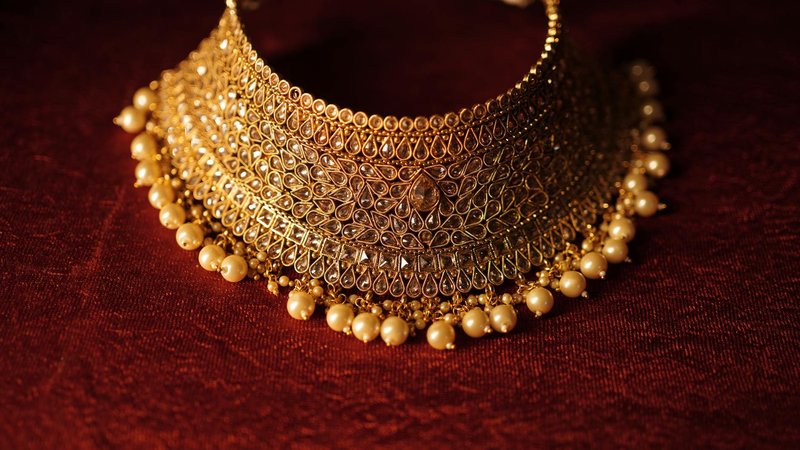
In the Middle East and North Africa, the "hand of Fatima" (khamsa) often incorporates an eye symbol in its center. This combination — a protective hand with a watching eye — is among the most common amulet designs in the Islamic world. The khamsa predates Islam (it appears in ancient Mesopotamian artifacts) but was adopted into Islamic culture, where it's associated with Fatima, the Prophet's daughter. I've seen versions from Morocco to Iran, and while the basic shape is consistent, the decorative styles range from austere geometric patterns to ornate filigree work.
In India, the concept of "drishti" operates similarly. Black dot pottu (bindi) on babies' faces are intended to ward off the evil eye, and the "nazar suraksha kavach" — literally "evil eye protection armor" — is a thriving market for amulets, bracelets, and wall hangings. Indian traditions often combine the eye symbol with red thread, lemon, and chili, which are believed to absorb negative energy. The practical logic is surprisingly similar to Mesopotamian approaches: specific materials for specific protections.
In Jewish tradition, the "ayin hara" (evil eye) appears in the Talmud and Kabbalistic texts. The hamsa, called the "Hand of Miriam" in Jewish contexts, serves the same protective function. Israeli jewelry designers frequently incorporate evil eye motifs in contemporary pieces, often in minimalist gold or silver settings that look more like modern art than ancient protection.
In Latin America, "mal de ojo" is primarily associated with children. The belief holds that adults — especially those with light-colored eyes — can unintentionally cause illness in infants through admiring or covetous glances. Protective measures include red bracelets, egg rituals (passing a raw egg over the child's body to absorb the evil eye), and specific prayers. This child-focused version of the belief is less common in Mediterranean cultures, where the evil eye threatens adults equally.
The Evil Eye in Modern Fashion
Something shifted around 2018. The evil eye went from being a cultural symbol you'd find in specialty shops and tourist markets to a mainstream fashion motif. I first noticed it on Instagram — delicate gold evil eye pendants worn by fashion influencers, layered with chain necklaces and minimal stud earrings.
By 2021, Google Trends data showed "evil eye jewelry" searches had increased by roughly 150% compared to 2017. Major retailers from Mejuri to Gorjana were offering entire evil eye collections. The symbol had been stripped of its protective baggage and repositioned as an aesthetic choice — a geometric eye shape that happened to carry cultural resonance.
This commercialization bothers some people. I understand why — there's something uncomfortable about a symbol with 3,000 years of spiritual weight being sold as a trend item. But I also think the commercial version serves a purpose. For many people, wearing an evil eye necklace is their first exposure to a symbol that, in its original context, represents something profound: the universal human desire for protection from the unseen malice of others.
The key distinction is intentionality. A mass-produced evil eye charm on a fast-fashion bracelet is decorative. A nazar boncuk purchased from a Turkish glassblower who's been making them for decades is something else entirely. Both are valid, but they occupy different categories of meaning.
Why Blue Remains the Dominant Color
Across almost every culture that adopted the evil eye, blue emerged as the primary protective color. I spent a while trying to understand why, and the answer seems to be a convergence of several factors.
First, practical: blue pigment was historically rare and expensive. Lapis lazuli, mined primarily in Afghanistan, was worth more than gold for centuries. Using blue in a protective amulet signaled that you were investing real resources in your protection — it wasn't casual. The scarcity made blue feel powerful.
Second, environmental: in Mediterranean and Middle Eastern regions where the evil eye belief was strongest, blue is the color of the sea and sky — the two vast forces that dominated daily life. Associating blue with divine or natural protection made intuitive sense in these landscapes.
Third, psychological: blue is consistently rated as the most calming color in cross-cultural psychological studies. If the evil eye represents anxiety about others' negative attention, blue serves as a visual counterbalance — cool, stable, reassuring. I suspect this psychological dimension is why blue persisted even as specific cultural justifications changed.
What the Evil Eye Teaches Us About Human Nature
Take away the glass, the gold, the mythology — what's left? A simple truth: humans have always been nervous about each other's attention. Not violence, that's different. The evil eye is about something quieter — the slow damage that envy and too much admiration can do to how safe you feel.
At least a dozen cultures developed this idea on their own, many with no obvious transmission path between them. And they all landed on the same fix: put something on your body that watches back. An eye for an eye, but in the gentlest possible sense. Not retaliation, but reflection. The nazar doesn't attack the envious gaze — it mirrors it, returns it to its source, neutralizes it by making it visible.
I think that's why the symbol has survived for 3,000 years and shows no sign of fading. It addresses a need that hasn't changed since a Mesopotamian healer pressed a clay tablet into a patient's hand and said: this will watch over you.

Comments