The Difference Between Rocks, Minerals, Crystals, and Gemstones
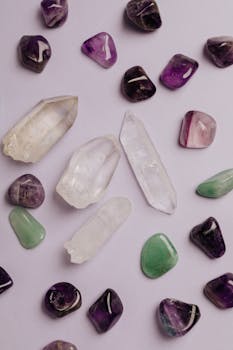
Someone holds up a chunk of amethyst and calls it a crystal. Someone else calls it a mineral. A jeweler calls it a gemstone. A geologist might just call it violet quartz and move on. All four words get thrown around like they mean the same thing, and in casual conversation, that's fine. But they don't mean the same thing, and the distinctions matter if you're actually trying to understand what's sitting on your shelf or dangling from your ear.
Minerals: the basic building blocks
A mineral is a naturally occurring, inorganic solid with a specific chemical composition and an ordered internal structure. That definition comes from the International Mineralogical Association, and every word in it matters. "Naturally occurring" means lab-grown sapphire isn't a mineral in the strict sense — it's a synthetic mineral analog. "Inorganic" rules out things like amber or pearl, which are biological in origin. "Specific chemical composition" means quartz is always SiO₂, give or take trace impurities. "Ordered internal structure" is what separates a mineral from glass — glass has no repeating atomic arrangement, so obsidian, despite being natural and inorganic, is not a mineral.
As of early 2026, the IMA recognizes around 6,000 mineral species. Most of them are obscure — you'll never encounter things like nedollite or niobophyllite unless you're deep into systematic mineralogy. The ones people actually know and collect number maybe 100 to 200 at most.
Rocks: aggregates of minerals (and sometimes other stuff)
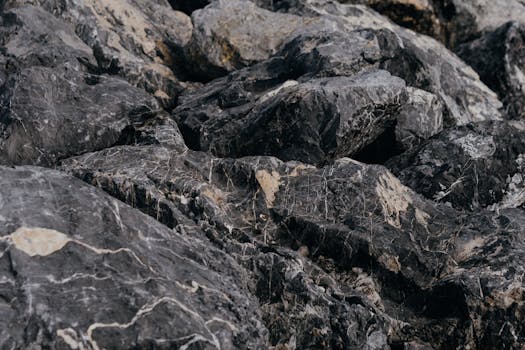
A rock is any solid aggregate of one or more minerals, mineraloids, or organic material. Granite is a rock made of feldspar, quartz, and mica. Limestone is mostly calcite but can contain clay, silica, and organic debris. Coal is a rock, technically, even though it's mostly compressed plant material with almost no mineral content.
The key distinction: minerals are homogeneous (or nearly so), rocks are not. If you look at a piece of granite under a hand lens, you can see the individual mineral grains — pink feldspar, glassy quartz, dark mica flakes. A single piece of quartz, by contrast, is the same stuff all the way through (again, ignoring trace impurities).
Geologists classify rocks into three broad groups. Igneous rocks formed from cooled magma or lava — basalt, granite, pumice. Sedimentary rocks formed from compressed and cemented fragments — sandstone, shale, limestone. Metamorphic rocks formed when existing rocks were altered by heat and pressure — marble (from limestone), schist, gneiss. A single rock can move between categories over geological time. Limestone becomes marble under metamorphism. Marble can melt and become an igneous rock. The rock cycle isn't a one-way street.
Crystals: it's about structure, not shape
This is where people get confused, and the confusion is understandable because the word "crystal" is used loosely in everyday language. Scientifically, a crystal is any solid whose atoms are arranged in a repeating, three-dimensional pattern. That's it. Shape has nothing to do with it.
Most minerals are crystalline by definition — remember that "ordered internal structure" in the mineral definition? That ordered structure is a crystal lattice. So most minerals are crystals. But not all crystals are minerals (again, lab-grown silicon is crystalline but not a natural mineral), and some minerals don't form visible crystals — they're microcrystalline or cryptocrystalline, meaning the individual crystal grains are too small to see without a microscope. Chalcedony (the material agate and carnelian are made of) is crystalline, but you'll never see a well-formed chalcedony crystal because the grains are measured in micrometers.
A crystal face — those flat, geometric surfaces you associate with the word — is simply the external expression of the internal atomic arrangement. When a mineral grows in open space without interference, it develops faces that reflect its symmetry system. Quartz grows in hexagonal prisms. Pyrite grows in cubes (or sometimes pyritohedra, which look like slightly distorted cubes). But if the same mineral grows in a tight space where it can't develop faces, it still has the same internal crystal structure. A grain of quartz in a sandstone is crystalline even though it looks like a rounded blob.
The takeaway: if someone says "crystal" and means a naturally occurring mineral with visible crystal faces, they're using the word in a common but incomplete sense. If they mean any solid with ordered atomic structure, they're being more precise. Both usages are established, but in a geological context, the structural definition matters more.
Gemstones: when minerals become valuable
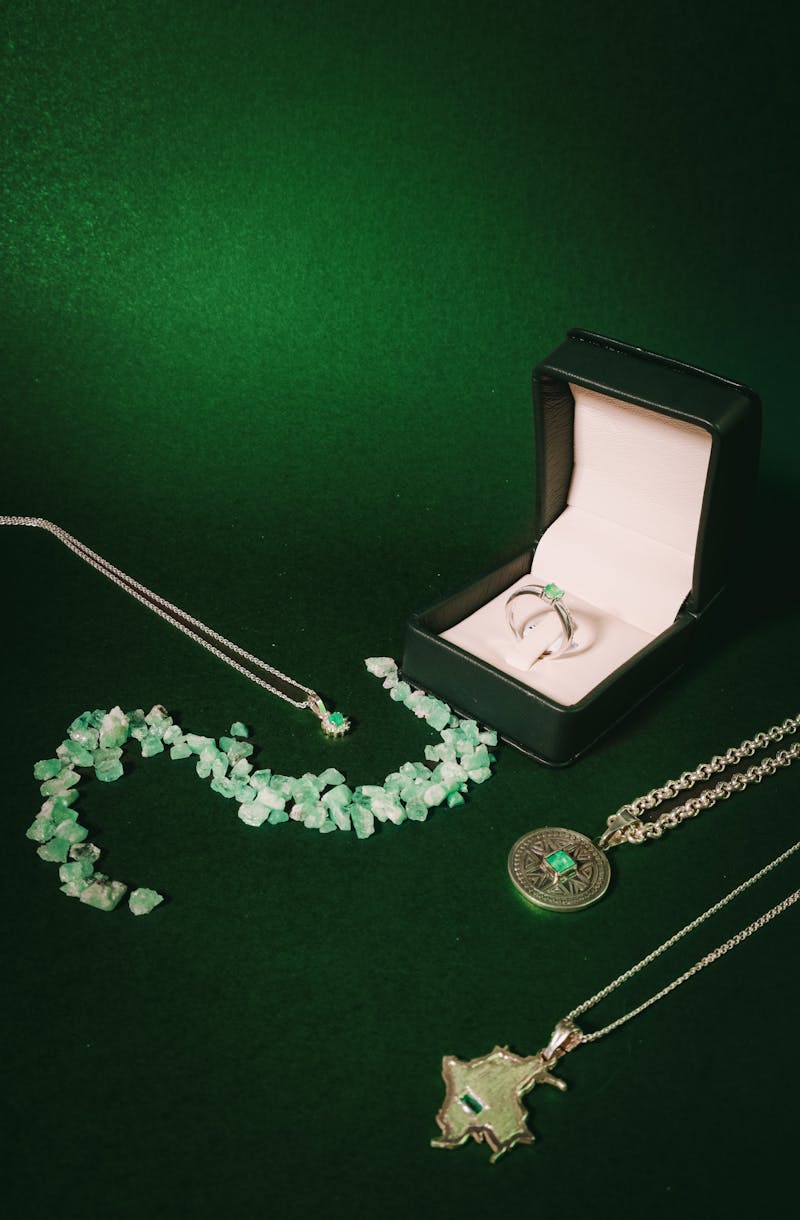
A gemstone is a mineral (or occasionally a mineraloid or organic material) that is cut and polished for use in jewelry or decorative objects. The word has no strict geological definition — it's a human value judgment. Beauty, durability, and rarity are the traditional criteria, but which qualities matter most depends entirely on the market.
Diamond is a gemstone because it's hard (10 on the Mohs scale), brilliant, and rare in gem quality. Tanzanite is a gemstone despite being relatively soft (6-6.5) because its color is distinctive and it comes from essentially one place on Earth — a small area near Mount Kilimanjaro. Jade is a gemstone even though "jade" refers to two completely different minerals (jadeite and nephrite) with different chemistry and structure, because the cultural value of jade in East Asia predates modern mineralogy by thousands of years.
Some gemstones aren't even minerals. Pearl is organic — it's nacre, which is calcium carbonate laid down by a mollusk. Amber is fossilized tree resin. Jet is compressed wood. Opal is a mineraloid — it's SiO₂·nH₂O, hydrated silica with no consistent crystal structure. These all get called gemstones because people cut them, wear them, and pay real money for them. The geological definition takes a back seat to market reality.
The Venn diagram in practice
Here's how the categories overlap:
Every mineral is crystalline (with rare exceptions like some naturally occurring amorphous silica), but not every crystal is a mineral. Most gemstones are minerals, but some are organic or mineraloid. Most rocks are made of minerals, but some are mostly organic (coal) or amorphous (obsidian). A single piece of amethyst — that purple quartz sitting on a collector's shelf — is simultaneously a mineral (quartz, SiO₂), a crystal (hexagonal lattice), and a gemstone (cut and valued for its color). It becomes part of a rock only when it's embedded in a larger aggregate.
Quartz is probably the clearest example of how the categories relate. It's a mineral. It's crystalline. It's used as a gemstone (amethyst, citrine, rose quartz, smoky quartz, and others). And it's a major component of many rocks — granite, sandstone, quartzite. The same chemical substance (SiO₂) can occupy every category depending on its context.
Why the distinction actually matters
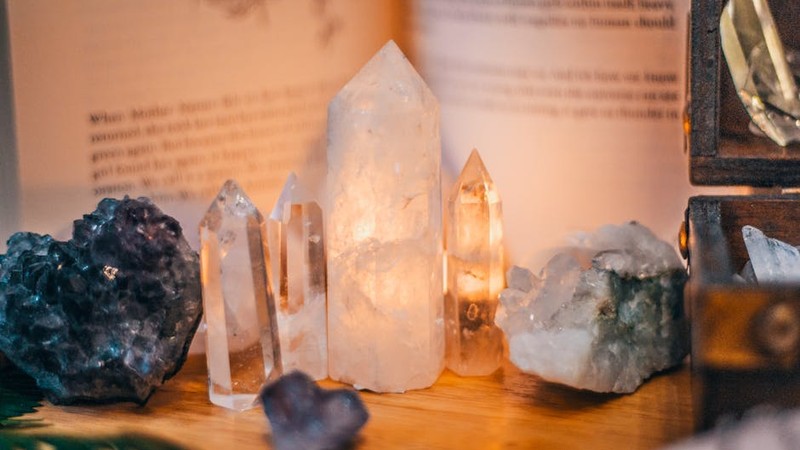
If you're buying a stone and someone calls it a "crystal," you should ask what they mean. Are they talking about a mineral species, a growth form, or a marketing category? The wellness industry has blurred these lines considerably. "Healing crystals" aren't a mineralogical category — they're a retail category. Rose quartz and amethyst get lumped together as "crystals" despite having completely different chemistry, structure, and geological origins. Citrine is often just heat-treated amethyst, which is a different thing geologically from natural citrine, but the market doesn't always make the distinction clear.
For collectors, the distinction between a well-crystallized specimen and a massive one is significant. A thumbnail-sized crystal of fluorite with sharp edges and good color is worth far more than a kilogram chunk of massive fluorite with no crystal faces. Same mineral, completely different value proposition. The crystal form — the external expression of the internal lattice — is what collectors pay for.
Some tricky edge cases
Obsidian is volcanic glass. It's natural and inorganic, but it has no crystal structure. So it's a rock (specifically, an igneous rock), but it's not a mineral. It's definitely not a crystal or a gemstone, though it gets used decoratively.
Pearls are among the most valuable gemstones in the world, but they're not minerals (biological origin) and they're not crystalline in any meaningful sense — nacre is layered, not lattice-ordered.
Aventurine is a variety of quartz (mineral, crystal) with inclusions of mica or fuchsite that give it a sparkly appearance. It's often sold as "aventurine quartz" or just "aventurine," and it straddles the line between mineral specimen and gemstone depending on how it's cut.
Larimar is a blue variety of pectolite, a mineral. It only comes from the Dominican Republic. It's a gemstone by any market definition but relatively unknown outside collector circles. The point is that the mineral-gemstone boundary is porous and constantly shifting based on what people find attractive and marketable.
A quick reference
Mineral: naturally occurring, inorganic, specific chemistry, ordered structure. About 6,000 known species. Rock: aggregate of minerals or other material. Classified as igneous, sedimentary, or metamorphic. Crystal: solid with repeating atomic pattern. Most minerals are crystalline. Gemstone: mineral (or other material) valued for beauty and cut for jewelry. The categories overlap extensively. A diamond is all four — mineral, crystal, gemstone, and (in aggregate deposits like kimberlite pipes) a component of rock. A piece of coal is a rock but none of the others. A lab-grown sapphire is a crystal but not a mineral. Understanding which word applies in which context isn't pedantry — it's the difference between knowing what you're looking at and just guessing.
Comments