Crystal Shapes and Meanings: A Complete Guide
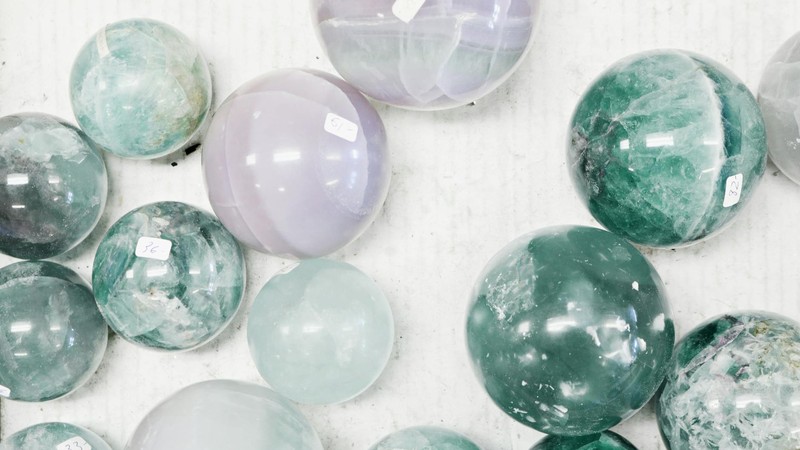
I remember my first time walking into a proper crystal shop. Not one of those tourist trap places with mass-produced pyramids and everything labeled "HEALING STONE" — I mean a real, curated shop where the owner actually knew their stuff. There were crystals everywhere. Raw chunks with jagged edges, smooth polished stones, towering points, glowing spheres, strange egg-shaped objects, clusters that looked like tiny frozen cities. I stood there for a solid ten minutes just staring, completely overwhelmed.
I picked up a rose quartz and asked the owner, "What's the difference between this and that one?" gesturing at a rose quartz sphere on the next shelf. She smiled and said something that's stuck with me ever since: "Same crystal, different conversation."
It took me a while to understand what she meant. In the crystal world, the shape isn't just about aesthetics — it's about how the energy (or the intention, or the focus — use whatever language works for you) is directed and experienced. A raw piece of quartz feels fundamentally different from a polished sphere, and both feel different from a crystal point. It's the same material, but the shape changes the relationship you have with it.
This guide is my attempt to break down the most common crystal shapes you'll encounter, what they're traditionally used for, and how to figure out which shape is right for what you're trying to do. No dogma, no gatekeeping — just practical information from someone who's spent way too much time (and money) in crystal shops.
Raw and Natural Stones
These are crystals in their natural, uncut, unpolished state — exactly how they came out of the earth (or very close to it). They might be rough chunks, partial crystal formations, or stones that have been tumbled by nature itself over thousands of years in rivers and streams.
Raw stones have a raw, unfiltered energy to them. They haven't been shaped or directed by human hands, so they're often described as more "grounding" or "earth-connected." If you're someone who likes the idea of working with a crystal that hasn't been altered from its natural state, raw stones are the way to go.
I keep a chunk of raw black tourmaline on my desk, and honestly, I think part of the reason I like it is that it looks like it belongs there — like a piece of the earth that somehow ended up on my workspace. Raw stones are also typically the most affordable option, since they require the least processing.
Best for: Grounding, connecting with natural energy, home decor, meditation anchors, beginners who want an authentic starting point.
Tumble Stones
Tumble stones are small, smooth, rounded pieces of crystal that have been placed in a tumbling machine with grit and polished over several weeks. The result is a pocket-sized, touch-friendly stone with a beautiful natural luster.
If raw stones are the wilderness, tumble stones are the city park — still natural, still genuine, but smoothed out and approachable. They're the most common shape you'll see in crystal shops, and for good reason. They're affordable, portable, and incredibly versatile.
I carry a small aventurine tumble stone in my pocket pretty much every day. It's become almost a reflex — reach in, feel the smooth surface, roll it between my fingers. It's not a dramatic spiritual experience, but it's grounding in a quiet, consistent way.
Tumble stones are perfect for crystal grids, medicine bags, placing around your home, or giving to friends who are curious about crystals but aren't ready for a raw chunk of amethyst on their nightstand.
Best for: Everyday carry, crystal grids, gifts, beginners, anyone who appreciates tactile comfort.
Crystal Clusters
A crystal cluster is a group of crystal points that grew together on a shared base. They look like miniature crystal cities — dozens (sometimes hundreds) of points jutting out in different directions from a single matrix. Amethyst clusters are probably the most iconic example, those gorgeous purple geode slices with a bed of terminated points.
Clusters are unique because they combine the focused energy of multiple crystal points with the anchoring energy of a shared base. In crystal practice, they're often used to cleanse and charge other stones — you place smaller crystals on or near the cluster, and the cluster's combined energy is said to refresh them. Whether or not you buy into the metaphysical properties, a cluster is undeniably a beautiful decorative object.
I have a clear quartz cluster on my bookshelf that serves double duty: it looks amazing in natural light, and I use it as a designated "charging station" for my smaller tumbled stones. Practical and pretty.
Best for: Cleansing and charging other crystals, home decor, meditation spaces, statement pieces.
Geodes
A geode is basically a cluster turned inside out. On the outside, it looks like an ordinary, unremarkable rock. Crack it open (or slice it), and you find a hollow interior lined with crystal points. It's nature's surprise egg.
Geodes are formed when mineral-rich water fills a cavity in rock, and over millions of years, crystals grow inward from the walls. The result is a self-contained crystal environment — a little cave of focused energy, if you will. Because the crystals are sheltered inside the rock, geodes are said to hold and amplify energy particularly well.
Amethyst geodes (sometimes called "amethyst cathedrals" when they're tall and cathedral-shaped) are the most popular, but you can find geodes lined with citrine, celestite, agate, and other minerals. Large geodes make incredible statement pieces for home decor. Smaller ones are perfect for displaying on a desk or shelf.
One thing I love about geodes is the element of surprise. You never quite know what the interior looks like until it's opened. Even commercially sold geodes that have been pre-cut often reveal unexpected color variations and crystal formations.
Best for: Home decor, statement pieces, energy amplification, meditation focus, the thrill of cracking one open yourself (you can buy whole geodes and crack them — it's genuinely fun).
Crystal Spheres
Crystal spheres are one of the most recognizable shapes in crystal work, and they've been used in various cultures for centuries. A perfectly polished sphere emits energy evenly in all directions, creating a sense of balance and harmony in a space.
The spherical shape is significant because there's no "point" directing energy in a specific direction. Instead, the energy radiates outward uniformly from the center. This makes spheres excellent for creating a calm, balanced atmosphere in a room. They're also the traditional shape for scrying — gazing into a crystal ball to access intuitive insights (yes, crystal balls are real tools, not just fortune-teller props).
Good crystal spheres are expensive to produce. It takes a significant amount of raw material to carve a sphere (lots of waste), and the polishing process is time-consuming. A high-quality sphere should have no visible scratches, chips, or flat spots, and the color should be even throughout. Small imperfections are normal in natural stone, but the overall shape should be as close to perfectly round as possible.
I have a small rose quartz sphere that I keep on my nightstand. Whether it's the shape, the stone, or just the placebo effect, I genuinely sleep better with it there. The sphere shape feels like it creates a gentle, encompassing presence rather than a directed force.
Best for: Room balancing, scrying and meditation, creating harmonious spaces, gazing practice, collectors.
Crystal Points and Wands
Crystal points are naturally terminated crystals — they have a defined point at one end and a wider base. When a point is naturally formed, it's called a "natural point." When it's cut and polished into an elongated shape with a point at one or both ends, it's called a "wand."
Points and wands are all about direction. Energy flows from the base to the tip (or from tip to base, depending on the tradition). This makes them ideal for focused intentions, energy work, and directing energy to a specific area or chakra.
In practice, crystal wands are commonly used in healing work to draw energy through the body, either by pointing the tip at a specific area or by sweeping it along the body's energy pathways. Points are often placed in a room with the tip facing a specific direction to direct energy where it's wanted.
A double-terminated point (with a point at both ends) is particularly valued because energy can flow in both directions — in and out simultaneously. These are often used for bridging energy between two points, whether that's two chakras, two people, or two spaces.
I use a clear quartz point as a kind of "energy antenna" on my desk — I point it toward my computer screen when I'm working on creative projects, not because I have any scientific evidence that it helps, but because the ritual of setting that intention puts me in a focused headspace.
Best for: Directed energy work, healing practices, intention setting, focused meditation, energy grids.
Crystal Eggs (Egg-Shaped Stones)
Crystal eggs are smooth, oval stones shaped like — you guessed it — eggs. They're polished to a beautiful finish and are surprisingly comfortable to hold in your hand. The narrow end fits naturally between your fingers, and the wider end rests in your palm.
Eggs symbolize new beginnings, fertility, and potential — which makes sense metaphorically, since an egg is literally a container of unrealized possibility. In crystal work, egg-shaped stones are often used for nurturing energy, emotional healing, and manifestation work related to new projects or phases of life.
The shape is also practical. An egg is one of the most comfortable crystal shapes to hold during meditation. It doesn't have any sharp edges, it doesn't roll away like a sphere, and the ergonomic fit in your hand means you can hold it for extended periods without discomfort.
I was gifted a blue lace agate egg by a friend, and it quickly became one of my most-used meditation tools. The cool, smooth surface and the perfect hand-fit make it incredibly grounding. It lives on my meditation altar now.
Best for: Meditation, new beginnings, emotional healing, manifestation, comfortable hand-held use.
Pyramids
Crystal pyramids are carved into the classic four-sided pyramid shape with a square base and a pointed apex. They're one of the most visually striking crystal shapes and carry strong symbolic associations with ancient Egyptian culture, sacred geometry, and focused energy.
The pyramid shape is said to concentrate and amplify energy, drawing it in through the base and directing it upward through the apex. In sacred geometry, the pyramid represents the element of fire and the principle of ascension — energy moving from the grounded material base toward the spiritual peak.
In practical use, pyramid-shaped crystals are popular for manifestation work (the focused apex "sends" your intention out into the universe), meditation (placing the pyramid in front of you and focusing on the apex), and space clearing (a pyramid in each corner of a room is a common feng shui practice).
Good quality crystal pyramids are well-proportioned with clean edges and a sharp apex. The base should sit flat and stable. As with spheres, producing a well-made pyramid requires skill and significant raw material, so expect to pay more for larger, well-crafted pieces.
Best for: Manifestation, energy amplification, meditation focus, space clearing, sacred geometry enthusiasts.
Heart-Shaped Crystals
Heart-shaped crystals are carved or tumbled into the universal symbol of love. They're one of the most popular gift shapes, and rose quartz hearts are practically synonymous with crystal gift-giving.
The heart shape obviously connects to matters of the heart — love, compassion, emotional healing, self-care, and relationships. But the heart shape isn't limited to romantic love. It's also about self-love, forgiveness, grief processing, and opening yourself to deeper connections with others.
Beyond the symbolism, heart-shaped crystals serve a practical purpose: they're a tangible, physical reminder to check in with your emotional state. I keep a small jade heart on a chain near my front door. Every time I leave the house, I touch it and take a breath. It's a micro-moment of grounding that costs nothing but consistency.
Heart-shaped crystals come in every price range, from tiny pocket-sized tumbled hearts to large, beautifully carved display pieces. They're an accessible entry point for anyone new to crystals.
Best for: Gifts, self-love practice, emotional support, grief work, relationship intentions, daily reminders.
Carved Figurines and Deity Statues
Crystal carvings go beyond geometric shapes into representational art — animals, angels, Buddha figures, Ganesha, skulls, flowers, trees, and more. These combine the properties of the crystal material with the symbolic meaning of the carved form.
An elephant carved from green aventurine, for example, might be chosen by someone working on both abundance (aventurine's traditional association) and strength/wisdom (the elephant's symbolism). A Buddha carved from amethyst combines amethyst's calming energy with the Buddha's representation of enlightenment and inner peace.
Crystal skulls deserve a special mention because they have their own dedicated following. Inspired by (but not directly related to) the famous Mesoamerican crystal skulls, modern crystal skulls are carved from various stones and are used in meditation, energy work, and consciousness exploration. The skull shape is said to represent ancient wisdom and the container of knowledge.
The quality of carved figurines varies enormously. At the lower end, you'll find mass-produced pieces with rough detail and uneven polishing. At the higher end, skilled artisans create genuinely beautiful works of art where the crystal's natural color variations and inclusions become part of the design. Price is usually a good indicator of quality here.
I have a small clear quartz owl that I'm oddly attached to. It's not a particularly expensive piece, but something about the combination of the owl's watchful energy and the clarity of the quartz resonates with me. Sometimes you just connect with a piece, regardless of the shape or the stone.
Best for: Combining crystal properties with symbolic meaning, gifts, collectors, altar pieces, personal totems.
How to Choose the Right Shape for You
With all these options, how do you actually choose? Here's what I've found most helpful:
Start with intention. What do you want this crystal to do? If it's for general balance in a room, a sphere is great. If it's for focused meditation, a point or an egg. If it's an everyday carry piece, a tumble stone. If it's a gift, a heart shape almost always lands well.
Trust your instinct. This sounds woo-woo, but I genuinely mean it. When you're looking at a collection of the same crystal in different shapes, you'll usually be drawn to one more than the others. That pull is worth paying attention to. I've bought crystals I "logically" thought I should want and never connected with them, while impulse picks based on pure attraction became my favorite pieces.
Consider practicality. A massive geode is incredible but not practical if you live in a small apartment. A tiny tumble stone is portable but might not satisfy you visually if you want a display piece. Think about where the crystal will live and how you'll interact with it.
Don't overthink it. There's no wrong answer here. The "right" shape is the one that resonates with you, serves your purpose, and brings you some measure of joy or peace. The crystal community can sometimes feel gatekeepy about the "correct" way to do things, but at the end of the day, these are rocks. Beautiful, meaningful rocks — but rocks nonetheless. Your relationship with them is personal and valid.
Display and Placement Tips
Where you put your crystals matters, both practically and energetically. Here are some placement ideas based on shape:
Clusters and geodes work well as focal points in a room — on a bookshelf, mantle, or dedicated crystal display area. They draw the eye and anchor the energy of a space.
Spheres are excellent for center placement — the middle of a coffee table, the center of an altar, or on a stand where they can catch light. Their even energy distribution makes them natural centerpieces.
Points and wands should be positioned with intention. Point a crystal toward the area you want to energize (a workspace, a bed, a door) or away from areas where you don't want active energy (some people point them away from their bed for better sleep).
Tumble stones are the most versatile for placement. Scatter them on a windowsill, arrange them in a grid pattern, place them in bowls, or tuck them into small spaces around your home.
Pyramids are powerful in corners (feng shui tradition) or as focal points on altars and desks.
Hearts and eggs are intimate shapes — keep them close to you, in a pocket, on a nightstand, or in a personal space rather than a public one.
Whatever shapes you choose and wherever you place them, the most important thing is that your crystal collection feels like yours — not someone else's idea of what it should be. Start with what calls to you, learn as you go, and enjoy the process. There's no finish line here, and that's part of the beauty.

Comments