Crystal Journaling Guide: Track Your
May 14, 2026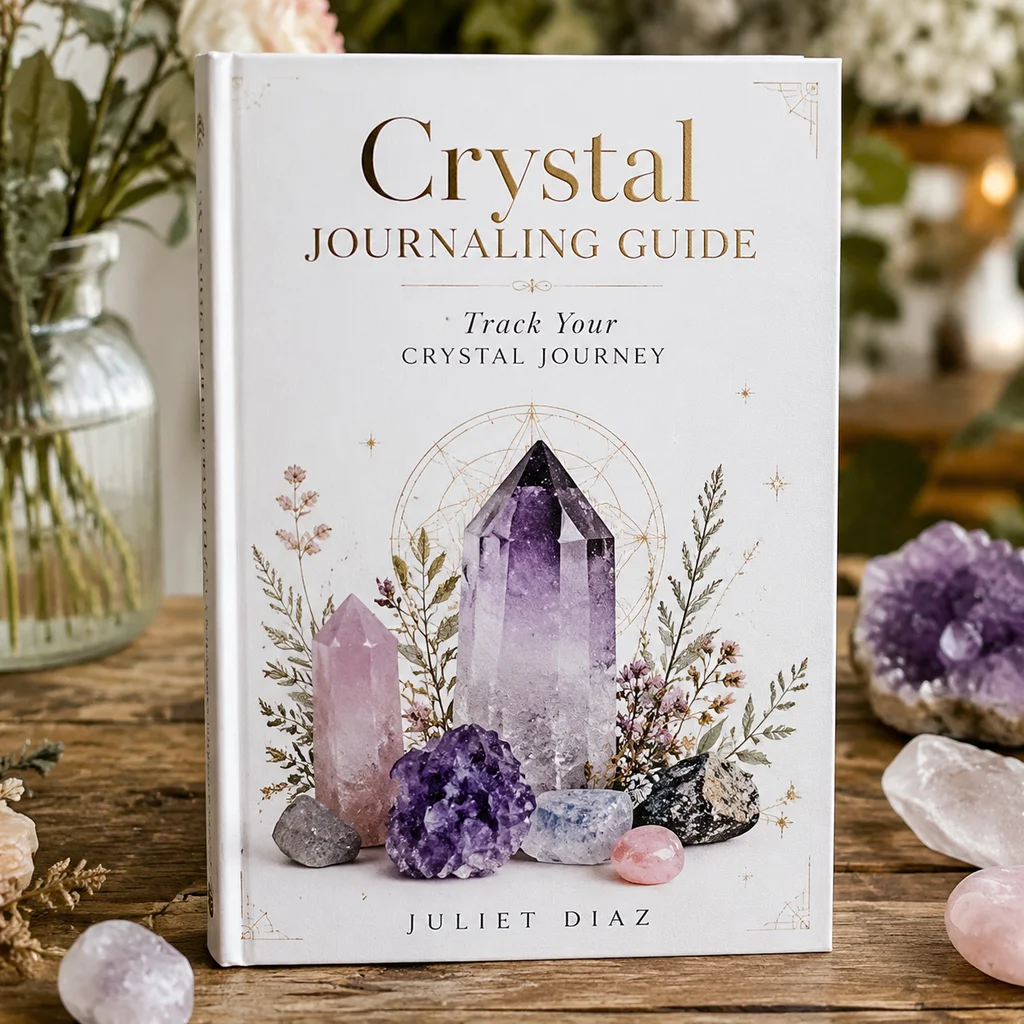
Crystal Journaling: A Practical System for Tracking Your Collection
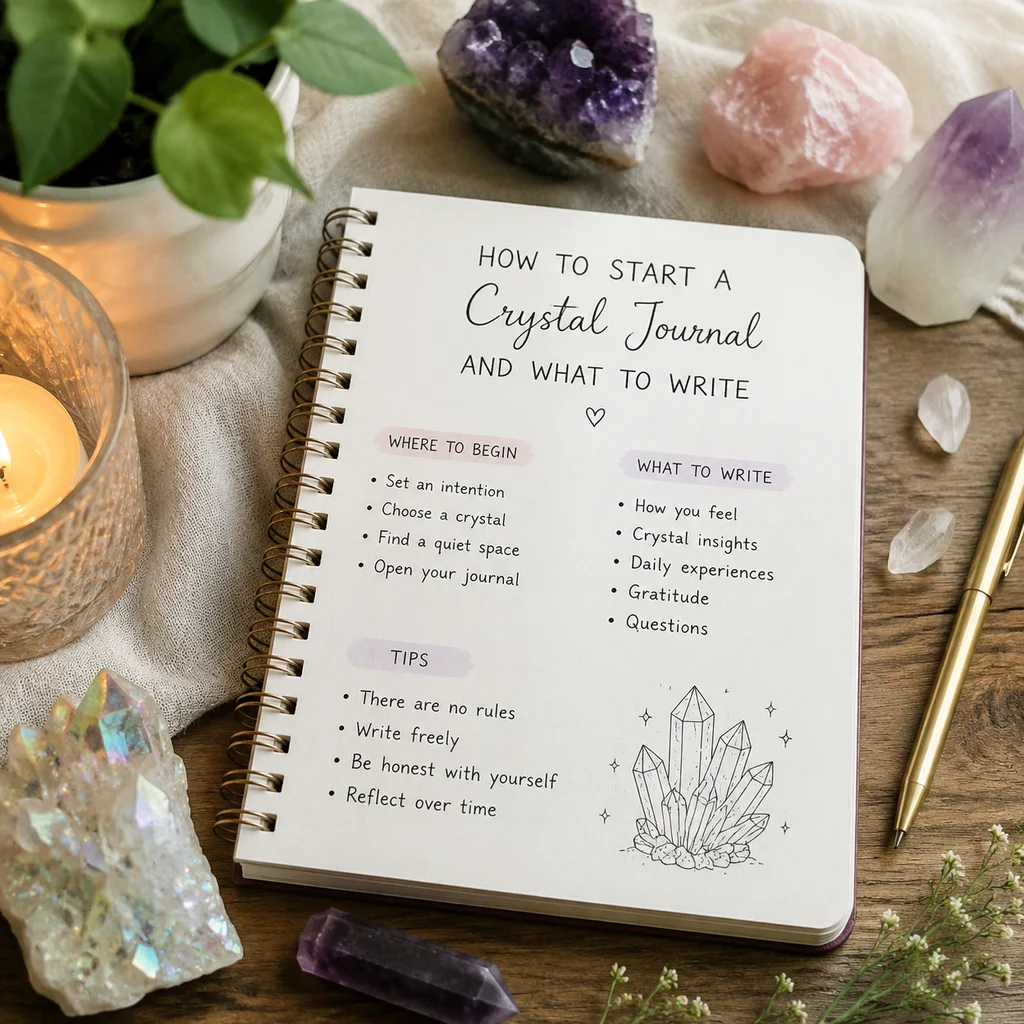
A crystal collection grows faster than most people expect. One piece becomes three, three becomes a shelf, and before long you have specimens scattered across multiple rooms with only a vague memory of where most of them came from. A crystal journal solves this problem — and in the process, it makes you a more thoughtful collector.
This is not about keeping a spreadsheet of purchase prices (though you can if that matters to you). It is about building a personal record that captures why each piece caught your eye, what you were drawn to, and how your relationship with your collection evolves over time. Think of it as a mix between a field notebook, a gratitude practice, and a reference library you actually enjoy opening.
Choosing Your Format
The best journaling system is the one you will actually use. There is no single correct format, and the right choice depends on how your brain works and what you want to get out of the process.
Physical Notebooks
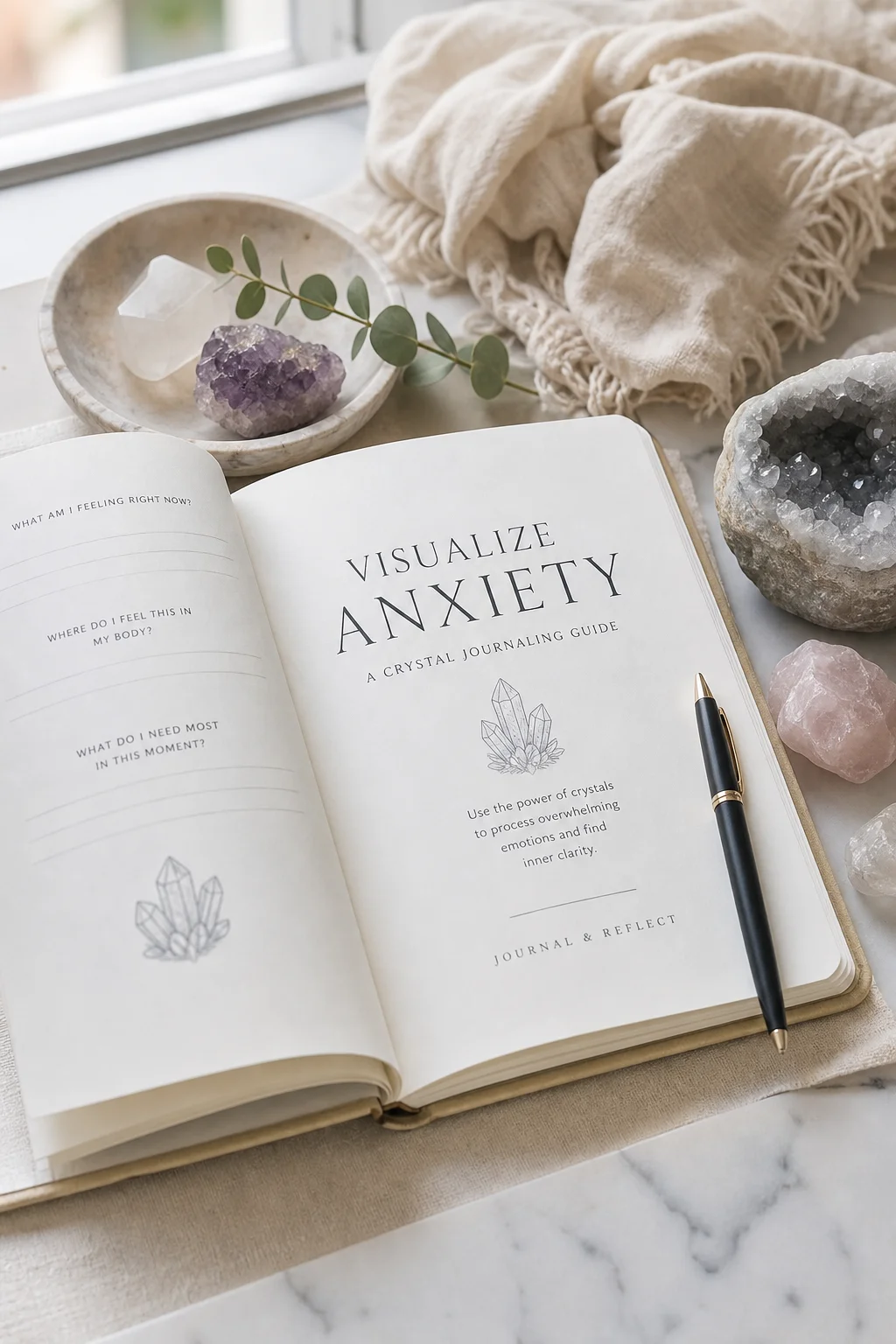
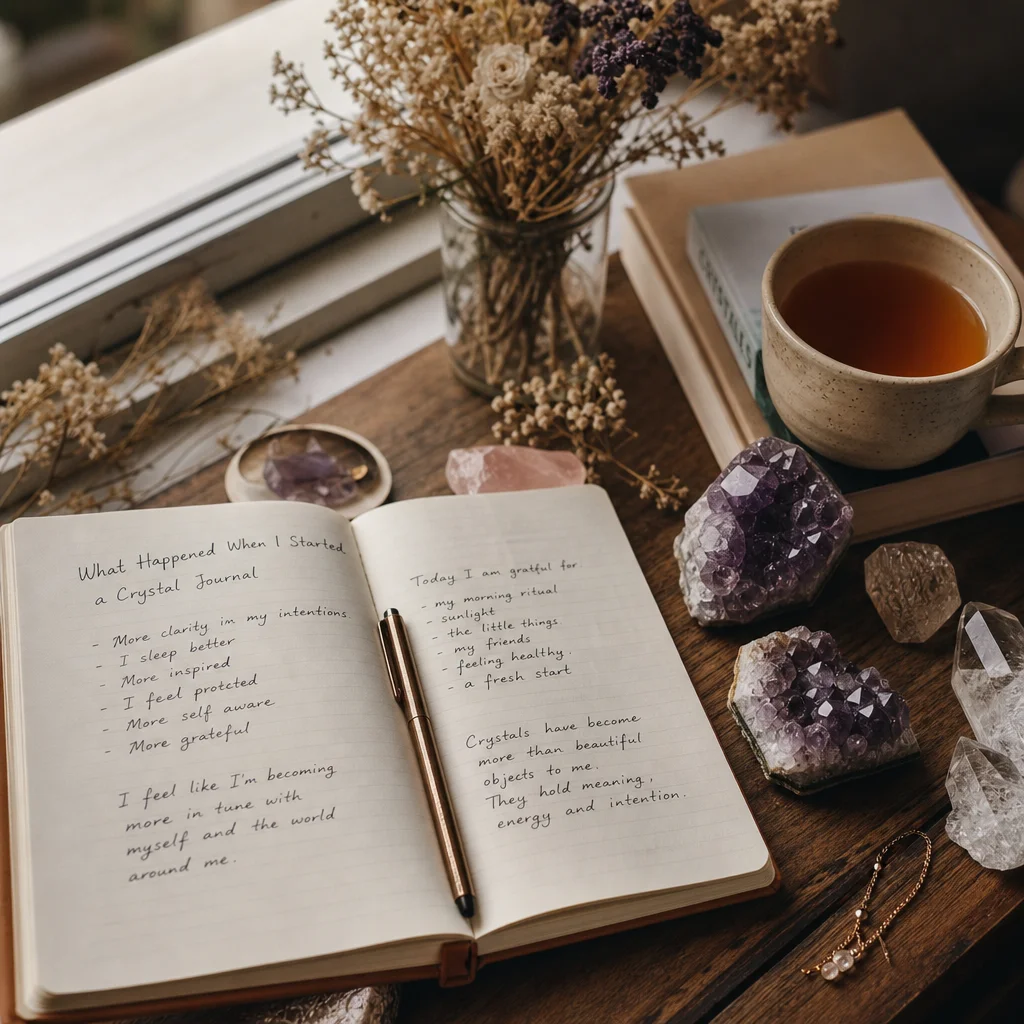
A blank sketchbook or dotted-grid notebook gives you freedom to write, sketch, and tape in photos or small samples. The tactile experience of writing by hand slows you down in a way that encourages more detailed observations. You can keep a notebook next to your display shelf and add entries whenever you acquire something new.
Some collectors use a two-page spread per specimen: one side for written notes, the other for a drawing or a Polaroid-style photo. The visual element makes the journal useful as a quick reference even when you are not in a reading mood.
Digital Systems
Notes apps (Apple Notes, Google Keep, Obsidian) work well if you always have your phone nearby. The advantage is searchability — you can find every entry mentioning "fluorite" or "Tucson" in seconds. Photos live right alongside the text, and you can tag entries however you like.
Spreadsheets are the natural choice for collectors who want sortable, filterable data. Columns for name, variety, origin, acquisition date, price, and storage location give you a functional inventory at a glance. The downside is that spreadsheets discourage narrative — the story of finding a particular piece at a flea market does not fit neatly into a cell.
A hybrid approach works best for many people: a spreadsheet for hard data (what, where, when, how much) and a digital note for each specimen that holds the longer story and photos.
What to Record for Each Specimen
Not every entry needs to be exhaustive. But establishing a baseline template ensures you capture the important details while they are still fresh.
The Essentials
- Species and variety — What is it? Be specific. "Quartz" is a start; "smoky quartz with chlorite inclusions" is much more useful six months from now.
- Origin — Where did it come from? Mine name, region, country. If you bought it at a show, note the dealer.
- Acquisition details — Date, price or trade terms, where you got it (show, online, self-collected, gift).
- Physical description — Size, weight, color, crystal habit, notable features (phantoms, inclusions, terminations).
- Condition — Any damage, repairs, or stabilization? Note it honestly now so you are not guessing later.
The Optional but Valuable
- Why you chose it — What made this piece worth acquiring? Was it the color, the shape, a feeling, a good price? This is the entry most people skip, and the one that becomes most interesting to read years later.
- Associated information — Cultural or historical notes, traditional associations, geological context. Recording these alongside the physical specimen creates a richer reference.
- Storage or display location — "On the windowsill in the study" or "Box 3, top tray." Essential when your collection outgrows a single shelf.
- Photos — At least one well-lit shot from the best viewing angle. Multiple angles are better. Photos capture details that words struggle with.
Building a Routine Around Your Journal
The hardest part of journaling is consistency. Without a system, entries start strong and trail off within weeks. These approaches help turn journaling into a habit rather than a chore.
The Unboxing Entry
Make journaling part of the process every time a new piece arrives. Before you find a place for it on the shelf, sit down with your journal (or phone) and write the entry. The specimen is already in front of you, the details are fresh, and the excitement of the new acquisition provides natural motivation. Pairing the journal entry with the physical act of receiving creates a trigger that is hard to ignore.
Monthly Reviews
Set a recurring calendar reminder — once a month works well — to review your recent entries. This serves three purposes: you catch any entries that were started but not finished, you notice patterns in what you have been acquiring, and you have a natural moment to update storage locations if things have moved around.
Monthly reviews are also a good time to photograph specimens that arrived before you started journaling. Working through your existing collection in small batches is less overwhelming than trying to document everything at once.
Seasonal Reflections
Every few months, write a longer entry that steps back from individual specimens and looks at the collection as a whole. What direction is it taking? Are you focusing on a particular mineral, region, or aesthetic? Has your taste shifted since you started collecting? These periodic reflections track your growth as a collector in a way that individual entries cannot.
Using Your Journal as a Learning Tool
A well-maintained crystal journal becomes more than an inventory — it becomes a personalized textbook. Here is how to extract learning value from it.
Pattern Recognition
After a few dozen entries, you will start noticing patterns. Maybe you gravitate toward green minerals, or you consistently pick specimens with interesting inclusions over cleaner examples. Recognizing these preferences helps you make more deliberate choices rather than impulse purchases you later question.
Patterns in origin locations can guide future collecting. If most of your favorite pieces came from Brazilian pegmatites, that is useful information for planning purchases or even travel.
Building Reference Knowledge
When you record associated information — crystal system, hardness, associated minerals, geological formation — for each specimen, you are building a reference library tailored to the material you actually own. This sticks in memory better than reading abstract descriptions because each fact is anchored to a physical object you can hold.
Over time, your journal entries become a personalized field guide. When you encounter a new specimen that resembles one you already own, your own notes are often more useful than a generic reference because they are written in your own language and reference specimens you can physically compare.
Tracking Changes in Specimens
Some crystals change over time. Certain sulfides tarnish, some hydrated minerals dehydrate and crack, and light-sensitive species fade. Periodic photographs and condition notes in your journal document these changes and can alert you to storage problems before damage becomes severe.
If you ever need to file an insurance claim for a damaged or stolen collection, a journal with photos, descriptions, and purchase records is invaluable. Documentation that does not exist cannot help you.
Avoiding Common Pitfalls
Perfectionism
The fastest way to kill a journaling habit is insisting every entry be polished and complete. A sloppy entry with a date, a name, and a phone photo is infinitely better than no entry at all. Give yourself permission to write abbreviated notes and fill in details later during a monthly review.
Over-Complicating the System
It is tempting to design an elaborate system with categories, subcategories, rating scales, and cross-references before you have written a single entry. Resist this urge. Start simple. Add complexity only when you feel a genuine need for it — not because you saw someone else's impressive spreadsheet online.
Neglecting the Narrative
Reduction data is useful, but the stories are what make a journal worth re-reading. The road trip to that mine in Arkansas, the conversation with the dealer who turned out to be a retired geology professor, the moment your kid picked up a piece and said "this one looks like a dragon" — these details give your collection personality and context that a bare inventory never will.
Sharing Your Journal
Some collectors keep their journals strictly private, and that is perfectly fine. Others find that sharing entries — in mineral club newsletters, on social media, or through a personal blog — adds motivation and connects them with like-minded people. If you do share, be mindful about revealing exact collecting locations for sensitive sites, and consider whether sharing purchase prices helps or harms the community discourse around specimen valuation.
A crystal journal is ultimately a conversation between your present self and your future self. The effort you put in today pays dividends every time you open it to remember a find, settle a question about a specimen's origin, or simply revisit the path that brought your collection into being. Start where you are, use what you have, and let the journal grow alongside the collection it describes.
Digital Tools Worth Considering
If you decide to go the digital route, a few tools stand out for crystal journaling specifically.
Obsidian is a free note-taking app that stores everything as plain text files on your own computer. It supports internal linking between notes, which means you can create a note for each specimen and link it to notes about the mine it came from, the dealer you bought it from, or the mineral species it belongs to. The graph view gives you a visual map of how everything in your collection connects.
Notion offers a more structured approach with databases, templates, and the ability to embed photos directly in entries. You can create a specimen database with custom properties (origin, price, hardness, date acquired) and then write longer narrative entries linked to each record. The mobile app makes it easy to add entries from a show or shop floor.
Simple Photo Albums should not be underestimated. A dedicated album on your phone, organized chronologically, with captions noting the species and origin, functions as a lightweight journal. It lacks the depth of a written record but captures the visual information that matters most for quick identification and comparison.
Whichever tool you choose, set it up so that adding a new entry takes under two minutes. If the friction is higher than that, you will start skipping entries, and skipped entries become abandoned journals.
Making Your Journal Work for Insurance
An often-overlooked benefit of consistent journaling is documentation for insurance purposes. If you ever need to file a claim for lost, stolen, or damaged specimens, an insurance adjuster will want evidence that you owned what you claim and that it was worth what you say.
Photos taken at the time of acquisition, purchase receipts or records of trade, and written descriptions of each specimen's condition form a paper trail that is difficult to dispute. Store backup copies of digital records off-site — cloud storage or a USB drive at a friend's house — so that a single disaster does not destroy both your collection and your documentation.
For high-value specimens, consider getting a professional appraisal and storing the appraisal document alongside your journal entry. The combination of your personal documentation and a professional's assessment provides strong evidence of both ownership and value.
Related Guides
- Essential Jewelry Storage Tips
- How to Clean Crystals Without Ruining Them
- 7 Crystal Cleaning Mistakes That Cost Me Hundreds of Dollars
- 15 Creative Ways to Display and Store Your Crystal Collection
- Crystal Shapes Explained: Tumbled, Raw, Points, Spheres
- Crystal Pricing: 7 Tricks Shops Use to Make You Overpay
- How to Clean Crystal Jewelry: A Complete Care Guide
Frequently Asked Questions
How do I start a crystal journal as a beginner?
Start simple with a notebook and pen. Begin by listing each crystal you own, then add details like name, date acquired, and a few words about how it looks or feels. You don't need fancy templates or apps right away. As your collection grows and your knowledge deepens, you can expand your entries to include properties, cleansing schedules, and personal reflections. The most important step is simply beginning and building a habit that feels natural to you.
What should I write in my crystal journal entries?
Each entry should capture both practical and personal details. Record the crystal name, variety, date acquired, and where you got it. Note physical traits like color, shape, and any unique markings. Add metaphysical properties you associate with it, cleansing methods used, and how often you work with it. Include photos or sketches if possible. Over time, add observations about shifts in energy, pairing successes, or meaningful experiences while using that particular stone.
Is a digital crystal tracker better than a paper journal?
Both formats have distinct advantages. A paper journal offers a tactile, distraction-free experience that many collectors find meditative and personal. Digital tools provide searchable databases, photo organization, and backup security. Some enthusiasts maintain both, using digital spreadsheets for cataloging and a physical journal for deeper reflections. Choose what fits your lifestyle, and remember that consistency matters far more than the format you select for documenting your collection.
How often should I update my crystal collection journal?
Aim to update your journal whenever you add a new piece to your collection or notice meaningful changes in an existing stone. Some collectors set aside time weekly or monthly for review sessions. The key is establishing a rhythm that feels sustainable rather than burdensome. If you go too long between entries, you may forget important acquisition details. Even brief notes jotted down quickly are valuable for maintaining an accurate record of your collection.
Should I keep a crystal journal if I only have a few pieces?
Absolutely. Even a small collection benefits from documentation. A journal helps you track when you acquired each piece, how you've been working with it, and which stones you're drawn to over time. It also creates a meaningful record of your personal journey with crystals. Starting this habit early makes it effortless to maintain as your collection naturally grows. Many seasoned collectors wish they had begun documenting from their very first specimen.

Comments