Crystal jewelry gifts: what to buy for different personalities
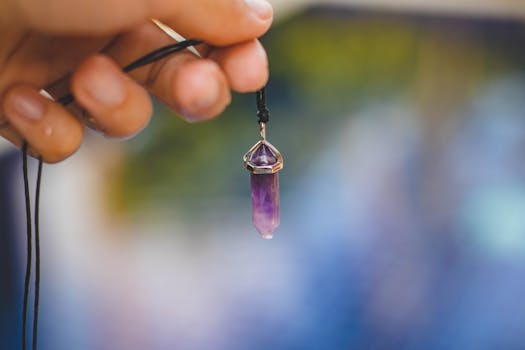
Why crystal jewelry makes a personal gift
There is something about giving someone a piece of crystal jewelry that feels different from handing them a gift card or a pair of socks. The person receiving it can tell you put thought into it. You didn't just grab something off a shelf at the last minute. You considered who they are, what they like, maybe even what they need right now. That is the kind of gift people remember.
Crystal jewelry has been around for thousands of years. Ancient Egyptians wore lapis lazuli. Roman women pinned amethyst brooches to their stolas. Victorian mourners wore jet beads. The point is, this is not a trend. It is one of the oldest forms of personal adornment, and it has stuck around because it works. People like wearing stones. They like the way they catch light. They like that each one is slightly different, the way no two people are exactly the same.
But here is the tricky part: crystal jewelry is personal. What blows one person's mind might leave another person cold. An earthy, raw stone pendant that speaks to your nature-loving friend could feel completely wrong for your sister who lives in tailored blazers and reads fashion magazines. The trick is matching the piece to the person, not just picking something pretty.
This guide breaks down seven common personality types and suggests crystal jewelry that actually fits each one. Not vague "everyone would love this" recommendations. Specific, practical suggestions you can act on.
The classic minimalist
You know this person. Their jewelry box has maybe four things in it, and every single one gets worn on rotation. They don't do statement pieces. They don't do trends. They want something clean, well-made, and versatile enough to wear every day without thinking about it.
For this person, less is more. A lot more. A tiny rose quartz bead on a thin gold-filled chain is going to get way more use than an elaborate crystal cluster necklace. The same goes for a single clear quartz stud earring, or a thin bangle with a small polished stone set into it.
The key is subtlety. The crystal should be a detail, not the whole story. Think of it like a whisper, not a shout. A 4mm or 6mm stone is usually the sweet spot. Anything bigger starts to cross into statement territory, and that is not what this person signed up for.
Metals matter here too. Gold-filled or sterling silver, not plated. Minimalists notice quality, and they notice when plating starts to wear off after two months. If you can swing it, solid gold is even better. A simple 14k gold pendant with a 3mm stone is the kind of thing they will wear for decades.
Good stone choices for minimalists: clear quartz (it goes with literally everything), rose quartz (soft and neutral), and white sapphire (if you want to spend a bit more). These are all low-color stones that read as elegant rather than flashy.
The bold trendsetter
This is the friend who always knows what is going to be cool six months before everyone else. They were wearing chunky resin rings before TikTok discovered them. They follow indie jewelry designers on Instagram and probably have a mood board saved somewhere.
For this person, safe is boring. Do not buy them a basic crystal pendant. They already have one, or they have decided those are played out. Instead, look for pieces that have something unusual about them. Raw, unpolished crystals set in unexpected ways. Asymmetrical designs. Mixed metals. Stones that are not the usual suspects.
Consider a chunky amethyst cluster ring, the kind where the crystal is set exactly as it was found, jagged edges and all. Or a labradorite pendant cut into an unusual shape, like a hexagon or a teardrop, set in blackened silver. Labradorite is a great choice here because its play of color (called labradorescence) changes depending on the angle, which means the piece looks different every time you look at it.
Tourmaline is another strong option for trendsetters. It comes in more colors than almost any other gemstone, and watermelon tourmaline (pink center, green outer layer) has been having a serious moment in independent jewelry design. A watermelon tourmaline slice pendant on a long chain is the kind of piece this person will actually get excited about.
Materials to lean toward: oxidized silver, brass, rose gold. Anything that feels a little rough around the edges, literally or figuratively. Polished perfection is not the vibe here.
The nature lover
This person has houseplants in every room. They go hiking on weekends. Their Spotify Wrapped is 80% acoustic guitar playlists. They probably own at least one piece of clothing with a leaf print on it.
For the nature lover, the connection between the jewelry and the earth matters. They want to feel like the stone came from somewhere real, not a factory. Raw and rough-cut crystals are usually a bigger hit with this group than perfectly faceted ones. A chunky piece of green aventurine that still looks like it was just pulled out of the ground, set in a simple wire wrap, is going to resonate way more than a precision-cut gemstone in a prong setting.
Moss agate is another excellent choice. It has green inclusions that look like tiny landscapes, like miniature forests frozen in stone. Nature lovers tend to lose their minds over this stuff. A moss agate cabochon in a bezel setting on a leather cord is about as on-brand as it gets.
Tree agate works too. It has dendritic (tree-like) inclusions in white or light green. Unakite, with its pink and green mottling, is another good bet. These stones look like nature. That is the whole point.
When it comes to settings, organic shapes win. Skip the perfect circles and go for freeform. Leather cords, waxed cotton, or braided hemp make better necklace choices than standard chains. For earrings, look for drop styles with natural stone chips rather than uniform beads.
The spiritual or mindful person
Let me be clear about something: I am not talking about crystal healing here. I am talking about someone who values intentionality, mindfulness, and personal meaning. They meditate. They journal. They probably have a sage bundle somewhere in their apartment. They appreciate gifts that carry symbolic weight.
For this person, the story behind the stone matters more than the setting. They want to know where it came from, what it has traditionally represented, why you chose it for them. So pick something with actual cultural or historical significance and be ready to talk about it.
Amethyst has been associated with clarity and calm for centuries. The word comes from the Greek "amethystos," meaning "not intoxicated," because ancient Greeks believed it could prevent drunkenness. A nice amethyst pendant paired with a handwritten note about that history is a thoughtful gift. Lapis lazuli was ground into pigment for Renaissance paintings. Sodalite is sometimes called the "poet's stone" because of its deep blue color.
Pendants and palm stones are better choices than rings or bracelets for this group, because they are easier to hold and focus on. A worry stone made from polished black tourmaline, smooth enough to rub with your thumb, is the kind of small, meaningful gift this person will actually use.
Mala bead bracelets (usually 21 or 27 beads on an elastic cord) are also popular with this crowd. They are portable, wearable, and carry a meditative quality. Just make sure the beads are real stone, not glass or resin painted to look like stone. This group can usually tell the difference.
The practical professional
This person works in an office, a courtroom, a hospital, or anywhere else where "appropriate" jewelry is an unspoken rule. They need something that looks polished, does not clank against a keyboard, and will not get caught on a sweater. They have zero patience for anything fussy.
For this personality, the priority is wearability. Small stud earrings with crystal accents are almost always a safe bet. A pair of 5mm blue lace agate studs in sterling silver settings is professional without being boring. Blue lace agate has a soft, milky blue banding that reads as calm and composed, which is basically the professional vibe in stone form.
Thin pendant necklaces work too, as long as they sit close to the collarbone and do not swing around. A small round cabochon of smokey quartz in a bezel setting on an 18-inch chain is understated but noticeable. Smokey quartz has a warm brown tone that pairs well with both gold and silver, which means it goes with basically everything in their wardrobe.
Avoid: anything that dangles (earrings that swing are distracting in meetings), anything with sharp edges (raw crystals can snag on fabric), anything that makes noise (bangles that clink). This person needs jewelry that disappears into their day-to-day, not jewelry that demands attention.
If you want to go a little fancier, consider a tennis bracelet with small crystal beads. Not diamonds, but crystal beads that have a similar look. Prehnite beads in a soft green, or lepidolite in a dusty lavender, look elegant strung on fine wire with a gold clasp.
The vintage enthusiast
This person thrift shops. They watch period dramas. Their apartment has at least one piece of genuine mid-century furniture. They have opinions about jewelry eras and they are not afraid to share them.
For the vintage lover, new jewelry that looks old is the move. Art deco-inspired geometric cuts. Victorian-style filigree. Edwardian lace-like metalwork. The key is that the design references a real historical period, not just "old-looking."
An art deco style ring with a rectangular step-cut amethyst set in white gold is a solid choice. The geometric lines and bold symmetry of art deco design (roughly 1920-1935) pair beautifully with the deep purple of amethyst. If you can find a piece that actually uses an old-cut stone, even better.
For something more delicate, look for Victorian-style pieces with seed pearls and small crystal accents. A baroque freshwater pearl necklace with tiny crystal spacer beads has that layered, collected-over-time look that vintage enthusiasts love. It reads like something someone inherited from their grandmother, even if you just bought it last week.
Moonstone is a natural fit here. It was enormously popular in Art Nouveau jewelry (1890-1910), and pieces that reference that era often feature it prominently. A moonstone cabochon with visible adularescence (that blue-white shimmer that moves across the surface) set in a flowing, organic silver setting is peak Art Nouveau.
The sentimental friend
This is the person who keeps every birthday card they have ever received. They cry at movies. They value emotional connections above basically everything else. When they give a gift, it comes with a three-page handwritten letter. When they receive one, the thought behind it matters more than the object itself.
For the sentimental person, go for birthstones. Not because of any mystical property, but because it is personal. It says "I know when your birthday is and I chose something specifically for that." A small, well-made birthstone pendant is almost guaranteed to be a hit.
If you want to go further, consider a two-stone piece. A pendant or ring with two different crystals, one representing the giver and one representing the receiver, is the kind of thing this person will treasure. Mother-daughter, best-friend, or sister pairs are common. Rose quartz and clear quartz together is a nice combination. So is amethyst and citrine (purple and yellow complement each other well).
Engraving is worth the extra cost and wait time. Even a simple date on the back of a pendant, or initials on the inside of a ring, transforms a nice gift into a meaningful one. This is the one personality type where I would absolutely say: spring for the engraving.
Presentation matters too. Do not hand this person jewelry in a plastic baggie. Put it in a real box, ideally with a handwritten note. They will keep the box. They will keep the note. That is just who they are.
A few universal tips
No matter who you are shopping for, there are some basics that apply across the board. First, check for metal allergies. Nickel is the most common culprit, and it shows up in a lot of cheap jewelry. Sterling silver (stamped 925), gold-filled, and solid gold are all safe bets for most people. Surgical steel works for earrings. If you are not sure, ask. It is way better to ask than to give someone a rash.
Second, pay attention to sizing. Ring sizes, bracelet lengths, necklace lengths. These are not guessable. Sneak a peek at their existing jewelry if you can, or ask a mutual friend. A ring that does not fit is a nice gesture trapped in a drawer.
Third, buy from someone who actually knows what they are selling. Real crystal jewelry should come with some indication of what the stone is. "Natural amethyst" or "genuine citrine" is a real description. "Crystal gemstone" or "natural stone" without specifics is a red flag. Real sellers know their minerals.
Finally, set a realistic budget. Good crystal jewelry starts around $25-40 for a simple piece and goes up from there. You do not need to spend hundreds to get something nice, but be wary of anything under $15 that claims to be genuine stone in precious metal. At that price point, something is probably not what it claims to be.
The best crystal jewelry gift is not the most expensive one. It is the one that makes the recipient think, "They actually get me." That is worth more than any price tag.
Comments