Build Your Abundance Crystal Grid
May 14, 2026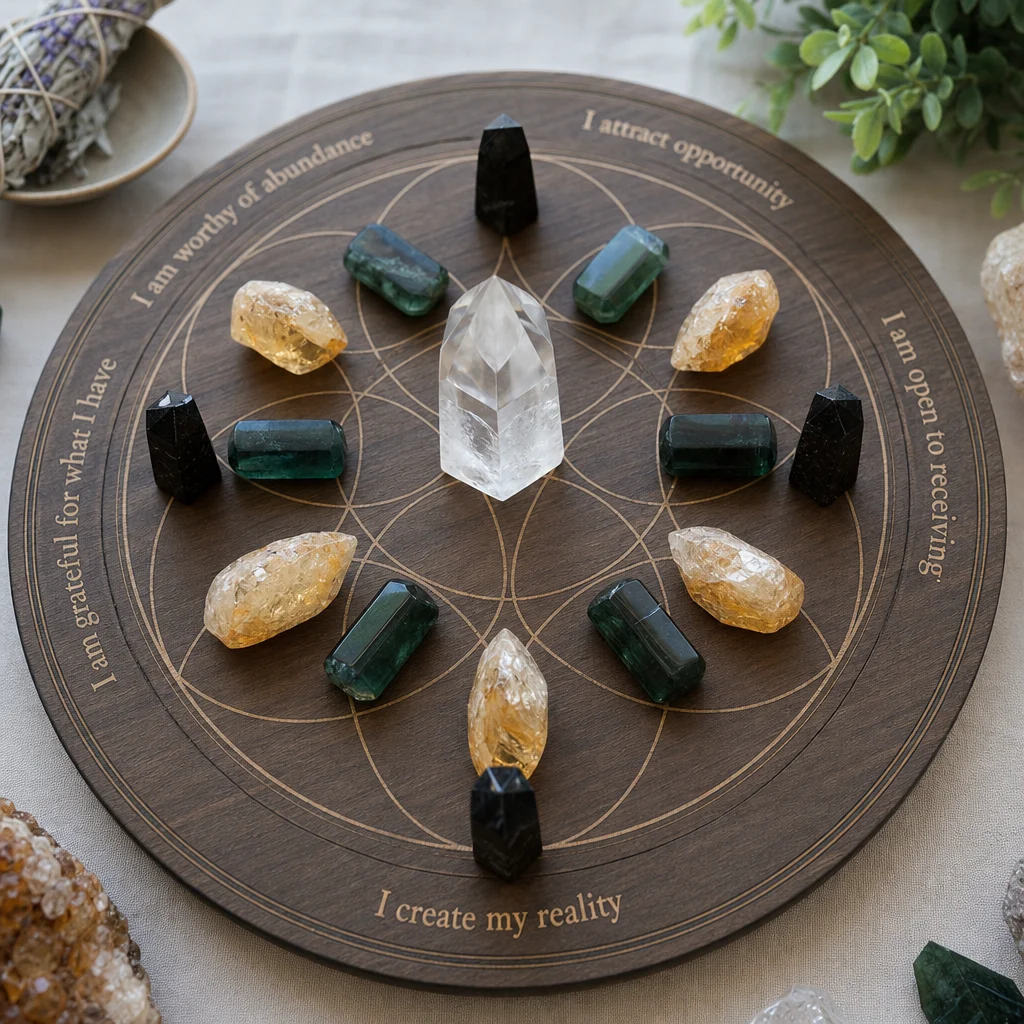
Crystal grid for abundance: 7 steps to build your first one
A crystal grid is a deliberate arrangement of stones in a geometric pattern, built around a specific intention. People have used them for centuries across cultures — from Vedic mandalas to Native American medicine wheels — as a way to focus attention and energy on a goal. If you've never made one before, an abundance grid is a solid place to start because the structure itself is forgiving and the materials are easy to find.
This guide walks through the actual mechanics: which stones to pick, how to arrange them, what geometry to use, and how long to leave it up. No vague metaphysical claims — just practical steps you can follow tonight.
What you need before you start
Before laying down a single stone, gather three things: your centerpiece stone, your supporting stones, and something to write your intention on. A grid without a clear intention is just a pretty arrangement. The intention is what gives it structure.
Choosing a center stone
The center stone anchors the whole grid. For abundance work, citrine is the traditional pick — it's been associated with wealth and prosperity in Chinese and Mediterranean cultures for hundreds of years. A raw citrine point works well, but a tumbled stone is fine too.
If you don't have citrine, green aventurine or pyrite are both reasonable substitutes. Green aventurine has a long association with luck and new opportunities. Pyrite — "fool's gold" — is literally a mineral that looks like money, and some traditions link it to financial thinking and confidence.
Supporting stones
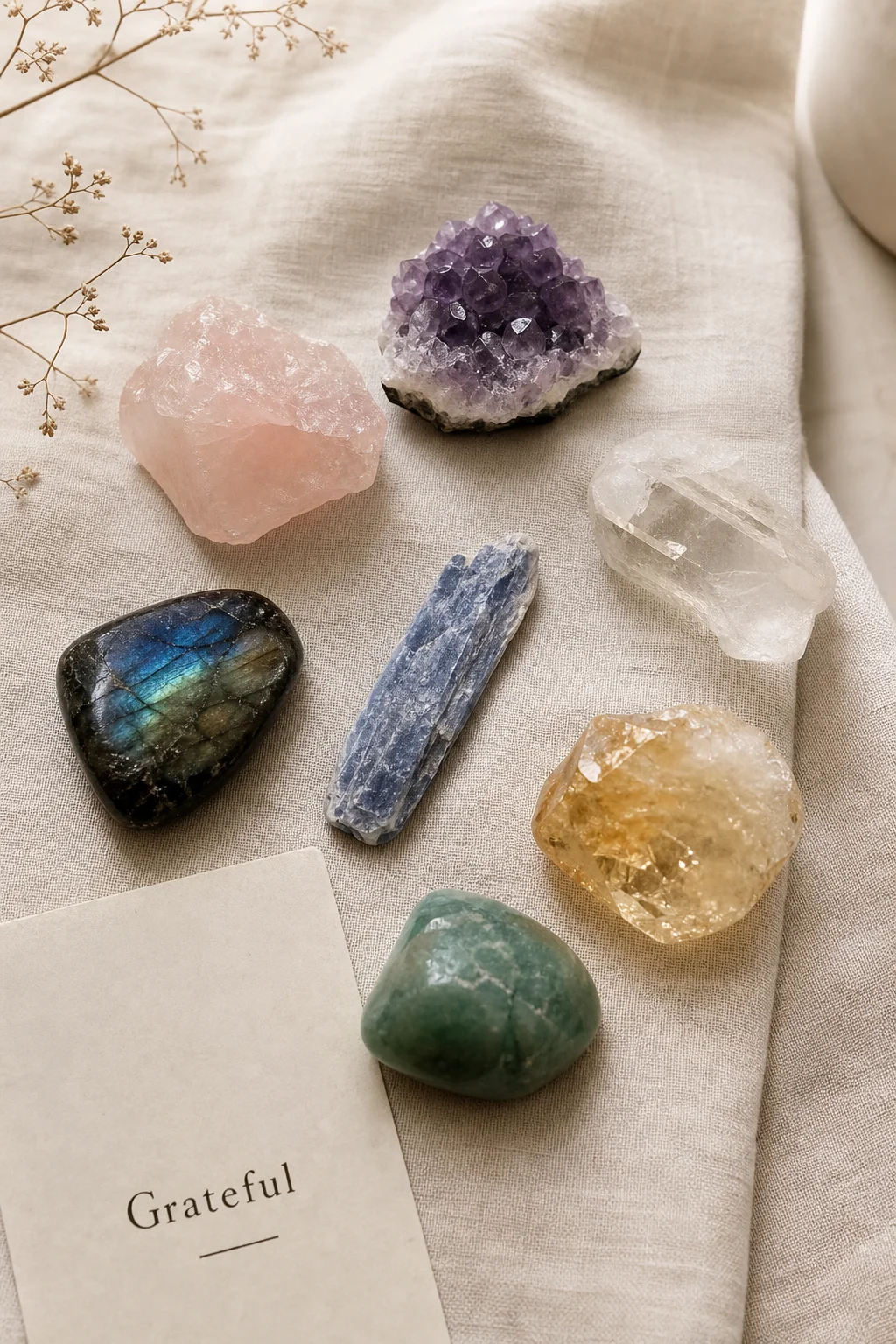
You'll want 6 to 8 stones to surround the center. These should complement your focus, not fight it. Good options for abundance grids include:
- Green jade — tied to prosperity in East Asian culture for millennia
- Carnelian — associated with motivation and taking action
- Peridot — sometimes called the "money stone" in crystal traditions
- Tiger's eye — linked to confidence and clear decision-making
- Clear quartz points — used to amplify whatever intention you're working with
Don't stress about getting the "right" stones. Use what you have. A grid made with stones you actually own and feel connected to will work better for you than one built from a shopping list you found online.
The geometry
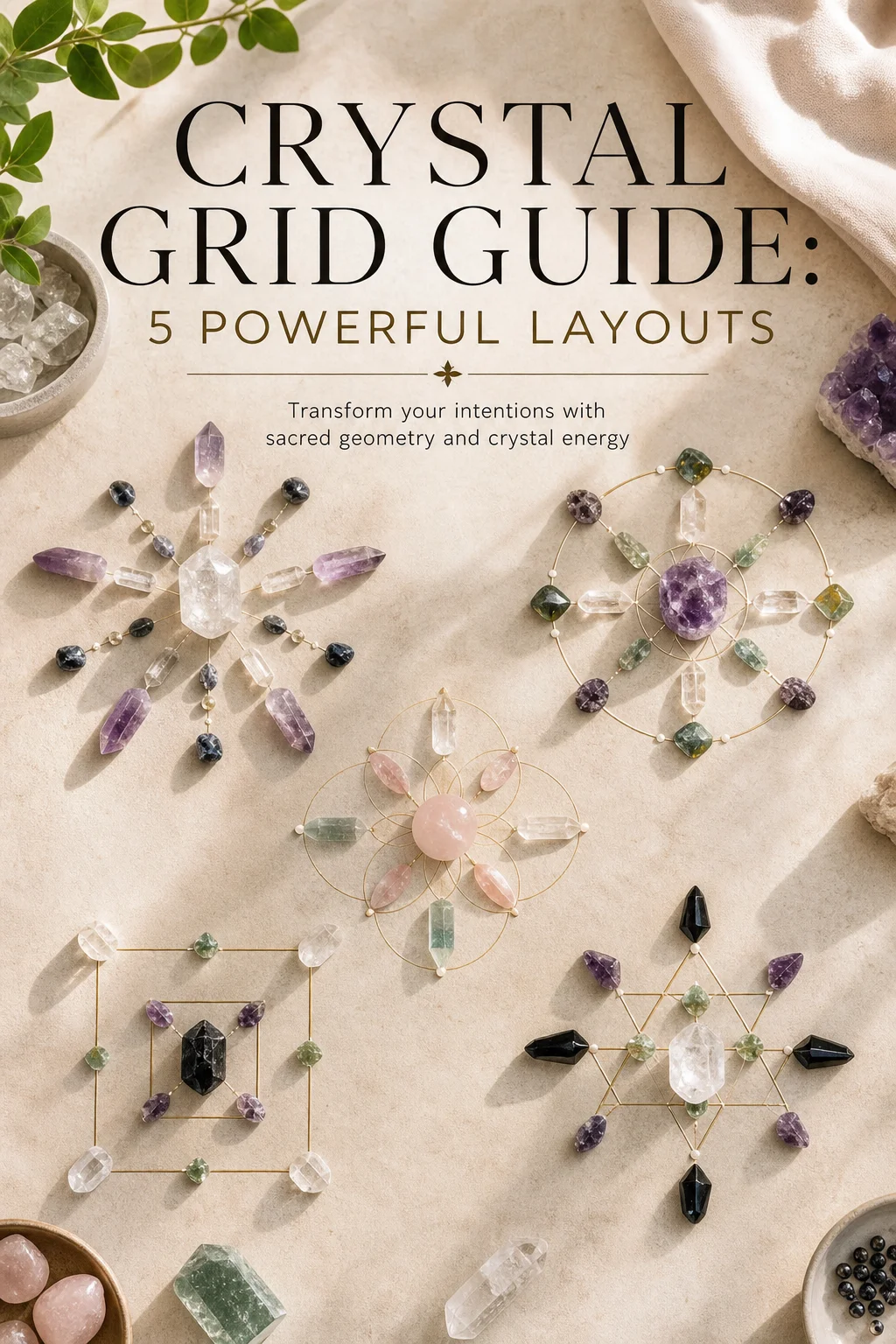
Most abundance grids use one of two shapes: a hexagon (six-sided) or the Seed of Life pattern. The hexagon is easier for beginners because it only requires six outer stones placed at equal intervals around the center. If you want something more intricate, the Flower of Life pattern uses overlapping circles, but that's a lot more stones and a lot more setup time.
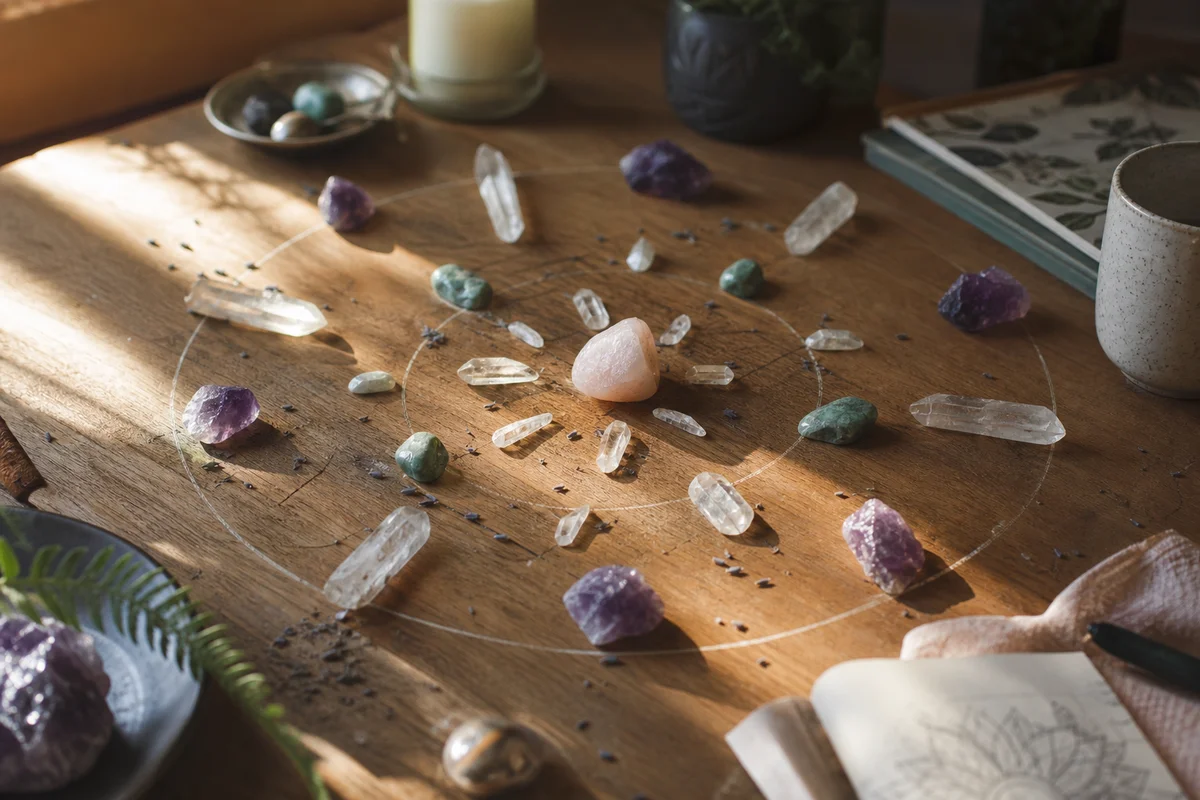
You can also just draw your shape on paper and place stones on the lines. There's no rule that says the geometry has to be made from stones alone.
Building the grid: step by step
Set aside 20 to 30 minutes. Find a flat surface you won't need to disturb for at least a few days — a corner of your desk, a shelf, or a small table dedicated to the grid. Here's the process:
Step 1 — Cleanse your stones
Run each stone under cool water for a few seconds, or pass it through incense smoke (sage or sandalwood both work). Some people leave them in moonlight overnight. The point isn't mysticism — it's about creating a moment of focus where you think about what you're doing and why. That mental pause matters more than the method.
Step 2 — Write your intention
Write one clear sentence on a small piece of paper. Be specific. "I want more money" is vague. "I am building three new income streams by September" is something you can actually work toward. Fold the paper and place it under your center stone.
The more concrete your intention, the easier it is for your brain to notice relevant opportunities and act on them. This is partly why crystal grids work for some people — they function as a physical reminder of a goal you've stated clearly.
Step 3 — Place the center stone
Put your center stone directly on top of the folded intention paper. If you're using a point (like a raw citrine), point it upward. Take a breath. This is the anchor.
Step 4 — Place the first ring
If you're doing a hexagon, place six stones at equal distances from the center — roughly two to three inches out. If it helps, draw a light circle on your surface first and divide it into six sections. Place one stone at each point.
If you're using clear quartz points, point them outward from the center. This is a traditional choice meant to "send out" the intention. Whether or not you buy the energy mechanics, the visual symmetry is satisfying and keeps the arrangement stable.
Step 5 — Add an outer ring (optional)
For a second ring, place twelve more stones in a larger circle around the first six. You can alternate between two types of stones to create a visual pattern. This step isn't necessary, but it does make the grid look more complete and gives you more surface area to work with if you want to add specific intentions to individual stones.
Step 6 — Activate the grid
Take a clear quartz point or your center stone and physically trace the lines of your grid — center to each outer stone, then around the circle. Some people do this while repeating their intention out loud. The physical act of connecting the stones in order is what "activates" the pattern. Again, this is about creating a focused ritual, not about summoning forces.
Step 7 — Leave it up
Let the grid sit undisturbed for at least 7 days. Some people leave abundance grids up for a full lunar cycle (about 28 days). Check in with it daily — even just a glance — and spend a minute thinking about the intention you wrote. When you're ready to take it down, thank the process (or don't — your call), then cleanse the stones again before storing them.
Common mistakes and how to fix them
The biggest mistake beginners make is overcomplicating the grid. You don't need twelve types of crystals, sacred geometry printed on gold leaf, or a specific moon phase. Six stones around a center point, a clear intention, and consistent attention will serve you better than an elaborate setup you never actually use.
Another common issue: using stones that feel wrong to you personally. If pyrite makes you think of deception (it is called fool's gold, after all), don't use it for an abundance grid. The association should feel positive and specific to you. Crystal traditions are deeply personal — what matters is your relationship to the materials.
Finally, don't place your grid somewhere it'll get knocked over or moved. A stable, semi-permanent location is part of the point. If you're constantly rebuilding it, you'll lose the continuity that makes the practice useful.
A simple starter layout you can try tonight
Here's a minimal abundance grid you can build in under ten minutes with stones you probably already have or can buy for under $15 total:
- Center: One tumbled citrine
- Ring of 6: Green aventurine or green jade (same type for all six)
- Intention paper: One specific, time-bound financial goal
Arrange the six green stones in a hexagon around the citrine. Trace the connections with your finger. Leave it on your nightstand for a week. That's it.
The real value of a crystal grid isn't magic — it's the combination of a clear written goal, a physical representation of that goal you see every day, and a small ritual that keeps your attention on what you're trying to build. If the grid makes you think about your finances once a day and act on one opportunity you'd otherwise miss, it's done its job.
Step-by-Step Guide to Laying Out Your Abundance Crystal Grid
Now that you have your stones and your intention, it's time to get your hands dirty and lay out your grid. Here's a step-by-step guide to help you through the process:
Step 1: Find a Suitable Space
Choose a quiet, peaceful place where you won't be disturbed. This could be a corner of your living room, a dedicated altar space, or even a spot in your garden. The key is to create a space that feels right for your intention.
Step 2: Cleanse Your Stones
Before you start, it's a good idea to cleanse your stones. You can use sage, saltwater, or simply hold them under running water. This helps to clear any negative energy and prepares them for the work ahead.
Step 3: Set Your Intention
Take a moment to focus on your intention. Visualize what abundance looks like to you. Maybe it's financial stability, career success, or simply a feeling of well-being. Allow yourself to feel the energy of this intention as you set it into your grid.
Step 4: Arrange Your Center Stone
Place your center stone in the center of your chosen space. This stone will be the focal point of your grid and should be a stone that resonates with the theme of abundance for you.
Step 5: Place Your Supporting Stones
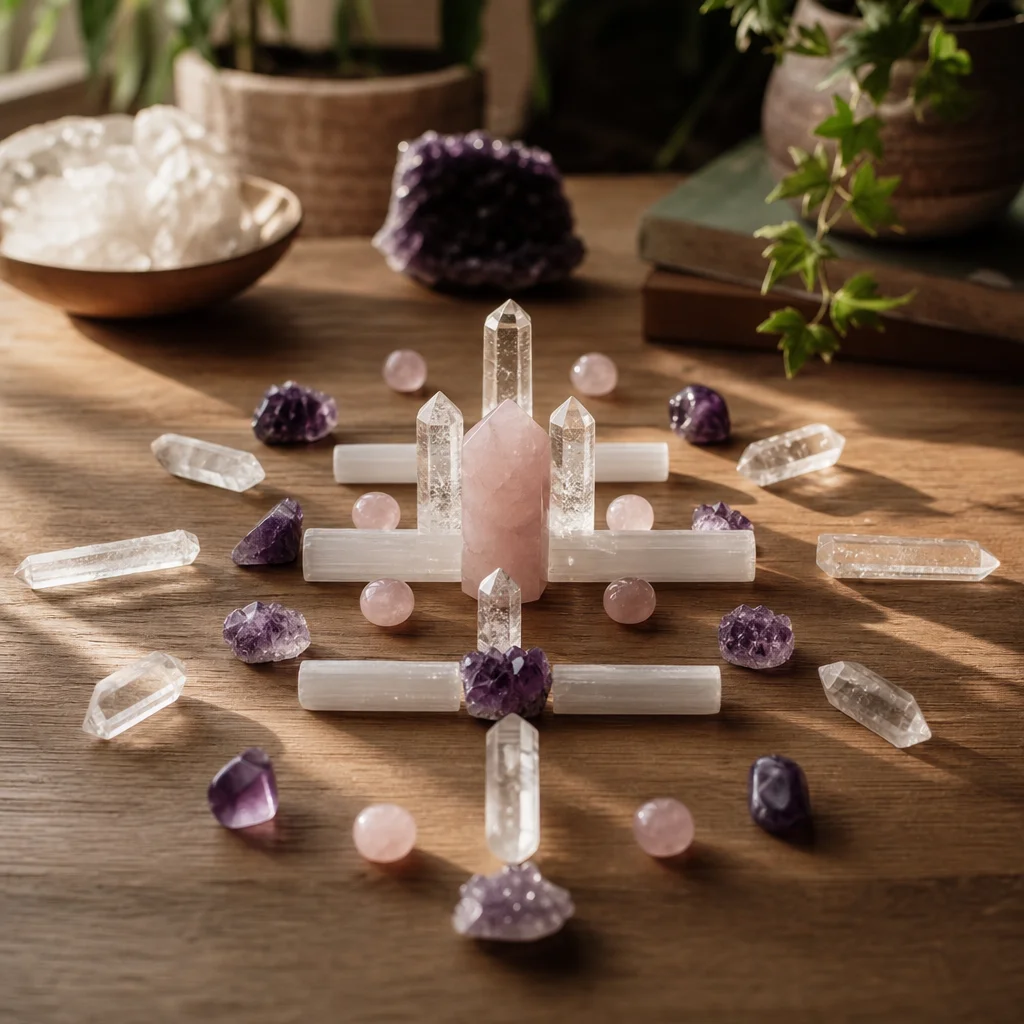
Now, place your supporting stones around the center stone. If you're using a hexagon pattern, you'll need six stones. If you're using the Seed of Life pattern, you'll need more stones and a more complex layout. Remember, there's no right or wrong way to do this. Trust your intuition and let your grid evolve naturally.
Step 6: Connect the Stones
Use a piece of string, yarn, or even a thin wire to connect the stones. This creates a cohesive energy field that helps to amplify your intention. You can also use a clear quartz point to connect the stones, as it is known for its amplifying properties.
Step 7: Activate Your Grid
Once your grid is complete, take a moment to ground yourself. Breathe deeply, feel the energy of the stones, and affirm your intention. You can also say a mantra or visualization to help you connect more deeply with your goal.
Personalizing Your Abundance Crystal Grid
Your abundance grid is a personal creation, so feel free to add your own touch. Here are a few ideas:
- Incense and Aromatherapy: Add a few drops of essential oils or light some incense to enhance the energy of your grid.
- Symbolic Items: Place items that represent your intention around your grid, such as coins, seeds, or even a small business card with your goals written on it.
- Journaling: Keep a journal of your experiences with your grid. Write down your thoughts, feelings, and any insights that come to you.
Regular Maintenance of Your Abundance Crystal Grid
Once your grid is set up, it's important to maintain it. Here are a few tips:
- Cleansing: Regularly cleanse your stones to keep them free of negative energy.
- Recharging: Recharge your grid periodically by placing it under the light of the full moon or by using a crystal charging method.
- Reflection: Spend time with your grid each day to reflect on your intention and to connect with the energy of the stones.
Comparing Different Abundance Crystal Grids
Here's a table comparing different types of abundance crystal grids and their benefits:
| Grid Type | Number of Stones | Benefits |
|---|---|---|
| Hexagon Grid | 6-8 stones | Easy to set up, amplifies abundance energy |
| Seed of Life Grid | More than 12 stones | Complex, creates a powerful energy field |
| Flower of Life Grid | Even more stones | Very powerful, promotes balance and harmony |
FAQ
Can I use any type of stone for my abundance grid?
Can I use any type of stone for my abundance grid?
Answer.
Yes, you can use any type of stone that resonates with the theme of abundance for you. Just make sure that the stones you choose complement each other and don't conflict with your intention.
How long should I leave my abundance grid up?
How long should I leave my abundance grid up?
Answer.
There's no set time for how long you should leave your grid up. Some people prefer to keep it up for a few weeks or months, while others may leave it up indefinitely. The key is to trust your intuition and remove the grid when you feel it's no longer serving its purpose.
Can I use my abundance grid for other intentions?
Can I use my abundance grid for other intentions?
Answer.
Yes, you can use your abundance grid for other intentions as well. Just make sure to cleanse and reprogram the grid for each new intention.
What if I don't have all the stones I need for my grid?
What if I don't have all the stones I need for my grid?
Answer.
Don't worry if you don't have all the stones you need. You can still create a powerful grid with the stones you do have. The energy of the grid comes from your intention and the connection you feel with the stones, not just the number of stones you use.
Can I use my abundance grid to help others?
Can I use my abundance grid to help others?
Answer.
Yes, you can use your abundance grid to help others. Just make sure to cleanse and reprogram the grid for each person you want to work with. It's important to respect their privacy and intentions.
Comments