Complete Guide to Pearl Types
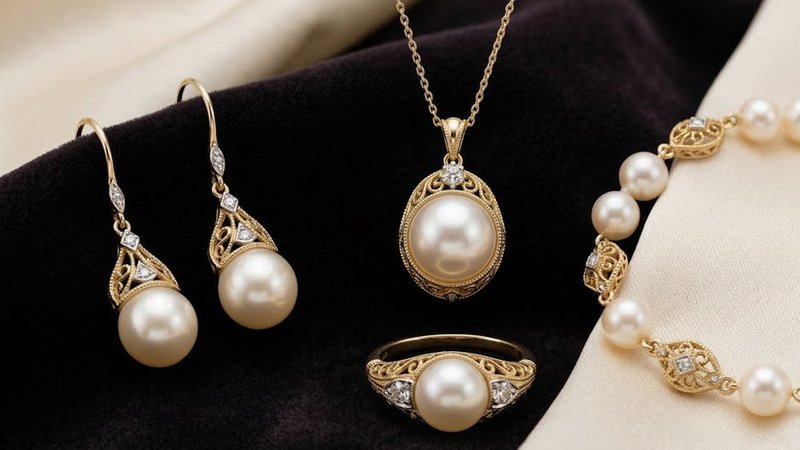
Three years ago, I bought what I thought was a gorgeous strand of pearls from a street market in Bangkok. The vendor swore they were freshwater pearls from China. They had that creamy luster, that soft glow — or so I thought. It wasn't until I brought them home and compared them side by side with my grandmother's real pearl necklace that I realized something was off. They were too perfectly round. Too uniform. And when I rubbed two of them together, there was absolutely no grit — just smooth, cold plastic sliding against plastic.
I'd been fleeced. And honestly? It stung more because I'd been so confident. That experience sent me down a rabbit hole of pearl research that I never expected. I read everything I could find, talked to jewelers, visited pearl farms, and spent way more money than I'd like to admit testing different types. So consider this guide the thing I wish someone had handed me before that Bangkok market trip.
Let's walk through every major type of pearl out there — what makes each one special, how to spot fakes, and how to figure out which kind is actually worth your money.
Freshwater Pearls: The Everygirl's Pearl
If you're just getting into pearls, freshwater pearls are where you'll probably start. And honestly? They deserve more respect than they get.
Most of the world's freshwater pearls come from China — specifically from regions around Shanghai and in the lakes of Jiangsu province. The Chinese have been culturing freshwater pearls for centuries, and modern techniques have gotten ridiculously good at producing beautiful stones at scale.
Why They're Popular
Price is the obvious answer. A decent freshwater pearl necklace will run you $30 to $150, compared to $500+ for a comparable Akoya strand. But it's not just about being cheap. Freshwater pearls come in an incredible range of colors naturally — white, cream, peach, lavender, pink, and even copper tones. You don't need dye or treatment to get these shades; the mussel just... makes them.
The other thing I love about freshwater pearls is their character. Because most freshwater pearls are tissue-nucleated (meaning the irritant that starts the pearl is a small piece of mantle tissue rather than a round bead), they tend to have slightly irregular shapes. Some people see this as a flaw. I think it gives them soul. No two are exactly alike.
What to Watch For
Not all freshwater pearls are created equal. The cheapest ones you'll find online for $5 a strand are essentially costume jewelry — thin nacre, dull luster, obvious blemishes. A good quality freshwater pearl should have decent luster (that soft inner glow, not a shiny surface reflection) and a nacre thickness of at least 0.5mm. If the pearl looks chalky or flat, pass on it.
Akoya Pearls: The Classic Choice
When most people picture "pearls" in their head — the kind Jackie Kennedy wore, the kind that screams old Hollywood elegance — they're picturing Akoya pearls.
Akoya pearls are saltwater pearls primarily cultured in Japan (though China produces some lower-grade ones too). They're bead-nucleated, which means the pearl forms around a round bead, giving them that near-perfect spherical shape that freshwater pearls rarely achieve.
What Makes Akoya Special
Two words: roundness and luster. Akoya pearls are consistently the roundest pearls on the market. If you want a strand where every pearl looks like its neighbor, Akoya is your best bet. And their luster is genuinely stunning — that mirror-like, sharp reflection that you see in high-end jewelry ads is mostly Akoya territory.
The classic Akoya color is white with rose or cream overtones, though you can find them with silver, blue, or gold tints too. They run small compared to other pearl types — typically 6mm to 8.5mm — which makes them delicate and feminine for earrings and chokers.
The Catch
Akoya pearls are expensive. A good quality 7.5mm strand from Japan will set you back $300 to $800. They're also more fragile than freshwater pearls. The nacre layer on an Akoya is thinner (sometimes just 0.2mm to 0.4mm), which means they can chip or wear down over time if you're not careful. I learned this the hard way when one of my Akoya earrings got scratched against a counter — the thin layer peeled back and exposed the bead nucleus underneath. Heartbreaking.
Tahitian Pearls: The Dark Horses
The first time I held a real Tahitian pearl, I was genuinely surprised. I'd seen photos, but nothing prepares you for the depth of color in person. These aren't just "black pearls" — they're an entire spectrum of dark, moody, gorgeous tones.
Tahitian pearls are cultured in French Polynesia, primarily around the islands of Tahiti and the Tuamotu Archipelago. They come from the black-lipped oyster (Pinctada margaritifera), which is one of the largest pearl-producing oysters in the world.
The Color Range
Calling them "black" is like calling a sunset "orange." Sure, some are predominantly black, but you'll also find deep charcoal, dark green, peacock (green with pink and gold highlights), aubergine, chocolate brown, and steel blue. The best Tahitian pearls have an iridescent quality — they shift color depending on the light and angle. That peacock overtone is the most sought-after and valuable.
Sizes typically range from 8mm to 14mm, with the occasional 16mm monster. They're bigger, bolder, and more statement-making than Akoya or freshwater pearls.
Price Reality
Good Tahitian pearls aren't cheap. A single strand of round, high-luster Tahitian pearls can easily cost $1,500 to $5,000. But you can find more affordable options — baroque or slightly off-round Tahitian pearls in the $200 to $500 range are common and still absolutely stunning for pendants or earrings.
South Sea Pearls: The Big Ones
If Tahitian pearls are the dark horses, South Sea pearls are the gentle giants. These are the largest commercially available pearls, typically ranging from 10mm to 15mm, with some reaching 20mm.
They're cultured in the warm waters of Australia, Indonesia, and the Philippines, from the gold-lipped and silver-lipped oyster (Pinctada maxima). These oysters are massive — the size of a dinner plate — which is why they can produce such large pearls.
Golden vs. Silver
South Sea pearls come in two main color families. The Australian and Indonesian varieties tend toward white, silver, and cream. The Philippine pearls are famous for their deep golden color, which is completely natural — no treatments needed.
The golden South Sea pearls are my personal favorite for making a statement. There's something about that warm, buttery gold against skin that looks incredible. A single golden South Sea pearl pendant can elevate literally any outfit from "nice" to "where did you get that?"
Why They're Pricy
South Sea pearls are the most expensive type, period. The oyster is rare and difficult to farm, the cultivation period is long (2-3 years per pearl), and the mortality rate of the oysters is high. A single high-quality 12mm South Sea pearl can cost $300 to $800 on its own. A full strand of matched rounds? You're looking at $5,000 to $30,000+.
Most people's first South Sea pearl purchase is a single pendant or a pair of earrings rather than a full strand. That's totally fine — one good South Sea pearl is a piece you'll wear for decades.
Baroque Pearls: Embracing the Imperfect
Here's the thing about pearl shopping that nobody tells you: the cool kids are buying imperfect pearls on purpose.
"Baroque" isn't actually a type of pearl — it's a shape classification. Baroque pearls are irregularly shaped. They might be lumpy, teardrop-shaped, coin-shaped, or completely asymmetrical. They can be any type of pearl (freshwater, Akoya, Tahitian, South Sea) — they just didn't grow round.
And right now, baroque pearls are having a massive moment in fashion. Designers love them because every single one is unique. You can't mass-produce a baroque pearl with a specific shape, which means your jewelry is genuinely one-of-a-kind.
My favorite baroque pearl purchase was a pair of large freshwater baroque earrings from a small Japanese artisan. They're these gorgeous, lumpy teardrop shapes with incredible luster, and I get compliments on them every single time I wear them. Cost me about $40. The pair of perfectly round Akoya studs I bought for $300? They sit in my jewelry box most days.
How to Tell Real Pearls From Fakes
After my Bangkok market experience, I became obsessed with authentication. Here are the methods that actually work — no fancy equipment needed.
The Tooth Test
This is the oldest trick in the book, and it still works. Gently rub a pearl against the edge of your front tooth. Real pearls feel slightly gritty or sandy, like fine sandpaper. Fake pearls (glass, plastic, or shell-coated beads) feel completely smooth. The reason? Real pearls are made of layers of crystalline nacre, which creates a microscopic texture that you can feel.
Be gentle with this test — you don't want to damage a real pearl by rubbing too hard. A light drag across your tooth is all you need.
The Rub Test
Take two pearls and rub them gently against each other. Real pearls will produce a small amount of pearl powder and feel slightly rough. Fakes will slide smoothly with no resistance and no powder. If you see a little white powder, that's actually a good sign — just wipe it off and the pearl will be fine.
The Magnifying Glass Test
Under a 10x loupe or magnifying glass, real pearls have a surface that looks like a topographic map — tiny ridges, lines, and irregularities in the nacre. Fakes have a perfectly smooth, uniform surface. Sometimes you can even see the seam where a plastic or glass bead was coated if it's a cheap fake.
The Temperature Test
Real pearls feel cool to the touch initially and then warm up as you hold them. Plastic fakes feel room temperature from the start. Glass fakes do feel cool, so this test alone isn't conclusive — combine it with the tooth or rub test.
Weight Check
Real pearls are heavier than they look for their size because the nacre is dense. If a pearl feels suspiciously light, it might be hollow plastic or a thin shell coating over a lightweight core.
Pearl Buying Guide by Budget
Under $50
Stick with freshwater pearls. You can get a nice freshwater pearl bracelet, a pair of earrings, or a simple pendant at this price point. Look for decent luster and minimal surface blemishes. Avoid anything listed as "shell pearls" or "simulated pearls" — those are fakes with a fancy name. Baroque freshwater pearls offer the best value at this price since their irregular shape makes them less expensive but often more interesting than their round counterparts.
$50 to $200
This is the sweet spot for freshwater pearl jewelry. You can find well-matched strands, higher luster stones, and unique designs from independent jewelers. You might also find a single Akoya pearl pendant or small Akoya earrings at the lower end of this range. This is also where I'd start looking at freshwater baroque pearl statement pieces — those big, lumpy, gorgeous pearls that look like they belong in a museum.
$200 to $500
Welcome to Akoya pearl territory. You can find a good quality Akoya necklace or a pair of high-grade Akoya earrings here. You'll also find baroque or slightly off-round Tahitian pearl pieces — a Tahitian pendant with good peacock overtone is absolutely within reach at this price. Single South Sea pearl pendants start around $300 if you're patient and shop around.
$500 to $2,000
At this level, you're buying serious pearl jewelry. High-grade Akoya strands, matched Tahitian pearl earrings, single premium South Sea pearl pendants, or designer freshwater pearl pieces. Take your time, buy from reputable dealers, and always ask about nacre thickness and treatment history.
$2,000+
South Sea pearl strands, premium matched Tahitian pearl necklaces, vintage pieces, and investment-grade pearls. At this price, get everything in writing — origin, size, treatment, and any certifications. Buy from established pearl dealers or auction houses, not random online marketplaces.
Final Thoughts
I still have that fake pearl strand from Bangkok. I keep it in a drawer as a reminder — partly to not get scammed again, and partly because it taught me something valuable about pearls. The real ones aren't perfect. They have texture, character, and tiny imperfections that make them unique. That's the whole point.
Whether you're spending $20 or $2,000, the best pearl is the one that speaks to you. Don't get caught up in what's "supposed" to be valuable. A chunky baroque freshwater pearl that you love wearing every day is worth more than a perfect Akoya strand that sits in a box. Trust your eyes, do the tooth test, and enjoy the process. Pearls have been captivating people for thousands of years — you're in good company.
Comments