Complete Birthstone Jewelry Gift Guide for Every Month

The Enduring Appeal of Birthstone Jewelry
Birthstone jewelry has been around for centuries, yet it remains one of the most popular gift categories in the jewelry world. Walk into any jewelry store and you'll find entire sections organized by month and birthstone. Online marketplaces are flooded with birthstone rings, necklaces, bracelets, and earrings. The concept is simple — each month is associated with a specific gemstone — but the gifting possibilities are surprisingly rich.
The modern birthstone list most people are familiar with was standardized in 1912 by the American National Association of Jewelers (now Jewelers of America). However, the tradition of associating gemstones with months dates back much further, with roots in biblical texts (the Breastplate of Aaron, described with twelve stones) and ancient cultures that linked stones to zodiac signs and planetary alignments.
What makes birthstone jewelry such a reliable gift choice is the built-in personalization. You don't need to know someone's ring size, favorite color, or style preferences in detail — you just need to know their birth month. This makes it particularly useful for gift-giving occasions where you might not know the recipient extremely well: coworkers, distant relatives, new partners, or your child's teacher.
January Through June: A Month-by-Month Guide
January — Garnet
Garnet is most commonly associated with deep red, but it actually occurs in nearly every color except blue. The most familiar variety is pyrope garnet, which ranges from brownish-red to pure red with slight orange or purple undertones. For gifting, red garnet has a warm, rich quality that works well in both yellow and white metal settings.
Gift ideas for January babies: a garnet solitaire pendant on a thin chain, a pair of small garnet stud earrings, or a garnet accent stone on a ring band. Because garnet is relatively affordable compared to many other gemstones, you can get a meaningful piece without a significant budget. It rates 6.5 to 7.5 on the Mohs hardness scale, making it durable enough for everyday wear in rings and bracelets.
February — Amethyst
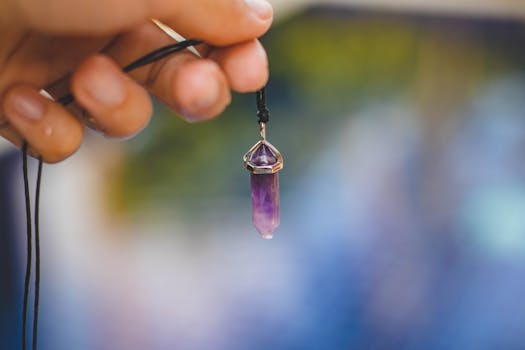
Amethyst's purple color ranges from pale lavender to deep violet, with the most prized specimens showing a rich, even color with flashes of red or blue. It's a variety of quartz, which means it's abundant and relatively affordable. Amethyst rates a 7 on the Mohs scale, making it one of the harder semi-precious stones and suitable for all jewelry types.
For February gifts, amethyst's purple hue works beautifully in both modern and vintage-inspired designs. A simple amethyst pendant, a beaded amethyst bracelet, or amethyst drop earrings are all classic choices. Amethyst also pairs well with both yellow gold (warm contrast) and white metals (cool harmony).
March — Aquamarine
Aquamarine ranges from nearly colorless to a rich sky blue, with the most valuable stones showing a deep, saturated blue. It's a member of the beryl family (same as emerald) and rates 7.5 to 8 on the Mohs scale. The name literally means "water of the sea" in Latin, which gives it a natural connection to ocean and beach themes.
Gift ideas: an aquamarine pendant on a long chain (the blue color is particularly beautiful against bare skin in summer), aquamarine stud earrings for everyday wear, or an aquamarine cocktail ring for a bolder statement. Aquamarine's pale blue color makes it versatile — it complements almost any skin tone and clothing color.
April — Diamond
April's birthstone is the most well-known and most expensive on the list. While large diamonds are certainly impressive gifts, smaller diamonds (0.1 to 0.25 carat) set in delicate jewelry are more practical and affordable options for birthstone gifting. Tiny diamond accents on a pendant, small diamond studs, or a diamond pavé band ring are thoughtful April gifts that won't break the bank.
An alternative for April that's gaining popularity: white sapphire or white topaz. Both are colorless stones that mimic diamond's appearance at a fraction of the cost. They're not traditional birthstones, but they're a practical option when budget is a concern.
May — Emerald
Emerald's rich green is one of the most recognizable colors in gemstones. It rates 7.5 to 8 on the Mohs scale, but emeralds are notoriously included (containing natural internal features) and can be brittle. This means emerald jewelry requires more careful wear — it's not ideal for rings or bracelets that will take knocks. Pendants and earrings are safer choices.
For May birthdays, consider a small emerald pendant in a protective bezel setting rather than a prong setting (which leaves the stone more exposed). Emerald pairs naturally with yellow gold, which enhances its warm green tones. Budget-friendly alternatives include green tourmaline or peridot, which offer similar green hues at lower price points.
June — Pearl and Alexandrite
June is one of three months with multiple birthstone options. Pearl is the traditional and more widely known choice. Pearls come in several varieties: freshwater (most affordable, wide range of shapes and colors), Akoya (round, high luster, classic white), Tahitian (dark, larger, more expensive), and South Sea (large, golden or white, premium pricing).
Alexandrite, June's alternative, is one of the rarest and most expensive gemstones. It's famous for its color-change property — appearing green in daylight and red under incandescent light. Because of its rarity and cost, it's not a practical gift for most budgets. Stick with pearls for June gifting unless the recipient specifically mentioned alexandrite.
July Through December: Completing the Year
July — Ruby
Ruby's vivid red to slightly purplish-red color makes it one of the most sought-after colored gemstones. It rates 9 on the Mohs scale (second only to diamond), making it extremely durable and suitable for all jewelry types. For July gifts, a ruby solitaire ring, ruby pendant, or ruby-accented bracelet are all excellent choices. Ruby pairs particularly well with yellow gold, which amplifies its warm undertones.
August — Peridot
Peridot's distinctive yellowish-green color is unique among gemstones — there's really nothing else quite like it. It rates 6.5 to 7 on the Mohs scale and is one of the few gemstones that occurs in only one color (though the intensity varies). Peridot is relatively affordable and works well in pendants, earrings, and rings. It pairs nicely with both yellow and white metals.
September — Sapphire
While most people associate sapphire with blue, it occurs in virtually every color (except red, which is ruby). Blue sapphire ranges from pale cornflower blue to deep navy, with medium to dark saturated blue being the most prized. Sapphire rates 9 on the Mohs scale, making it an excellent choice for everyday jewelry. A sapphire pendant, sapphire studs, or a sapphire-accented ring are classic September gifts.
October — Opal and Tourmaline
October has two birthstones. Opal is famous for its play-of-color — flashes of rainbow colors that shift as the stone moves. However, opal is relatively soft (5.5 to 6.5 on Mohs) and contains water, making it sensitive to heat and dryness. It's best suited for pendants and earrings rather than rings or bracelets. Tourmaline, October's alternative, comes in an extraordinary range of colors and is much more durable (7 to 7.5 on Mohs). Pink and green tourmaline are the most popular gift choices.
November — Topaz and Citrine
November shares topaz (traditional) and citrine (modern alternative). Citrine's warm yellow-to-orange-brown color makes it a cheerful, accessible birthstone at an affordable price point. Blue topaz, while not the traditional November color, has become extremely popular due to its bright, sky-blue appearance. Both stones rate 8 on the Mohs scale and are durable enough for any jewelry type.
December — Turquoise, Zircon, and Tanzanite
December has three birthstone options. Turquoise has been used in jewelry for thousands of years and has a distinctive opaque blue-green color with matrix (vein-like patterns). Zircon (not to be confused with cubic zirconia) is a natural gemstone that comes in many colors, with blue being the most popular for December. Tanzanite is a relatively recent discovery (1967) found only in Tanzania, known for its violet-blue color that shifts depending on the light. All three are relatively affordable, making December a budget-friendly gifting month.
Beyond the Single Birthstone: Creative Gifting Ideas
Once you move past the basic "single stone in a setting" concept, birthstone jewelry opens up to much more creative possibilities. Stackable rings featuring a birthstone are popular because they allow the recipient to add stones for family members over time — a mother's ring with her children's birthstones, for example. Birthstone necklaces with multiple small stones on a single chain serve a similar purpose.
Custom coordinates are another growing trend: a pendant or bracelet that combines the recipient's birthstone with coordinates of a meaningful location (where they were born, where they met their partner, where they got married). This adds a layer of personalization beyond just the month.
For the truly budget-conscious, beaded bracelets made from the birthstone's material offer a meaningful gift at a very accessible price point. A simple 8mm or 10mm beaded bracelet in the recipient's birthstone is a thoughtful gift that can be worn alone or stacked with other pieces. The natural variations in genuine stones mean each piece is unique, which adds to the gift's personal quality.
The key to successful birthstone gifting is remembering that the birthstone association itself is the main value — not the size or cost of the stone. A small, well-made piece featuring the correct birthstone will almost always be appreciated more than a large, expensive piece with no personal connection. It's the thought — the recognition that you knew and remembered their birth month — that makes birthstone jewelry such a consistently successful gift category.
Comments