I Tested Five Popular Crystal Cleansing Methods and Measured the Results
May 14, 2026
I Tested Five Popular Crystal Cleansing Methods and Measured the Results
Crystal cleansing advice floods every corner of the internet: salt baths, moonlight, sound, smoke, running water. Most recommendations come from tradition and intuition. I wanted to see what actually happens to the surface of commonly handled crystals after repeated "cleansing" with each method. The results changed how I treat my own collection.
The Setup
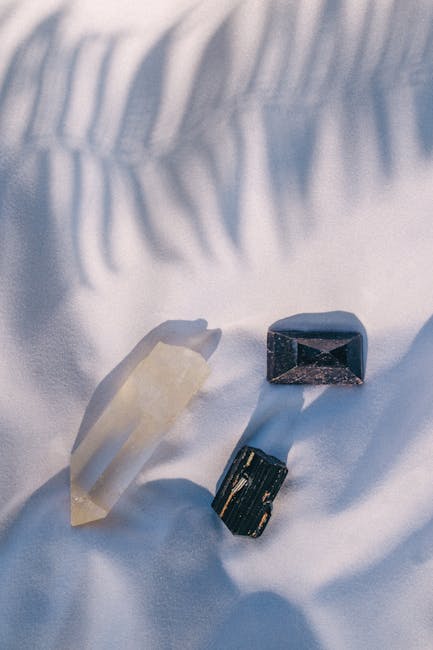
I used five identical clear quartz points from the same Brazilian mine lot. Each point measured approximately 4 cm, weighed between 28-32 grams, and started with comparable surface clarity under 10x magnification. I subjected each crystal to one cleansing method exclusively, applied daily for 30 consecutive days.
Before and after each cycle, I photographed the surface under controlled lighting at 10x and 30x magnification, weighed each specimen to 0.01g precision, and noted any visible changes. This is not a peer-reviewed study — it is a structured experiment by a collector, for collectors.
Method 1: Running Water (30 Days)
The protocol: hold under cool tap water for 60 seconds, pat dry with microfiber cloth. No soap, no hot water.
What Happened
- Weight change: -0.03g (within measurement noise)
- Surface: After two weeks, faint water spots appeared that required deliberate polishing to remove. By day 30, a slight film was visible under 30x magnification — likely mineral residue from the tap water itself.
- Clarity: Visually unchanged to the naked eye. Under magnification, marginally less "crisp" at facet edges.
The Problem Nobody Mentions
Tap water is not pure. Most municipal water contains dissolved minerals — calcium, magnesium, chlorine compounds. These deposit on crystal surfaces over time. If your tap water is hard (high mineral content), "cleansing" with water actually adds a film. Distilled water avoids this but adds cost and effort.
Also, this method is actively dangerous for water-soluble stones. Selenite, halite, and celestite should never see running water. Period.
Method 2: Dry Salt Burial (30 Days)
The protocol: bury the quartz point completely in a bowl of dry sea salt, leave for 24 hours, remove and brush off residue. Repeat daily (same salt reused).
What Happened
- Weight change: -0.01g
- Surface: Noticeable micro-scratching on facets that contacted salt crystals directly. Salt crystals rank 2-2.5 on Mohs, so they cannot scratch quartz (7). But the angular edges of salt grains can catch in surface micro-texture and create abrasion patterns under friction.
- Clarity: Slightly dulled compared to control. The micro-scratching scattered light differently at facet junctions.
The Problem Nobody Mentions
Dry salt absorbs moisture from the air and clumps. As it clumps, it concentrates. If any moisture reaches the salt-crystal interface, you get brief localized saltwater contact — which is far more aggressive than dry salt. I found tiny etch marks near the base where salt had clumped against the quartz.
For softer stones, salt is genuinely dangerous. Calcite (Mohs 3), fluorite (4), and malachite (3.5-4) can sustain real surface damage from extended salt contact, dry or wet.
Method 3: Sage Smoke (30 Days)
The protocol: pass the quartz through sage smoke for approximately 30 seconds per session, rotating to expose all sides. Use a white sage bundle from a single source.
What Happened
- Weight change: +0.02g
- Surface: A thin, oily residue accumulated progressively. Under 30x magnification, the residue appeared as a patchy film concentrated on upward-facing surfaces — exactly where smoke particles settle.
- Clarity: Visibly duller by day 15. The film scattered light enough that the naked eye could detect reduced transparency compared to the control specimen.
The Problem Nobody Mentions
Smoke is particulate matter. It contains tars, resins, and carbon compounds that physically deposit on surfaces. The "+0.02g" weight gain is real — it is smoke residue accumulating on the crystal. Over 30 days, this buildup became visible.
The residue cleaned off with isopropyl alcohol and a microfiber cloth, but the "cleansing" method was literally making the crystal dirtier. Ironic does not begin to cover it.
Health note: burning sage indoors regularly affects air quality. If you cleanse multiple stones daily, you are inhaling more particulate matter than most air quality guidelines recommend.
Method 4: Sound (Tibetan Singing Bowl, 30 Days)
The protocol: place the quartz point inside a 15cm brass singing bowl, strike and sustain tone for 60 seconds. Direct contact between crystal and bowl.
What Happened
- Weight change: 0.00g (no change whatsoever)
- Surface: Completely unchanged under both magnification levels. No marks, no residue, no film.
- Clarity: Identical to day 1.
The Problem Nobody Mentions
Sound waves at the amplitudes produced by singing bowls have zero measurable effect on solid crystal surfaces. The crystal does not "vibrate at a molecular level" in any meaningful way from a singing bowl. The acoustic energy is far too low.
What sound does do: it is relaxing for the practitioner. The ritual itself — the focused attention, the breathing, the meditative state — has genuine psychological benefits. If the ritual helps you feel connected to your collection, it serves a purpose. Just understand it serves you, not the crystal.
Physical risk: placing crystals directly against vibrating metal can chip them if the contact is at a vulnerable point or cleavage plane. I placed mine carefully flat-side down, which avoided this issue.
Method 5: Moonlight (30 Nights)
The protocol: place the quartz point on a windowsill from dusk to dawn. South-facing window, unobstructed sky view. This was January, so the crystal experienced roughly 14 hours of exposure per cycle.
What Happened
- Weight change: 0.00g
- Surface: Unchanged under magnification.
- Clarity: Unchanged.
- Temperature cycling: The crystal experienced roughly 8°C temperature swings each night (indoor heated air near the window versus cold glass surface). No visible effects from thermal cycling.
The Problem Nobody Mentions
Moonlight is reflected sunlight, roughly 400,000 times dimmer. It delivers essentially zero electromagnetic energy to a crystal surface. Any "charging" attributed to moonlight is entirely symbolic.
The real effect: your crystal sits on a windowsill where it collects dust, experiences temperature fluctuations, and risks being knocked off by a cat, a draft, or your own elbow. After 30 nights, mine had a fine dust layer that wiped off easily but was definitely there.
For UV-sensitive stones like amethyst, rose quartz, or citrine, windowsill placement can cause gradual fading — not from moonlight but from the sunlight that precedes and follows the moonlit hours. If you leave a stone out from dusk to dawn, it catches dawn light too.
The Control Specimen
One quartz point from the same lot sat undisturbed in a padded box in a closed cabinet for the entire 30 days. Result: zero change in any measurable property. It was as clean and clear on day 30 as day 1.
This is the uncomfortable truth — doing nothing preserved the crystal perfectly.
What Actually Cleans Crystals
Physical cleaning is straightforward. Dust, oils, and residue respond to:
- Microfiber cloth — removes fingerprints and light dust without abrasion
- Lukewarm distilled water — safe for nearly all non-soluble minerals, no mineral deposits
- Isopropyl alcohol (70%) — cuts oily residue, evaporates cleanly, does not damage most stones
- Soft brush (makeup brush) — reaches crevices in cluster and geode specimens
For the energetic or ritual component of "cleansing," none of the five tested methods showed measurable physical benefits, and three (water, salt, smoke) caused detectable surface changes over 30 days.
My Revised Routine
Based on these results, I changed my approach entirely:
- Daily: Display crystals get a light microfiber wipe if handled. Otherwise, they stay where they are.
- Monthly: Pieces that look dull get a brief rinse in distilled water and air dry on a clean cloth.
- Quarterly: Jewelry pieces worn regularly get a proper cleaning with appropriate methods for their hardness and stability.
- Ritual: I still use my singing bowl — not because it changes the crystals, but because I enjoy the practice. The difference is I no longer pretend it does something physical.
The best thing you can do for your crystals is to store them properly and handle them gently. Most "cleansing" methods solve a problem that proper storage prevents in the first place.
Comments