The One Rule That Saves Most Jewelry
The One Rule That Saves Most Jewelry
If you take only one thing from this guide, make it this: know what your stone is before you do anything to it. That sounds obvious, but it's the rule that gets violated most often. People see a dirty ring, assume "soap and water works for everything," and end up damaging a stone that can't handle soap, water, heat, or any combination of the three. Opals, pearls, turquoise, emeralds, and several other common gems have specific vulnerabilities that require different care from the standard diamond-ruby-sapphire approach.
Identify your stones first. If you're not sure, take the piece to a jeweler and ask. It costs nothing for them to look at it and tell you what you're working with. Then follow the cleaning method that matches the specific stone, not a generic approach.
Cleaning Hard Gemstones: Diamonds, Sapphires, Rubies
Diamonds, sapphires, and rubies sit at the top of the Mohs hardness scale (diamonds at 10, sapphires and rubies at 9) and can handle aggressive cleaning that would destroy softer stones. These three can be cleaned with warm water, mild dish soap, and a soft toothbrush. The process is straightforward: soak the piece in warm soapy water for 15-20 minutes, gently scrub with the toothbrush — pay attention to the underside of the stone where dirt accumulates behind prongs — rinse thoroughly, and pat dry with a lint-free cloth.
An ultrasonic cleaner works well for these stones. The high-frequency vibrations dislodge dirt from crevices that a brush can't reach. Most jewelers use ultrasonic cleaners as their default method for diamonds and corundum. The catch: ultrasonic cleaners can damage treated stones, fractured stones, and stones with inclusions that reach the surface. If your diamond has a laser drill hole or fracture filling, ultrasonic cleaning can cause the filling to leak or the fracture to worsen. When in doubt, stick with the brush method.
Steam cleaning is another option for hard stones. Jewelers use steam cleaners that shoot concentrated steam at the stone, blasting away oil and residue. It's effective but not something you can replicate at home without specialized equipment. If your hard stone jewelry is heavily soiled with years of buildup, a professional steam cleaning at a jeweler will cost a few dollars and make a dramatic difference.
Cleaning Porous and Soft Stones: Opals, Pearls, Turquoise
This group requires the most caution. Opals contain 3-21% water and can crack or craze (develop fine surface fractures) if they dry out or experience sudden temperature changes. Never soak opals. Never use hot water, ultrasonic cleaners, or steam on them. Wipe opals with a damp, soft cloth — that's it. If they're dirty enough to need more, use a very mild soap solution, work quickly, rinse immediately, and dry thoroughly.
Pearls are organic — they're calcium carbonate layers deposited around an irritant inside a mollusk. They're vulnerable to acids (including the acid in your sweat), heat, and chemicals. Wipe pearls with a soft damp cloth after wearing them, especially if you've been sweating. Never soak pearls. Never use soap on them — even mild soap can damage the nacre over time. If pearls need deeper cleaning, use only water, and dry them flat on a soft cloth rather than hanging them, since the silk thread can stretch.
Turquoise is porous and can absorb oils, soaps, and chemicals that discolor it. Clean turquoise with a dry or barely damp cloth. No soap, no soaking, no ultrasonic, no steam. If turquoise jewelry has silver components, clean the silver carefully around the stone — silver polish contains chemicals that will damage turquoise if it contacts the surface. Apply polish to a cloth and clean the silver areas only, or use a silver polishing cloth that doesn't require liquid.
Cleaning Emeralds: The Delicate Exception
Emeralds are hard (7.5-8 on the Mohs scale) but almost always contain inclusions and fractures. Most emeralds on the market are treated with oils or resins (cedar oil, epoxy resin) to fill surface-reaching fractures and improve clarity. These treatments are standard and expected, but they're also vulnerable. Heat, ultrasonic vibration, and many solvents can strip or degrade the filling, leaving the fractures exposed and the stone looking cloudy.
Clean emeralds with lukewarm water only — no soap, no detergent. A soft brush is fine for removing surface dirt, but use minimal pressure. No ultrasonic cleaners, no steam cleaners, no ammonia, no commercial jewelry cleaners. If the stone has been oiled and starts to look dull over time, a jeweler can re-oil it — this is routine maintenance for emerald owners, not a sign of damage.
Cleaning Quartz, Amethyst, Citrine, and Topaz
The quartz family (amethyst, citrine, rose quartz, smoky quartz) and topaz are moderately hard (7-8 on Mohs) and can handle the standard warm-soapy-water-and-soft-brush method. Avoid ultrasonic cleaners for stones with visible inclusions — the vibrations can worsen internal fractures. Amethyst can fade with prolonged sun exposure, so dry it in a shaded area rather than direct sunlight. Citrine and amethyst can both lose color intensity over time if left in bright light for extended periods, so store them in a dark place when not wearing them.
Topaz presents a specific warning: blue topaz on the market is almost always irradiated and heat-treated to produce the blue color. The treatment is permanent and safe, but some very lightly treated blue topaz can fade if exposed to strong heat. Stick with warm water, not hot, and you'll be fine.
Cleaning Amber and Organic Gems
Amber is fossilized tree resin — it's soft (2-2.5 on Mohs), light, and sensitive to heat and chemicals. Clean amber with a soft damp cloth. No soap, no solvents, no hot water. Amber can be polished with a soft cloth and a tiny amount of olive oil if it looks dull, but this is cosmetic, not cleaning. Never use an ultrasonic cleaner on amber — the vibrations can fracture it.
Other organic gems — coral, jet, ivory, shell — require similar gentle treatment. Warm water (not hot), no chemicals, soft cloth only. If these pieces are set in silver or gold, clean the metal separately and keep the cleaning agent away from the organic material.
Storage: Where Most People Mess Up
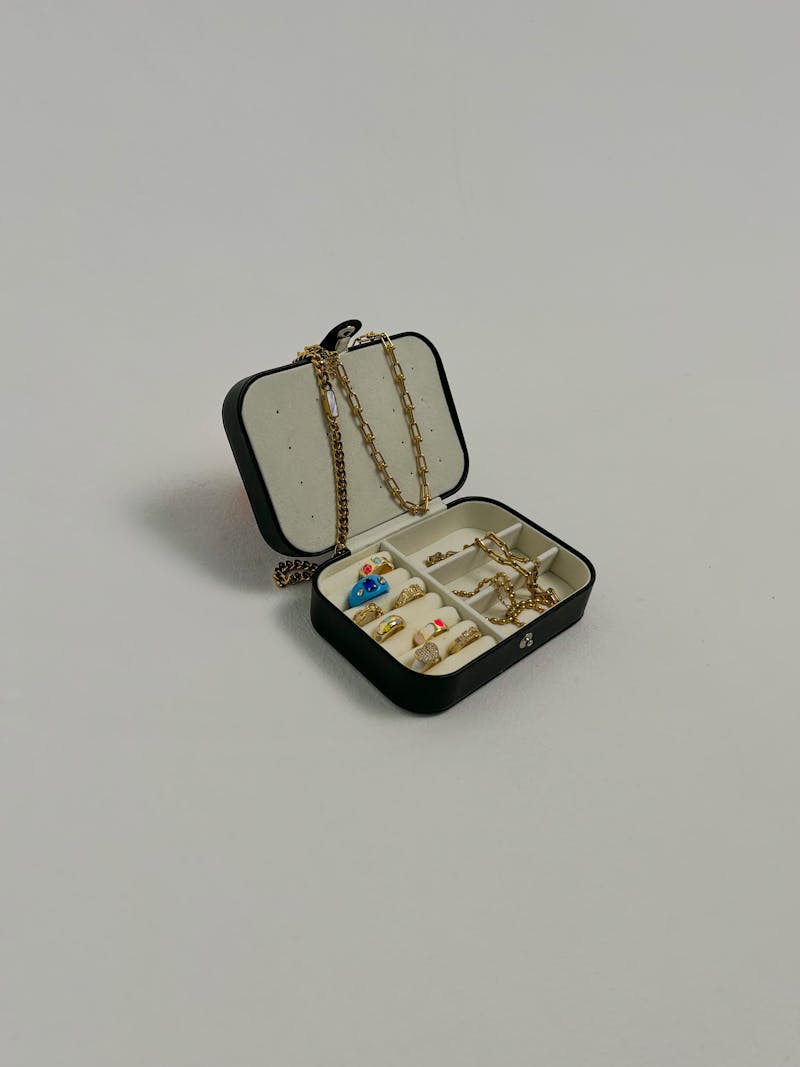
Proper storage prevents more damage than cleaning fixes. The most common storage mistake is throwing all jewelry into a single box or drawer and letting pieces knock against each other. A diamond will scratch a sapphire. A sapphire will scratch an amethyst. An amethyst will scratch a pearl. Everything scratches everything harder than itself. Every piece should have its own compartment or bag.
Individual soft pouches (cotton or velvet) are cheap and effective. Zip-lock bags work too, with a small square of soft cloth inside to prevent moisture buildup. For pieces with chains, fasten the clasp before storing to prevent tangling. For earrings, keep pairs together on a card or in a divided compartment — losing one earring of a pair is the most frustrating jewelry problem that exists.
Pearls need to breathe. Storing pearls in airtight plastic bags or sealed containers can cause them to dry out and crack. A soft cloth pouch or a silk-lined compartment is ideal. Store pearls flat, not hanging, to prevent the string from stretching.
Opals benefit from a small humidity source in storage. A piece of damp cotton or a tiny container of water in the same compartment keeps the ambient humidity up and prevents the opal from losing its internal water content. Don't let the opal touch the water directly — just maintain some humidity in the enclosed space.
What to Keep Away From All Jewelry
Chlorine is the single most destructive chemical for jewelry. Swimming pools, hot tubs, and household bleach all contain chlorine that attacks gold alloys (especially at the solder joints), damages sterling silver, and can pit or discolor many gemstones. Remove all jewelry before swimming. Every time. No exceptions.
Hairspray, perfume, and lotion are daily-use chemicals that accumulate on jewelry surfaces and can damage stones over time. Apply these products before putting on your jewelry, not after. Wait a few minutes for them to dry and absorb before adding your rings, necklaces, and earrings. This small habit makes a noticeable difference in how often your jewelry needs cleaning.
Salt water is surprisingly destructive. It corrodes silver and gold alloys, damages pearls, and can penetrate and destabilize opals. Beach jewelry exists — but it should be cheap pieces you don't care about, not your good stones. If you do get salt water on your jewelry, rinse it with fresh water as soon as possible and clean it properly when you get home.
How Often Should You Clean Your Jewelry
Everyday pieces — rings, watches, bracelets you rarely remove — should be wiped down weekly with a soft cloth and cleaned properly monthly. The oils from your skin, combined with environmental dirt and whatever lotions or soaps you use, build up faster than most people realize. A monthly cleaning keeps accumulation in check and gives you a chance to inspect settings for loose stones or worn prongs.
Occasional-wear pieces should be cleaned before storage, not before the next wear. Putting dirty jewelry away means the dirt sits on the surface and in crevices until you remember to clean it, which might be months. The five minutes it takes to clean a piece before putting it away will save you from a much longer and more difficult cleaning job later.
Professional cleaning is worth doing once a year for pieces you wear daily. A jeweler can inspect settings, check for wear on prongs and clasps, re-oil emeralds, restring pearls if needed, and give the whole piece a thorough ultrasonic or steam cleaning that goes beyond what's practical at home. Many jewelers offer this service free if you bought the piece from them, and charge modestly otherwise.
Building a Simple Maintenance Routine
You don't need special equipment or expensive products to keep your jewelry in good shape. A soft toothbrush, mild unscented dish soap, warm water, and a lint-free cloth handle 90% of cleaning needs. A few soft pouches and a jewelry box with compartments handle storage. The real key is consistency — small regular maintenance prevents the kind of neglect that leads to damaged stones, dull metal, and expensive professional restoration.
Take three minutes when you take your jewelry off at night: wipe each piece with a soft cloth and put it in its own compartment or pouch. Once a month, spend fifteen minutes doing a proper cleaning with soap and a brush. Once a year, take your most-worn pieces to a jeweler for a checkup. That's the entire maintenance schedule. It's not complicated. It just requires the habit of actually doing it.
Comments