Chakra Stones for Beginners: Which Ones Actually Matter and Why
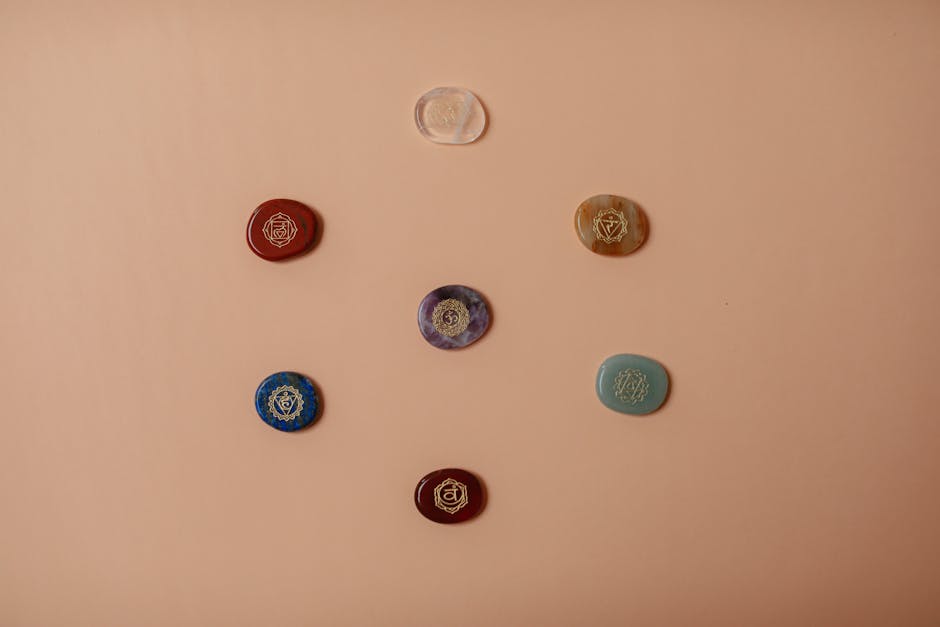
What Exactly Are Chakra Stones and Where Does This System Come From?
If you've spent any time in a crystal shop or scrolled through wellness content online, you've almost certainly encountered the concept of chakra stones. But before we get into which stones correspond to which energy centers, I think it's worth pausing to ask what this system actually is — because the answer is more interesting than most people realize.
The word "chakra" (चक्र) comes from Sanskrit and literally means "wheel" or "disk." The system describes seven primary energy centers running along the spine, from the base to the crown of the head. This framework originated in ancient Indian spiritual traditions, with some of the earliest textual references appearing in the Upanishads (roughly 800–200 BCE). Over centuries, the system was further developed in tantric traditions and eventually made its way into Western esoteric thought through Theosophist movements in the late 19th and early 20th centuries.
Here's the thing that surprised me when I first started researching this topic seriously: the specific stone-to-chakra correspondences that everyone cites today? Those are a much more recent development. Ancient texts mention the chakras and their qualities in detail, but the practice of assigning particular minerals to each center is largely a Western synthesis that gained popularity in the 1970s and 1980s. That doesn't make it invalid — traditions evolve — but it does mean you should feel free to use your own judgment rather than treating any one correspondence chart as gospel.
Chakra stones, then, are simply crystals and minerals that practitioners have associated with each of the seven energy centers based on color, traditional lore, and subjective experience. The underlying idea is that placing the "right" stone near its corresponding chakra can support balance in that area. Whether you approach this from a spiritual, psychological, or purely aesthetic perspective, understanding the framework gives you a useful vocabulary for exploring what resonates with you.
Which Stone Should I Start With for My Root Chakra?
The root chakra, or Muladhara, sits at the base of the spine and is traditionally associated with feelings of stability, safety, and being grounded. When people talk about feeling "ungrounded" or anxious without a clear cause, they're often describing what practitioners would call a root chakra imbalance — metaphorically speaking, your foundation feels shaky.
The most commonly recommended stones for this chakra are red and black varieties:
- Red Jasper — This is probably the single best starter stone for the root chakra, and I say that because it's affordable (typically $3–8 for a tumbled stone), widely available, and genuinely beautiful in an earthy, understated way. Red jasper has been used in jewelry and amulets for thousands of years — there are examples in Egyptian tombs dating back to around 4000 BCE. Its deep brick-red color with occasional banding makes it visually grounding even before you consider any traditional associations.
- Black Tourmaline — Perhaps the most popular "protection" stone in the crystal world, black tourmaline is associated with the root chakra for its supposed ability to absorb and transmute negative energy. I've found it to be one of the most versatile stones to keep around — it's hard (7–7.5 on the Mohs scale, so it doesn't scratch easily), and it looks sophisticated rather than "spiritual," which matters if you want to wear it in professional settings.
- Smoky Quartz — A translucent brown-to-black variety of quartz, smoky quartz is another affordable and accessible root chakra option. Brazil produces enormous quantities of it, which keeps prices reasonable. I particularly like the way it catches light — there's something warm about smoky quartz that feels less stark than pure black stones.
- Hematite — This metallic gray mineral is heavy for its size, which I think contributes to its grounding reputation in a literal, tactile sense. Hold a hematite palm stone and you'll immediately notice the weight. It's been used decoratively and ornamentally since the Paleolithic era.
My practical advice? If you're buying your very first root chakra stone, get a piece of red jasper or black tourmaline. Both are inexpensive, durable, and easy to find. Don't overthink it.
What Are the Best Sacral Chakra Stones and Do I Really Need an Orange Crystal?
The sacral chakra (Svadhisthana) is located just below the navel and is traditionally linked to creativity, emotional fluidity, and sensuality. The color association is orange, which naturally leads people toward orange-colored stones. But here's a question I get asked a lot: do you actually need an orange stone for this chakra?
The honest answer is no — you don't strictly need any specific color. The color associations are a mnemonic device, not a law of physics. That said, if you find the color-orange framework helpful as a starting point, there are some genuinely beautiful options:
- Carnelian — This is the undisputed king of sacral chakra stones. Carnelian has been prized since antiquity; the Egyptians called it "the setting sun." Its warm orange-to-red translucency is immediately eye-catching. I've noticed that carnelian tends to look best in direct sunlight — the stone almost seems to glow from within. Prices range from $5 for small tumbled pieces to $50+ for high-quality cabochons. Madagascar and India are the primary sources today.
- Orange Calcite — Softer than carnelian (Mohs 3), orange calcite has a gentle, almost candy-like appearance. It's very affordable ($2–5 typically) but scratches easily, so it's better suited for display or meditation than daily wear. I personally find calcite's softness makes it feel more delicate and intentional to work with — you have to handle it consciously.
- Sunstone — A feldspar mineral with tiny inclusions of hematite or goethite that create a sparkly, aventurescent effect. Oregon sunstone, which contains copper inclusions, is particularly stunning and can be quite valuable. For sacral chakra work, the warm orange varieties are traditional, and the natural shimmer adds a playful quality that feels appropriate for a creativity-linked energy center.
If the color orange doesn't appeal to you, moonstone (white with a blue sheen) and amber (golden fossilized resin) are both traditionally associated with the sacral chakra as well. The system is flexible enough to accommodate personal preference, and I'd argue that choosing a stone you're genuinely drawn to matters more than strictly following a color chart.
How Do I Choose a Solar Plexus Chakra Stone When There Are So Many Yellow Options?
The solar plexus chakra (Manipura) is connected to personal power, confidence, and self-worth — essentially, your internal sense of "I can handle this." It sits in the upper abdomen, and its color association is yellow, which gives you a broad palette to work with. The challenge isn't finding yellow stones; it's narrowing down which one feels right.
Here are the main contenders, with my honest assessment of each:
- Citrine — The most popular solar plexus stone by a wide margin. Natural citrine is actually quite rare; most commercial citrine is heat-treated amethyst (which turns yellow-orange when heated to around 470°C). I think that's fine — heat treatment is stable and doesn't affect the mineral's properties. What I'd caution against is paying premium prices for "natural" citrine without a reputable source. Most citrine on the market costs $5–20 for tumbled pieces, with Brazilian material being the most common.
- Yellow Jasper — Less flashy than citrine but more substantial-feeling. Yellow jasper has an earthy, mustard-to-honey coloration that I find deeply satisfying. It's opaque, hardy (Mohs 6.5–7), and relatively inexpensive ($3–10). If citrine feels too bright or "energetic" for your taste, yellow jasper offers a calmer, more grounded alternative.
- Tiger's Eye — Technically a chatoyant variety of quartz, tiger's eye displays a silky, golden-brown luster that shifts as you move the stone. South Africa is the primary source. Tiger's eye has an almost magnetic quality — people tend to pick it up and not want to put it down. At $3–15 for tumbled stones, it's very accessible, and it makes particularly attractive jewelry because of that characteristic shimmer.
- Pyrite — Also known as "fool's gold," pyrite is actually iron sulfide, and its metallic brassy luster makes it one of the most distinctive minerals you can own. It's associated with the solar plexus chakra for its bold, confident appearance and its historical use as a protective talisman. Pyrite is harder than you might expect (Mohs 6–6.5) but can oxidize in humid conditions, so keep it dry.
My suggestion for the solar plexus chakra is to hold a few options in your hand and notice which one you gravitate toward. Citrine for brightness and warmth, tiger's eye for that mesmerizing shimmer, or pyrite if you want something that makes a statement on your desk or shelf.
Which Stones Work for the Heart Chakra — and Is Green Really the Only Option?
The heart chakra (Anahata) sits at the center of the chest and is the bridge between the lower "physical" chakras and the upper "spiritual" ones. It's associated with love, compassion, emotional balance, and our capacity for both giving and receiving. Green is the primary color association, but pink is also strongly connected to this chakra, which significantly expands your options.
This is the chakra where I think the stone selection gets genuinely exciting, because some of the world's most beloved gemstones fall into this category:
- Rose Quartz — If there's one stone that has achieved mainstream, non-crystal-community recognition, it's rose quartz. This translucent pink variety of quartz is ubiquitous in jewelry, home decor, and wellness products. Brazil produces enormous quantities, keeping prices very low ($3–10 for tumbled stones). What I find remarkable about rose quartz is how consistently people respond to it — even skeptics tend to describe it as "soothing" or "pleasant" to hold. Its soft pink color is universally appealing.
- Green Aventurine — A form of quartz with tiny fuchsite inclusions that give it a sparkly green appearance. India is the primary source. Green aventurine is sometimes called "the stone of opportunity" in crystal folklore, and while I can't vouch for that claim, I can say that its subtle shimmer makes it one of the more visually engaging green stones at its price point ($3–8).
- Jade — Jade has a cultural significance that few other stones can match, particularly in East Asian traditions where it has been revered for millennia. Both nephrite jade (harder, more common) and jadeite (rarer, more vivid colors) are used. "Mutton fat" jade from Xinjiang, China — a creamy white nephrite — is among the most prized varieties and can command extraordinary prices. For heart chakra work, the green varieties are traditional, and even a modest piece of genuine jade carries that weight of cultural history.
- Emerald — The premium option. Emerald is a variety of beryl colored by chromium or vanadium, and fine specimens are among the most valuable gemstones on Earth. Colombia produces roughly 70–90% of the world's emeralds (estimates vary). Prices range from a few dollars per carat for heavily included commercial material to tens of thousands per carat for fine gems. For chakra work, you don't need investment-grade quality — even a small, included emerald is meaningful.
- Malachite — This copper carbonate mineral displays stunning banded patterns in shades of green, and no two pieces are alike. The Democratic Republic of Congo is the primary source of commercial malachite today. It's relatively soft (Mohs 3.5–4) and can be toxic in powdered form due to its copper content, so avoid wearing it as a ring where it might abrade. But as a display piece or palm stone, malachite is breathtakingly beautiful.
What About the Throat Chakra — Is Blue the Whole Story?
The throat chakra (Vishuddha) governs communication, self-expression, and the ability to speak your truth. Its color association is blue, specifically a light to medium blue, which points toward a specific set of minerals.
I find the throat chakra to be one of the more straightforward chakras to shop for, because the blue stone options are relatively limited compared to, say, the green palette of the heart chakra:
- Lapis Lazuli — This deep blue metamorphic rock speckled with golden pyrite inclusions is one of the most historically significant minerals known. It was ground into pigment for Renaissance paintings (ultramarine blue was more expensive than gold by weight at certain points) and carved into amulets in ancient Mesopotamia. Afghanistan's Sar-e-Sang mines have been producing lapis for over 6,000 years and remain the primary source of the finest material. Prices range from $5 for small tumbled pieces to hundreds for high-grade specimens.
- Blue Lace Agate — A delicate, sky-blue banded agate from Namibia and South Africa. Blue lace agate has a soft, calming appearance that I think makes it particularly well-suited for throat chakra work related to gentle, compassionate communication rather than forceful self-assertion. It's moderately priced ($8–20 for good quality tumbled stones) and relatively less common than other agates.
- Aquamarine — The blue-green variety of beryl (the same mineral family as emerald), aquamarine gets its name from the Latin for "seawater." Brazil's Minas Gerais region produces the finest specimens. Aquamarine can be quite expensive in jewelry grades ($100–1,000+ per carat for vivid stones), but smaller, paler specimens are affordable. I've always been struck by how aquamarine manages to look both cool and warm simultaneously — that blue-green quality is genuinely distinctive.
- Sodalite — A deep blue mineral with white calcite veining that can look superficially similar to lapis lazuli but is a completely different mineral (and generally much cheaper at $3–10). Sodalite is found in Brazil, Canada, and Namibia, among other locations. It's a solid, no-nonsense choice for throat chakra work if you want something that looks good without the premium price of lapis.
Third Eye Chakra Stones — Why Is Everyone Obsessed With Amethyst?
The third eye chakra (Ajna) sits between the eyebrows and is associated with intuition, insight, and inner vision. Its color is indigo — a deep blue-purple — which makes amethyst the most obvious and popular choice. But I want to address the "amethyst obsession" directly, because I think it's worth examining why this particular stone dominates the conversation so thoroughly.
Amethyst is a purple variety of quartz colored by trace amounts of iron and irradiation. Its popularity isn't hard to understand: it's beautiful (that royal purple color is universally appealing), it's durable (Mohs 7, so it holds up well in jewelry), it's relatively affordable (though prices have increased significantly as Brazil's major deposits have been depleted), and it has deep historical roots — the ancient Greeks believed it could prevent drunkenness (the name comes from the Greek "amethystos," meaning "not intoxicated").
But here are other third eye chakra options that deserve attention:
- Fluorite — Available in purple, green, blue, and color-banded varieties, fluorite is one of the most visually interesting minerals you can own. Its cubic crystal structure means it naturally forms perfect cubes, and banded specimens can display multiple colors in a single piece. China and Mexico are major producers. Fluorite is relatively soft (Mohs 4) and perfect for display or meditation. I find its color zoning fascinating — each piece is genuinely unique.
- Lepidolite — A lilac-to-pink mica mineral that contains lithium (yes, the same element used in psychiatric medication). This lithium content is sometimes cited as relevant to its calming properties, though the actual lithium content in lepidolite is locked in the mineral structure and not bioavailable. Regardless, lepidolite has a gentle, soothing appearance and is surprisingly affordable ($5–15). Brazil's Minas Gerais region produces particularly fine specimens.
- Labradorite — Though not purple, labradorite is frequently recommended for the third eye chakra because of its remarkable play of color (labradorescence) — a shimmering display of blue, green, and sometimes gold that appears when the stone is viewed from certain angles. Madagascar and Canada (especially Nain, Labrador, where it was first identified) are the best-known sources. Labradorite has an almost otherworldly quality that feels appropriate for a chakra associated with inner vision.
Crown Chakra Stones — What Makes a Stone "Spiritual" Anyway?
The crown chakra (Sahasrara) sits at the top of the head and represents our connection to something larger than ourselves — whether that's spirituality, universal consciousness, or simply a sense of perspective and meaning. Its color is violet or white, which is where the selection gets interesting, because "white stones" encompasses a wide range of minerals with very different characteristics.
The traditional crown chakra stones include:
- Clear Quartz — The most abundant and versatile mineral in the crystal world. Clear quartz is silicon dioxide (SiO₂), and it makes up roughly 12% of the Earth's crust by volume. It's called the "universal stone" in crystal communities because it's used for virtually everything. Arkansas, Brazil, and Madagascar are major sources. For the crown chakra, clear quartz is valued for its clarity and transparency — a metaphorical representation of pure consciousness. A good clear quartz point can be found for $5–30, and genuinely flawless specimens can reach much higher.
- Selenite — A crystallized form of gypsum, selenite is named after the Greek moon goddess Selene. It has a distinctive white, fibrous appearance and a pearly luster. Selenite is extremely soft (Mohs 2) — you can scratch it with your fingernail — which means it must be handled carefully and kept dry (it's water-soluble). Morocco produces enormous quantities. Despite its fragility, selenite has become enormously popular, and I think part of its appeal is that ethereal, almost ghostly white glow that seems to belong in another world entirely.
- Amethyst — Yes, amethyst appears here too. Light-colored, high-grade amethyst (sometimes called "spirit quartz" when it forms in a particular druzy pattern) is used for the crown chakra as well as the third eye. The deeper purple varieties tend to be assigned to the third eye, while lighter, more translucent specimens are associated with the crown.
- Howlite — A white calcium borosilicate mineral with distinctive gray veining. Howlite is inexpensive ($2–5), readily available, and often dyed to imitate turquoise (which I think does it a disservice — natural howlite has its own quiet charm). For crown chakra work, undyed howlite offers a calming, almost meditative visual quality.
Do I Need All Seven Stones at Once, or Can I Build My Collection Gradually?
This might be the most practical question on this list, and my answer is emphatically: build gradually. I've seen beginners spend $200–300 on complete "chakra sets" and then feel overwhelmed, unsure what to do with seven stones they haven't connected with individually.
Here's what I'd recommend instead:
Start with one or two stones that genuinely call to you. Maybe you saw a piece of black tourmaline and felt an immediate "yes." Maybe a friend gifted you rose quartz years ago and it's been sitting in a drawer. Begin there. Spend time with those stones — hold them, display them, carry one in your pocket. Notice what you notice.
When you feel ready to expand, let curiosity guide you rather than a checklist. Read about the chakra system and see which energy center resonates with a current challenge or interest in your life. If you're working on communication skills, explore throat chakra stones. If you're seeking more stability, look at root chakra options. This approach feels more organic and, in my experience, leads to a more meaningful collection because each stone has a personal story attached to it.
Budget-wise, you can build a solid seven-stone chakra set for under $50 if you stick with tumbled stones from reputable dealers. A single high-quality specimen of a stone you love will serve you better than seven mediocre pieces chosen to fill out a set. Quality over quantity, always.
How Should I Clean and Care for My Chakra Stones?
Caring for your stones isn't complicated, but there are a few practical things to know that will save you from damaging them accidentally.
Water-soluble stones to keep dry: Selenite, halite (salt), and malachite should never be submerged in water. Selenite will literally dissolve. Malachite releases copper into water, which is toxic. For these stones, a quick wipe with a dry or barely damp cloth is sufficient.
Soft stones to handle gently: Calcite (Mohs 3), fluorite (Mohs 4), and malachite (Mohs 3.5–4) scratch and chip easily. Don't toss them in a bag with harder stones like quartz or tourmaline. Store them separately, ideally in a soft pouch or wrapped in cloth.
Stones that fade in sunlight: Amethyst, rose quartz, citrine, and aventurine can all lose their color with prolonged sun exposure. If you're drawn to the "charge your crystals in sunlight" practice (which is a modern tradition, not an ancient one), limit it to an hour or two rather than leaving stones on a windowsill permanently. Moonlight charging is a gentler alternative if you want to follow this kind of practice.
Stones that oxidize: Pyrite can develop a dull surface and even create sulfuric acid in humid conditions over time. Keep it in a dry environment. Genuine amber (fossilized tree resin) can develop micro-cracks called "sun spangles" in prolonged heat — another reason to avoid hot windowsills.
For general cleaning, a soft brush and mild soap work for most hard stones (quartz, jasper, tourmaline). Avoid ultrasonic cleaners for fractured stones, and never use steam cleaning on porous or fractured specimens. When in doubt, a dry microfiber cloth is always safe.
The bottom line: treat your stones with the same care you'd give any object you value, and they'll last indefinitely. These are minerals that have existed for millions of years — with basic care, they'll outlast all of us.
Comments