Chain Types Explained: Cable, Box, Rope, Figaro, and Which Is Strongest
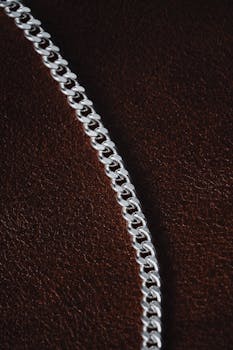
Chains seem simple until you start shopping for one and realize there are dozens of styles, each with different strengths, aesthetics, and maintenance needs. Pick the wrong chain for a heavy pendant and the links stretch or break. Pick a delicate chain for daily wear and it tangles into an impossible knot within a week. The type of chain you choose matters as much as the metal it's made from. Here's a practical breakdown of the most common chain styles and when to use each one.
Cable chain
The cable chain is the most basic and widely recognized chain style. It consists of identical oval links interlocked in an alternating pattern — each link passes through the two adjacent links perpendicular to it. If you picture a "typical" chain in your head, you're probably picturing a cable chain.
Cable chains are strong for their weight. The simple interlocking geometry distributes stress evenly across the links, and there are no weak points from twisting or folding. A well-made cable chain in sterling silver or solid gold can hold pendants weighing 15 to 25 grams without stretching, depending on the link gauge. Thicker cable chains can handle even more.
The simplicity of the cable chain is both its strength and its limitation. It looks clean and works with almost any pendant style, but it's visually plain. For people who want their chain to be a background element rather than a statement piece, that's a positive. For people who want the chain itself to draw attention, cable is boring.
One practical advantage: cable chains are easy to repair. If a link breaks, a jeweler can open an adjacent link, remove the broken one, and close the gap. The repair is nearly invisible and costs $10 to $20. This is not true for all chain types — some are extremely difficult or impossible to repair when they break.
Curb chain
The curb chain is the cable chain's flatter, more structured cousin. The links are similar in shape but are twisted and flattened so they lie flat against the skin. When you look at a curb chain from the side, each link is a flat, broad oval rather than a round wire loop.
This design makes curb chains slightly stronger than cable chains of the same wire thickness, because the flattened links have more surface area in contact with each other. The interlocking is tighter and there's less room for links to shift under stress. Curb chains are popular for men's jewelry — thicker curb chains are a classic masculine look — but they come in thin versions that work well for women's pendants too.
Curb chains have a nice drape and a subtle shine that catches light differently than round-link chains. The flat surface of each link reflects light in a broader pattern, giving the chain a slightly more polished appearance. For a medium-weight pendant (10 to 20 grams), a curb chain in 2mm to 3mm width is a solid, practical choice.
Box chain
Box chains are made from square or rectangular links — not round like cable chains. Each link is a tiny square tube, and they're connected end-to-end in a straight line. The result is a chain that looks like a series of small boxes strung together. From a distance, it has a smooth, almost liquid appearance because the square links fit tightly against each other.
Box chains are among the strongest chain types available for their size. The square geometry resists deformation better than round links, and the tight connection between links means there's very little flex at each joint. A 1.5mm box chain can hold more weight than a 1.5mm cable chain without stretching. For small to medium pendants (5 to 15 grams), box chains are one of the best choices.
The main drawback is cleaning. Dirt, lotion, and skin oils get trapped in the tiny gaps between the square links, and a standard polishing cloth can't reach inside. Ultrasonic cleaners help, but not everyone has one. A soft toothbrush with warm soapy water works, but it takes patience. If you wear your box chain daily, plan to clean it every couple of weeks or it will start looking dull.
Box chains are also harder to repair than cable chains. When a box chain breaks, the broken link often damages adjacent links, and replacing a single link is difficult because the square geometry requires precise alignment. Some jewelers will tell you it's easier to replace the whole chain than to repair a broken box chain.
Rope chain
Rope chains are made from small links that are twisted together to create a spiral pattern that resembles a rope. The visual effect is distinctive — the chain has a textured, three-dimensional look with a lot of light reflection from the twisted surfaces. Rope chains are popular for both men's and women's jewelry and are one of the most visually interesting chain types.
The twisted construction gives rope chains moderate strength but introduces a specific vulnerability: individual links can break where the twist creates stress concentration points. A rope chain doesn't usually fail all at once — instead, a single link snaps, and then the adjacent links are under more stress and may follow. This cascading failure pattern is less common in simpler chain designs like cable or box.
Rope chains are best suited for light to medium pendants (5 to 12 grams). Heavy pendants put too much stress on the twisted links and accelerate the risk of link failure. The chain itself is relatively heavy for its strength, because the twisted construction uses more metal per inch than a straight-link chain of similar strength.
Maintenance is another consideration. The twisted pattern catches on clothing, hair, and fabrics more easily than smoother chain types. This isn't a durability issue for the metal itself, but it's annoying in daily wear and can pull loose threads from knitwear. Rope chains also tangle more easily when stored loose — use a chain organizer or at least fasten the clasp and lay it flat in a jewelry box.
Figaro chain
Figaro chains originated in Italy and have a distinctive pattern: usually two or three short round links followed by one long oval link, repeating throughout the length. The rhythm of short-short-long gives the chain a visual cadence that is immediately recognizable and harder to confuse with other styles.
Strength-wise, Figaro chains are comparable to cable chains. The round links have similar stress distribution, and the alternating short and long links don't create significant weak points. The long links are slightly more vulnerable to bending than the short ones, but in a well-made chain this difference is negligible. Figaro chains handle medium-weight pendants (10 to 20 grams) without problems.
Figaro chains are primarily a men's style in the United States, though they're worn by both men and women in Europe. The pattern works well as a standalone chain — no pendant needed — because the visual rhythm is interesting on its own. For men's jewelry, a 4mm to 6mm Figaro chain is a classic look that works casually and in dressier settings.
Repair is straightforward, similar to cable chains. A broken link can be removed and replaced without affecting the overall pattern. One thing to note: if a long link breaks, the chain will look slightly off because the short-short-long rhythm is disrupted. A skilled jeweler can maintain the pattern during repair, but it's worth mentioning when you bring it in.
Herringbone chain
Herringbone chains are flat chains made from multiple rows of thin metal links pressed tightly together and lying in alternating directions, like the bones of a fish (hence the name). The result is a smooth, wide, flat chain with a liquid drape that looks almost like a ribbon of metal. Herringbone chains are beautiful and catch light dramatically, but they are the weakest chain type discussed here.
The problem is kinking. Because herringbone chains are flat and the links are pressed together, any sharp bend or twist can permanently deform the chain. Once a herringbone chain kinks, the damage is usually irreversible — you can't just unbend it because the compressed links won't return to their original position. Setting a heavy bag down on a herringbone chain, sleeping in it, or even just turning your neck sharply can cause a kink.
Herringbone chains should only be worn without pendants — the clasp area is the weakest point, and any additional weight from a pendant makes kinking even more likely. They're best as occasional-wear pieces, not daily jewelry. Store them flat, ideally on a padded jewelry display or in a rigid box, not coiled up where pressure can create bends.
I'm going to be direct: herringbone chains are beautiful but impractical. Buy one if you love the look and understand the limitations. Don't buy one as an everyday chain expecting it to last like a cable or box chain. It won't.
Wheat chain (Espiga)
Wheat chains — also called Espiga chains, from the Spanish word for wheat — are made from oval links that are interwoven in pairs, oriented in opposite directions. The pattern looks like heads of wheat, which gives the chain its name. The visual effect is a full, rounded chain with a lot of texture and dimension.
Wheat chains are quite strong. The interwoven construction distributes stress across multiple links simultaneously, rather than concentrating it on a single link joint. This makes wheat chains more resistant to stretching and breakage than simpler designs. They handle medium to heavy pendants (10 to 25 grams) well, depending on the gauge.
The texture of wheat chains makes them good standalone pieces — they look substantial and interesting without a pendant. The rounded profile is comfortable against the skin, and the chain has a natural flexibility that drapes well. For people who want a chain that looks good on its own and can also support a pendant, wheat chains are one of the best all-around choices.
Strength ranking and pendant guide
Based on link geometry, stress distribution, and real-world failure patterns, here's a practical strength ranking for common chain types, from strongest to weakest:
1. Box chain — square links resist deformation, tight connections, excellent for small pendants
2. Cable chain — simple, proven geometry, easy to repair, good all-arounder
3. Wheat chain — interwoven links share stress, strong drape, versatile
4. Curb chain — flat links add strength, slightly stronger than cable of same thickness
5. Figaro chain — similar to cable, long links slightly weaker but negligible in practice
6. Rope chain — twisted links can snap individually, cascading failure risk
7. Herringbone chain — flat construction kinks permanently, weakest by a wide margin
For pendant weight matching: box and cable chains in 1.5mm to 2mm handle pendants up to 10 grams. Wheat and curb chains in 2mm to 3mm handle 10 to 20 grams. Figaro chains in 3mm to 4mm handle 15 to 25 grams. Rope chains should stay under 12 grams. Herringbone chains should carry zero pendants.
General chain care tips
Regardless of chain type, a few habits make any chain last longer. Fasten the clasp when storing — this prevents tangling, which is the number one cause of chain damage during storage. Store chains individually or in separate compartments, because different metals rubbing against each other cause scratches and can trigger galvanic corrosion. Avoid wearing chains in the shower, pool, or ocean — chlorine and salt water accelerate tarnish and weaken solder joints. Take chains off before applying perfume, lotion, or hairspray, because chemicals build up in the links and degrade the metal over time.
Clean chains regularly with warm soapy water and a soft brush. For stubborn tarnish, a silver polishing cloth (for sterling silver chains) or a jewelry polishing cloth (for gold chains) works. Avoid chemical dips on chains with soldered links or attached pendants — the chemicals can weaken the solder joints. For intricate chains like rope or wheat, an ultrasonic cleaner is worth the investment if you wear them daily.
Comments