Celestite: The Complete Guide to the Angel Stone
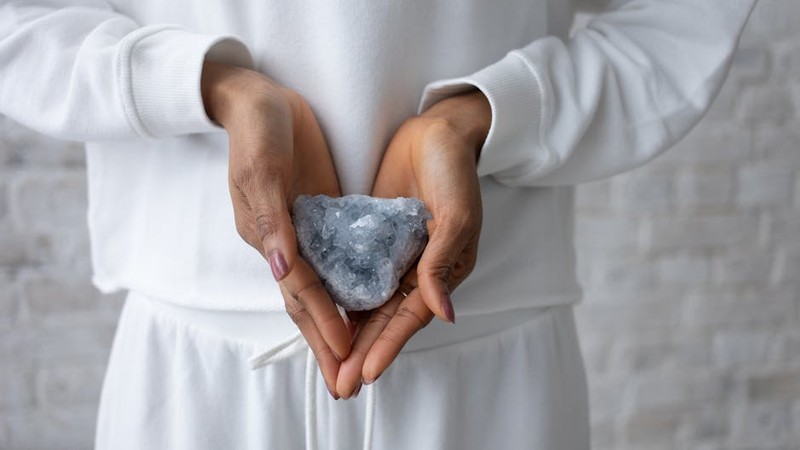
Celestite: The Complete Guide to the Angel Stone
With its ethereal sky-blue hue and delicate crystal formations, celestite (also known as celestine) has captivated crystal lovers, geologists, and spiritual seekers alike for centuries. Often called the "Angel Stone" for its believed connection to celestial realms, celestite is one of the most visually stunning and spiritually revered minerals in the crystal world.
Whether you're drawn to its pale blue beauty, curious about its geological origins, or seeking a deeper understanding of its metaphysical properties, this comprehensive guide covers everything you need to know about celestite — from its chemical makeup to the best ways to care for this fragile but powerful crystal.
What Is Celestite?
Celestite is a mineral composed of strontium sulfate (SrSO₄), a crystalline compound that gives the stone its signature soft blue coloration. The name comes from the Latin word "caelestis," meaning heavenly or celestial — a fitting name for a crystal that looks as though it was plucked directly from the sky.
Celestite belongs to the barite mineral group and is the principal source of strontium, an element used in fireworks, flares, and various industrial applications. But in the world of crystals and gemstones, celestite is treasured for far more than its chemical utility. It is prized for its calming energy, angelic associations, and breathtaking natural beauty.
Most celestite specimens sold in the crystal market are found inside geodes — hollow rock formations lined with stunning blue crystal points. These geode specimens are among the most photographed and sought-after pieces in any crystal collection.
Physical Properties of Celestite
Understanding celestite's physical characteristics is essential, especially because this crystal requires special handling due to its fragility.
Color Range
While celestite is best known for its pale to medium sky-blue color, it can also appear in colorless, white, gray, green, yellow, reddish-brown, and even pale pink varieties. The blue color is caused by trace amounts of iron or irradiation during formation. The most commercially valuable specimens display a clear, even blue tone without heavy inclusions.
Hardness and Durability
Celestite rates 3 to 3.5 on the Mohs hardness scale, making it a very soft mineral. For comparison, your fingernail is about 2.5, and a copper coin is about 3. This means celestite can be easily scratched by harder objects and requires careful handling. It is also somewhat brittle and can cleave along its crystal planes.
Crystal System and Formation
Celestite crystallizes in the orthorhombic system, typically forming tabular or prismatic crystals. It commonly occurs in geodes, sedimentary rocks, and hydrothermal veins. The most spectacular specimens come from large geodes where hundreds of intergrown crystal points create a dazzling interior landscape.
Key Specifications at a Glance
- Chemical formula: SrSO₄ (Strontium Sulfate)
- Mohs hardness: 3–3.5
- Crystal system: Orthorhombic
- Luster: Vitreous to pearly
- Transparency: Transparent to translucent
- Specific gravity: 3.9–4.0
- Cleavage: Perfect on {001}, good on {210}
Why Is Celestite Called the "Angel Stone"?
The nickname "Angel Stone" isn't just marketing — it stems from centuries of spiritual tradition. In crystal healing and metaphysical communities, celestite is widely regarded as a bridge between the earthly and celestial realms. Practitioners believe its high-frequency vibration opens channels of communication with guardian angels, spirit guides, and higher consciousness.
The association is reinforced by the crystal's appearance: pale blue crystal points radiating outward from a geode's interior look remarkably like tiny heavenly beings or frozen bolts of divine light. This visual metaphor, combined with celestite's reputation for promoting peace and tranquility, has solidified its identity as one of the premier angelic communication crystals.
"Celestite carries a soft, uplifting energy that reminds us we are never truly alone — that guidance and support are always available from the unseen realms."
Metaphysical and Healing Properties of Celestite
While scientific evidence for crystal healing is limited, millions of people around the world incorporate celestite into their spiritual and wellness practices. Here are the most commonly attributed metaphysical properties:
Angelic Communication and Spiritual Connection
Celestite is considered one of the most powerful stones for connecting with angelic beings and spirit guides. Many practitioners place celestite on their altar or bedside during meditation, prayer, or dream work to facilitate clearer communication with higher realms. It is said to heighten intuition, deepen meditation, and promote a sense of divine presence.
Inner Peace and Emotional Healing
The calming blue energy of celestite is believed to soothe anxiety, reduce stress, and promote emotional balance. It is often recommended for people going through difficult transitions, grief, or periods of emotional upheaval. Celestite is said to help release negative thought patterns and replace them with a sense of serenity and hope.
Throat Chakra Activation
In the chakra system, celestite is closely associated with the throat chakra (Vishuddha), the energy center governing communication and self-expression. Working with celestite is said to help you speak your truth with clarity and confidence, express emotions honestly, and listen more deeply to others. Some practitioners also associate it with the third eye chakra for its intuitive and psychic-enhancing qualities.
Dream Enhancement and Lucid Dreaming
One of celestite's most popular uses is for dream work. Placing a piece of celestite under your pillow or on your nightstand is believed to promote restful sleep, encourage vivid and meaningful dreams, and even facilitate lucid dreaming. Many people report receiving guidance, creative inspiration, and emotional insights through celestite-enhanced dreams.
Mental Clarity and Focus
Celestite's calming influence extends to the mind. It is often used to clear mental fog, improve concentration, and promote rational thinking during stressful situations. Students, writers, and creative professionals sometimes keep celestite on their desks to support mental clarity and creative flow.
How to Use Celestite in Your Daily Life
Meditation
Hold a celestite crystal in your hand or place it in front of you during meditation. Focus on its soft blue color and imagine breathing in its calming energy. Many meditators report feeling a greater sense of stillness, openness, and connection to something larger than themselves when working with celestite.
Bedroom Placement
Because of its calming and dream-enhancing properties, celestite is one of the best crystals to keep in the bedroom. Place a small piece on your nightstand or under your pillow to promote peaceful sleep and encourage meaningful dreams. A celestite geode on a bedroom shelf also makes a beautiful and soothing decorative piece.
Crystal Grids
Celestite is an excellent addition to crystal grids focused on peace, communication, spiritual growth, or angelic connection. It pairs particularly well with clear quartz (for amplification), amethyst (for spiritual awareness), and selenite (for cleansing and high-vibration energy).
Workspace or Study Area
Keep a small celestite specimen on your desk to promote a calm, focused work environment. Its association with the throat chakra can also support clear communication during meetings, presentations, or creative brainstorming sessions.
Celestite Care: Essential Dos and Don'ts
Celestite is a delicate crystal that requires special care. Because of its low hardness and water sensitivity, improper handling can easily damage or destroy your specimen. Follow these guidelines to keep your celestite in pristine condition:
⚠️ Do NOT Wash Celestite in Water
This is the single most important rule for celestite care. With a hardness of only 3–3.5 and a sulfate composition, celestite can partially dissolve in water, especially over prolonged exposure. Even brief rinsing can dull its surface or weaken its structure. Never use water to clean your celestite — there are safer alternatives listed below.
⚠️ Keep Out of Direct Sunlight
Celestite's beautiful blue color is not permanent under UV exposure. Prolonged direct sunlight will cause the color to fade, sometimes dramatically, turning a vibrant blue specimen into a pale, washed-out, or even colorless stone. Display your celestite in indirect light or under soft indoor lighting to preserve its color for years to come.
Handle with Care
Avoid dropping, bumping, or stacking heavy objects on your celestite. Its brittleness means it can chip, crack, or shatter relatively easily. When moving a celestite geode, always support it from the bottom and handle it gently.
Dust Gently
To remove dust from your celestite, use a soft, dry brush (a clean makeup brush or soft paintbrush works well) or a can of compressed air. Never use water, chemical cleaners, or abrasive cloths.
How to Cleanse and Charge Celestite Safely
Because water and sunlight are off-limits, you'll need alternative methods to cleanse and recharge your celestite:
- Sound cleansing: Use a singing bowl, tuning fork, or bells. The vibrations will clear stagnant energy without any physical contact.
- Sage or palo santo smudging: Pass your celestite through the smoke of burning sage, palo santo, or other cleansing herbs.
- Moonlight: Place your celestite under the light of the full moon overnight. Moonlight is gentle, safe, and won't fade the color.
- Selenite charging: Place your celestite on or near a selenite charging plate. Selenite has natural cleansing properties and won't harm celestite.
- Intention setting: Simply hold your celestite, set a clear intention for its energy, and visualize it being filled with fresh, positive energy.
Celestite vs. Similar Blue Crystals: How to Tell Them Apart
The crystal world is full of beautiful blue stones, and it's easy to confuse them. Here's how celestite compares to its most commonly confused look-alikes:
Celestite vs. Angelite
- Angelite is a form of anhydrite (calcium sulfate), while celestite is strontium sulfate. Angelite is typically a uniform, opaque blue-gray, whereas celestite often displays translucent to transparent blue crystal points. Angelite feels smooth and chalky; celestite has defined, glassy crystal faces.
- Energy-wise: Both are associated with angelic realms, but celestite is considered more attuned to communication, while angelite is linked to peace and compassion.
Celestite vs. Blue Lace Agate
- Blue Lace Agate is a banded chalcedony with delicate white and light blue striped patterns. Celestite, by contrast, is a uniform crystalline mineral without banding.
- Hardness: Blue Lace Agate is significantly harder (6.5–7 on the Mohs scale), making it far more durable for jewelry.
Celestite vs. Aquamarine
- Aquamarine is a variety of beryl (the same mineral family as emerald) and is much harder (7.5–8 on the Mohs scale). It is often more transparent and gemmy than celestite, with a slightly greener or teal-blue hue.
- Value: Aquamarine is a precious gemstone commonly used in fine jewelry; celestite is primarily a collector and decorative specimen.
Quick Comparison Table
- Celestite: SrSO₄ | Hardness 3–3.5 | Sky-blue, translucent crystals | Angel stone, communication
- Angelite: CaSO₄ | Hardness 3.5 | Opaque blue-gray | Peace, compassion
- Blue Lace Agate: SiO₂ | Hardness 6.5–7 | Banded blue and white | Calm, expression
- Aquamarine: Be₃Al₂Si₆O₁₈ | Hardness 7.5–8 | Transparent teal-blue | Courage, protection
Where Is Celestite Found?
Celestite occurs in sedimentary rock formations around the world, but a few locations produce the finest specimens:
- Madagascar: The world's premier source of high-quality celestite geodes. Madagascan specimens are known for their vivid blue color and large, well-formed crystal points. The famous deposits near Mahajanga produce geodes up to several feet in diameter.
- Mexico: Significant celestite deposits, particularly in the state of Coahuila. Mexican celestite often displays lighter blue tones and can form impressive crystal clusters.
- United States: Celestite is found in Ohio, Michigan, New York, Texas, and California. The Crystal Cave in Ohio contains some of the world's largest natural celestite geodes.
- United Kingdom: Historical deposits in Bristol and Yate produced notable celestite specimens, though commercial mining has largely ceased.
- Italy, Egypt, Libya, and Pakistan: Other notable sources of celestite, each producing specimens with unique regional characteristics.
Is Celestite Right for You?
Celestite is an ideal crystal for anyone seeking inner peace, spiritual growth, or a deeper connection to the unseen world. Its gentle energy makes it suitable for beginners and experienced crystal practitioners alike. Whether displayed as a stunning geode centerpiece, used in meditation, or kept by your bedside for dream work, celestite brings a touch of celestial beauty and tranquility to any space.
Just remember: treat this delicate Angel Stone with the care it deserves. Keep it dry, keep it out of the sun, and let its serene blue energy remind you that peace is always within reach — even in the most chaotic moments of life.
Conclusion
Celestite truly lives up to its heavenly name. From its geological origins as strontium sulfate formed deep within the Earth to its revered status as the Angel Stone in spiritual communities worldwide, celestite occupies a unique and cherished place in the mineral kingdom. Its delicate blue crystals are a testament to the beauty that nature can create over millions of years, and its calming, uplifting energy continues to inspire and comfort those who work with it.
If you're ready to welcome a piece of the sky into your home, celestite is one of the most rewarding crystals you can add to your collection. Just handle it with care, keep it away from water and sunlight, and let its celestial energy work its quiet magic in your life.
Comments