Can You Wear Crystals in the Shower or Pool? A Mineral-By-Mineral Breakdown
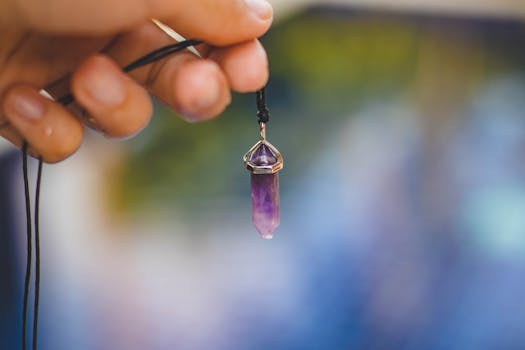
Someone gave you a beautiful crystal necklace and now you never want to take it off. That's understandable. But shower water, pool chemicals, and even hot tap water can destroy certain minerals in surprisingly short order. The answer isn't "yes" or "no" — it depends entirely on what the crystal is made of.
I've seen people ruin perfectly nice pieces of jewelry by wearing them through daily showers for months. The damage is usually gradual enough that you don't notice until one day the stone looks cloudy, cracked, or has lost its color entirely. By then, the damage is permanent.
Why water is not as harmless as it seems
Pure water at room temperature is relatively benign for most minerals. But the water in your shower and pool isn't pure, and it isn't always at room temperature.
Tap water contains chlorine (0.2-4.0 mg/L in most municipal systems), dissolved minerals, and in some areas, trace amounts of heavy metals. Pool water is far worse — it typically contains 1-3 ppm of free chlorine, plus cyanuric acid, calcium hardness adjusters, and algaecides. The pH of pool water runs 7.2-7.8, which is slightly alkaline, and some pool treatments push it higher.
Soap, shampoo, and body wash add surfactants that can penetrate microscopic cracks in stones and accelerate degradation. Hot water expands air bubbles inside porous stones, which can literally crack them from the inside. The temperature differential between your warm skin and hot shower water is usually 15-25°F, and that's enough thermal shock to damage some minerals over repeated exposure.
Stones that can handle water
These are the ones you don't need to worry about. If your crystal jewelry is made from any of these, daily shower exposure is fine:
Quartz family (Mohs 7)
Clear quartz, rose quartz, amethyst, citrine, smoky quartz, and aventurine are all varieties of silicon dioxide with a Mohs hardness of 7. They resist scratching from normal wear, they don't dissolve in water, and they tolerate soap and shampoo without damage. Amethyst can fade in prolonged sunlight but isn't affected by water or chlorine at normal concentrations.
The one exception: heavily fractured or included quartz. If your amethyst has visible cracks, internal inclusions, or a druzy (crystalline) surface, repeated hot-cold cycling from showers could eventually cause those cracks to spread. Tumbled stones and smooth cabochons are fine. I've worn a rose quartz pendant through daily showers for two years with zero visible change — but that particular piece was a high-quality tumbled stone with no visible inclusions.
Agate and jasper, which are also cryptocrystalline quartz, are similarly durable. Their fine-grained structure makes them less prone to chipping than macrocrystalline quartz, and they handle water exposure without any issues.
Beryl family (Mohs 7.5-8)
Aquamarine, emerald, and morganite are beryllium aluminum cyclosilicates. Emeralds are a special case because most natural emeralds are heavily included and often fracture-filled with oils or resins — hot water and soap can strip those treatments. But aquamarine and morganite are generally durable enough for water exposure. Emerald jewelry should stay dry. If you have an emerald ring, take it off before washing your hands, let alone showering.
Aquamarine is a beryl variety that's often quite clean (fewer inclusions than emerald), which makes it one of the more water-safe colored gemstones. Most aquamarine on the market is heat-treated to improve its blue color, but heat treatment is permanent and doesn't affect water resistance.
Corundum (Mohs 9)
Ruby and sapphire are aluminum oxide. They're the second-hardest natural mineral after diamond. Water, soap, and pool chemicals won't touch them. These are essentially bomb-proof for daily wear. If your crystal pendant happens to be ruby or sapphire, wear it wherever you want. The only thing that scratches corundum is diamond or another corundum.
Diamond (Mohs 10)
Obviously. But diamond jewelry in pools and hot tubs is more of a security concern than a mineralogical one — the setting can loosen in chlorine over time, especially if it's a prong setting. The diamond itself is fine. If your diamond is in a platinum or gold setting, pool chemicals won't affect the metal either. Sterling silver settings will tarnish faster in chlorinated water.
Stones you should remove before getting wet
Selenite (Mohs 2, water-soluble)
Selenite is hydrated calcium sulfate — the "hydrated" part is literal. It contains water molecules in its crystal structure. Extended exposure to liquid water causes it to slowly dissolve. Even high humidity over months can make selenite surfaces chalky and soft. A ten-minute shower won't destroy a selenite pendant, but doing it daily for a month absolutely will. Take it off. Selenite can literally be dissolved in a glass of warm water — it's that sensitive.
Malachite (Mohs 3.5-4, copper carbonate)
Malachite reacts with acids, and many soaps and body washes are slightly acidic (pH 5.5-6.5). Even mildly acidic water can cause surface etching over time. More importantly, malachite contains copper — extended contact with water can release trace amounts of copper ions. The amount is small and not dangerous for skin contact, but it will discolor the stone and give it a dull, washed-out look. Some malachite is also sealed with a resin or wax coating that soap will strip away over repeated washings.
Halite / Himalayan salt (Mohs 2.5, extremely soluble)
Halite is literally rock salt. It dissolves in water. A Himalayan salt lamp dropped in a bathtub becomes a bathtub with slightly salty water and no lamp. Wearing a halite pendant in the shower is essentially the same thing, just slower. Don't do it. Halite is also hygroscopic — it absorbs moisture from humid air and can develop a damp, sticky surface even without direct water contact.
Pyrite (Mohs 6-6.5, sulfur content)
Pyrite is iron sulfide. When exposed to water and oxygen simultaneously (like in a shower), it undergoes a slow oxidation reaction that produces sulfuric acid and iron oxides. The stone develops rusty spots, a yellowish powdery coating, and eventually crumbles. This process takes weeks to months depending on humidity, but regular water exposure dramatically speeds it up. If you've ever seen an old pyrite specimen with a rough, rusty, pitted surface — that's what water does to it.
Turquoise (Mohs 5-6, porous)
Most turquoise on the market is stabilized — treated with resin or polymer to harden it. Unstabilized turquoise is quite porous and will absorb water, soap, and oils, which can darken the color and cause structural weakening. Even stabilized turquoise is best kept dry to preserve color. Pool chlorine is particularly harsh on turquoise and can cause permanent color shifts from blue-green toward an ugly gray-green. I've seen turquoise cabochons turn nearly gray after a single summer of being worn in a swimming pool regularly.
Opal (Mohs 5.5-6.5, 3-21% water content)
Opals contain 3-21% water in their structure. Sudden temperature changes can cause "crazing" — fine cracks that spread across the surface and ruin the play of color. Going from a warm room to a hot shower creates that kind of thermal shock. Opals also absorb water slowly, which can temporarily change their appearance (they look cloudy) until they dry out. Repeated wet-dry cycling eventually causes permanent damage. Ethiopian opals, which are particularly porous, are especially vulnerable to water damage.
The pool problem is worse than the shower problem
Pool chemicals are significantly harsher than tap water. Chlorine at pool concentrations (1-3 ppm free chlorine) is corrosive to many metals commonly used in jewelry settings — especially silver and copper-based alloys. If your crystal is set in sterling silver, regular pool swimming will tarnish and eventually pit the metal. The chlorine attacks the copper in the silver alloy.
Saltwater pools use sodium chloride instead of chlorine tablets, but they're actually worse for many stones because the salt concentration is higher. The dissolved salt penetrates porous stones and, when it dries, crystallizes inside microscopic pores. Over time this creates internal pressure that can crack the stone. This is the same mechanism that damages masonry in coastal areas.
Hot tubs are the worst of all. They combine everything bad: warm-to-hot water (thermal shock risk), high chlorine levels (2-5 ppm, higher than pools), added chemicals (bromine, shock treatments), and sometimes high pH. If any of your jewelry involves soft stones, porous stones, or non-precious metal settings, the hot tub will damage them faster than either a shower or a pool.
What about the ocean?
Saltwater is roughly 3.5% sodium chloride — far saltier than any pool. The abrasiveness of sand is also a factor. If you're swimming at a beach, your jewelry is getting hit by salt, sand, and wave action simultaneously. For hard, non-porous stones in gold or platinum settings, this is fine. For anything else, the ocean is a good way to shorten your jewelry's lifespan considerably. Sand is essentially tiny quartz particles — Mohs 7 — and it will scratch any stone softer than that.
A simple rule of thumb
Hardness above 7 is generally safe for water. Below 7, check the specific mineral. If the stone is visibly porous, cracked, included, or has a druzy surface, be cautious regardless of hardness. And if you're not sure what the stone is, assume it's sensitive and take it off.
For the jewelry setting itself: sterling silver and brass tarnish in chlorinated water. Gold and platinum are fine. Stainless steel is fine. If the setting has glued-in stones, hot water can weaken the adhesive over time. Epoxy and cyanoacrylate glues both degrade faster with repeated heat exposure.
There's no shame in having a "shower ritual" where you take off your crystal jewelry, set it on the bathroom counter, and put it back on when you're done. Your crystals will last years longer for it. A small dish or hook by the shower is all you need.

Comments