<h2>Can Crystals Really Interact with Each Other, and What Happens If They Do?</h2>
Can crystals chemically react with each other?
In most cases, no. The vast majority of popular crystals and gemstones are chemically stable solids. A piece of amethyst sitting next to a piece of rose quartz is not going to undergo any chemical reaction. They are both varieties of silicon dioxide with different trace impurities, and at room temperature, they just sit there being rocks.
There are exceptions worth knowing about. Halite, which is rock salt, will dissolve if it gets wet and comes into contact with anything that accelerates dissolution. If you store halite in a sealed container with a hygroscopic mineral (one that absorbs moisture from the air), the local humidity can increase enough to start dissolving the halite. It does not react with the other mineral directly, but the moisture dynamic matters.
Pyrite is another one to watch. Iron pyrite (FeS₂) oxidizes when exposed to moisture and air over time. If you store pyrite in a closed container with a carbonate mineral like calcite or malachite, the sulfuric acid produced by pyrite oxidation can etch or damage the carbonate. This is a slow process and mostly relevant for long-term storage, but it is a real chemical interaction.
For everyday handling and wearing, chemical reactions between different crystals are not something you need to worry about. Your jewelry box is not a chemistry lab.
Do crystals physically damage each other?
Yes, and this is the interaction that actually matters in practice. Crystals have different hardness levels on the Mohs scale, and when harder stones rub against softer ones, the softer stone gets scratched.
Diamond sits at 10 on the Mohs scale and will scratch every other mineral. Corundum (ruby and sapphire) at 9 will scratch topaz (8), which will scratch quartz (7), and so on down the line. If you toss all your crystals into a single bag or drawer, the harder ones will gradually wear grooves into the softer ones.
This matters most for polished stones and tumbled pieces. A chunk of raw quartz tossed into a bag with a polished piece of fluorite (hardness 4) will leave visible scratches on the fluorite within days. For jewelry, this means you should think about what sits next to what on a bracelet or necklace. A bracelet with both turquoise (5-6) and quartz beads (7) will show wear on the turquoise over time.
The practical fix: store each crystal or piece of jewelry separately. Small zip bags, individual compartments in a divided box, or soft pouches all work. It takes a little more effort than dumping everything into one bowl, but your stones will look better for much longer.
Which crystal pairs should you avoid wearing together?
You will find long lists online claiming that certain crystal combinations "clash" or "cancel each other out." These lists are based on marketing frameworks, not physics or chemistry. There is no scientific mechanism by which, say, wearing amethyst and citrine together would cause any kind of interference beyond physical contact.
That said, there are pairings where physical practicality should make you think twice. If you are wearing a soft, porous stone like opal (hardness 5.5-6.5, water content up to 20%) right against a hard, abrasive stone like diamond or corundum, the opal is going to take damage over time. Similarly, pearls (2.5-4.5 on Mohs) will scratch if they rub regularly against almost any other gemstone.
The other practical concern is structural integrity. Some stones are brittle or have natural cleavage planes. Kyanite has perfect cleavage in one direction and can split if knocked. Labradorite and moonstone both have good cleavage and can chip if they hit a harder stone at the wrong angle. Wearing these in a bracelet where they constantly bang against other beads is asking for trouble, regardless of what the other beads are made of.
So the real answer is not about mystical incompatibility. It is about matching hardness levels and structural durability when you design or wear multi-stone pieces.
Does crystal color mixing matter?
Not from a physical or chemical standpoint. The color of a crystal is determined by trace elements, structural defects, or inclusions within the mineral. Those properties do not change when you place differently colored stones next to each other.
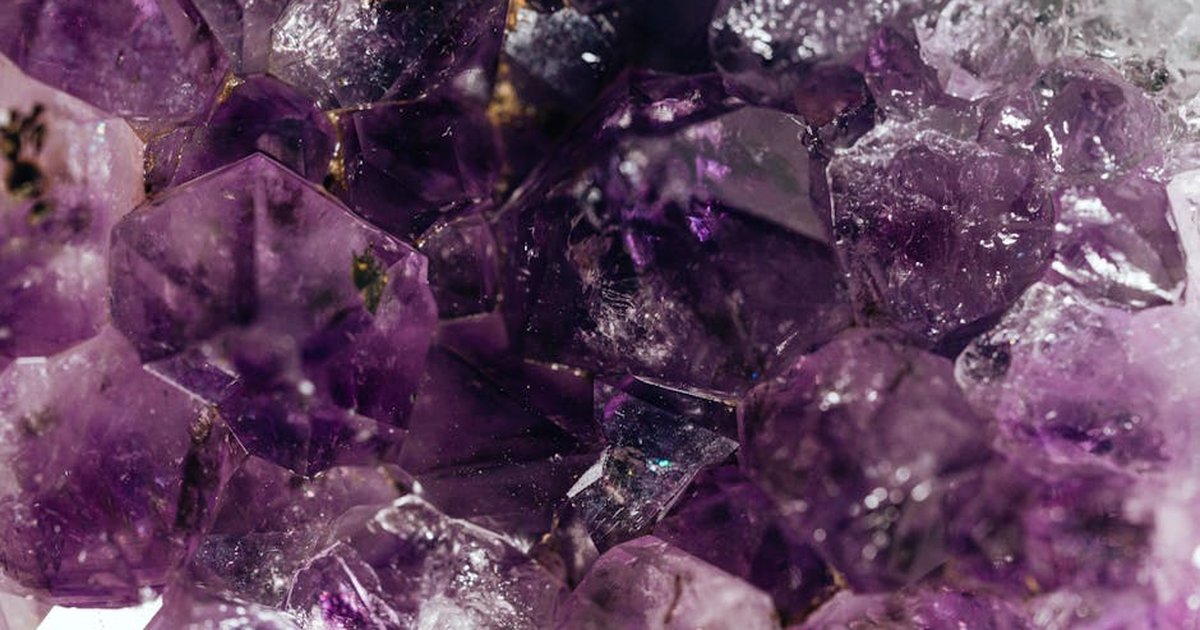
Amethyst gets its purple color from iron impurities exposed to natural radiation. Citrine is the same mineral (quartz) with a different oxidation state of iron. Putting them next to each other does not cause the colors to blend, cancel out, or transfer. The iron atoms stay where they are.
There is one narrow exception related to light exposure. If a light-sensitive stone like amethyst or kunzite sits directly next to a stone that could concentrate or reflect UV light, prolonged exposure could accelerate fading. This is extremely unlikely in normal conditions, but if you keep your crystals on a sunny windowsill, it is the UV light doing the damage, not the crystal neighbors.
Color mixing is a design choice. It does not have a physical effect on the stones.
Can crystal dust be harmful?
This one is serious and often overlooked. If you cut, grind, carve, or polish crystals, the dust produced is not harmless dirt. Many popular crystals contain silica (silicon dioxide), and inhaling crystalline silica dust over time causes silicosis, a permanent and progressive lung disease. Quartz, jasper, agate, chalcedony, and amethyst are all forms of silica and all produce hazardous dust when worked.
Other minerals carry their own dust hazards. Malachite contains copper, and copper dust is toxic if inhaled or ingested. Cinnabar is mercury sulfide, and the mercury in cinnabar dust is dangerous. Even stones that seem harmless, like fluorite, produce dust that can irritate lungs and eyes.
If you are cutting or grinding crystals at home, wear a properly fitted respirator (not a paper dust mask) and work in a well-ventilated area. A wet-cutting method, where water is applied to the cutting surface, dramatically reduces airborne dust. Professional lapidary workshops use dust collection systems for a reason.
Normal handling of finished crystals, even rough ones, does not produce enough dust to be a concern. The risk comes from mechanical processes that create fine airborne particles.
Do crystals lose their color over time?
Some do, and the mechanism is well understood. It is a photochemical reaction, not an "energy depletion."
Amethyst and citrine are the most common examples. Both get their color from iron impurities in the quartz lattice, and both are sensitive to prolonged UV exposure. Sunlight, especially direct sunlight, can cause the iron centers to change their oxidation state. Amethyst fades from purple to pale yellow or even colorless. Citrine can deepen or fade depending on the specific iron chemistry. This process is sometimes called "fading" or "bleaching," and it is permanent. Once the color is gone, it does not come back.
Kunzite, a pink variety of spodumene, is notorious for fading. It can lose its pink color after just a few weeks of direct sun exposure. Rose quartz can also fade, though it is slower about it than kunzite. Topaz, particularly blue topaz that has been irradiated, can revert toward its natural color with enough UV exposure over time.
The fix is simple: keep light-sensitive stones out of direct sunlight. Display them in a case, store them in a drawer, or wear them (which is fine because indoor light is not strong enough to cause noticeable fading in most cases). Some people claim you can "recharge" faded amethyst by irradiating it, but that requires actual gamma radiation from a cobalt-60 source or similar equipment, not sunlight or moonlight.
What about placing crystals on top of each other for storage?
Physically, stacking crystals is usually fine as long as you account for hardness differences. A piece of quartz sitting on top of a piece of selenite (hardness 2) will eventually scratch the selenite at the contact point. Weight matters too. A heavy piece of hematite resting on a delicate piece of celestite can crack the celestite simply from pressure over time.
The safest approach for long-term storage: wrap softer or more fragile pieces individually in soft cloth or tissue, and place them in a way that harder stones are not resting directly against them. A divided jewelry box or bead storage container with padded compartments is cheap insurance against preventable damage.
There is no energetic or chemical reason to avoid stacking most crystals. The practical concern is purely mechanical: harder, heavier stones can scratch, chip, or crack softer, lighter ones if they are in direct contact for extended periods.
Comments