Crystals Aren't Medicine — But They're Not Nothing Either
Crystals Aren't Medicine — But They're Not Nothing Either
Let me say this upfront so we can get past it: crystals cannot treat anxiety. They can't replace therapy, medication, or any evidence-based treatment. If someone tells you a piece of rose quartz will cure your generalized anxiety disorder, they're either misinformed or selling something.
Now that we've got that out of the way, let's talk about what crystals actually can do for people dealing with anxiety. Because dismissing them entirely misses something interesting about how humans interact with objects, rituals, and their own minds.
The Obvious Criticism
I understand the skepticism. I really do. When you look at the claims floating around crystal communities — that amethyst "absorbs negative energy," that citrine "attracts abundance," that clear quartz "amplifies intentions" — it sounds like pseudoscience, because in a literal sense, it is. There's no published, peer-reviewed study showing that a quartz crystal has any physiological effect on anxiety symptoms.
The science is clear on this point. Crystals are minerals. They're made of atoms arranged in repeating patterns. Silicon dioxide, mostly. They don't emit anything measurable. They don't interact with your nervous system. Holding a crystal doesn't change your cortisol levels any more than holding a paperweight does.
But here's where the conversation gets more interesting than "crystals fake, science real."
What Tradition Actually Says
Before we get to the psychology, it's worth understanding what crystal traditions actually claim, because a lot of the criticism targets straw-man versions of these practices.
In many historical contexts, crystals weren't presented as medicine. Ancient Egyptian, Greek, Roman, Chinese, and Indian cultures all used stones in various ways — jewelry, amulets, decorative objects, tools for meditation. The associations they made between specific stones and specific qualities were more cultural and symbolic than medical. Lapis lazuli was linked to royalty and wisdom in Egypt. Jade was tied to virtue and purity in China. These were meaning frameworks, not prescriptions.
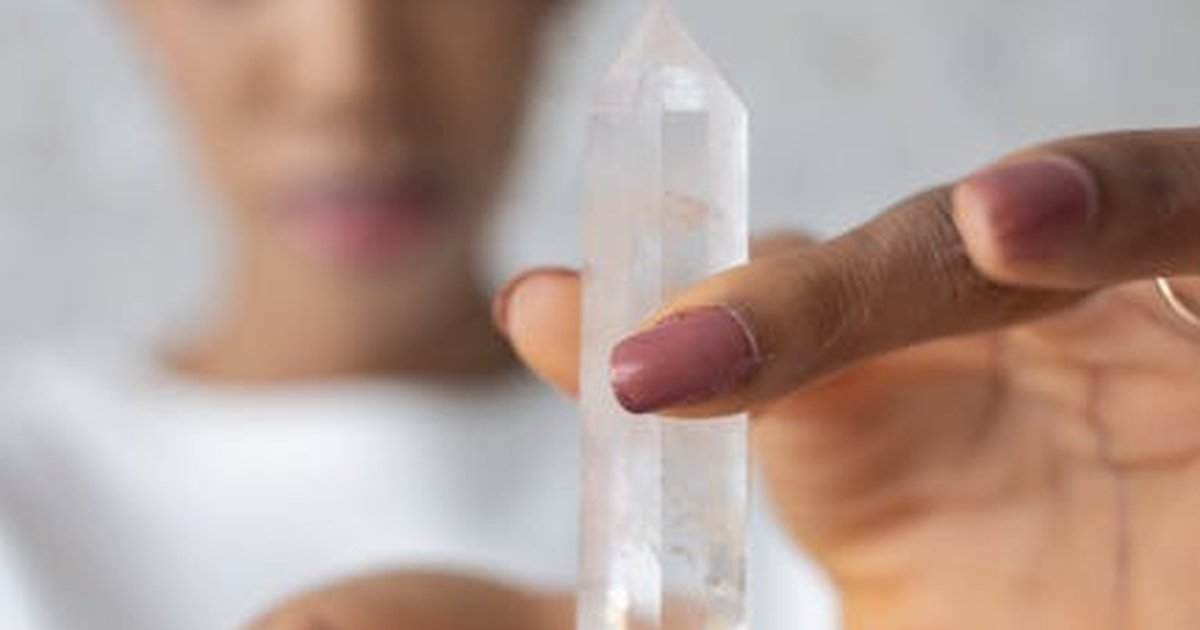
Modern crystal practice, at its best, operates in a similar space. The people I've talked to who work with crystals seriously don't think a stone is going to fix their anxiety disorder. They think a stone can be a tool within a broader practice — a focus point for meditation, a physical reminder of an intention, a small ritual that adds structure to their day.
The problem isn't the practice itself. The problem is the Instagram influencers who've turned it into "drink this crystal water to cure your depression." That's where the justified criticism belongs.
The Psychological Mechanism That Actually Matters
Here's the thing nobody on either side talks about enough: ritual objects work. Not because of any property inherent in the object, but because of what the human brain does with objects that carry meaning.
There's solid research on this. Studies on placebo effects show that the physical ritual of taking a pill — even a sugar pill — produces measurable physiological changes. The act itself matters. Similarly, religious and spiritual practices around the world use physical objects — prayer beads, rosaries, worry stones, mandalas — as anchors for mental states. These aren't superstitions. They're technologies of attention.
A crystal on your desk functions in the same category. You've assigned it a meaning — "this is my calm stone" — and every time you see it or touch it, that meaning activates. It's a shortcut. Instead of going through a five-minute breathing exercise, you touch the stone and your brain makes the association: calm, present, okay.
This isn't magical thinking. It's classical conditioning. It's the same reason seeing a photo of someone you love makes you feel warm, or why hearing a specific song triggers a memory. The object is a trigger for a psychological state you've practiced accessing.
The Mindfulness Angle
Here's where crystals have a genuine, practical overlap with evidence-based approaches to anxiety: they're mindfulness tools.
Mindfulness-Based Stress Reduction (MBSR), developed by Jon Kabat-Zinn at the University of Massachusetts, is one of the most well-studied interventions for anxiety. The core practice is simple: pay attention to the present moment, without judgment, using a physical anchor — often the breath, sometimes the body, occasionally an object.
A crystal works as that anchor. When anxiety starts spiraling — "what if I said the wrong thing in that meeting, what if they think I'm incompetent, what if I lose my job, what if I can't pay rent" — you need something to interrupt the chain. A crystal in your pocket gives you that something. You reach for it, feel its texture and temperature, and for a few seconds, your attention is on something concrete and immediate instead of an imaginary catastrophe.
Is this different from using a worry stone, a fidget spinner, or just rubbing your thumb and forefinger together? Not really. The mechanism is the same. The crystal just happens to be prettier and, for some people, more meaningful. And meaning isn't nothing. People are more likely to stick with a practice that feels personal and significant to them.
The Community Factor
One thing that surprised me when I started looking into this is the community aspect. Crystal practice, for many people, is social. They go to shops together, share recommendations, trade stones, post photos. That social component has real mental health value.
Social support is one of the strongest predictors of resilience in the face of anxiety and depression. Having a hobby that connects you with other people — even if that hobby involves rocks with no scientifically proven benefits — is genuinely good for you. The crystal is the excuse. The connection is the benefit.
This isn't unique to crystals, obviously. Book clubs, running groups, knitting circles — same dynamic. But crystal communities tend to be welcoming and low-pressure, which matters for people with social anxiety who might find other groups intimidating.
Where the Line Is
So here's my position, stated plainly:
Crystals are useful as mindfulness tools, ritual objects, and community builders. They are not useful as medical treatments, and anyone who claims otherwise is doing a disservice to both the crystal community and the mental health community.
The line is: use crystals as part of your life, not as a replacement for professional help. If you have clinical anxiety, see a therapist. If your anxiety is manageable and you're looking for supplementary practices, a crystal on your desk or in your pocket is a perfectly reasonable option — no more or less valid than a meditation app, a journal, or a daily walk.
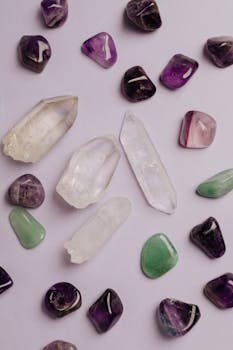
The other line is: don't spend money you don't have. The crystal industry has a markup problem. A piece of quartz that costs $2 wholesale can sell for $30 retail because it's been polished and labeled "anxiety relief crystal." If you want to try working with crystals, start cheap. Tumbled stones are a few dollars each. You don't need the $200 geode.
What Science Could Actually Study
There's an interesting research gap here. Nobody's done a rigorous study on whether using a ritual object (like a crystal) as a mindfulness anchor produces better outcomes than standard mindfulness practice alone. It's not a crazy question. If the object helps people stick with the practice longer or engage more deeply, that's a measurable benefit worth documenting.
Anthropologists have studied the role of objects in religious and spiritual practice extensively. Psychologists have studied placebo effects and ritual behavior. But the intersection — modern, secular-ish people using traditional objects for mental health purposes — hasn't gotten much academic attention. There's a PhD thesis in there somewhere.
A Balanced Take
If your friend tells you they use crystals for anxiety, the right response isn't "that's fake and you're being duped." It's also not "omg crystals are amazing, you should try this $80 citrine." The right response is something like: "Does it help? How do you use it?" Because the answer to those questions is probably more nuanced and interesting than either the skeptics or the enthusiasts want to admit.
Crystals won't cure anxiety. But a small, smooth stone that you touch when your mind starts racing, that reminds you to breathe and be present, that connects you to a community of people who share your interest? That's not nothing. That's a perfectly reasonable thing to keep in your pocket.
The Sensory Experience Matters More Than You'd Think
One more thing worth mentioning: the tactile experience of holding a crystal is genuinely different from most objects you encounter in daily life. Stones are cold when you pick them up and warm slowly in your hand. They have weight. They have texture — some smooth like glass, some rough like sandpaper, some with natural ridges and pits that your fingers explore without you thinking about it.
This sensory engagement is basically what occupational therapists call "sensory grounding." When your nervous system is in fight-or-flight mode, engaging your sense of touch pulls your attention back to your body and out of the anxiety spiral. It's why ice cubes, textured fabrics, and kinetic sand are used in anxiety management. A crystal does the same thing, with the added bonus of being something you chose specifically and find aesthetically pleasing.
I've held a piece of blue lace agate during a stressful phone call, and I'm not going to pretend it made the call less stressful. But it gave my hands something to do, and that small amount of physical occupation made a real difference in how I handled the conversation. I was less fidgety, more focused, more present. The stone didn't solve the problem. It helped me show up better to deal with it.
That's the modest, realistic case for crystals and anxiety. Not a cure. Not a replacement. A small, sensory, meaningful tool in a larger toolkit. That's worth taking seriously, even if you never spend a dime on a crystal shop.
Comments