How to build a crystal jewelry capsule collection
What a capsule collection actually means
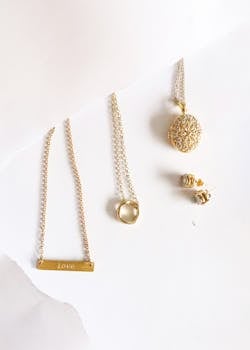
The term "capsule collection" gets thrown around a lot in fashion, but when it comes to crystal jewelry, it means something specific: a small, curated set of pieces that all work together. Not a huge jewelry box stuffed with options you never wear. A tight edit of 8 to 15 pieces that cover every situation in your life, from the office to a wedding to a Tuesday morning grocery run.
The concept comes from wardrobe planning. In the 1970s, Susie Faux (a London boutique owner) coined the idea, and designer Donna Karan popularized it with her "Seven Easy Pieces" collection in 1985. The same logic applies to jewelry. You want pieces that mix, match, and layer without clashing. Every piece earns its spot because it does a job the others cannot.
A crystal jewelry capsule collection is not about owning less for the sake of it. It is about owning better. Fewer pieces, each one chosen deliberately. When you open your jewelry drawer, everything in it is something you actually want to wear. Nothing is gathering dust. Nothing is "just okay."
I think the ideal number is somewhere between 10 and 14 pieces. Fewer than 10 and you might feel limited. More than 14 and you are drifting back into hoarder territory. But the exact count is less important than the principle: every piece has a reason to exist in your collection.
Start with your lifestyle
Before you buy a single thing, look at your actual life. Not the life you wish you had. The one you actually live, five days out of seven.
If you work from home in sweatpants, you do not need a collection heavy on formal pieces. If you are in a corporate environment, you need more polished options than someone who works outdoors. If you go out three nights a week, you need evening pieces. If your social life is mostly brunch and farmer's markets, you don't.
Here is a quick exercise: think about the last month. How many times did you need jewelry for work? For a social event? For exercise or outdoor activities? For travel? Write down rough numbers. Those numbers tell you how your collection should be weighted. If 80% of your jewelry-wearing happens at work, then 80% of your capsule should be work-appropriate. Simple math, but most people skip this step entirely.
Also consider your personal style. Not "what is trendy" but what you actually gravitate toward. Look at the jewelry you already wear most. Is it all silver? Mostly gold? Do you like chunky pieces or delicate ones? Earthy tones or clear stones? Your capsule should be an amplified version of what you already like, not a complete departure from it.
The core four (start here)
Every crystal jewelry capsule needs four foundational pieces. These are the non-negotiables. Get these right and the rest of the collection builds naturally around them.
A go-to pendant necklace
This is your everyday necklace. The one you put on Monday morning and forget about until Friday night. It needs to be comfortable, durable, and versatile enough to pair with a t-shirt or a button-down.
A small to medium crystal pendant (8mm to 12mm) on a 16 to 18-inch chain is the standard starting point. Clear quartz is the most versatile option because it is nearly colorless and goes with everything. Smokey quartz is a close second if you prefer warm tones. Rose quartz works if you wear a lot of pink, coral, or neutral tones.
The chain matters more than people think. A thin, delicate chain looks elegant but breaks easily. A slightly thicker chain (1mm or so) in gold-filled or sterling silver is a better long-term investment. Box chains and cable chains are the most durable styles.
Stud earrings
Studs are the workhorses of any jewelry collection. They do not get tangled in your hair. They do not catch on scarves. They do not make noise when you are on the phone. They just sit there looking good.
Crystal studs in the 4mm to 6mm range hit the sweet spot between noticeable and practical. Amethyst studs are a classic choice. The purple reads as both professional and slightly interesting, which is a hard balance to strike. Citrine studs in a warm yellow-gold are another strong option, especially if you tend to wear gold jewelry.
Buy a matching pair. Not mismatched studs, not one stud (that is a different look entirely). A clean, symmetrical pair of crystal studs is one of those things that just works, always, no matter what else you are wearing.
A bracelet
Bracelets are underrated in capsule collections. They add a layer of visual interest to your wrist without demanding attention the way a statement necklace does. A simple crystal beaded bracelet on elastic cord is the easiest starting point. They are comfortable, they do not have a clasp to fumble with, and you can stack them if you want.
A single-strand bracelet with 6mm or 8mm beads is the right size. Too small and it looks childish. Too large and it is clunky. Black tourmaline beads are a great neutral option. Green aventurine is versatile if you wear a lot of earth tones. Snowflake obsidian, with its black and white contrast, is striking without being loud.
If elastic is not your thing, a chain bracelet with a single crystal charm works too. Just make sure the chain is sturdy. Thin chain bracelets have a habit of catching on things and breaking at the worst possible moment.
A statement piece
You need one piece that is not subtle. One piece that someone might compliment you on at a party. This is your showpiece, and it does not need to be practical or everyday-wearable. It just needs to be good.
A large crystal pendant (15mm or bigger) is the most versatile statement option because you can swap it onto your everyday chain. A chunky amethyst point pendant, a raw citrine cluster, or a big piece of labradorite set in silver all work. The key is visual impact. When you put this piece on, it should change the whole energy of your outfit.
If necklaces are not your thing, a bold ring or a pair of drop earrings can serve as your statement piece. The rule is the same: one piece that does the heavy lifting when you need to look put-together.
Building out from the core
Once you have the core four, the next six to ten pieces fill in the gaps. Think of these as situation-specific additions. You already have your everyday covered. Now you need to handle the edge cases.
Layering pieces
If you like the layered necklace look, you need two or three additional necklaces at different lengths. A choker-length piece (14 to 15 inches), a mid-length pendant (20 to 22 inches), and a longer piece (28 to 30 inches) will stack nicely together. The trick is mixing textures and stone sizes. A thin chain with a tiny stone, a medium chain with a medium stone, and a thicker chain with a larger stone create visual depth without looking cluttered.
Labradorite is excellent for longer necklaces because its color play shows best when there is more surface area. A large labradorite cabochon on a 24-inch chain is the kind of piece that makes people lean in for a closer look.
Event pieces
Depending on your social calendar, you might need one or two pieces that are specifically for dressier occasions. A pair of crystal drop earrings is usually the most useful option here. Something with movement, something that catches light when you turn your head.
Amethyst drop earrings in a teardrop cut are classic and photograph well. Rose quartz drops have a romantic softness that works for weddings and date nights. If you want something less expected, try prehnite, which has a pale green translucence that looks incredible under warm lighting.
Earthy or casual pieces
If you spend weekends in jeans and a flannel, you want jewelry that matches that energy. Raw crystal pendants on leather cords, simple wire-wrapped stones, beaded anklets. These pieces should feel relaxed and effortless, like you just threw them on. Which, ideally, you did.
Unpolished quartz points on a cotton cord are about as casual as it gets, and they look great with that specific aesthetic. Jasper, with its opaque earthy colors and interesting patterns, is another good material for casual pieces. Red jasper, picture jasper, or ocean jasper all have distinct looks that work well in bohemian-leaning collections.
Color coordination basics
A capsule collection that is all over the place color-wise is going to feel chaotic. You do not need to match perfectly, but you do need some cohesion. Here are three approaches that work.
The neutral approach: stick to clear, white, gray, brown, and black stones. Clear quartz, white sapphire, smokey quartz, black tourmaline, snowflake obsidian. This is the easiest to coordinate because neutral stones go with literally any color of clothing. The downside is it can feel a bit safe.
The tonal approach: pick one color family and stay within it. All purples (amethyst, charoite, lepidolite, sugilite). All blues (lapis lazuli, blue lace agate, sodalite, larimar). All greens (jade, aventurine, peridot, malachite). This creates a cohesive look without being boring, because the stones within each family have enough variety to keep things interesting.
The complementary approach: choose two or three colors that look good together. Purple and gold (amethyst + citrine). Pink and green (rose quartz + aventurine). Blue and white (lapis lazuli + clear quartz). This gives you more range while still maintaining a sense of intentionality.
Pick one approach and commit to it. Mixing all three is how you end up with a collection that feels random.
Metal consistency
This gets overlooked constantly, but it matters. If half your collection is silver and half is gold, layering becomes difficult and the overall feel is scattered.
My recommendation: pick one metal as your primary and stick with it for at least 80% of your pieces. Sterling silver is the most practical choice for crystal jewelry because it is affordable, durable, and pairs well with the cool tones of most crystals. Gold-filled is the next best option if you prefer warm tones.
If you want to mix metals, do it intentionally. One or two pieces in your secondary metal is fine. A gold bracelet in a mostly silver collection adds visual interest. Five gold pieces and five silver pieces just looks like you could not make up your mind.
Quality over quantity (always)
A capsule collection of 12 genuinely good pieces beats a drawer full of 50 mediocre ones every time. Spend the money on better materials and better craftsmanship. Gold-filled lasts years longer than gold-plated. Hand-knotted silk thread between beads prevents them from scratching each other and breaking. Properly set stones do not fall out after six months.
Learn to spot the difference between genuine crystal and glass. Real crystal has natural inclusions, slight color variations, and an internal structure you can see if you look closely. Glass is too uniform, too perfect, and often too shiny. Hold the stone up to the light. Real crystal has depth. Glass looks flat.
Buy from sellers who tell you exactly what the stone is, where it comes from, and what the metal is. "Natural gemstone" is not a description. "Natural amethyst from Uruguay, 7mm round, set in 925 sterling silver" is. The specificity is a good sign that the seller knows their product and stands behind it.
Maintenance and rotation
A capsule collection only works if you actually wear all of it. Every three months or so, lay everything out and ask yourself: when did I last wear this? If the answer is "I can't remember," that piece needs to either be restyled or removed from the collection.
Crystal jewelry is not fragile, but it is not indestructible either. Store pieces separately so harder stones do not scratch softer ones. A simple jewelry box with individual compartments, or even small velvet pouches for each piece, does the job. Keep silver pieces in anti-tarnish bags if you have them.
Clean your pieces with warm soapy water and a soft brush. Ultrasonic cleaners work for harder stones (quartz, topaz, sapphire) but can damage softer ones (pearl, opal, turquoise). When in doubt, use soap and water. It is slower but it will not ruin anything.
A well-maintained capsule collection is a quiet luxury. It is not about impressing anyone. It is about opening your drawer in the morning, seeing a small, perfectly edited selection of things you love, and knowing that whatever you pick will look right. That feeling is worth the effort of putting it together.


Comments