Blue Lace Agate: The Complete Guide to the Stone of Communication and Calm
Blue Lace Agate: The Complete Guide to the Stone of Communication and Calm
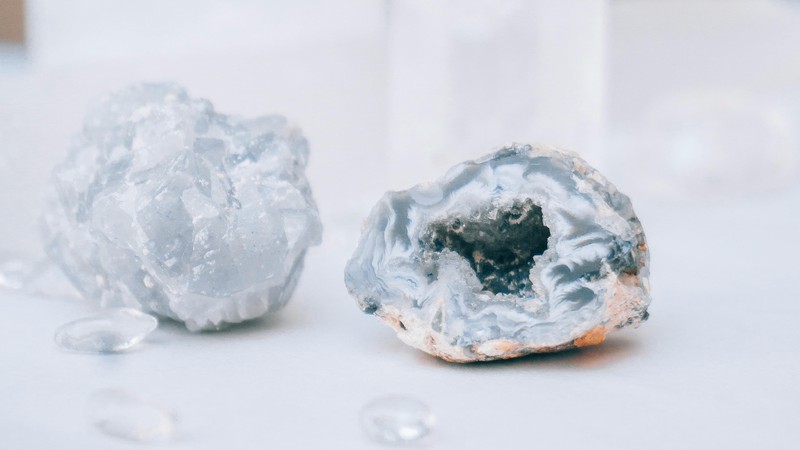
Among the hundreds of varieties within the agate family, blue lace agate stands out as one of the most visually distinctive and spiritually beloved. With its soft, sky-blue bands weaving through translucent white layers, this stone has earned a reputation as the Stone of Communication — a crystal that gently encourages self-expression, soothes anxiety, and brings a sense of tranquility to anyone who wears or holds it.
Whether you're drawn to blue lace agate for its calming energy, its stunning natural patterns, or its connection to the throat chakra, this guide covers everything you need to know about this remarkable stone.
What Is Blue Lace Agate?
Blue lace agate is a banded variety of chalcedony, which itself is a microcrystalline form of silicon dioxide (SiO₂). What sets it apart from other agates is its signature coloration: delicate bands of pale blue, ranging from powdery periwinkle to soft cerulean, alternating with milky-white or silvery-grey layers. These bands form naturally over millions of years as mineral-rich water flows through cavities in volcanic rock, depositing microscopic quartz crystals layer by layer.
The result is a stone that looks almost painted — as if an artist brushed soft blue ribbons across a white canvas. No two pieces are identical, which makes every blue lace agate crystal genuinely one of a kind.
Physical Properties of Blue Lace Agate
Understanding the physical characteristics of blue lace agate helps you identify genuine specimens and care for them properly:
- Chemical Composition: Silicon dioxide (SiO₂) with trace amounts of iron and aluminum that create the blue coloration
- Crystal System: Trigonal (microcrystalline)
- Hardness: 6.5–7 on the Mohs scale — reasonably durable for everyday jewelry
- Luster: Waxy to vitreous when polished
- Transparency: Translucent to semi-translucent
- Specific Gravity: 2.58–2.64
- Fracture: Conchoidal with a smooth, shell-like break
On the Mohs scale, blue lace agate sits comfortably between feldspar and quartz in hardness. This means it's resistant to scratching from everyday objects but can still be damaged by harder materials like topaz or sapphire. For a crystal bracelet, this hardness level is ideal — durable enough for daily wear while still feeling pleasantly smooth against the skin.
Why Is It Called the Stone of Communication?
The title "Stone of Communication" isn't just marketing language. In crystal healing traditions, blue lace agate has a strong affinity for the throat chakra (Vishuddha), the energy center associated with speaking your truth, authentic self-expression, and clear communication.
When the throat chakra is blocked or unbalanced, people often experience difficulty expressing their thoughts, fear of public speaking, social anxiety, or a tendency to either dominate conversations or withdraw entirely. Blue lace agate is believed to help open and balance this chakra, promoting communication that is both honest and gentle.
Unlike some stones that push you to speak boldly and confrontationally, blue lace agate encourages a softer approach. It's not about demanding to be heard — it's about finding the right words and delivering them with grace. This makes it particularly valuable for people who struggle with social anxiety, those in counseling or therapy settings, teachers, public speakers, and anyone navigating difficult conversations.
If you're interested in how different stones interact with the body's energy centers, our chakra bracelet guide provides a detailed overview of matching stones to each chakra.
Metaphysical Properties and Healing Benefits
Calm Communication and Self-Expression
The primary metaphysical property of blue lace agate is its ability to facilitate calm, clear communication. Crystal practitioners often recommend holding or wearing blue lace agate before important conversations, presentations, or interviews. The stone is said to help organize thoughts, reduce nervous stuttering, and promote a sense of inner peace that translates into more confident speech.
Anxiety and Stress Relief
Blue lace agate is widely regarded as one of the best crystals for anxiety. Its gentle, cooling energy is thought to settle a racing mind and ease nervous tension in the body. Many people keep a blue lace agate tumbled stone on their desk at work or carry one in their pocket during stressful days. The rhythmic blue and white banding is visually soothing on its own — even skeptics often find the stone calming to look at and hold.
Emotional Healing
Emotionally, blue lace agate is associated with releasing old emotional wounds, particularly those related to being misunderstood, silenced, or unable to express feelings. It's sometimes called a "nurturing stone" because of its gentle, supportive energy. Unlike more intense stones that force emotional confrontation, blue lace agate works slowly and gently, making it suitable for people who are sensitive to strong crystal energies.
Throat Chakra Activation
Placing blue lace agate on the throat during meditation is a common practice for throat chakra work. Practitioners believe this helps clear energetic blockages in the neck area, which may manifest physically as tight throat muscles, frequent sore throats, or thyroid issues. Whether or not you subscribe to the chakra system, the simple act of focused breathing with a cool, smooth stone at your throat can be deeply relaxing.
How to Use Blue Lace Agate
Jewelry: Bracelets, Pendants, and Necklaces
Wearing blue lace agate as jewelry is the most popular way to benefit from its energy throughout the day. Blue lace agate bracelets are particularly popular because the stone rests against your pulse points, which crystal practitioners believe amplifies its energetic effects. The stone's 6.5–7 Mohs hardness makes it well-suited for beaded bracelets that can withstand daily wear.
Pendants and necklaces are another excellent choice, as they position the stone near the throat chakra. If you're interested in exploring different bracelet styles, our guide on how to choose the right natural stone bracelet covers everything from sizing to intention-setting.
Meditation
Hold a blue lace agate stone in your hand or place it at your throat during meditation. Focus on the cool, smooth surface and the gentle blue color. Visualize blue light flowing through your throat, clearing away tension and allowing your voice to flow freely. Even a five-minute session can help center your thoughts before a stressful event.
Workplace and Office
Keep a blue lace agate tumble stone or small geode on your desk. It's believed to promote a calm work environment, reduce workplace tension, and help you communicate more effectively with colleagues. Many people find that having a visually beautiful, calming object on their desk naturally improves their mood and focus.
Public Speaking and Performance
Before giving a presentation, speech, or performance, try holding blue lace agate for a few minutes while taking deep breaths. Some practitioners place the stone in their pocket or wear it as a pendant during the event. The idea is that the stone's calming energy helps quiet stage fright while its communication-enhancing properties help you articulate your thoughts clearly.
How to Cleanse and Care for Blue Lace Agate
One of the practical advantages of blue lace agate is its relative durability. With a Mohs hardness of 6.5–7, it can handle normal wear and cleaning without special precautions. Here's how to keep your blue lace agate looking beautiful:
Cleaning
- Warm, soapy water is the safest and most effective cleaning method. Use a mild soap (dish soap works well) and a soft cloth or brush
- Rinse thoroughly with clean water and dry with a soft cloth
- Avoid ultrasonic cleaners and steam cleaning, as these can damage the stone's internal structure over time
What to Avoid
- Harsh chemicals, bleach, and abrasive cleaners
- Prolonged exposure to direct sunlight (like most colored stones, blue lace agate can fade over time with excessive UV exposure — see our article on whether crystals can fade in the sun)
- Extreme temperature changes, which can cause cracking
- Storing alongside harder stones like diamonds or sapphires that could scratch the surface
Energetic Cleansing
If you work with crystals energetically, blue lace agate can be cleansed by placing it on a bed of sea salt overnight, smudging with sage or palo santo, or leaving it in moonlight (especially during a full moon). For more detailed methods, our guide on how to cleanse your crystal bracelet covers seven approaches that work well for agate and similar stones.
Blue Lace Agate vs Other Blue Stones
The world of blue crystals can be confusing, with several stones offering overlapping properties. Here's how blue lace agate compares to other popular blue stones:
Blue Lace Agate vs Sodalite
Sodalite is a deeper, more opaque blue stone with white veining rather than banding. While both stones are associated with communication and the throat chakra, sodalite has a more intellectual energy — it's often called the "stone of logic" and is favored for mental clarity and rational thinking. Blue lace agate, by contrast, has a softer, more emotional quality focused on gentle expression. Choose sodalite when you need to think clearly; choose blue lace agate when you need to speak gently.
Blue Lace Agate vs Lapis Lazuli
Lapis lazuli is a dramatically different stone — deep, intense blue with flecks of golden pyrite. Lapis has been prized since ancient Egypt and carries a weightier, more powerful energy associated with wisdom, truth, and spiritual insight. Blue lace agate is much lighter both in color and energy. If lapis lazuli is a deep, resonant bell, blue lace agate is a soft wind chime. Both have their place, but blue lace agate is better suited for those who prefer subtlety over intensity.
Blue Lace Agate vs Blue Chalcedony
This comparison is trickier because blue lace agate is technically a type of chalcedony. However, "blue chalcedony" typically refers to the solid, uniformly blue variety without banding. Blue lace agate's distinctive banded pattern sets it apart visually, and many crystal practitioners consider the banded structure to create a more layered, complex energy. Blue chalcedony is calming in a straightforward way, while blue lace agate's energy flows in a more nuanced, wave-like pattern.
Blue Lace Agate vs Aquamarine
Aquamarine, the birthstone of March, is a transparent to translucent beryl with a similar cool blue tone but a very different crystal structure and formation process. Aquamarine is significantly harder (7.5–8 on the Mohs scale) and more valuable as a gemstone. Energetically, aquamarine is associated with courage and the courage to speak, while blue lace agate is more about gentle, calm communication. Aquamarine is the bolder choice; blue lace agate is the softer one.
Where Is Blue Lace Agate Found?
Blue lace agate has specific geological requirements — it forms in volcanic cavities (geodes and nodules) where silica-rich water deposits layers over millennia. The most prized specimens come from a few key locations:
- Namibia: The most famous and commercially important source. Namibian blue lace agate, particularly from the Brandberg and Goboboseb regions, is considered the gold standard for its vivid blue coloration and well-defined banding
- South Africa: Neighboring regions produce similar quality material, often mined alongside Namibian deposits
- Brazil: A major source of many agate varieties, Brazil produces blue lace agate with slightly different banding patterns — often wider, more dramatic bands with a slightly greener-blue tone
- India: Indian blue lace agate tends to be paler with finer, more delicate banding. It's often more affordable than African material
- United States: Small deposits exist in western states including Oregon and Montana, though commercial quantities are limited
Namibian blue lace agate remains the most sought-after for jewelry and collections due to its intense color and crisp banding. When shopping for quality specimens, ask about the origin — Namibian stones command a premium but offer the most striking visual appearance.
How to Tell if Blue Lace Agate Is Real
With the growing popularity of crystal jewelry, synthetic and dyed agates have flooded the market. Here are some tips for identifying genuine blue lace agate:
- Examine the banding: Natural blue lace agate has organic, slightly irregular bands that follow the contours of the stone. Perfectly uniform, overly symmetrical banding may indicate a synthetic or heavily treated stone
- Check the color: Genuine blue lace agate is soft and muted — not vivid electric blue. If the color looks unnaturally bright or saturated, it may be dyed
- Look for inclusions: Tiny natural inclusions and slight color variations within bands are hallmarks of genuine stone. Perfectly clean, uniform material is suspicious
- Test the temperature: Real agate feels cool to the touch and takes a moment to warm up in your hand. Glass or plastic imitations warm almost immediately
- Buy from reputable sources: This is the most reliable way to ensure authenticity. For more guidance, our article on buying natural stone bracelets online covers red flags and quality indicators in detail
Conclusion
Blue lace agate occupies a unique space in the crystal world — it's gentle without being weak, beautiful without being flashy, and powerful in its subtlety. As the Stone of Communication, it offers something many of us desperately need in today's fast-paced, high-stress world: the ability to express ourselves clearly and calmly, even when the stakes are high.
Whether you're a seasoned crystal collector or just beginning to explore the world of healing stones, blue lace agate is a wonderful addition to any collection. Its accessible price point (compared to premium stones like aquamarine or lapis lazuli), everyday durability, and genuinely soothing energy make it a stone you'll reach for again and again.
Consider starting with a simple beaded bracelet or a tumbled stone to carry with you. Over time, you may find that blue lace agate becomes one of your most trusted crystal companions — always ready to lend a little calm and clarity when you need it most.
Comments