Master the Black Tourmaline: Your Ultimate
May 28, 2026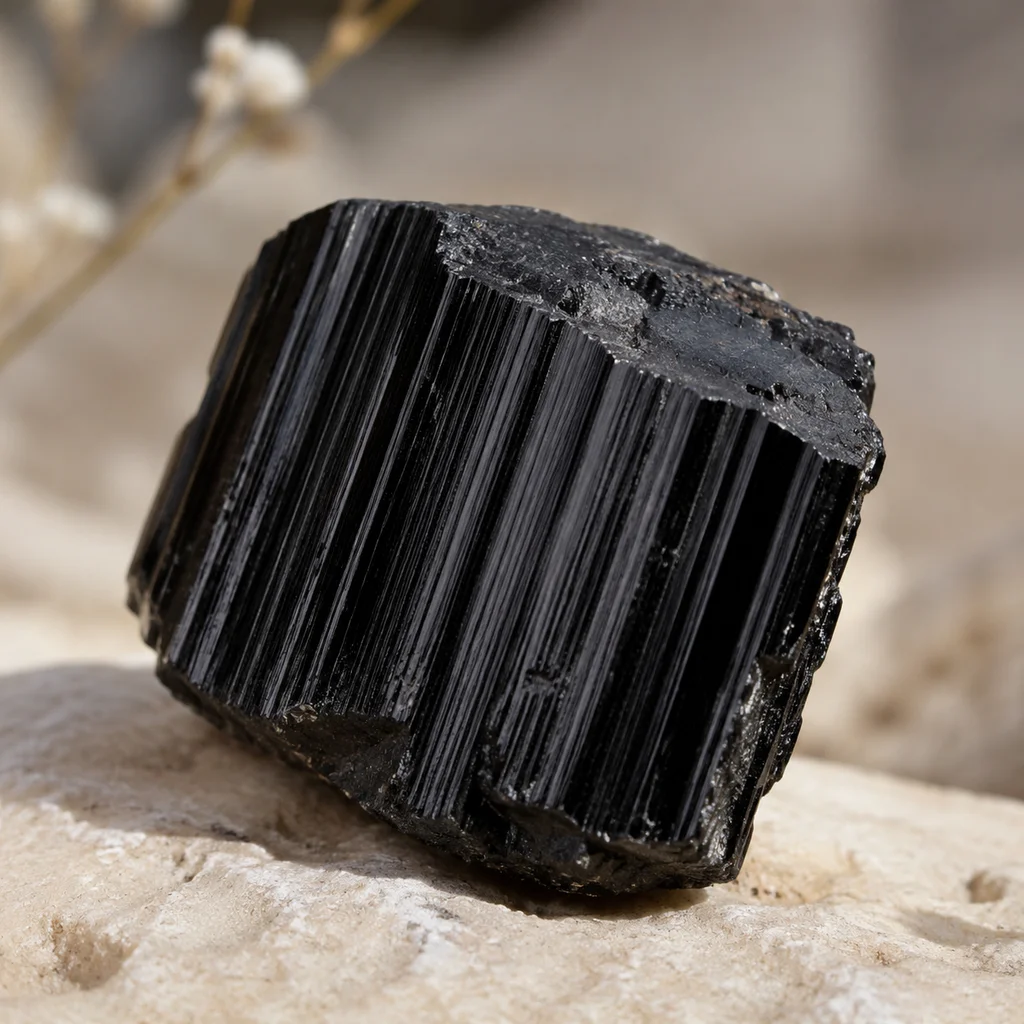
Black Tourmaline: The Complete Protection Stone Guide
Why Black Tourmaline Deserves a Spot in Every Collection
Walk into any crystal shop and you'll find black tourmaline — usually near the entrance, often in substantial chunks, and almost always one of the best-selling items. There's a reason for that. Among the thousands of minerals sold as "healing crystals," black tourmaline (schorl) stands out for being simultaneously affordable, durable, visually striking, and genuinely interesting from a scientific perspective.
This isn't just a stone that looks cool. Black tourmaline has piezoelectric and pyroelectric properties (it generates an electrical charge under pressure or heat), a Mohs hardness of 7-7.5, and a chemical composition that makes it one of the most chemically stable minerals in common use. It doesn't fade in sunlight, it doesn't degrade in water, and it doesn't require any special handling.
Whether you're a first-time buyer or a longtime collector looking to deepen your knowledge, this guide covers everything you need to know about black tourmaline.
What Is Black Tourmaline, Mineralogically?
Black tourmaline is the mineral species schorl, a member of the tourmaline group. Its chemical formula is NaFe³⁺₃Al₆(BO₃)₃Si₆O₁₈(OH)₄ — a sodium iron aluminum borosilicate with hydroxyl groups. That's a mouthful, but the key takeaway is the iron content. Iron is what gives schorl its opaque black color and its reputation for being the most common tourmaline variety (accounting for roughly 95% of all tourmaline found in nature).
Key Physical Properties
| Property | Value |
|----------|-------|
| Mohs Hardness | 7-7.5 |
| Crystal System | Trigonal (hexagonal) |
| Streak | White to grey (surprising for a black stone) |
| Luster | Vitreous to submetallic |
| Cleavage | Indistinct / conchoidal fracture |
| Density | 3.18-3.22 g/cm³ |
| Transparency | Opaque |
| Piezoelectric | Yes — generates charge under pressure |
| Pyroelectric | Yes — generates charge when heated |
The Columnar Crystal Habit
One of black tourmaline's most recognizable features is its crystal habit. It typically forms as long, prismatic crystals with visible striations running lengthwise along the faces. These columns are often three-sided or six-sided in cross-section, and they can grow quite large — specimens over 30 cm are not uncommon from Brazilian and Pakistani deposits.
The striations (fine parallel lines) are a useful identification feature. If you run your fingernail along the length of a crystal and feel distinct ridges, you're likely holding real tourmaline. Most fakes and imitation materials lack this characteristic surface texture.
Where Black Tourmaline Comes From
Major deposits are found in:
- Brazil (Minas Gerais) — The world's largest producer, known for massive crystal clusters
- Pakistan (Gilgit-Baltistan) — Produces exceptional single crystals, often with albite matrix
- Afghanistan (Nuristan) — Similar to Pakistani material, excellent crystal quality
- Madagascar — Known for both raw specimens and tumbled stones
- United States (Maine, California) — Historical deposits, limited current production
- Mozambique — Growing source of commercial-grade material
- Namibia (Erongo Mountains) — Produces aesthetic matrix specimens
Most black tourmaline on the commercial market comes from Brazil or Pakistan. Brazilian material tends to form in granitic pegmatites and often occurs as radiating clusters (fan-shaped groups of crystals growing from a common point). Pakistani material more commonly occurs as isolated prismatic crystals embedded in white albite feldspar matrix.
How to Identify Real Black Tourmaline
With black tourmaline's popularity comes a flood of imitations. Here's how to tell the real thing from fakes:
The Streak Test
Black tourmaline's streak (the color it leaves when scratched across unglazed porcelain) is white to light grey. This is counterintuitive — a pitch-black stone leaving a white streak. Most black imitation materials (dyed howlite, black onyx, obsidian, slag glass) will either leave a dark streak or no visible streak.
The Striation Test
Run your fingernail along the length of a crystal. Real tourmaline has distinct vertical striations — fine ridges you can feel. Glass, plastic, and most other materials will be smooth.
The Hardness Test
At 7-7.5 on Mohs, black tourmaline can scratch glass (5.5 Mohs) and steel (4-4.5 Mohs). If a supposed tourmaline can't scratch a glass jar, it's probably not tourmaline.
Common Imitations
| Material | How to Spot It |
|----------|---------------|
| Black onyx (dyed agate) | No striations, banding visible under strong light |
| Obsidian | Conchoidal fracture, no striations, lighter weight |
| Black glass (slag) | Perfect smooth surface, bubbles visible under magnification |
| Dyed howlite | Soft (3.5 Mohs), no striations, chalky texture |
| Black plastic | Warm to touch quickly, very light weight, scratches easily |
Uses for Black Tourmaline
In Jewelry
Black tourmaline's hardness (7-7.5) makes it suitable for all types of jewelry, including rings — a claim many popular crystals can't make. It holds a polish well, resists scratching from daily wear, and the opaque black color pairs with virtually any metal and any outfit.
Common jewelry forms:
- Faceted stones — Usually step-cut or mixed cuts for modern designs
- Cabochons — Smooth domed cuts that show off the surface texture
- Beads — Very common in stretch bracelets and mala necklaces
- Raw crystal pendants — Wire-wrapped or drilled natural crystal points
For Display and Collection
Raw black tourmaline specimens are among the most accessible mineral specimens for beginning collectors. A good-quality 5-8 cm crystal from Pakistan costs $10-30, making it far more affordable than comparable specimens of most other minerals.
Look for:
- Single crystals with good termination (the pointed end)
- Radiating clusters from Brazil
- Matrix specimens (crystals growing on albite or quartz)
- Doubly-terminated crystals (points at both ends) — less common and more collectible
EMF and Environmental Use
Black tourmaline is widely marketed for electromagnetic field (EMF) protection. While there's no peer-reviewed scientific evidence that a piece of tourmaline on your desk meaningfully reduces your exposure to electromagnetic radiation from electronic devices, the stone's piezoelectric properties are real and measurable. Whether you subscribe to the EMF protection concept or not, a chunk of black tourmaline on your desk is a handsome conversation piece.
Care and Cleaning
Black tourmaline is one of the easiest crystals to care for:
- Water safe — Can be rinsed under running water without damage
- Sun stable — Won't fade in sunlight (unlike amethyst, rose quartz, etc.)
- Durable — 7-7.5 Mohs means it resists most everyday scratching
- Chemically stable — Not affected by mild soap or cleaning solutions
- No special storage needed — Store it wherever you want, with whatever you want
The only real precaution: avoid hard impacts. Tourmaline has indistinct cleavage, meaning it doesn't split cleanly along flat planes like feldspar minerals, but it can still chip or fracture from a significant drop.
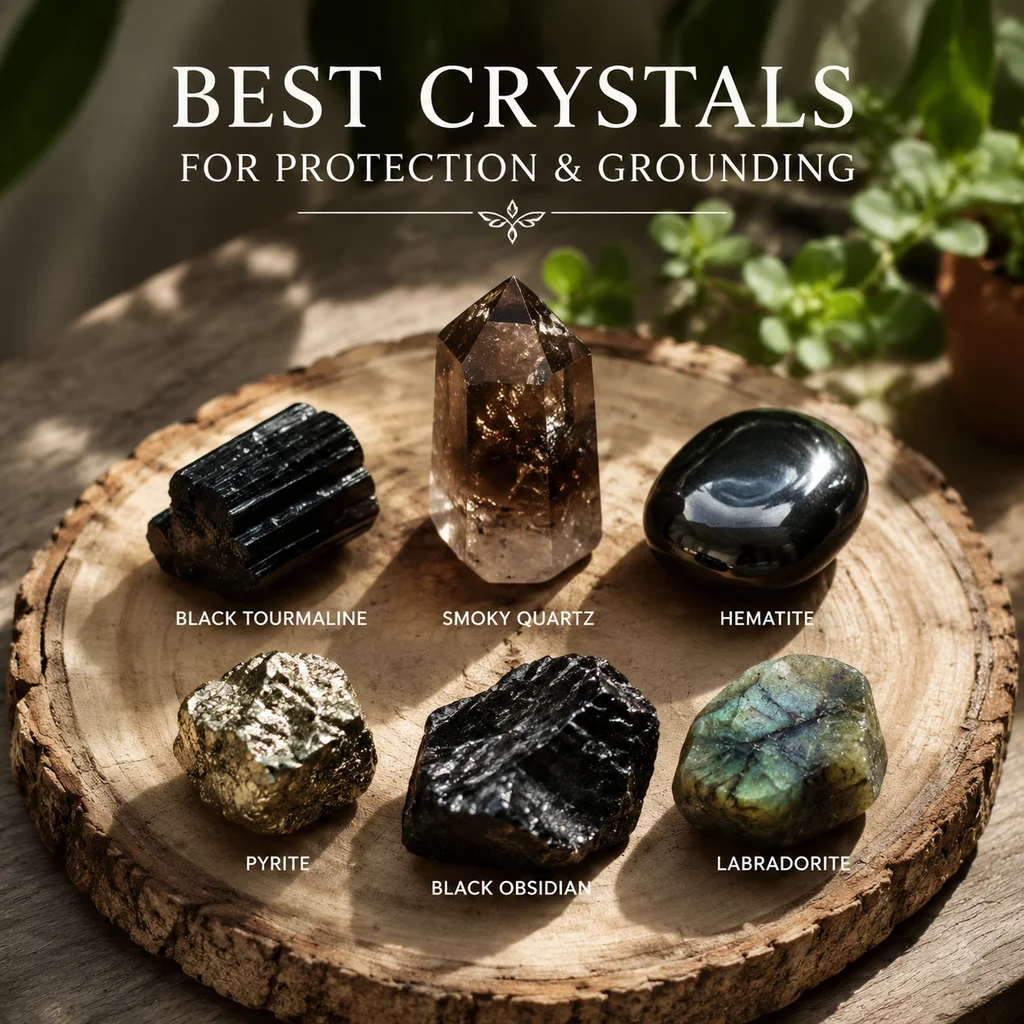
Black Tourmaline vs Other Black Stones
| Stone | Mohs | Streak | Key Feature |
|-------|------|--------|-------------|
| Black Tourmaline | 7-7.5 | White | Vertical striations |
| Black Onyx | 6.5-7 | White | Smooth, often banded |
| Black Obsidian | 5-5.5 | White | Conchoidal fracture, glassy |
| Black Jasper | 6.5-7 | White | Granular texture, opaque |
| Black Spinel | 8 | White | Octahedral crystals, very hard |
| Hematite | 5.5-6.5 | Red-brown | Heavy, metallic luster, red streak |
Buying Guide: What to Look For
For Raw Specimens
- Well-formed crystal shape with visible faces and striations
- Good termination (intact pointed end)
- Minimal damage (check for chips on edges)
- Contrast with matrix material (white albite enhances visual appeal)
For Jewelry
- Smooth polish with no visible scratches
- Even color throughout (no brown or grey patches)
- Secure setting (tourmaline's hardness means prongs need to be well-made)
- For beads: consistent size and shape, smooth drill holes
Price Expectations
- Tumbled stones (2-4 cm): $3-8
- Raw crystal (5-8 cm): $10-30
- Bracelet (8mm beads): $15-35
- Faceted ring stone (1-2 ct): $20-60
- Matrix specimen (10+ cm): $30-100+
FAQ
Q: Is black tourmaline the same as schorl?
A: Yes. Schorl is the mineral species name for black tourmaline. All black tourmaline is schorl, but not all tourmaline is schorl — other tourmaline varieties include elbaite (watermelon tourmaline), dravite (brown tourmaline), and liddicoatite.
Q: Can black tourmaline go in water?
A: Yes. Black tourmaline is water-safe for cleaning and brief soaking. Its hardness (7-7.5) and chemical stability mean water won't damage it. Just dry it afterward to prevent mineral deposits on the surface.
Q: Does black tourmaline actually protect against EMF?
A: There's no scientific consensus that a piece of tourmaline on your desk measurably reduces electromagnetic radiation exposure from electronic devices. The stone does have real piezoelectric and pyroelectric properties, but these are different from the EMF protection claims made in crystal marketing.
Q: How can I tell if my black tourmaline is real?
A: Check for vertical striations (ridges you can feel with your fingernail), do a streak test (real tourmaline leaves a white streak on unglazed porcelain), and test hardness (should scratch glass). If it's perfectly smooth, leaves a dark streak, or can't scratch glass, it's probably not real tourmaline.
Q: What's the difference between black tourmaline and obsidian?
A: Black tourmaline is a crystalline mineral (Mohs 7-7.5, with visible crystal structure and striations), while obsidian is volcanic glass (Mohs 5-5.5, amorphous, with conchoidal fracture). Tourmaline is harder, has visible crystal faces, and shows striations. Obsidian is glassier and breaks with shell-shaped fractures.
Frequently Asked Questions
What makes Black Tourmaline a protective stone?
Black Tourmaline is known for its protective properties due to its strong negative ion emissions, which create an energetic barrier that shields the wearer from negative energies and electromagnetic fields.
Can Black Tourmaline be used to protect from electromagnetic fields?
Yes, Black Tourmaline has been historically used as a shield against electromagnetic fields due to its natural crystal structure which can absorb and dissipate these fields, thereby protecting the wearer from their potential harmful effects.
Is it safe to wear Black Tourmaline everyday?
Absolutely, Black Tourmaline is safe to wear everyday. It's a gentle stone with no adverse effects reported, and its protective qualities are beneficial on a daily basis.
How should I clean and care for my Black Tourmaline jewelry?
Clean your Black Tourmaline jewelry by gently wiping it with a soft, damp cloth. Avoid using chemicals or harsh cleaners as they can damage the stone. Store it in a fabric-lined box away from extreme temperatures or direct sunlight to preserve its quality.
Understanding the Basics
This section covers important aspects of understanding the basics. For detailed information, please refer to the FAQ section below.
Key Factors to Consider
This section covers important aspects of key factors to consider. For detailed information, please refer to the FAQ section below.
Step-by-Step Instructions
This section covers important aspects of step-by-step instructions. For detailed information, please refer to the FAQ section below.
Common Mistakes to Avoid
This section covers important aspects of common mistakes to avoid. For detailed information, please refer to the FAQ section below.



Comments