Bismuth: The Rainbow Metal That Isn't Actually a Crystal
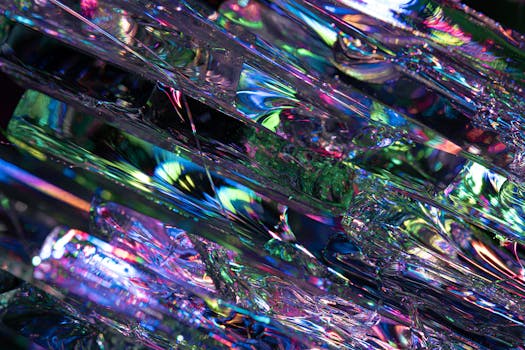
If you've seen bismuth online — and you probably have, because those iridescent, geometric rainbow chunks show up everywhere from science feeds to Etsy listings — you've been looking at something that's both more and less than what it appears to be. The rainbow colors are real. The geometric shapes are real. The crystal structure is real. But the hopper crystals you see in photographs, with their stair-stepped edges and impossibly perfect angles, are not natural. Not even close.
Here's what bismuth actually is, how it does that thing with the colors, and why calling it a "crystal" isn't quite right — or maybe is, depending on how pedantic you want to get.
Bismuth basics
Bismuth is element 83 on the periodic table. It's a heavy metal — literally heavy, with a density of 9.78 g/cm³, which puts it close to lead (11.34 g/cm³) but well below gold (19.32 g/cm³). It's brittle. If you hit a piece of bismuth with a hammer, it doesn't bend or flatten like copper or gold would — it cracks and shatters. This is unusual for a metal and has to do with bismuth's crystal structure, which is rhombohedral, meaning its atoms arrange themselves in a tilted cube pattern that doesn't allow the kind of easy sliding between atomic planes that makes most metals malleable.
Bismuth has been known since antiquity, though it wasn't always recognized as a distinct element. For centuries, it was confused with tin and lead because it occurs alongside them in ore deposits. It wasn't until 1753 that Claude François Geoffroy demonstrated that bismuth was its own element, separate from lead. The name likely comes from the German Wismut, which might derive from weiße Masse — "white mass" — referring to its silvery appearance when freshly cut.
Element 83 is the end of the line for stable elements. Bismuth has the highest atomic number of any element that isn't radioactive. Or at least, that was the accepted wisdom until 2003, when researchers in France discovered that bismuth-209 actually does undergo alpha decay, with a half-life of roughly 2 × 10¹⁹ years. That's about a billion times longer than the current age of the universe. So for all practical purposes, bismuth is stable. Your bismuth paperweight isn't going to irradiate you. But technically, strictly speaking, it's radioactive.
Why bismuth looks like a toy from another dimension
Those rainbow bismuth crystals you see everywhere are created in a lab or workshop, not found in nature. Here's the process, and it's something you can actually do at home with basic equipment.
Melt bismuth. The melting point is 271.5°C (520.7°F), which is low enough that you can melt it on a kitchen stove in a stainless steel pot — though you probably shouldn't, because the fumes aren't great and the pot will be ruined. As the molten bismuth cools, it crystallizes. And it crystallizes in a specific way that creates those distinctive geometric shapes called "hopper crystals."
Hopper crystals form when the edges of a growing crystal crystallize faster than the interior. The result is a structure that looks like a hollow cube or pyramid with stair-stepped internal terraces. Bismuth does this because the edges cool faster — they're exposed to the air on more surfaces, so heat escapes more quickly, and crystallization starts at the corners and edges and works inward. The interior stays liquid longer, and by the time it finally solidifies, the outer shell is already formed, leaving that characteristic stepped pattern.
The rainbow colors come from a thin layer of bismuth oxide that forms on the surface when the hot metal is exposed to air. This oxide layer is extremely thin — on the order of a few hundred nanometers — and it creates thin-film interference, the same phenomenon that makes soap bubbles and oil slicks shimmer with color. Different thicknesses of the oxide layer produce different colors. Thinner layers produce blues and yellows. Thicker layers shift toward greens, pinks, and purples. The colors change depending on the angle you view them from, which is why they seem to shift and dance as you turn the piece in your hand.
This oxide layer is fragile. You can wipe it off with a finger. Handle a bismuth crystal enough and the rainbow fades. Some people coat their bismuth specimens with clear lacquer or resin to preserve the colors. Others just keep them in a display case and don't touch them.
Natural bismuth doesn't look like that
In nature, bismuth rarely forms the rainbow hopper crystals that the internet loves. Natural bismuth typically occurs as dull, silvery-gray metallic masses mixed with other minerals in ore deposits. It's found in association with tin, lead, copper, silver, and cobalt ores. The most common bismuth mineral is bismuthinite (Bi₂S₃), a grayish-black sulfide. Native bismuth — pure metallic bismuth — does occur naturally, but it's usually in small, irregular pieces that don't have the hopper crystal structure or the oxide rainbow.
The reason is simple. In a natural geological setting, bismuth cools slowly, under pressure, surrounded by other minerals. It doesn't get the rapid, uneven cooling that creates hopper crystals. And the oxide layer that produces the rainbow colors doesn't develop the same way underground, where the metal is exposed to groundwater chemistry rather than dry air. The spectacular bismuth crystals you see in photos are laboratory products — beautiful, interesting, but not representative of how bismuth occurs in the earth.
This doesn't make them less real. The bismuth is real. The crystal structure is real. The oxide colors are real. But they're manufactured conditions producing a specific visual result. Think of it like a geode — the mineral inside formed naturally, but the fact that you're looking at a perfect hemispherical cross-section with amethyst crystals pointing inward is because someone cracked a rock open, not because nature intended that display.
What bismuth is actually used for
Rainbow crystals are a niche product. The vast majority of bismuth produced globally goes into industrial and medical applications, and most people interact with it without ever knowing.
The biggest single use is in pharmaceuticals. Bismuth subsalicylate — you know it as Pepto-Bismol — has been a household remedy since the early 20th century. Bismuth compounds are also used to treat Helicobacter pylori infections in combination with antibiotics. The mechanism isn't fully understood, but bismuth appears to disrupt the bacterial cell wall and reduce inflammation in the stomach lining. It's one of the oldest medicines still in regular use, and it works.
Bismuth is also used as a replacement for lead in several applications. Lead has obvious toxicity problems, and bismuth shares some of lead's useful properties — high density, low melting point — without being nearly as toxic. Bismuth is used in lead-free solders, fishing sinkers, shotgun pellets (steel shot damages shotgun barrels; bismuth shot doesn't), and as a nontoxic replacement for lead in wheel weights. The European Union has been pushing this transition for environmental reasons, and bismuth demand has increased accordingly.
In metallurgy, bismuth is added to low-carbon steel to improve machinability. It acts as a lubricant between the cutting tool and the steel, reducing tool wear and improving surface finish. This is a high-value application where small amounts of bismuth — typically less than 0.1% by weight — make a measurable difference in manufacturing efficiency.
More recently, bismuth has found use in catalysts for industrial chemical processes and as a component in certain types of superconductors. Bismuth strontium calcium copper oxide (BSCCO) is a high-temperature superconductor that operates at temperatures achievable with liquid nitrogen cooling, which makes it practical for applications like magnetic resonance imaging and power transmission.
Is bismuth safe?
Generally, yes. Bismuth is one of the least toxic heavy metals. You can hold it, handle it, and even ingest small amounts of bismuth compounds without ill effects — which is why it's been used in medicine for over a century. The body absorbs very little bismuth, and what it does absorb is excreted relatively quickly, primarily through the kidneys.
That said, "least toxic heavy metal" isn't the same as "harmless." Bismuth metal dust can be irritating to the respiratory tract if inhaled, and large doses of bismuth compounds can cause bismuthosis, a condition involving dark pigmentation of the gums and mucous membranes. This is rare and usually associated with long-term, high-dose medical use rather than casual handling of the metal. If you're melting bismuth at home, use ventilation. The fumes aren't as dangerous as lead or cadmium fumes, but breathing any metal fumes is a bad idea.
Buying bismuth crystals
The bismuth crystal market is straightforward, mostly. You're buying a manufactured mineral specimen. The quality depends on the skill of the person who melted and cooled it. Good hopper crystals have clean, well-defined edges, vivid rainbow colors with good coverage, and interesting geometric forms. Bad ones look lumpy, have patchy or dull colors, or show signs of being knocked around during the cooling process.
Price varies with size and quality. Small individual crystals (1 to 3 cm) are typically $10 to $30. Larger specimens and clusters can run $50 to $200. Unusually large or well-formed pieces command premium prices. There isn't really a "rare" bismuth crystal market in the way there is for natural minerals — the material itself is abundant and the manufacturing process is reproducible — but skill and aesthetics do matter.
One thing to watch for: some sellers market bismuth as a "healing crystal" with various metaphysical properties. Bismuth has no tradition of metaphysical use in any culture — these claims are modern inventions. Bismuth is a metal with interesting physical properties and a genuinely cool visual appearance. That's enough. Making up spiritual significance for it is unnecessary and, frankly, a bit embarrassing.
Bismuth is worth knowing about because it's one of those elements that's more interesting than its periodic table entry suggests. It's the heaviest stable-ish element. It makes rainbow colors through physics, not pigment. It replaces toxic lead in dozens of applications. And it looks like something from a science fiction movie, even though it's just a metal that oxidizes in thin layers. Sometimes that's enough.
Comments