Birthstone jewelry: is it worth buying or just a marketing gimmick
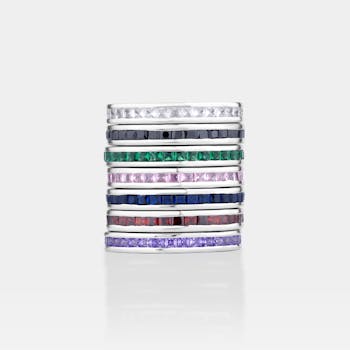
The birthstone list is not ancient
There is a widespread belief that birthstones come from some ancient tradition stretching back thousands of years. That is only half true. People have associated certain stones with months and zodiac signs since biblical times — the Book of Exodus describes Aaron's breastplate with twelve stones representing the twelve tribes of Israel. The idea has roots. But the specific list most people use today was not formalized until 1912, when the American National Association of Jewelers (now called the Jewelers of America) sat down and standardized it.
They picked the list for a reason, and that reason was sales. By giving every month a designated stone, jewelers created a built-in gift market. "What do I get someone for their birthday?" became easier to answer, and the answer conveniently involved buying jewelry. The National Association of Jewelers was a trade group, not a cultural preservation society. They were solving a business problem, not documenting a sacred tradition.
The list has been updated a few times since 1912. The American Gem Trade Association added tanzanite as an alternative for December in 2002, and spinel was added as an August option in 2016. These additions were driven by availability and market demand, not by any rediscovered ancient text. The commercial intent is right there in the timeline.
None of this means birthstone jewelry is bad or meaningless. But it does mean you should know what you are participating in when you buy it.
The full list, with honest price notes
Here is the commonly accepted birthstone list, along with what each stone actually costs. Prices vary by quality, cut, and source, but these are realistic ballpark ranges for jewelry-grade stones in 2025 and 2026.
January — Garnet: Deep red to reddish-brown. This is one of the most affordable birthstones. A decent garnet starts around $20 to $50 per carat. The dark red almandine variety is common and cheap. The bright orange spessartine garnets from Namibia can run $200 to $500 per carat, but no one expects January babies to buy those.
February — Amethyst: Purple quartz. Another budget-friendly option. Amethyst is abundant, especially from Brazil and Uruguay, and a nice one costs $15 to $40 per carat. The color range is wide — from pale lavender to deep purple that almost looks black in low light. Deeper saturated purple is more valued, but even the best amethyst is not expensive by gem standards.
March — Aquamarine: Light blue beryl. Mid-range pricing at $50 to $300 per carat for good color. The name literally means "seawater," and the best stones have that pale, icy blue-green color. Most aquamarine on the market is heat-treated to improve the color. Untreated stones with natural deep color are rare and expensive.
April — Diamond: Yes, really. April's birthstone is diamond. This is the reason April-born people tend to receive expensive birthday gifts — or no gemstone gift at all. A 1-carat diamond starts around $3,000 to $5,000 for a decent quality stone and goes up sharply from there. Many April babies simply ignore the birthstone thing entirely, which is a completely rational response.
May — Emerald: Green beryl with chromium or vanadium. Expensive and fragile. A good emerald runs $500 to $5,000+ per carat, and most are heavily included (meaning they have visible internal flaws). Inclusions are so common in emeralds that the trade has its own term — "jardin," French for garden, because the inclusions look like foliage. Emeralds are also softer than most gemstones and chip easily. They are beautiful but high-maintenance.
June — Pearl or Alexandrite: June gets two options, and they could not be more different. Pearls are accessible — a nice freshwater pearl strand runs $50 to $300. Alexandrite, on the other hand, is one of the rarest and most expensive gemstones on earth. A 1-carat alexandrite with decent color change starts around $5,000 and can hit six figures. Most "alexandrite" in affordable jewelry is actually lab-created synthetic corundum with a color-change coating. The real thing is collector territory.
July — Ruby: Red corundum. Rubies are expensive. A decent 1-carat ruby runs $1,000 to $10,000+ per carat depending on color and treatment. The most valued color is "pigeon blood red" — a pure red with a slight blue undertone. Most rubies are heat-treated, and untreated stones command massive premiums. Mozambique has become the main source since Myanmar (Burma) sanctions restricted that supply.
August — Peridot, Spinel, or Sardonyx: Peridot is the traditional choice — a yellowish-green gem that is surprisingly affordable at $20 to $100 per carat. Spinel was added as a modern alternative and comes in many colors, with red spinel being the most prized. Sardonyx, the third option, is a banded agate that is essentially free. You could probably find a piece of sardonyx in your driveway if you looked hard enough.
September — Sapphire: Blue corundum. Sapphires are expensive but not as extreme as rubies. A 1-carat blue sapphire runs $400 to $3,000 per carat. The best sapphires come from Kashmir, Sri Lanka, and Madagascar. Like rubies, most are heat-treated. Sapphires also come in every color except red (that would be a ruby), including yellow, pink, and the rare padparadscha — a pink-orange that is among the most expensive colored gems in the world.
October — Opal or Tourmaline: Two good options. Opals are mesmerizing but fragile — they contain 3 to 21 percent water and can crack if they dry out. Australian opals are the standard, with prices from $50 to thousands per carat depending on play-of-color intensity. Tourmaline is more durable and comes in an absurd range of colors. Pink tourmaline is the most popular for October jewelry, running $100 to $500 per carat.
November — Topaz or Citrine: Topaz comes in many colors, but November's traditional association is golden or imperial topaz. Blue topaz, which is extremely common in jewelry, is almost always colorless topaz that has been irradiated and heat-treated. Citrine is yellow quartz, affordable at $20 to $80 per carat, and often confused with topaz by people who do not know the difference.
December — Turquoise, Tanzanite, Zircon, or Lapis Lazuli: December has the most options. Turquoise is culturally significant in the American Southwest and relatively affordable at $5 to $50 per carat for good stones. Tanzanite is a blue-purple gem found only in Tanzania and runs $200 to $800 per carat. Blue zircon is brilliant and underappreciated at $50 to $200 per carat. Lapis lazuli is a rock, not a mineral, and has been used in jewelry for over 6,000 years. A good piece of lapis is $10 to $80 per carat.
The symbolism is mostly made up, and that is fine
Every birthstone comes with a list of symbolic meanings. Garnet supposedly represents friendship and trust. Amethyst is said to promote clarity. Diamond symbolizes eternal love. These associations come from a mix of medieval lapidaries, Victorian marketing, and modern New Age reinterpretation. None of them are based on anything scientific.
But "made up" does not mean "worthless." Money is made up. National borders are made up. The concept of a birthday celebration is made up. Human beings assign meaning to things, and that assigned meaning becomes real in its consequences. If wearing an amethyst pendant because it is your February birthstone makes you feel a connection to something larger than your daily routine, that feeling has value regardless of whether the stone "actually does" anything.
The problem arises when people treat birthstone symbolism as fact. "Garnet protects travelers" is not a medical claim with evidence behind it. It is a cultural story. Enjoy the story, but do not confuse it with a warranty.
Is birthstone jewelry worth buying?
Here is an honest breakdown by motivation.
For yourself: If you like the stone associated with your birth month, buy it. You do not need a justification beyond "I think it looks good." The birthstone connection is a convenient filter for choosing among thousands of available gemstones, and there is nothing wrong with using it that way. Just do not pay a premium because a piece is marketed as "birthstone jewelry." The same amethyst in the same setting costs the same whether you were born in February or not.
As a gift: This is where birthstone jewelry genuinely earns its keep. Choosing a gift is hard, especially for someone you know well enough to want to personalize but not well enough to know their exact taste in gemstones. "I got you your birthstone" is a thoughtful gesture that shows you paid attention. The recipient gets something personal, and you get a gift-giving decision that took thirty seconds instead of three hours. Everyone wins.
As an investment: Forget it. With rare exceptions (fine diamonds, untreated Kashmir sapphires, pigeon blood rubies), birthstone jewelry does not appreciate in value. The retail markup on jewelry is 100 to 300 percent. You are paying for craftsmanship, branding, and retail overhead, not for the intrinsic value of the stone. Buy birthstone jewelry because you want to wear it or give it, not because you think it will fund your retirement.
As a family tradition: This is the most compelling reason, honestly. A grandmother's emerald ring, a mother's pearl necklace passed down — these objects carry meaning that has nothing to do with their market value. If your family has a tradition of birthstone gifts, that tradition itself is the value. The stone is just the载体.
You are not locked in
Here is something the jewelry industry does not advertise: you can pick any stone as your birthstone. The 1912 list is not law. Some months already have multiple options. June has pearl and alexandrite. August has peridot, spinel, and sardonyx. December has four. If the industry cannot even agree on one stone per month, you certainly do not have to limit yourself to their suggestions.
Plenty of people adopt stones that are not on the official list. Someone born in March might prefer aquamarine, but there is nothing stopping them from claiming moonstone or blue lace agate as their own. The connection is personal, and personal connections do not require institutional approval.
The bottom line: birthstone jewelry is a commercial invention with genuine emotional value. It is not a scam, but it is not ancient wisdom either. It is a useful, pleasant convention that makes gift-giving easier and gives people a fun way to connect with gemstones. Take it for what it is, and you will get exactly what you paid for.

Comments