10 Best Crystals for Anxiety: An Honest Guide
Last winter was rough. Not in a dramatic, life-falling-apart way, but in that quiet, grinding way where you wake up at 3am with your heart racing for no reason and spend the whole day feeling like something terrible is about to happen even though nothing is.
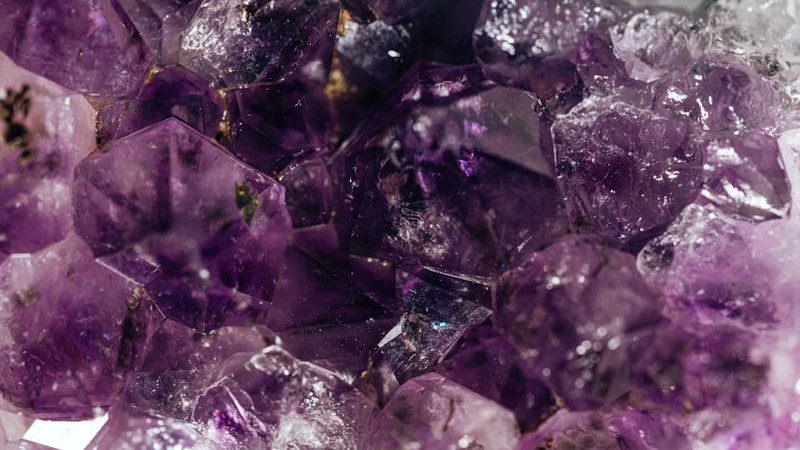
Then one evening, a friend handed me a small purple stone — roughly walnut-sized — and said, "Hold this. Take a deep breath." I looked at her like she'd lost her mind. A rock. For anxiety. Seriously?
But I was desperate enough to try anything, so I held it. And I breathed. Something shifted. Not cured — I'm not going to tell you a crystal fixed my mental health. But that moment of holding something cool and smooth and focusing on my breath instead of racing thoughts? That was the first time in weeks I'd felt slightly grounded.
That stone was amethyst. And it sent me down a rabbit hole I'm still in. Here's what I've learned — honestly, without the woo-woo filter and without dismissing it either.
Before We Get Into It
Crystals are not medicine. Not a substitute for therapy, medication, or professional mental health treatment. If you're dealing with severe anxiety or depression, please talk to a professional. What follows is based on traditional beliefs, personal experience, and the growing community of people who find comfort working with stones. Take what resonates and leave the rest.
10 Crystals People Swear By for Anxiety
1. Amethyst — The Classic Calming Stone
Amethyst is the one everybody knows, and for good reason. It's been associated with calm, clarity, and spiritual protection across cultures for thousands of years. People commonly keep it by their bed for restful sleep and warding off nightmares, and hold it during meditation to quiet mental chatter.
Interestingly, there's tangential science here: color psychology research suggests purple environments can have a mildly calming effect on the nervous system, possibly lowering heart rate and reducing stress responses. Whether that's what's happening with amethyst or something else, I can't say. But the stone feels good to hold, and that counts.
2. Black Tourmaline — The Grounding Anchor
Anxiety often feels like floating slightly above your own body — dissociated, untethered. Black tourmaline is associated with grounding, supposed to help you feel connected to the physical world. In crystal healing traditions, it absorbs negative energy and deflects it into the ground.
It's heavy, dense, and black — the physical weight in your hand is inherently stabilizing. I keep a piece on my desk and pick it up when that floaty, disconnected anxiety kicks in.
3. Blue Lace Agate — For the Tense Talker
If your anxiety shows up as social anxiety — fear of speaking, throat tension, feeling unable to express yourself — blue lace agate is the recommendation. Associated with the throat chakra and promoting calm, clear communication.
The stone itself is gorgeous: pale blue with delicate white banding that looks like lace. I've worn it as a pendant to presentations. I genuinely can't tell you if the stone helped or the placebo effect helped or if I just needed something to believe in. But I got through those presentations.
4. Rose Quartz — Self-Compassion in Stone Form
Here's something I've learned through therapy: a lot of anxiety is rooted in self-criticism. The voice that says you're not good enough, that everyone is judging you — that's a major anxiety driver. Rose quartz is associated with self-love, compassion, and emotional healing.
It's not about narcissism. It's about the radical idea that maybe you deserve the same kindness you extend to others. Carrying rose quartz is supposed to remind you to treat yourself gently. And choosing to carry a pink stone that symbolizes self-compassion is a small, deliberate act of self-care.
5. Lapis Lazuli — When Your Mind Won't Shut Up
Sometimes anxiety is mental chaos — racing thoughts, circular worrying, inability to focus. Lapis lazuli is known as a stone of the third eye, associated with mental clarity and organizing scattered thoughts.
It's deep blue with flecks of gold pyrite, prized since ancient Egypt. In crystal work, lapis is said to help identify the root of your anxiety rather than just managing symptoms. I find it useful during journaling — holding it while writing helps me focus on what's actually bothering me instead of spiraling into vague dread.
6. Sodalite — Logic Meets Intuition
Sodalite is lapis lazuli's quieter cousin — similar blue tones but subtler. It balances rational thinking with intuition, making it relevant for a specific anxiety type: overthinkers. If your anxiety comes from analyzing every outcome and getting trapped in "what if" loops, sodalite is worth exploring.
7. Tiger Eye — Grounded Courage
Anxiety and fear are close cousins. Underneath anxiety is often fear of failure, judgment, or the unknown. Tiger eye is associated with courage and confidence. It has warm, chatoyant bands of golden brown that seem to move as you turn the stone — genuinely mesmerizing and probably helps anxiety just by giving you something to focus on.
I reach for tiger eye when anxiety is paralyzing — when I know I need to act but fear is keeping me frozen. It's supposed to provide a gentle push of "you can handle this."
8. Fluorite — The Focus Stone
Called the "genius stone," fluorite is associated with mental clarity, concentration, and absorbing negative energy. It comes in stunning colors — green, purple, blue, often banded — and each shade has slightly different properties.
For anxiety, fluorite is useful when stress is work- or study-related. If you're anxious about deadlines or exams, its reputation for improving focus while calming the mind makes it practical. I keep a green fluorite cube on my desk and fidget with it during long work sessions.
9. Aquamarine — The Ocean's Calm
The name comes from Latin for "water of the sea." Aquamarine is a stone of courage and tranquility — sailors carried it as a protective talisman for centuries. For anxiety, it's supposed to have a gentle, soothing energy that doesn't force calm but invites it, like wading into still water.
People who meditate with aquamarine describe a sense of spaciousness, as if the stone creates room around their anxiety. I find it particularly useful during meditation, helping me settle into practice faster.
10. Smoky Quartz — The Energetic Sponge
Smoky quartz is grounding, similar to black tourmaline but different in quality. While tourmaline acts as a shield, smoky quartz is more like a sponge — absorbing and transmuting negative energy. The smoky brown-to-black color comes from natural irradiation within the earth, which is kind of poetic.
I've found smoky quartz to be the most immediately grounding stone I own. During meditation, holding a piece makes me feel anchored — like my feet are actually touching the floor for the first time all day. If you try one stone from this list and your anxiety leans toward the floaty type, this might be it.
How to Actually Use These Stones
Carry a Pocket Stone
Choose one or two that resonate and keep them in your pocket. Reaching for a smooth, cool stone when anxiety rises redirects from spiraling thoughts to physical sensation. Some call this a "worry stone" practice, and it's been around across cultures for centuries.
Create a Small Ritual
When anxiety hits: take out your stone, hold it in both hands, close your eyes, and take ten slow breaths. Takes about ninety seconds. The stone isn't doing anything magical — or maybe it is — but the combination of tactile sensation, intentional breathing, and a brief pause creates a circuit breaker for the anxiety spiral.
Keep Them Close While You Sleep
Place calming crystals — amethyst, rose quartz, howlite — under your pillow or on your nightstand. Having something associated with calm nearby can make falling asleep feel less threatening. Just make sure it's smooth and won't jab you at 3am.
Meditate With Them
Holding a crystal during meditation gives your hands something to do and serves as a focal point. Some place crystals on body parts corresponding to chakras, but even just holding one and focusing on its weight and texture is a valid approach.
Crystal Grids
Arranging multiple stones in geometric patterns with a specific intention. A common anxiety layout places a large central stone (like an amethyst cluster) surrounded by smaller calming stones in a circle. The process of arranging them is meditative in its own right.
Crystal Combinations for Specific Anxiety Types
Anxiety that disrupts sleep: Amethyst + howlite. Amethyst for calm, howlite specifically for quieting an overactive mind at bedtime.
Social anxiety: Blue lace agate + rose quartz. One for confident communication, one for self-compassion. Together they address both the external expression and internal landscape of social fear.
Work and performance stress: Fluorite + black tourmaline. Focus and mental clarity plus absorbing ambient stress from demanding environments.
Generalized, free-floating anxiety: Amethyst + smoky quartz + rose quartz. Calming, grounding, and self-compassion all at once — the anxiety starter pack.
Being Honest About What's Actually Happening
There's a lot of crystal content that makes it sound like holding the right stone will rewire your brain chemistry. It won't. There's no credible scientific evidence for that.
Here's what I think might actually be happening: when you hold a smooth, cool stone and take a deep breath, you're practicing mindfulness. Redirecting attention from abstract worries to physical sensation. Creating a deliberate pause in anxious thinking. These are all things therapists recommend — they just usually suggest it without the stone.
But the stone adds something. Maybe the weight in your hand. Maybe the ritual of choosing it, carrying it, reaching for it. Maybe the symbolic meaning — this purple one means calm, this black one means protection. Maybe it's the placebo effect, which is real and powerful regardless of what skeptics say. Or maybe there's something about crystals we don't fully understand yet.
What I know for sure: since I started working with crystals, I have more tools for managing anxiety. Not instead of therapy and medication — in addition to them. A smooth piece of amethyst in my pocket doesn't replace my coping strategies. It reminds me to use them.
And sometimes, on the really bad days, just holding something beautiful and breathing is enough. Not a cure. Not a fix. But enough to get through the next hour. And sometimes an hour is all you need.
Comments