Azurite-Malachite: The Stone of Two Colors and What Makes It Special
A Stone That Couldn't Make Up Its Mind
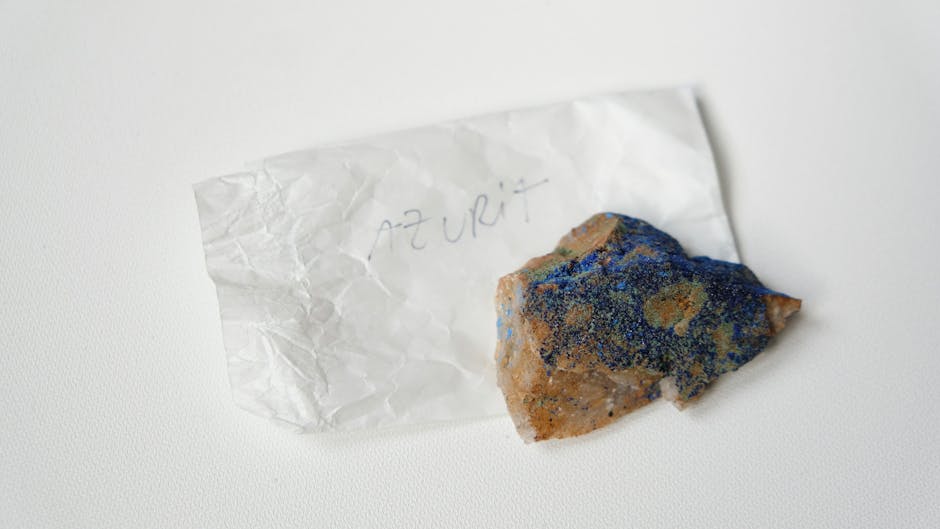
Azurite-malachite is one of those stones that makes you do a double take. You see a piece with deep, electric blue and vivid green swirled together, and your brain has a moment of "wait, what am I looking at?" It looks like someone took two completely different gemstones and merged them into one. And in a sense, that's exactly what happened, though the merging was done by nature, not by a jeweler.
Azurite and malachite are both secondary copper minerals, meaning they form when copper deposits interact with water, oxygen, and carbon dioxide over long periods. They often form in the same deposits, and it's common to find them intergrown, layered, or mixed together. When the two minerals occur together in a single piece that's suitable for cutting and polishing, it's sold as azurite-malachite.
The Chemistry Behind the Colors
Azurite and malachite are essentially copper carbonates, but with different amounts of water in their crystal structure. Azurite is copper carbonate, Cu3(CO3)2(OH)2, and malachite is copper carbonate hydroxide, Cu2CO3(OH)2. The subtle difference in chemical formula results in dramatically different colors: azurite is a deep, intense blue, while malachite is a bright, banded green.
The relationship between the two is so close that azurite actually weathers into malachite over time. When azurite is exposed to moisture and air over geological timescales, it gradually converts to malachite. This means that finding azurite-malachite together is like catching a chemical reaction in progress. You're looking at a snapshot of azurite in the process of transforming into malachite.
In some specimens, you can see the transition clearly: bright blue azurite surrounded by green malachite, with zones of mixed blue-green where the conversion is happening. In other pieces, the two minerals are finely intergrown in patterns that create a marbled effect. The exact appearance depends on the specific geological conditions at the location where the piece formed.
Where Does Azurite-Malachite Come From?
The most famous source of high-quality azurite-malachite is the Democratic Republic of Congo, specifically the Katanga province. The copper deposits in this region produce some of the most vividly colored azurite and malachite in the world. Congolese azurite-malachite often has striking contrast between the deep blue azurite and bright green malachite, making it highly sought after by collectors and jewelers.
Morocco is another significant source, particularly from the Touissit and Oujda mining regions. Moroccan material tends to have well-defined layers of blue and green, sometimes in alternating bands that create a striped effect. The quality varies, but the best Moroccan pieces are excellent for both display and jewelry use.
Arizona in the United States has produced azurite-malachite from its copper mining districts, particularly Bisbee and Morenci. American collectors prize Bisbee material for its rich colors, though high-quality specimens from this source are increasingly hard to find as the mines have largely closed or shifted to lower-grade ore.
Other sources include Australia, Namibia, France, and Russia. Each location produces material with slightly different characteristics in terms of color intensity, banding patterns, and overall quality. Serious collectors often seek specimens from specific locations to represent different geological formations.
Azurite-Malachite in History
Both azurite and malachite have been used by humans for thousands of years, though not always together. Azurite was ground into blue pigment for paint, particularly during the Middle Ages and Renaissance. Before synthetic ultramarine became widely available, azurite pigment was one of the few sources of blue available to painters. It was used in illuminated manuscripts, panel paintings, and frescoes throughout Europe.
Malachite has an even longer history of human use. Ancient Egyptians used it as a pigment for eye makeup and in ornamental objects. The Russians famously used malachite for decorative purposes, particularly during the 19th century when entire rooms, columns, and vases were made from massive malachite slabs. The Malachite Room in the Winter Palace in Saint Petersburg is one of the most famous examples.
The combined azurite-malachite material has been used in jewelry and decorative objects for centuries, particularly in pieces where the dramatic color contrast could be shown to advantage. Inlay work, cabochons, and carved pieces are traditional forms that take advantage of the natural patterns in the stone.
Working With Azurite-Malachite
Here's the thing about azurite-malachite that surprises a lot of people: azurite is quite soft. On the Mohs hardness scale, azurite rates 3.5 to 4, and malachite is 3.5 to 4 as well. This puts both minerals on the softer end of the gemstone scale, comparable to materials like calcite and fluorite. They're softer than pearls and significantly softer than most metals used in jewelry.
This softness means azurite-malachite requires careful handling and specific jewelry applications. It's not suitable for rings that will take daily wear, as the stone will scratch and abrade quickly. Pendants, earrings, brooches, and necklace centerpieces are much better choices because they're less exposed to contact with hard surfaces.
Cutting azurite-malachite requires skill because the two minerals have slightly different hardnesses and can polish at different rates. A skilled lapidary can bring both the azurite and malachite to a good polish simultaneously, but it takes patience and the right polishing compounds. Some cutters stabilize the material with resin before cutting to improve durability, which is a common and acceptable practice for this soft stone.
The blue azurite in azurite-malachite is sensitive to light and heat. Prolonged exposure to bright light can cause the azurite to darken or even begin converting to malachite. Over very long periods, the azurite content in a piece can actually decrease as it slowly transforms. This is a natural process and not a defect, but it means that azurite-malachite pieces are best stored away from direct sunlight and heat sources.
Traditional Associations and Symbolism
In crystal traditions, azurite-malachite is often associated with the idea of transformation and balance. The combination of blue and green is seen as representing a bridge between different states: between thought and emotion, between stillness and change, between the old self and the new self. The fact that azurite naturally converts to malachite over time adds a layer of meaning related to gradual transformation.
Azurite on its own has traditionally been associated with insight and mental clarity in various cultural traditions, partly because of its deep, intense blue color. Malachite has been associated with protection and emotional balance. When the two occur together, some practitioners see the combination as particularly powerful for periods of personal transition or change.
These are cultural and symbolic interpretations, not scientific claims. The geological reality of azurite converting to malachite is fascinating on its own terms, and the visual impact of the two colors together is striking regardless of any symbolic meaning you might assign to it.
Buying Tips: How to Spot Quality
Color contrast is the most important factor. The best azurite-malachite pieces have vivid, saturated blue azurite and bright, clear green malachite. The contrast between the two colors should be sharp and clear, not muddy or blended into an indeterminate blue-green. If the colors look washed out or the stone appears mostly one color with just a hint of the other, it's lower quality material.
Pattern matters too. Some people prefer bold, dramatic bands of blue and green, while others like fine, intricate marbling where the two minerals are closely intergrown. Neither pattern is inherently better; it's a matter of personal preference. But the pattern should be interesting and visually appealing, not chaotic or dull.
Check for stability. Azurite-malachite is sometimes stabilized with resin or epoxy to improve durability. This isn't necessarily a problem, especially for jewelry use, but it should be disclosed. If you're buying a piece for display rather than wear, you might prefer natural, untreated material. Stabilized pieces are usually heavier than untreated pieces of the same size because of the added resin.
Be aware of imitations. Reconstituted azurite-malachite, made from powdered stone mixed with resin and pressed into blocks, is common in the market. It's recognizable by its overly uniform appearance and lack of natural variation. Genuine azurite-malachite has irregular patterns, color variations, and slight imperfections that reconstituted material doesn't replicate convincingly. Dyed howlite or magnesite are also sometimes sold as azurite-malachite, but the colors tend to be too uniform and the patterns too regular.
Care and Maintenance
Azurite-malachite is soft, porous, and light-sensitive. It needs more care than most jewelry stones. Clean it only with warm water and a very soft cloth. No ultrasonic cleaners, no steam, no chemical cleaners. Even mild dish soap can be too harsh for some specimens. A damp cloth is usually sufficient.
Store azurite-malachite in a cool, dark place, wrapped in a soft cloth or in a padded box. Avoid prolonged exposure to sunlight, especially for pieces with significant azurite content. The blue color will fade with extended light exposure, and this process is irreversible.
Keep it away from acids, including common household items like vinegar, lemon juice, and some cleaning products. Both azurite and malachite react with acids, which can damage the surface and alter the colors. Perfumes, hairsprays, and lotions should be applied before putting on azurite-malachite jewelry, not after.
Because of its softness, azurite-malachite will show wear over time if worn regularly. This is normal and not a defect. Some people actually like the way the stone develops a soft patina with age, similar to how turquoise changes over years of wear. If you prefer a pristine appearance, reserve azurite-malachite pieces for special occasions rather than daily wear.
Is It Worth Adding to Your Collection?
Azurite-malachite isn't the most practical jewelry stone. It's soft, sensitive, and requires careful handling. But from a purely aesthetic standpoint, few natural materials can match its visual impact. That deep blue next to bright green, swirled together in patterns that look almost too vivid to be natural, is genuinely eye-catching.
For collectors, azurite-malachite offers the added interest of a stone that's literally in the process of changing. Owning a piece means owning a snapshot of a geological transformation that's been happening for millions of years. That's a pretty cool thing to have on your shelf or around your neck, even if you never think about the chemistry behind it.
For jewelry lovers, azurite-malachite works best as a statement piece rather than everyday wear. A pendant or a pair of earrings in a bold, artistic setting can showcase the stone's colors beautifully while protecting it from the wear and tear that would damage a ring or bracelet. Pair it with silver for a cool, contemporary look, or with warm gold tones for a more earthy, bohemian feel.
It's not a stone for everyone, and it's certainly not a stone for every occasion. But if you appreciate natural beauty, geological curiosity, and colors that make people stop and look twice, azurite-malachite is worth knowing about.
Comments