Apatite: the stone that confuses gemologists
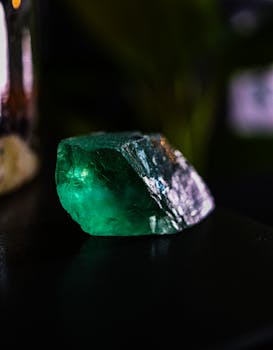
The name gives it away. Apatite comes from the Greek word apate, which means "deception." The person who named it back in 1786 was not being subtle. Abraham Gottlob Werner, a German geologist, picked that name because apatite has an annoying habit of looking like other, more valuable minerals. Over two hundred years later, gemologists are still getting fooled by it.
What apatite actually is
Apatite is not a single mineral. It's a group of phosphate minerals with the same basic crystal structure but different chemical mixes. The formula gets complicated, Ca5(PO4)3(F,Cl,OH), but the practical takeaway is simple: apatite is the mineral group that makes up your teeth and bones. Hydroxylapatite, a specific variety, accounts for about 60-70% of human tooth enamel. So when you brush your teeth, you are literally dealing with apatite.
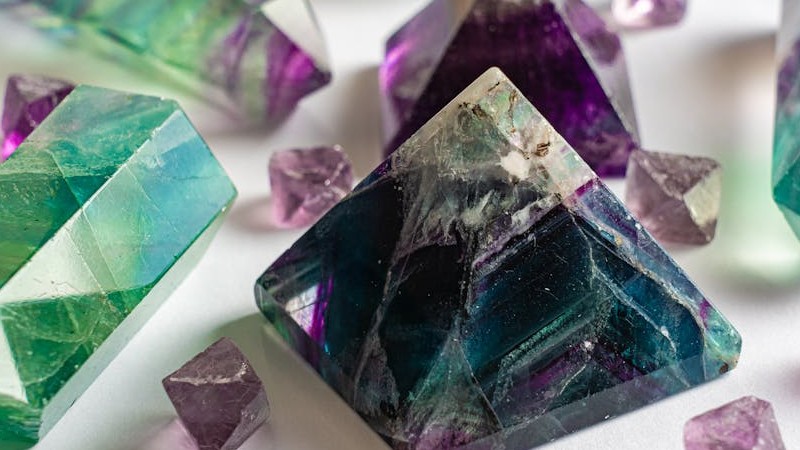
In the gem world, the two colors you see most are blue and green. Neon blue-green apatite from Brazil is probably the most commercially popular variety. Green apatite turns up frequently too, often looking enough like tourmaline or peridot to cause real confusion at gem shows. Yellow, purple, and colorless varieties exist but they're less common. The yellow material from Mexico can be quite attractive, with a warm honey tone that some collectors prefer over the blues. Purple apatite from the Mount Apatite district in Maine is a collector's oddity, rarely seen outside American mineral shows.
Apatite in industry (yes, really)
Before apatite was a gemstone curiosity, it was an industrial mineral. Most of the apatite mined worldwide goes into phosphate fertilizer. The connection between apatite and agriculture is direct: phosphate rock, which is predominantly apatite, is the primary source of phosphorus for global fertilizer production. About 90% of all mined apatite ends up in fertilizer, not jewelry cases. China, Morocco, and the United States are the largest producers by volume, though most of this material is not gem quality.
There is also a small but real market for apatite as a feed supplement for livestock. Monocalcium phosphate and dicalcium phosphate, both derived from apatite, are added to animal feed to provide essential phosphorus and calcium. The mineral that sits in a collector's display case and the mineral mixed into cattle feed are chemically the same thing.
How to tell apatite from its lookalikes
The confusion between apatite and other stones is not theoretical. It happens regularly at gem shows, in online marketplaces, and occasionally in jewelry stores. Here is a quick reference for the most common mix-ups:
Blue apatite versus aquamarine: the easiest test is hardness. Quartz (hardness 7) scratches apatite but not aquamarine. If you have a quartz point or a hardness testing kit, you can tell in seconds. Visually, aquamarine tends to be paler and more pastel, while blue apatite leans toward a deeper, more saturated blue-green. But color alone is unreliable. Always test.
Green apatite versus tourmaline: green tourmaline is significantly harder (7-7.5) and has stronger pleochroism, meaning it shows different colors from different angles when you rotate it. Apatite's pleochroism is weak by comparison. Green apatite also tends to have more visible inclusions than tourmaline of similar quality.
Blue apatite versus Paraiba tourmaline: this is the most dangerous mix-up because the price gap is staggering. Fine Paraiba tourmaline sells for thousands of dollars per carat. Blue apatite that looks superficially similar might cost $30. If someone offers you a "Paraiba" at an unusually low price, test the hardness before paying. Reputable dealers will not mind you checking.
The hardness problem
Brazil produces the most commercially significant apatite, especially the neon blue-green material from Minas Gerais. The color is genuinely striking. Electric, saturated, the kind of blue-green that makes you look twice. Mexican apatite tends toward yellow-green. Madagascar has produced some decent material too, including the rare purple variety.
Burma (Myanmar) yields blue apatite that some dealers consider the finest available, though Burmese stones come with the usual transparency and sourcing questions. Canada and Russia produce apatite too, but mostly in industrial quantities rather than gem grade. The scale tilts heavily toward Brazil. Probably 60-70% of gem-quality apatite on the market originates there.
One interesting side note: apatite from the Durango district in Mexico has become more visible in the market over the past decade. The Mexican material tends toward yellow and yellow-green, and while it does not match the neon intensity of the Brazilian blue-green stones, the best pieces have a warm, almost amber quality that appeals to collectors who want something different from the standard blue. Prices for Mexican apatite are generally lower than Brazilian material of comparable size, which makes it a good entry point for new collectors.
Blue apatite meaning and cultural associations
Crystal enthusiasts often connect blue apatite with communication and self-expression. The reasoning is mostly visual. The blue color evokes the throat chakra in traditional systems. Many people find the stone calming to look at, and some keep a piece on their desk while working. These associations are cultural and personal, not scientific. Apatite does not emit any measurable energy field.
Green apatite, by contrast, is traditionally associated with growth and abundance, again largely because of its color. These folk associations exist across dozens of cultures and crystal traditions, and they predate any modern understanding of mineralogy by centuries.
Yellow apatite sometimes gets linked to creativity and intellectual pursuits. Purple apatite, being the rarest color, attracts its own set of associations around uniqueness and spiritual insight. None of these connections have empirical support, but they are part of how people interact with the stone, and that cultural layer matters to many collectors even if the science does not back it up.
Famous apatite specimens
The world's largest cut apatite weighs in at around 147 carats and is housed in a private collection. The Smithsonian Institution in Washington, D.C. holds several notable apatite specimens, including a deep blue gem from Myanmar that weighs over 30 carats. These are exceptions. Most gem-quality apatite on the market weighs under 5 carats, and stones above 10 carats are genuinely uncommon.
Apatite crystals from the Panasqueira mine in Portugal are famous among mineral collectors for their sharp, well-formed hexagonal prisms. These are not gem material, but they are some of the finest mineral specimens of any apatite variety. A good Panasqueira apatite crystal, with its glassy luster and perfect terminations, can sell for hundreds of dollars to serious collectors even though it would never be cut into a gem.
Is apatite worth collecting?
Honestly, for most people, no. Not as an investment. Apatite does not hold value the way sapphire, emerald, or even tourmaline does. Fine specimens can be beautiful, but the market is thin. You would have trouble selling even a spectacular blue apatite for what you paid for it a few years later. There are simply too few serious apatite buyers to create the kind of demand that drives price appreciation.
That said, the stone has genuine appeal for what it is. A well-cut neon blue apatite is stunning in a way that photos barely capture. The color saturation is unusual among natural stones at that price point. If you treat apatite as a colorful, affordable mineral specimen rather than a fine gem investment, it delivers a lot of visual bang for the buck.
The main thing is knowing what you are getting. If a dealer is selling "aquamarine" at an unusually low price, ask to test the hardness. A simple scratch test with quartz (hardness 7) will tell you immediately. Quartz scratches apatite but not aquamarine. It takes about ten seconds and could save you from an expensive mistake.
Caring for apatite
Store apatite separately from harder stones. A piece of quartz rolling around in the same bag will scratch it. Clean with warm soapy water and a soft brush. No ultrasonic cleaners, no steam, no chemicals. Avoid sudden temperature changes. The stone is not particularly heat-sensitive, but thermal shock can cause fractures in any mineral with internal inclusions, and apatite commonly has those.
Apatite jewelry is best kept for occasional wear. Earrings and pendants are safer choices than rings or bracelets because they encounter fewer impacts. If you do set apatite in a ring, use a protective setting, a bezel or deep halo, and take it off before doing anything with your hands.
One advantage of apatite's low price point: if it does get damaged, replacing the stone is not a financial crisis. A 3-carat blue apatite cabochon costs about the same as a decent dinner for two. Compare that to chipping a sapphire or emerald of similar size, where replacement would run into hundreds or thousands of dollars. For some collectors, that affordability is part of the appeal. Apatite is a stone you can enjoy without anxiety.
The bottom line
Apatite is a genuinely interesting mineral with a name that perfectly describes its worst habit. It looks better than its price suggests, breaks easier than you would want, and fools more people than it probably should. As a collector's curiosity, it has real charm. As a serious gemstone, it falls short on durability and market value. Know the difference, and you can enjoy the stone for what it actually is: a pretty, affordable phosphate with a great backstory and a color that punches above its weight class.
Comments