Anklets in Different Cultures: From Indian Brides to Surfer Beach Towns
Anklets in different cultures: from Indian brides to surfer beach towns
Meta description: Anklets carry different meanings depending on where you are in the world. In India they signal marriage, in the Middle East they carry centuries of tradition, and in surf towns they are just summer style.
The Indian tradition of payal
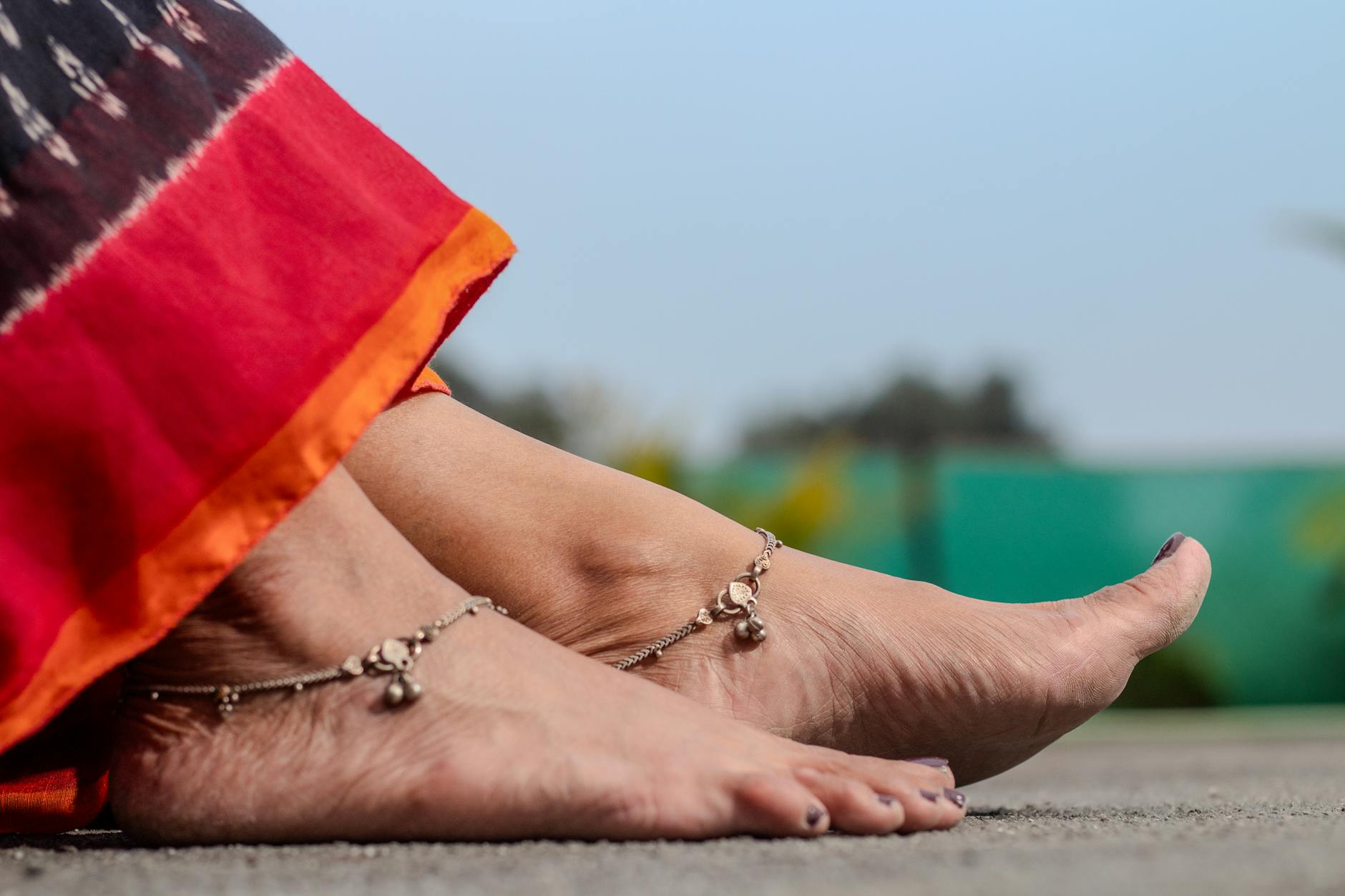
In India, the anklet is called a payal (or pajeb in some regions), and it carries significant cultural weight. For married Hindu women, wearing silver anklets is a visible marker of marital status, similar in social function to a wedding ring in Western cultures. The tradition varies by region, but it is widespread across northern and southern India.
The payal is typically made of silver rather than gold. There are both practical and spiritual reasons for this. Silver is believed to have cooling properties in Ayurvedic medicine, which is relevant in a hot climate. Gold, on the other hand, is considered a metal of the gods in Hindu tradition and is generally reserved for upper-body jewelry. Some communities do make gold anklets for very wealthy families, but silver is the norm.
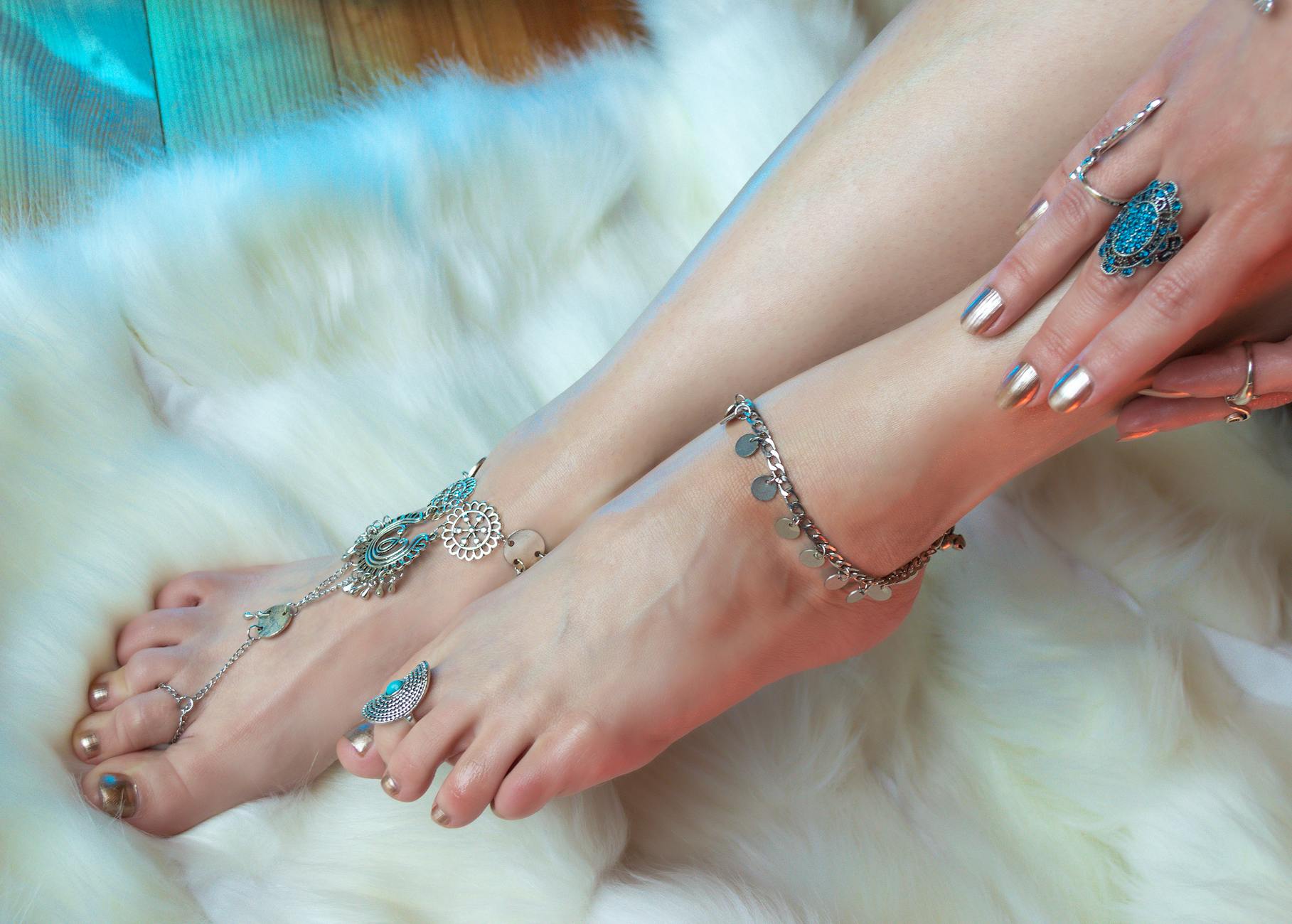
Indian brides often receive ornate payal as part of their wedding trousseau. These are not subtle pieces. They can be wide, heavy, and decorated with bells, filigree work, and small dangling elements. The bells serve a dual purpose: they make a soft jingling sound as the woman walks, which is considered aesthetically pleasing, and in some traditions, the sound lets the household know that the wife is moving about.
I have watched a few Indian wedding videos just to see the jewelry, and the ankle pieces are often the most elaborate part of the ensemble. They can weigh several ounces each, and the craftsmanship on the better ones is genuinely impressive. The level of detail in the filigree and enamel work puts most Western costume jewelry to shame.
Anklets across the Middle East and North Africa
Anklets have a long presence in the Middle East and North Africa as well. In Egypt, they were worn by women across social classes during the Pharaonic period, and archaeological finds include both simple hoop anklets and more elaborate gold pieces inlaid with semi-precious stones.
In Bedouin and rural communities, silver anklets with coins or charms attached have been common for generations. The coins sometimes carry personal or family significance. Women might add coins from significant years, gifts from family members, or pieces that mark important life events. Over time, an anklet can become a kind of wearable record of a woman's history.
In some Gulf countries, heavy gold anklets were historically a form of portable wealth. A woman's jewelry collection, including ankle pieces, represented her financial security. This is less common now with modern banking, but the cultural association between jewelry and financial independence persists in older communities.
The Ottoman influence is visible in Turkish anklet traditions as well. Ottoman women wore ankle bracelets called "halhal" (related to the Arabic word for anklet), which were often wide bands of silver or gold. These were more structured than the thin chains common in Indian styles and could be quite heavy.
[IMG: a collection of traditional Middle Eastern silver anklets with attached coins and small charms laid out on dark fabric]
How anklets became Western fashion
The anklet's journey from cultural tradition to mainstream Western fashion is a bit tangled. In the United States and Europe, ankle bracelets started appearing regularly in the 1960s and 1970s, driven partly by the bohemian and hippie movements. Young women traveling through India, North Africa, and Southeast Asia came back with ankle chains and incorporated them into their everyday style.
Surf and beach culture picked up the trend early. Thin chain anklets with small shell, shark tooth, or starfish pendants became almost uniform in beach communities from California to Australia. The look was casual, natural, and fit the barefoot-in-the-sand aesthetic perfectly. I grew up near the coast and I remember that by the late 1990s, an anklet was basically part of the standard summer uniform for women at the beach, right alongside flip-flops and sunscreen.
The 1990s and early 2000s saw a more formal version of the anklet trend, with fine gold and silver chains worn with dresses and heels. Celebrities wore them on red carpets, and jewelry designers started including anklets in their seasonal collections. The pendulum has swung back toward casual in recent years, with layered and beaded anklets being more popular than delicate chains.
One thing that interests me is how the meaning shifts depending on context. In India, an anklet can communicate marital status and family identity. On a beach in California, it communicates that you like the ocean. The same basic object, completely different signals.
[IMG: a woman's feet in sandals on a boardwalk, wearing a layered beaded anklet in earth tones]
Common materials and styles
Anklets come in a wider range of materials than most people realize. Here are the main categories worth knowing about:
Precious metals like sterling silver and solid gold are the most durable options for everyday wear. Silver is more affordable and has a cooler, brighter look that works well with casual outfits. Gold is warmer and more versatile for dressing up. Gold-plated silver or brass offers the gold look at a lower price point, but the plating will wear off over time, especially on something that sits near the ground and gets more abrasion.
Beaded anklets made with natural stones, wood beads, or glass beads are popular in bohemian and casual styles. They are comfortable, lightweight, and you can mix materials easily. The tradeoff is durability. Stretch cord breaks, and individual beads can crack or chip if they catch on something. I have broken more than a few beaded anklets by catching them on furniture edges or door frames.
Leather and cord anklets have a more rugged, casual feel. They work well with the surf and festival aesthetic but are not ideal for wet environments since leather degrades with repeated water exposure. Hemp and waxed cotton are alternatives that handle moisture better.
For adjustable sizing, most chain anklets use a small extension chain with a lobster clasp. Beaded anklets often use stretch cord. The chain style is more secure and allows for finer size adjustment, which matters because ankle sizes vary more than wrist sizes.
[IMG: a flat-lay arrangement showing four different anklet styles: thin gold chain, beaded natural stone, leather cord with charm, and wide silver cuff]
A few things to consider before wearing one
Anklets sit in a high-wear zone. They are close to the ground, they rub against shoes, and they get exposed to sand, water, and whatever else you walk through during the day. This means that material choice matters more for anklets than for necklaces or earrings.
If you are going to wear an anklet regularly, sterling silver or solid gold will hold up the best. Plated pieces will start to show wear within a few months of daily use, especially in warm weather when perspiration accelerates the process. That is not a knock on plated jewelry, just a realistic expectation.
The right fit matters too. An anklet should sit loosely enough to move freely but not so loose that it catches on things. A good rule of thumb is about half an inch to an inch of slack. If it slides down over your heel, it is too loose. If it leaves a mark on your skin, it is too tight.
For formal occasions, a thin chain in silver or gold is the safest bet. Save the beaded and leather pieces for casual settings. And if you are traveling to India or parts of the Middle East, it is worth knowing that wearing an anklet can carry cultural meanings that you might not intend to signal. Not a reason to avoid wearing one, just something to be aware of.
Comments