<h2>Amethyst vs Citrine: Which Is Right for You?</h2>
The chemistry: same mineral, different origin stories
Both amethyst and citrine are silicon dioxide. They form in the same geological environments — volcanic vesicles, hydrothermal veins, and geodes. Their crystal structure is identical. The only difference is trace impurities and how those impurities were treated by nature (or by humans) after the crystal formed.
Amethyst gets its purple color from iron ions (Fe³⁺) trapped in the crystal lattice during formation. When natural irradiation from nearby radioactive minerals in the earth interacts with those iron ions, it produces the violet-to-purple hues that amethyst is known for. The exact shade depends on the iron concentration and the type of irradiation. More iron plus more irradiation creates darker, deeper purple. Less of either produces the pale lavender tones.
Natural citrine is rarer than most people realize. It gets its yellow-to-amber color from a different iron-related process. In natural citrine, the iron ions exist in a different oxidation state (Fe³⁺ arranged differently within the lattice) and have been exposed to heat within the earth — typically from nearby volcanic activity or deep geothermal gradients — over millions of years. This slow, natural heating transforms what would have been amethyst into citrine.
The key distinction is timing and temperature. Amethyst kept cool retains its purple. Amethyst heated above roughly 400–500°C (750–930°F) turns yellow, orange, or brown. Nature does this slowly underground. Humans do it quickly in kilns. The result looks similar, but the origin is very different.
The uncomfortable truth about most citrine on the market
Here's something most jewelry stores won't volunteer: the majority of citrine sold today is heat-treated amethyst. Estimates from gemologists range from 80% to 95% of all citrine on the market. The heat treatment is permanent and stable — the color won't fade or revert — and the resulting stone is still quartz, still structurally identical to natural citrine. But it's not "natural citrine" in the geological sense.
Why does this matter? Price, mostly. Natural citrine from well-known deposits (particularly the Anahí mine in Bolivia, which produces the prized ametrine — a bicolored stone with zones of both amethyst and citrine in a single crystal) commands significantly higher prices than heat-treated material. A natural citrine of good color and clarity might sell for three to ten times the price of a comparable heat-treated stone.
Heat-treated citrine is not fake or synthetic. The stone is real quartz from the earth, and the treatment is a simple application of heat that mimics what would happen underground over geological time. Most gemological organizations, including the GIA (Gemological Institute of America), consider heat treatment of quartz a standard and acceptable practice that should be disclosed but doesn't require special labeling the way dyed or irradiated stones do.
Still, if you're paying premium prices for "natural citrine," you should ask the seller directly whether the stone is naturally colored or heat-treated. A reputable dealer will tell you honestly.
How to tell them apart
Color clues
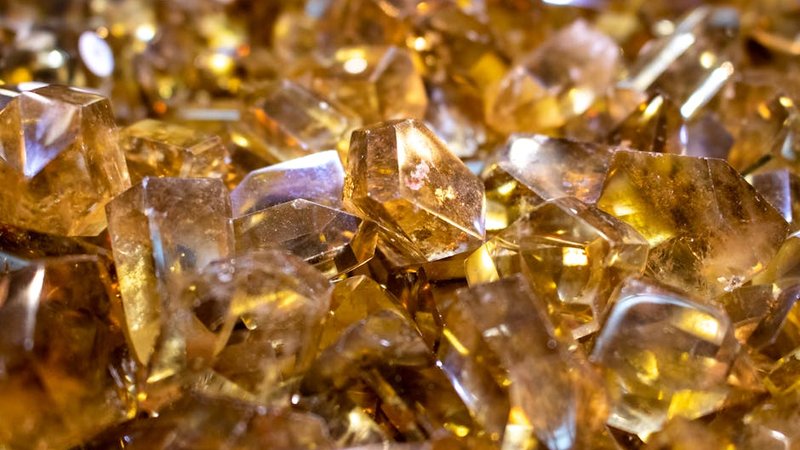
Natural citrine tends to have a pale yellow to golden color with relatively low saturation. It often looks like pale honey or light champagne. Heat-treated citrine, by contrast, tends toward deeper oranges, reddish-browns, and amber tones. The dark orange-to-red "Madeira" citrine you see in a lot of commercial jewelry is almost always heat-treated.
There's an overlap zone — some natural citrine can be fairly deep amber, and some heat-treated material can be pale — so color alone isn't definitive. But as a general rule: if it's vivid orange or has reddish undertones, it's probably heated. If it's pale yellow with a slightly smoky quality, it's more likely natural.
Amethyst is straightforward to identify by color, but be aware that very light amethyst (sometimes called "pink amethyst" in marketing) can look similar to pale citrine under certain lighting. The giveaway is undertone: amethyst reads as purple or violet even in pale specimens, while citrine reads as yellow or golden.
Testing methods
For collectors who want to know for sure, gemological testing can distinguish natural from heat-treated citrine. The most reliable method is spectroscopic analysis, which looks at the absorption spectrum of the stone. Natural citrine and heat-treated citrine produce slightly different spectral patterns because the iron ions are in different configurations.
Most people don't have access to a spectroscope. A simpler (but less definitive) test is to check for color zoning. Many heat-treated amethysts retain faint concentric color bands that were visible when the stone was purple — the heating just shifts the hue from purple to yellow but doesn't erase the banding pattern. Natural citrine typically has more uniform color distribution.
Hardness and durability
Both stones score 7 on the Mohs hardness scale. They're identical in durability and suitable for daily-wear jewelry. Neither is particularly brittle, and both can be cleaned with warm soapy water and a soft brush. Ultrasonic cleaners are generally safe for both, as is steam cleaning.
The one durability concern is heat itself, ironically. Since citrine can be created by heating amethyst, prolonged exposure to high heat can potentially alter the color of either stone. Leaving an amethyst ring on a sunny windowsill for months might cause the purple to fade slightly. Direct flame or extreme heat (like a jeweler's torch during repair work) can turn amethyst yellow or citrine brown. A good jeweler knows to remove amethyst or citrine stones before applying heat to the metal setting.
Price comparison
Amethyst is one of the most affordable gemstones on the market. Even fine specimens with deep, saturated color and excellent clarity are relatively inexpensive compared to other colored stones. A high-quality amethyst might cost $10 to $30 per carat for calibrated stones, and less in larger sizes because the per-carat price doesn't scale up the way it does with ruby or sapphire.
Natural citrine is significantly more expensive per carat, though still affordable compared to many gemstones. Good natural citrine ranges from $20 to $80 per carat depending on color saturation and clarity. Heat-treated citrine is cheaper, often $5 to $15 per carat. The wide range in heat-treated material reflects color quality — the pale, champagne-colored stones are less valuable than the deep Madeira orange.
For context: a 5-carat amethyst of excellent quality might cost $50 to $150. A comparable natural citrine could run $100 to $400. A heat-treated citrine of similar appearance might be $25 to $75. The markup on "natural" versus "treated" is significant.
Cultural and historical background
Amethyst has one of the richest histories of any gemstone. The ancient Greeks believed it could prevent drunkenness — the name comes from the Greek "amethystos," meaning "not intoxicated." According to myth, the god Dionysus was insulted by a mortal and swore to unleash his tigers on the next person he encountered. That person was a young woman named Amethyste, who was on her way to worship Artemis. Artemis turned her into a clear crystal to protect her, and Dionysus, in remorse, poured wine over the crystal, staining it purple.
In medieval Europe, amethyst was considered one of the cardinal gemstones (along with ruby, sapphire, emerald, and diamond) and was worn by bishops and royalty. It was thought to promote clarity of thought and protect against temptation — which, in the medieval context, usually meant temptation of the wine variety. Leonardo da Vinci wrote that amethyst could "dissolve evil thoughts and quicken intelligence," though it's unclear whether he meant this literally or metaphorically.
Citrine has a less documented ancient history, partly because it's rarer in nature. The Romans and Greeks used it for intaglios and cabochons, but it was never as prominent as amethyst. In the 18th and 19th centuries, citrine gained popularity in Scotland, where it was sometimes called "the merchant's stone" and was carried as a talisman for prosperity. Whether this association has any historical basis or is largely a modern marketing invention is debated.
One interesting historical note: much of what historical texts call "topaz" or "yellow quartz" was likely citrine. Gemstone identification wasn't formalized until the 19th century, and many yellow stones were grouped together under the term "topaz" regardless of their actual mineral composition.
Which should you choose?
The decision comes down to what matters more to you: color preference, budget, or the story behind the stone.
Choose amethyst if you love purple (it's the only major gemstone that offers it in abundance), if you're on a tighter budget, or if you're drawn to its long cultural history. It's a versatile stone that works in both casual and formal jewelry, and the color range — from pale lavender to deep Siberian purple — gives you options.
Choose natural citrine if you value rarity and don't mind paying more, or if the warm golden tones complement your wardrobe better. The honey-to-champagne colors of natural citrine pair beautifully with both gold and silver settings and have a warmth that amethyst doesn't offer.
Choose heat-treated citrine if you want the look of golden quartz at an affordable price. There's nothing wrong with it — it's real stone, treated in a way that's been standard practice for decades. Just know what you're buying and pay accordingly.
And if you can't decide, look for ametrine. It's a single crystal that's part amethyst and part citrine, split by a sharp color boundary. It occurs naturally (the Anahí mine in Bolivia is the primary source) and is a visual reminder that these two stones are, chemically speaking, the same material wearing different clothes.
Comments