Crystals for empaths — which stones actually help with emotional overwhelm
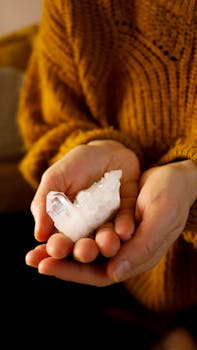
What being an empath actually means
The word "empath" gets thrown around a lot on social media, and most of the time it's used loosely to describe anyone who picks up on other people's moods. But there's a real psychological framework behind it. Dr. Elaine Aron coined the term "highly sensitive person" (HSP) in the 1990s, and her research suggests roughly 15 to 20 percent of the population processes sensory input more deeply than average. That includes emotional input. Someone tells you about their bad day and you physically feel heavier. You walk into a room and can tell two people had an argument before you walked in. A news story about a stranger's suffering ruins your afternoon.
This isn't intuition or a sixth sense. It's a nervous system that processes environmental stimuli at a higher resolution. Brain imaging studies have shown that HSPs exhibit stronger activation in the mirror neuron system, the same circuitry responsible for empathy. Their amygdalas respond more intensely to emotional faces. In practical terms, this means an empath doesn't just understand that someone is sad. Their body responds as if the sadness were their own.
The problem starts when this sensitivity turns into a full-time job. Most empaths don't have an off switch. They absorb emotions at the grocery store, at work, from family members, from strangers on the bus. Over time, that constant intake leads to emotional exhaustion, anxiety, and a nagging sense that none of the feelings you're carrying actually belong to you. That's the overwhelm people talk about, and it's exhausting in a way that's hard to explain to someone who doesn't experience it.
So when empaths start looking for ways to cope, crystals show up early in the search. And that's fine. What isn't fine is pretending that a piece of rose quartz is going to solve a problem that therapy and boundaries might actually address. Crystals are tools. Some people find them genuinely helpful as part of a larger self-care practice. Others think they're decorative rocks. Both takes are reasonable.
Why boundaries matter more than any stone
Before getting into specific crystals, there's an uncomfortable truth that needs to be said. No stone on earth will protect you from emotional overwhelm if you don't set boundaries. That's not a crystal community talking point, but it's the reality. Empaths tend to be people-pleasers. They say yes when they want to say no. They sit through conversations that drain them because leaving feels rude. They check their phone at 11 PM when a friend texts about a crisis for the third time that week.
Learning to say "I need some time alone" or "I can't talk about this right now" is genuinely difficult for empaths because they can feel the other person's disappointment in real time. But without that skill, no amount of black tourmaline is going to stop the bleed. Think of boundaries as the foundation and crystals as something you build on top. The foundation does the heavy lifting.
That said, having a physical object to focus on during boundary-setting moments does help some people. Psychologists call this "grounding," and it works by pulling your attention from abstract emotional overwhelm into something concrete and tangible. A crystal in your hand gives your brain a sensory anchor. It won't enforce a boundary for you, but it can make the moment of setting one feel less overwhelming. And for empaths, that small shift can matter.
Black tourmaline
Black tourmaline is probably the most commonly recommended stone for empaths, and for decent reason. It's a grounding stone in the traditional sense, which basically means it's associated with feeling more stable and less scattered. Practically speaking, it's heavy, dark, and smooth when tumbled, which makes it pleasant to hold during stressful moments.
Most people who use black tourmaline keep it in their left pocket. The idea comes from the belief that your left side receives energy and your right side sends it out, so a protective stone on the left acts as a filter for what comes in. There's no scientific evidence for left-vs-right energy flow, but the act of deliberately placing something in your pocket with a specific intention is a form of mindfulness practice, and mindfulness has actual research behind it.
At night, some empaths put a piece of black tourmaline under their pillow or on their nightstand. The logic is straightforward: your subconscious doesn't shut off when you sleep, and empaths often process other people's emotional residue in dreams. Having a grounding object nearby can serve as a psychological signal that it's time to let go of what you absorbed during the day. A tumbled piece costs about $5 to $12, so it's not an expensive experiment.
Amethyst
Amethyst has a long reputation as a calming stone, and it's one of the few crystals with genuine historical weight behind it. The ancient Greeks literally named it "amethystos," meaning "not intoxicated," because they believed it could prevent drunkenness. That specific claim doesn't hold up, but the broader association with mental clarity and calm has persisted for over two thousand years, which counts for something in terms of cultural staying power.
For empaths, amethyst is often used during meditation. You hold a palm-sized piece in your hands, close your eyes, and focus on the physical sensation of the stone. The idea isn't that the amethyst is doing something magical. The idea is that giving your hands something to hold during meditation reduces fidgeting and helps your mind settle. Meditation is hard for empaths because their brains are constantly processing input. A physical anchor makes the practice more accessible.
Amethyst clusters placed in a living space are common too. Whether this actually changes the "energy" of a room is debatable, but having a visible reminder to slow down in a space where you spend most of your time can influence behavior. You walk past it and remember to breathe. That's not nothing. Geodes and clusters run $15 to $40 depending on size, and a single tumbled stone is usually under $8.
Rose quartz
Rose quartz gets a lot of attention as a "love stone," which makes some people dismiss it. But for empaths, its usefulness has less to do with romance and more to do with self-compassion. Empaths are notoriously hard on themselves. They give endlessly to others and then feel guilty for needing anything in return. Rose quartz is traditionally associated with gentleness toward yourself, and using it as a reminder of that intention has real psychological value.
A common practice is to hold rose quartz during a short self-compassion exercise. You think of something you've been beating yourself up about, hold the stone, and consciously replace the self-criticism with the kind of language you'd use with a close friend. This technique comes from Dr. Kristin Neff's research on self-compassion at the University of Texas, and studies show it reduces anxiety and depression. The rose quartz itself isn't doing the work. The structured practice is. But having a physical object tied to that practice creates a habit loop that makes it easier to repeat.
Rose quartz worn on the left side (pendant, bracelet, or just in a pocket) is also common. Some people find that the pink color itself has a mild calming effect, which isn't entirely far-fetched. Color psychology research, while limited, suggests that warm pink tones can reduce aggression and promote relaxation. A tumbled rose quartz stone costs around $4 to $10.
Aquamarine
Aquamarine is associated with clear communication, which is relevant to empaths for a specific reason. Many empaths struggle to express their own needs because they're so focused on reading other people. They know what someone else is feeling before that person does, but when asked how they're doing, they draw a blank. Aquamarine is traditionally linked to finding your voice and speaking honestly.
The practical application here is wearing aquamarine (as a pendant near the throat or as a ring) during conversations where you need to advocate for yourself. It's a visual and tactile reminder that your feelings matter too. Again, the stone isn't granting eloquence. It's acting as a cue in a behavioral chain: see the stone, remember the intention, speak up. This kind of cue-based behavior change is well-documented in psychology and is the same principle behind wearing a rubber band to snap when you want to break a habit.
Aquamarine is also recommended for empaths who work in high-stress communication environments like customer service, teaching, or healthcare. Keeping a piece on your desk or wearing it during shifts gives you a small, private moment of intention-setting before difficult interactions. Tumbled aquamarine costs $8 to $20, with better quality pieces running higher.
Tourmalinated quartz and black onyx
Tourmalinated quartz is clear quartz with black tourmaline needles running through it. It's visually striking and combines what people consider the amplifying properties of clear quartz with the grounding qualities of tourmaline. Whether that combination actually works better than either stone alone is impossible to verify, but many empaths report that it helps them feel protected without feeling shut off, which is a balance that pure black tourmaline sometimes doesn't strike.
Black onyx serves a similar function but with a different texture and weight. It's denser and colder to the touch, which some people find more grounding than tourmaline's slightly rougher surface. Both stones work well as pocket pieces. The choice between them mostly comes down to personal preference for how the stone feels in your hand. Try both if you can. Tumbled pieces of each cost $5 to $15.
Sugilite and lepidolite for deeper emotional processing
Sugilite is less common and more expensive ($20 to $60 for a decent piece), but it comes up frequently in empath communities for emotional processing. It's a deep purple stone associated with helping people work through difficult emotions rather than just buffering against them. For empaths who tend to suppress what they're feeling in order to keep functioning, sugilite is traditionally recommended as a companion for journaling or therapy homework.
Lepidolite contains lithium, which is genuinely interesting even if the therapeutic implications are overstated. Lepidolite is a mica mineral, and while rubbing it on your skin isn't going to deliver a pharmacological dose of lithium, the association with a known mood-stabilizing element gives some people a psychological comfort. It's also a soft, flaky stone with a lavender color that many people find inherently soothing to look at and handle. Lepidolite is affordable at $6 to $15 for tumbled pieces.
The honest bottom line
Crystals can be a useful part of an empath's coping toolkit. They provide tactile grounding, visual reminders of intentions, and a low-cost entry point into mindfulness practices. Many people genuinely find them helpful, and that experience is valid regardless of whether the mechanism is energetic or psychological.
But they have hard limits. If you're dealing with clinical depression, anxiety disorders, or trauma, you need a therapist, not a geode. If your empath sensitivity is making it impossible to function at work or maintain relationships, a crystal won't fix that. Professional help exists for a reason, and there's no shame in using it alongside whatever personal rituals work for you.
The empaths who seem to do best aren't the ones with the most expensive crystal collections. They're the ones who combine physical grounding tools (including crystals, but also exercise, nature, and sensory practices) with real boundaries, professional support when needed, and the basic self-awareness to notice when they're absorbing someone else's stuff and consciously choose to let it go. Start there. Add crystals if they help. Skip them if they don't.
Comments